When you pick up a generic pill at the pharmacy, you expect it to work just like the brand-name version. But what happens when it doesn’t? What if you feel worse, or the medication just doesn’t seem to help anymore? That’s where MedWatch comes in - the U.S. Food and Drug Administration’s system for collecting real-world safety reports on all medications, including generics.
Generics make up about 90% of all prescriptions filled in the U.S. They’re cheaper, widely used, and legally required to be bioequivalent to their brand-name counterparts. But bioequivalence doesn’t always mean identical experience. Patients report differences in side effects, effectiveness, and even how the pill feels when swallowed. These aren’t just anecdotes. They’re signals - and MedWatch is the main tool the FDA uses to catch them.
How MedWatch Works for Generic Drugs
MedWatch isn’t a fancy system. It’s simple: anyone - patients, doctors, pharmacists, or even manufacturers - can report a problem with a medicine. That includes allergic reactions, unexpected side effects, or cases where a generic drug just didn’t work like it should. For generics, the most common issue reported is therapeutic inequivalence: the drug seems less effective or causes new symptoms compared to the brand version the patient used before.
Reports go into the FDA Adverse Event Reporting System (FAERS), which holds over 9 million entries. Each report includes basic info: the drug name, what happened, when it happened, and who reported it. But here’s the catch - the system doesn’t automatically know if the drug was brand or generic. That’s left to the person filling out the form.
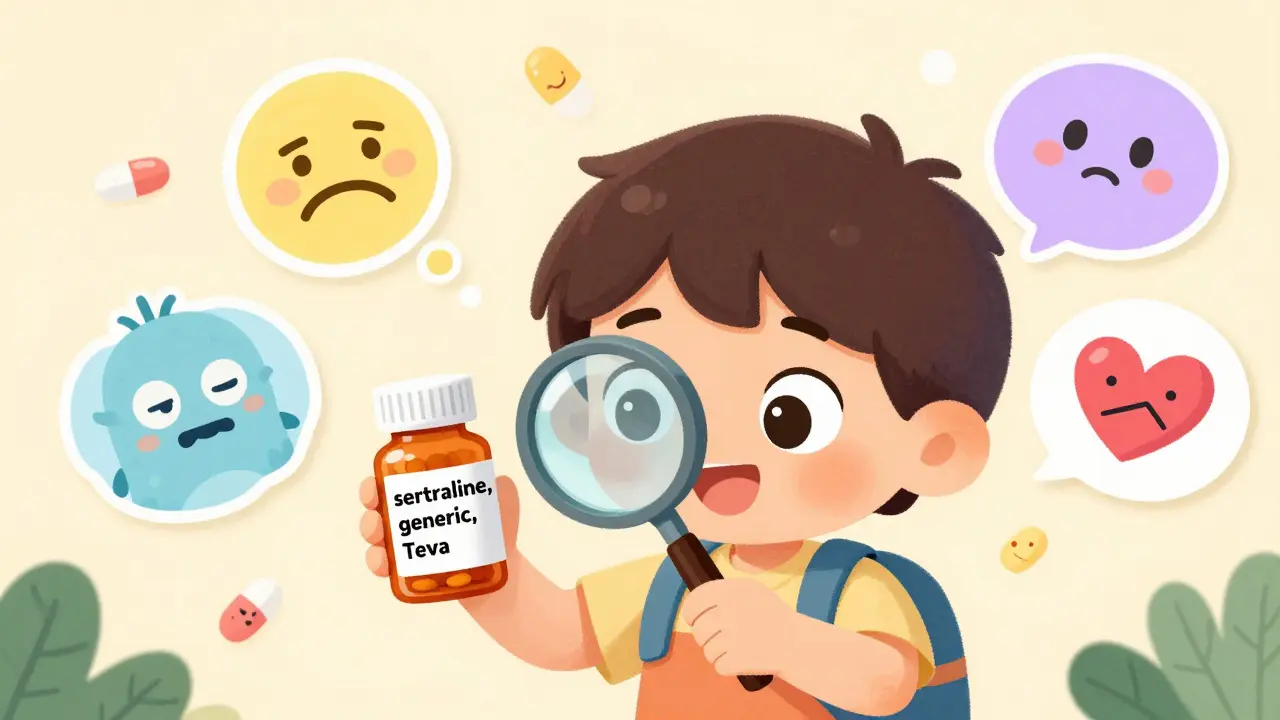
The FDA gives clear instructions: if you’re reporting a generic, write the generic name first, then add “generic” and the manufacturer’s name if you know it. For example: sertraline, generic, Teva. But most patients don’t know the manufacturer. They just see “sertraline” on the label. And that’s where the data gets muddy.
The Hidden Problem: Generic Identity in Reports
A 2024 FDA analysis found that only 32.7% of generic drug reports included the manufacturer’s name. Compare that to brand-name reports - 89.4% named the manufacturer. Without that detail, the FDA can’t tell if a problem is tied to one specific maker or a general issue with the drug class.
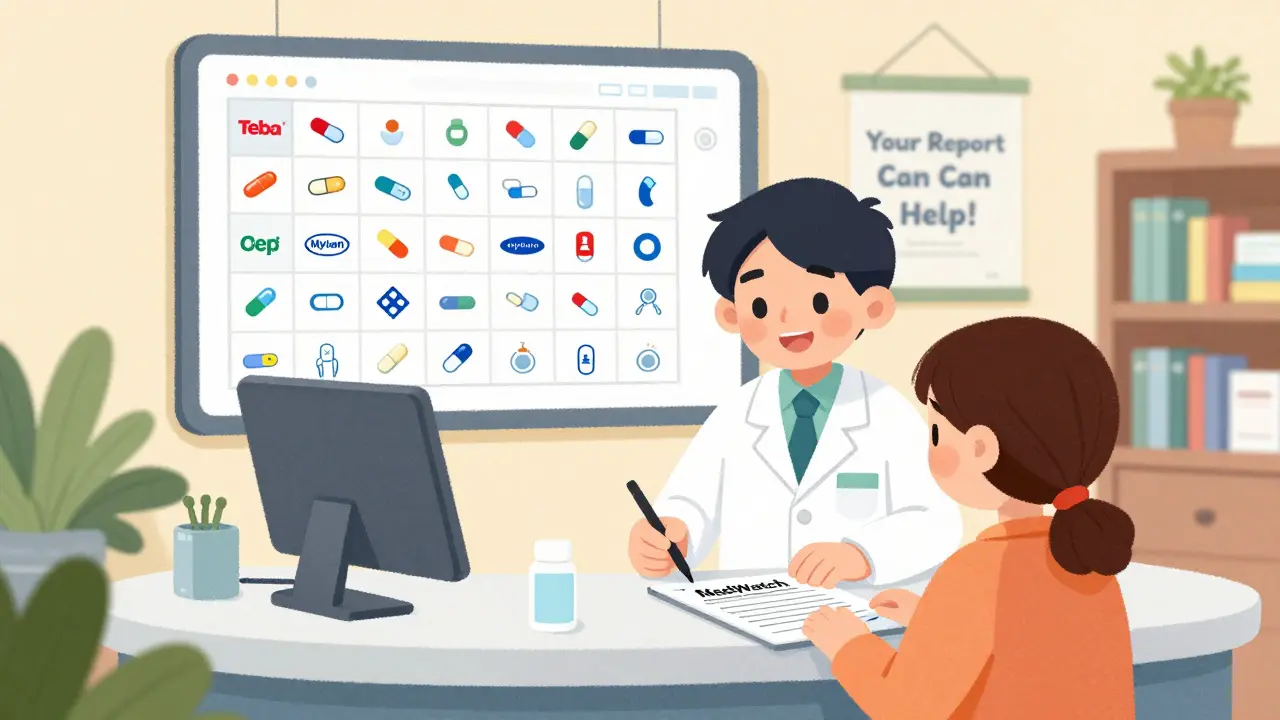
That’s a big deal. Two different companies can make the same generic drug, but use different inactive ingredients - fillers, dyes, coatings. These don’t affect bioequivalence under FDA rules, but they can affect how a patient tolerates the drug. One person might have stomach issues with Teva’s levothyroxine but no problems with Mylan’s. If both are just labeled “generic levothyroxine,” those differences disappear in the data.
Pharmacists and doctors know this. In a 2024 AMA survey, 78% said they struggled to distinguish between generic manufacturers when filing reports. Many give up because the form doesn’t have a clear field for it. One pharmacist on Reddit reported submitting 17 reports over three years - only two got responses. But one of those led to a label change for a generic thyroid drug. That’s why it matters.
Real Cases That Changed Things
In 2022, multiple reports came in about a specific generic version of bupropion XL made by Mylan. Patients said it caused severe anxiety, insomnia, and mood swings - symptoms they didn’t have on the brand version or other generics. The FDA looked at the pattern. They checked the NDC codes, compared lab results, and reviewed patient histories. Within 11 months, they updated the drug’s labeling to include new warnings about mood changes with that particular formulation.
That’s the power of MedWatch. It doesn’t act on one report. It looks for clusters. One person having trouble? Maybe coincidence. Ten people reporting the same issue with the same generic? That’s a signal.
Another example: patients reporting that their generic sertraline made them feel “numb” or “zombie-like” compared to the brand. After reviewing hundreds of similar reports, the FDA added a note to the drug’s prescribing information about emotional blunting - even though the active ingredient was unchanged.
Why So Few Reports? The Underreporting Crisis
Despite high usage, only 4.7% of all drug safety reports mention “generic” in connection with therapeutic failure. That’s not because generics are safe - it’s because people don’t know they should report, or they don’t know how.
Patients often think: “It’s just a generic. It’s supposed to be the same.” So when they feel off, they blame themselves - “Maybe I’m not taking it right,” or “I’m just getting older.” They don’t connect the dots to the pill they just got from a different pharmacy.
Even healthcare providers underreport. A 2024 ASHP survey found that 71% of pharmacists said they didn’t have time to fill out detailed reports. Others didn’t know the right way to document the manufacturer. And patients? Only 28.3% included the NDC code - the 11-digit number on the pill bottle that tells you exactly which company made it.
The FDA has tried to fix this. They now offer Spanish-language forms. They’ve trained pharmacists on how to identify generics. They even added a “therapeutic inequivalence” option to the online form. But the biggest barrier? The system still doesn’t auto-detect generics.
What’s Changing in 2026
There’s progress. In early 2024, the FDA rolled out a new algorithm that can now identify generic drugs in FAERS with 92.4% accuracy. It doesn’t rely on what people type - it uses patterns in the data: timing of symptoms, dosage changes, co-medications, and even the NDC codes hidden in pharmacy records.
This algorithm is now part of the FDA’s daily processing. It’s helping them spot trends faster. For example, they recently flagged a spike in reports of dizziness linked to a specific batch of generic metformin - something they might have missed before.
By 2026, the FDA plans to connect MedWatch directly to electronic health records. That means when a doctor prescribes a generic, the system could automatically pull the NDC and manufacturer from the pharmacy’s digital record. No more guessing. No more missing data.
The Generic Drug User Fee Amendments (GDUFA) III plan, launched in 2023, also includes a promise to improve generic safety tracking. The goal? To make sure the 90% of prescriptions that are generic get the same level of safety oversight as the 10% that aren’t.
What You Can Do
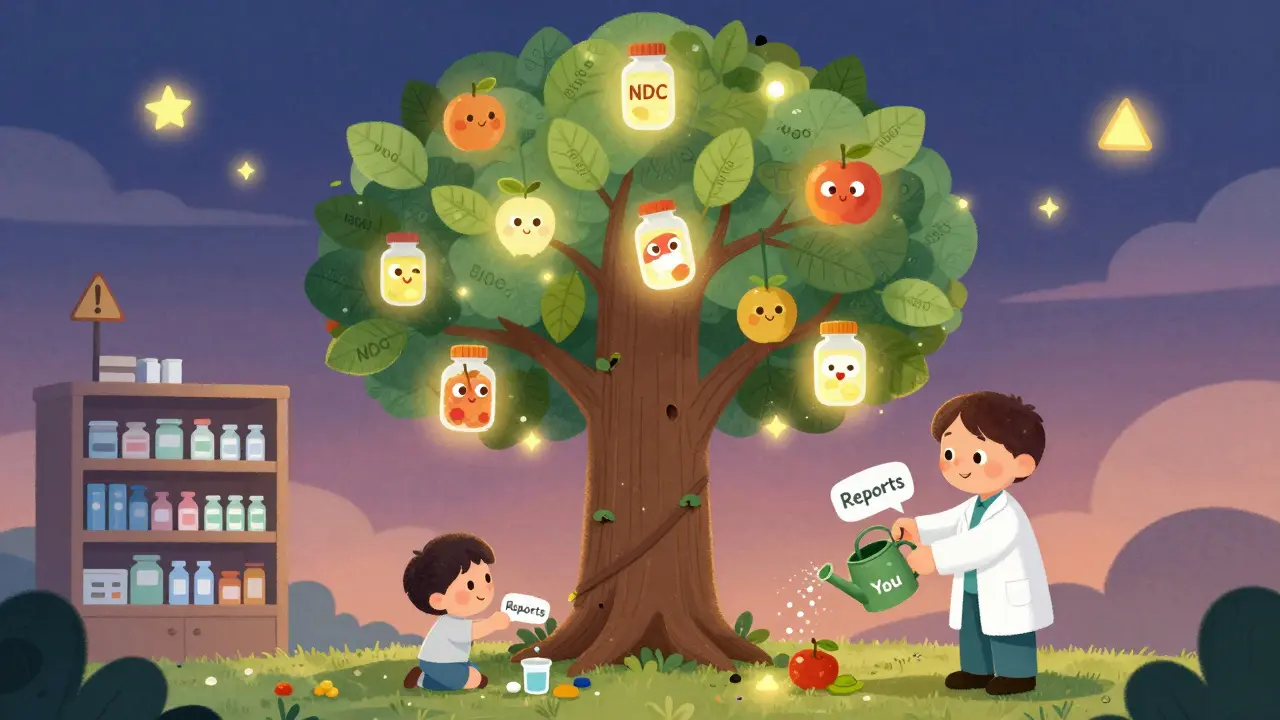
You don’t need to be a doctor to make a difference. If you notice a change after switching to a generic - worse side effects, less effectiveness, new symptoms - report it. Here’s how:
- Write down the exact name of the drug (generic name first).
- Find the manufacturer name on the pill bottle or packaging.
- Write down the NDC code - it’s a long number on the box or label.
- Describe what happened: when it started, how bad it was, if you took anything else.
- Go to www.fda.gov/MedWatch and fill out the form.
It takes less than 15 minutes. You don’t need to give your name. But if you do, the FDA might follow up. And if enough people report the same issue, it could lead to a warning, a label change, or even a recall.
Don’t assume it’s just you. Don’t assume it’s your body. Don’t assume the FDA already knows. They don’t - unless you tell them.
Why This Matters for Everyone
Generics save the U.S. healthcare system over $300 billion a year. They’re essential. But safety isn’t optional. The same drug, made by two different companies, can behave differently in real life. And if we don’t track those differences, we’re flying blind.
MedWatch isn’t perfect. It’s voluntary. It’s messy. But it’s the only system we have that lets patients and providers speak directly to the FDA about drug safety. For generics, that voice is more important than ever.
The future of safe, affordable medicine depends on this data. And that data only comes from you - the person taking the pill, the pharmacist handing it out, the doctor watching the symptoms.
Report it. It matters more than you think.
8 Comments
man i just switched to generic sertraline last month and honestly? i feel like a zombie with a headache. not depressed, not anxious... just empty. like my emotions got put on mute. i didn't think to report it till now, but this post made me realize i'm not crazy. i even checked the bottle - it's Teva. 🤷♂️
of course the FDA can't track generics properly. you're telling me people who can't spell 'pharmacy' on a prescription form are gonna remember to write 'generic, Teva, NDC: 0093-4211-01'? please. this system is a joke. if you're too lazy to write down the manufacturer, you shouldn't be allowed to take pills at all. 🙄
i used to work at a pharmacy and we'd get so many patients coming in saying 'this generic doesn't work like the last one' - but they'd forget the name or the bottle was gone. i'd try to help them fill out the form, but half the time they'd just say 'nah, it's fine' and leave. it's not their fault. the system's just not built for regular people. 🤕
oh wow. a whole article about how people can't follow basic instructions. how revolutionary. the FDA has a 15-minute form, a website, and even Spanish translations - yet somehow, patients still can't type 'generic' and the manufacturer's name? maybe the problem isn't the system. maybe it's the people who think 'bioequivalent' means 'identical' and then blame the pill when they feel weird. 🙃
in canada we have the same issue. i switched from brand to generic levothyroxine and my heart started racing. i didn't know the maker until i checked the bottle. reported it. got a letter back saying 'thank you for your feedback.' that's it. no follow-up. no label change. just silence. the system's broken but nobody's fixing it. 🇨🇦
you guys are doing the right thing by reporting. i know it feels pointless but trust me - one report might not change anything. but 500? 1000? that's how they find the bad batches. i've been telling my patients for years: if it feels different, it probably is. don't brush it off. write it down. send it in. you're not just helping yourself. you're helping everyone else who takes that same pill next month. 💪
omg yes!! i reported my generic bupropion last year after i had panic attacks for 3 weeks straight. i didn't even know it was Mylan until i looked at the bottle 😅 FDA emailed me back saying they'd added it to their review list. 6 months later - boom - new warning label. i cried. it felt like i actually did something good. if you're reading this and you're scared to report - don't be. it takes 10 mins. you're a hero. 🙌❤️
the system is broken but people are the problem. no one checks the bottle. no one knows the NDC. no one cares. until it's their turn to be the one who got the bad batch. then suddenly they're mad. but they still won't report. it's sad.