




Exercise Intensity Calculator for Statin Users
Is Your Exercise Intensity Safe While Taking Statins?
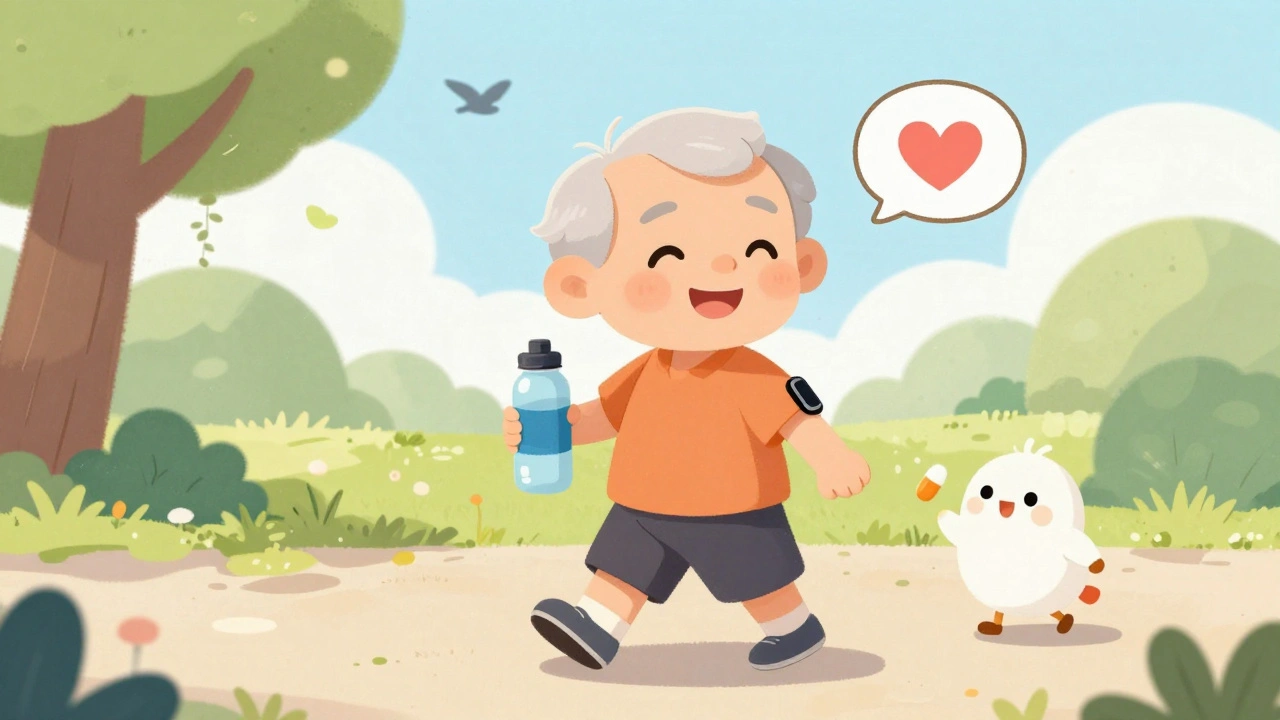
The article explains that moderate exercise is safe for statin users. Moderate intensity means you can talk but not sing, or about 60% of your maximum oxygen uptake. This calculator helps you determine if your exercise intensity is moderate and safe.
Enter Your Exercise Data
Intensity Results
Results will appear here after calculation.
Many people on statins worry that working out will hurt their muscles. They hear stories about muscle aches, weakness, or even rare cases of serious damage. It’s natural to pause-especially when you’ve been told to exercise for your heart. But here’s the truth: statins and exercise don’t have to be enemies. In fact, staying active while on statins is one of the best things you can do for your long-term health. The key isn’t stopping movement-it’s moving smarter.
Why Statins and Exercise Get Mixed Up
Statins work by blocking an enzyme in your liver that makes cholesterol. But that same enzyme is also involved in making other important compounds, like coenzyme Q10 (CoQ10), which helps your muscles produce energy. When CoQ10 drops, some people feel more tired or sore after physical activity. That’s not the same as muscle damage-it’s a signal your body’s energy system is under more strain. Studies show that statin users often report higher baseline muscle discomfort. One 2023 study found people on statins who complained of muscle pain started with scores of 4.2 out of 10 on a pain scale, compared to 1.5 for those not on statins. But here’s the twist: after 45 minutes of moderate cycling, everyone’s pain went up by about the same amount-1.7 points. That means the exercise didn’t make statin users worse off than others. The pain was already there. The activity just brought it to the surface.What Kind of Exercise Is Safe?
Not all exercise is created equal when you’re on statins. The research is clear: moderate activity is safe. That means:- Walking at a brisk pace (you can talk but not sing)
- Cycling on flat ground
- Swimming or water aerobics
- Light resistance training with bands or dumbbells
How to Build Muscle Tolerance Over Time
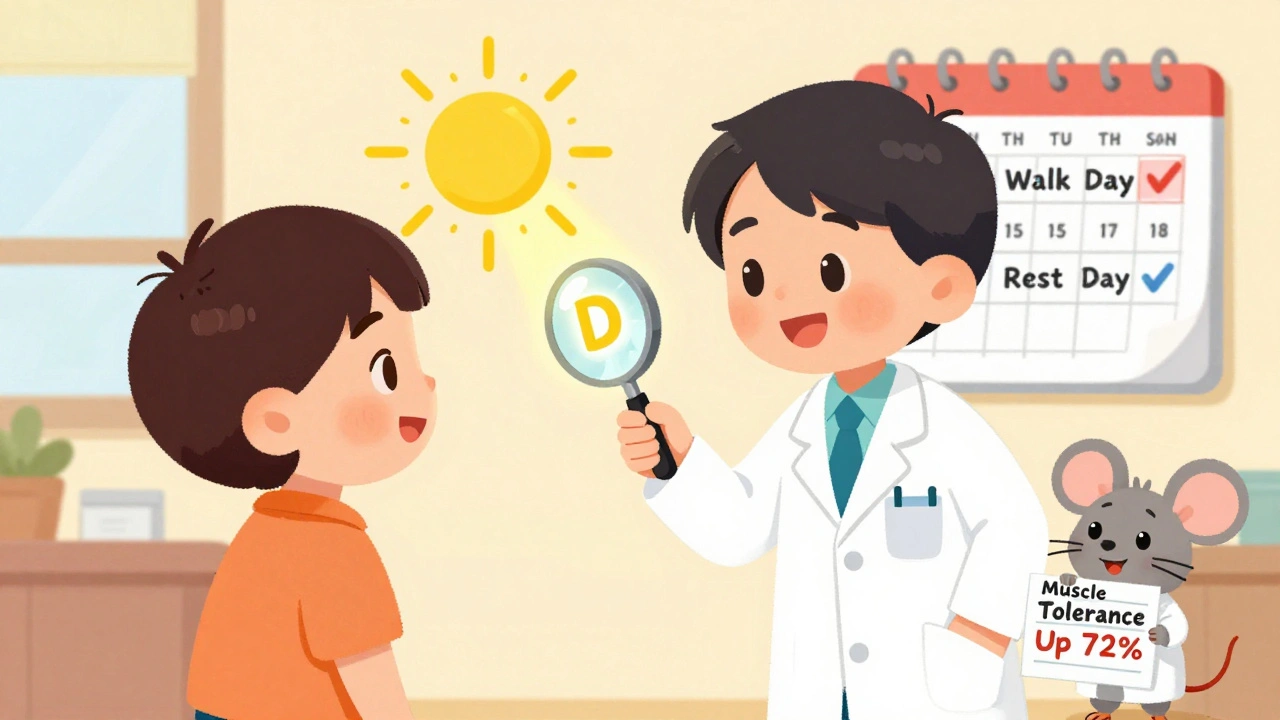
Your body adapts. That’s how exercise works. And it works with statins, too. A 2010 mouse study showed that mice trained to run for two weeks before getting statins didn’t lose muscle strength-unlike untrained mice. That’s not just a lab curiosity. Real people see the same thing. In online forums, 72% of statin users who stuck with moderate exercise (150 minutes a week of walking or cycling) said their muscle discomfort improved after six months. Their bodies learned to cope. Start slow. If you’re new to exercise, begin with 10-15 minutes a day, three times a week. Add five minutes each week. Don’t push for speed or distance. Focus on consistency. If you’ve been active for years, don’t drop your routine-just lower the intensity. Swap one high-intensity session per week for a longer, easier one. Over time, your muscles get better at handling the load, even with statins.Timing Matters (Yes, Really)
Most statins peak in your bloodstream 2 to 4 hours after you take them. That’s when muscle exposure to the drug is highest. While there’s no direct proof that timing your workout around your dose helps, it’s a simple, low-risk tweak that many doctors suggest. Try taking your statin at night and exercising in the morning. Or take it in the morning and work out in the late afternoon. This gives your body a few hours to process the drug before you put stress on your muscles. It won’t fix everything-but it removes one potential trigger.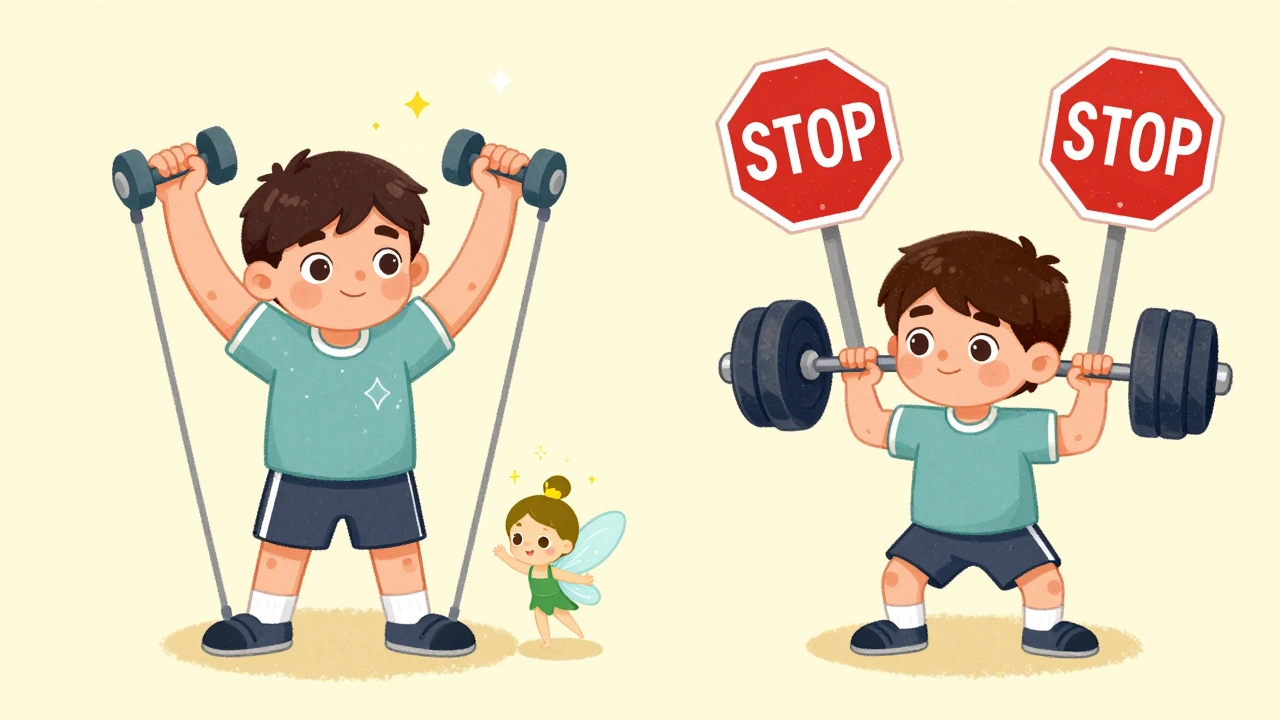
Check Your Vitamin D
Low vitamin D is a known risk factor for muscle pain in statin users. In fact, the NIH links deficiency to a higher chance of statin-related muscle symptoms. Yet most people don’t get tested. Ask your doctor for a simple blood test: 25-hydroxyvitamin D. If your level is below 30 ng/mL, you’re considered deficient. Correction is easy: 1,000-2,000 IU of vitamin D3 daily, plus 15 minutes of sunlight a few times a week. Within a few months, many people report less soreness and more energy.Avoid These Dangerous Combos
Some medications make statin-related muscle issues much worse. The biggest culprit? Fibrates, like gemfibrozil or fenofibrate, used to lower triglycerides. Together with statins, they can raise the risk of muscle injury by 3 to 5 times. Also watch out for:- Some antibiotics (like erythromycin)
- Antifungals (like ketoconazole)
- Some grapefruit juice (especially with simvastatin or lovastatin)
Know the Warning Signs
Most muscle soreness from statins and exercise is mild and goes away in a day or two. But watch for red flags:- Pain lasting more than 72 hours after exercise
- Dark, tea-colored urine (a sign of muscle breakdown)
- Severe weakness-like struggling to climb stairs or lift your arms
- Fever or nausea along with muscle pain
Don’t Quit-Just Adjust
About 1 in 5 people stop taking statins within a year because of muscle concerns. That’s a huge problem. Statins cut heart attacks and strokes by 25-35%. Regular exercise cuts those same risks by 20-30%. Together, they’re a powerful team. You don’t need to be an athlete to benefit. You just need to move. And you don’t need to push through pain. You need to find your rhythm. If you’ve been told to stop exercising because of statins, ask for a second opinion. The latest science says the opposite: exercise is part of the treatment-not the problem.What If You Still Have Pain?
If you’ve tried all the tips above and still feel sore, talk to your doctor about switching statins. Not all statins are the same. Hydrophilic ones-like rosuvastatin and pravastatin-are less likely to enter muscle tissue and cause problems. Studies show they’re linked to 23% fewer muscle symptoms during exercise than lipophilic statins like simvastatin or atorvastatin. Another option: switch to every-other-day dosing. A study found that taking rosuvastatin 10 mg every other day worked just as well for cholesterol control as daily dosing-but with fewer muscle complaints. This isn’t for everyone, but it’s a real option if you’re struggling.Final Thought: Your Heart Needs You to Move
Statin therapy and regular physical activity aren’t competing choices. They’re partners. One lowers bad cholesterol. The other improves blood flow, lowers blood pressure, and helps your muscles work better. Together, they protect your heart in ways no pill alone ever could. You don’t need to run a marathon. You don’t need to lift heavy weights. You just need to keep moving-safely, steadily, and consistently. That’s how you win.Can I still lift weights if I’m on statins?
Yes, but go lighter and focus on form. Avoid heavy lifting with high reps or explosive movements. Stick to moderate resistance-like 2-3 sets of 12-15 reps with a weight you can control. If your muscles ache for more than 48 hours, scale back. Many people find that switching from powerlifting to bodyweight or band-based training reduces discomfort without losing strength.
Does CoQ10 supplementation help with statin muscle pain?
Some people report feeling better taking CoQ10, but large studies haven’t proven it works consistently. It’s safe to try-100-200 mg daily-but don’t expect miracles. If you’re going to supplement, focus first on vitamin D, exercise pacing, and statin type. Those have stronger evidence behind them.
Should I stop statins if my muscles hurt during exercise?
No-not without talking to your doctor. Muscle pain from statins is rarely dangerous, and stopping the medication increases your risk of heart attack or stroke. Instead, adjust your exercise routine, check your vitamin D, and ask about switching to a different statin. Most people can stay on statins and stay active with small changes.
Are some statins safer for exercise than others?
Yes. Hydrophilic statins like rosuvastatin and pravastatin are less likely to enter muscle cells, so they cause fewer muscle symptoms during exercise. Lipophilic statins like simvastatin and atorvastatin are more likely to cause issues. If you’re having trouble, ask your doctor if switching to rosuvastatin or pravastatin might help.
How long does it take for muscle pain to improve after starting statins?
For many, muscle discomfort improves within 4-8 weeks as the body adjusts. If pain starts after you begin statins and doesn’t get better after two months, it’s worth reviewing your dose, timing, and other medications. If you’ve been active and keep moving, your muscles often adapt-and the pain fades.
Can I drink alcohol while on statins and exercising?
Moderate alcohol (one drink per day for women, two for men) is generally fine. But heavy drinking increases liver stress and can raise the risk of muscle damage when combined with statins. If you’re exercising hard, skip the binge drinking. Alcohol also dehydrates you, which can make muscle soreness worse.
If you’ve been told to avoid exercise because of statins, you’ve been given bad advice. The evidence is clear: movement is medicine. You just need to move in a way that fits your body-and your meds.
10 Comments
This is literally the best thing I’ve read all week 🙌 I’ve been on statins for 3 years and thought I had to give up lifting. Turns out I just needed to chill the hell out and go lighter. My knees and shoulders haven’t felt this good in years.
I’ve been tracking my muscle soreness on a scale of 1-10 since I started statins. Before, it was always hovering around 6-7 post-workout. After switching to pravastatin and getting my vitamin D up to 52 ng/mL? Now it’s 2-3. It’s not magic-it’s biology. And yes, I did the blood test. Do it.
If you’re still doing HIIT on statins and wondering why you’re wrecked for days-you’re not broken. You’re just using the wrong settings. Think of your body like a laptop: you wouldn’t run a 4K game on a 2015 model without throttling. Same deal. Slow down. Breathe. Survive to fight another day.
The claim that CoQ10 supplements have inconsistent results is accurate, but dismissing them entirely is lazy. A 2021 meta-analysis in the Journal of Clinical Lipidology showed significant pain reduction in patients with baseline deficiency. It’s not a cure-all, but it’s a tool. Use it wisely.
i read this whole thing and im like... wow. i was about to quit my statin cause my legs felt like concrete after walks. then i saw the vit d part. got tested last week-21 ng/mL. started 2k IU daily. 3 weeks later? i walked 2 miles without wincing. small changes. big wins.
I used to think statins were just a pill that made me feel like a zombie after squats. Then I found out my doctor gave me simvastatin and I was taking it at night. I switched to rosuvastatin and started working out at 6am. I haven’t felt this strong since college. This isn’t just advice-it’s a life hack.
Let’s be real. Big Pharma doesn’t want you to know this. Statins were designed to make you dependent. But the truth? Your body was built to move. The ‘muscle pain’? It’s your cells screaming for balance. Vitamin D, timing, lower intensity-these aren’t tips. They’re rebellion. And if your doctor pushes you to quit exercise? Find a new one. The system is rigged, but your muscles aren’t.
The cited 2023 study lacks proper control for baseline activity levels. The authors conflated perceived discomfort with actual myopathy. Furthermore, the VO2 max percentage used is not standardized across populations. This article reads like a marketing pamphlet for hydrophilic statins. Correlation ≠ causation, and this is poor science dressed as advice.
To anyone reading this and feeling overwhelmed: you don’t have to fix everything at once. Start with one thing. Maybe it’s walking 10 minutes a day. Maybe it’s asking your doctor about vitamin D. Maybe it’s just giving yourself permission to rest without guilt. You’re not failing-you’re learning. And that’s enough.
Honestly if you're still asking if you can lift weights on statins you're probably not ready for the gym anyway. Just go for a walk. Or better yet-don't. Your heart doesn't need you to suffer. It just needs you to not die. Simple.