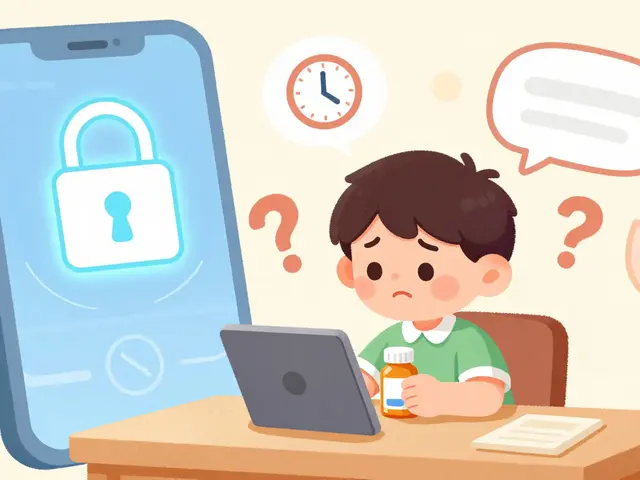



Every year, thousands of people accidentally take two doses of the same medication in one day. It’s not because they’re careless-it’s because they forgot, got confused, or someone else gave the medicine without knowing it was already taken. This isn’t rare. In fact, double-dosing is one of the most common medication errors in homes across the UK and US, especially among older adults and young children. The results can be serious: dizziness, nausea, liver damage, even death. But the good news? Most of these mistakes are completely preventable with simple, practical steps.
Why Double-Dosing Happens at Home
People don’t mean to overdose. They’re trying to do the right thing. Maybe their parent took a pill but didn’t remember. Maybe their child spit out the medicine, so they gave it again. Or maybe they’re juggling five different medications and lose track after a sleepless night. According to the National Council on Patient Information and Education, about half of all medication-related emergencies happen at home. And nearly 30% of seniors admit they’ve accidentally taken a double dose at least once in the past year. It’s not just about forgetting. It’s about confusion. Many over-the-counter cold medicines, pain relievers, and sleep aids contain the same active ingredients as prescription drugs. A person might take their prescribed acetaminophen for pain and then reach for a cold tablet that also has acetaminophen-without realizing they’re doubling up. That’s how liver damage starts. One study found that 32% of double-dosing cases involved hidden duplicate ingredients that patients never noticed.Use a Pill Organizer-But Choose the Right One
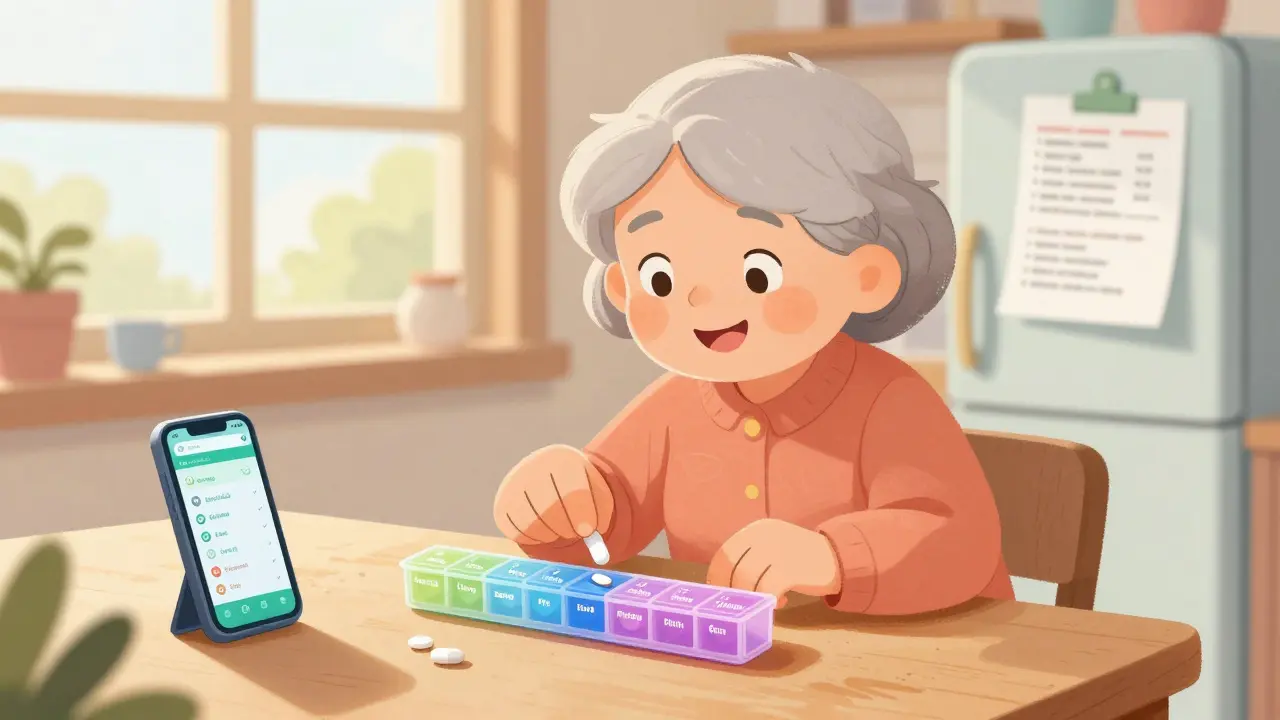
The simplest, most effective tool is a pill organizer. Not just any box, though. You need one with separate compartments for each time of day: morning, afternoon, evening, bedtime. A basic 7-day organizer with four slots per day is ideal for most people taking multiple medications. These aren’t fancy gadgets-they’re plastic trays you can buy for under £10 at any pharmacy. The key is visibility. When you open the box and see an empty morning slot, you know you haven’t taken your pill yet. If it’s already gone, you don’t reach for another. WesleyLife’s 2023 survey found that 68% of seniors use weekly pill organizers, and those who did saw a 35% drop in double-dosing incidents. But here’s the catch: it only works if you fill it correctly. Get help from a pharmacist or caregiver to sort your pills into the right slots. Don’t guess. Misfilling the box creates a new kind of risk.Set Digital Reminders-And Share Them
Phones are always with us. Use them. Apps like Medisafe, MyTherapy, or even the built-in alarm function on your smartphone can send alerts for every dose. These aren’t just reminders-they’re tracking systems. When you tap “taken,” the app logs it. If you miss a dose, it nudges you. If you try to log a second dose too soon, it warns you. A 2022 study in the Journal of Medical Internet Research showed that users of these apps improved adherence by 87%. But the real power comes when you share access. If you’re caring for an elderly parent or a child, give a family member permission to see the app’s log. That way, if you forget to take your pill and your spouse gives it to you later, they’ll know it’s already been taken. This cuts double-dosing by nearly half in households with multiple caregivers, according to St. Louis Children’s Hospital.Never Use Kitchen Spoons for Liquid Medicines
This one catches people off guard. A teaspoon isn’t a teaspoon. A kitchen spoon can hold anywhere from 2.5mL to 7.3mL-depending on how you hold it. But most liquid medications are dosed in precise millilitres. Giving a child 5mL of amoxicillin with a kitchen spoon could mean giving them 7mL instead. That’s a 40% overdose. Always use the syringe, dropper, or cup that came with the medicine. If it’s missing, ask your pharmacist for a new one-they’ll give it to you for free. Children’s Healthcare of Atlanta found that 86% of emergency visits for medicine poisoning in kids involved household items like spoons or cups being used instead of proper measuring tools. Don’t risk it. Keep the measuring device taped to the bottle so you never forget.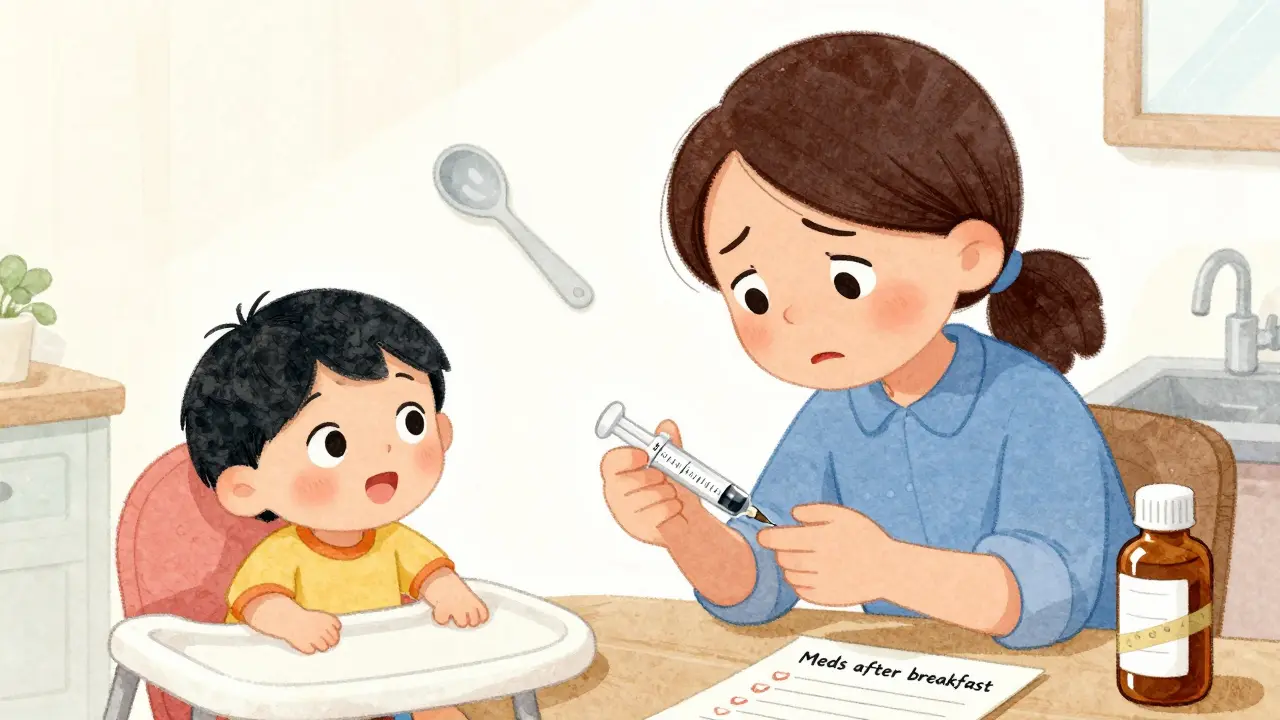
Keep a Written Medication List-All of Them
Write down every single thing you or your loved one takes. Not just prescriptions. Include vitamins, supplements, herbal teas, and over-the-counter drugs. That’s because many products share the same active ingredients. For example, Tylenol, Panadol, and some cold syrups all contain paracetamol. If you’re taking one for a headache and another for a cough, you’re doubling up without knowing. Right at Home Chesterfield recommends keeping this list in your wallet or phone notes and updating it every time your doctor changes your meds. When you go to the pharmacy, bring it with you. Pharmacists use this list to catch hidden duplicates. In 2023, EssexCare Pharmacy found that 32% of double-dosing cases they reviewed involved patients who didn’t realize they were taking two products with the same ingredient.Designate One Person to Manage Medications
In homes with multiple caregivers-parents, grandparents, nannies, or visiting relatives-confusion grows fast. One person gives medicine in the morning. Another gives it at lunch. No one knows what happened. Children’s Healthcare of Atlanta tracked this exact scenario: in 41% of pediatric double-dosing cases, the child refused medicine the first time, then accepted it later from a different caregiver who didn’t know it had already been given. Assign one person as the official “medication manager.” That person fills the pill box, sets the phone reminders, and is the only one who gives out doses. If someone else needs to help, they check the list or app first. This simple rule reduced double-dosing by 47% in households studied by St. Louis Children’s Hospital. It’s not about control-it’s about clarity.Store Medicines Out of Reach-and Out of Sight
Kids are curious. They see bottles on the counter, think they’re candy, and pop them. Even if they don’t eat the whole bottle, one or two pills can be dangerous. The same goes for older adults who might grab the wrong bottle in the dark. Keep all medicines locked away or in a high cabinet. Not the bathroom-humidity ruins pills. Not the kitchen counter-too easy to reach. Use a locked box if needed. The American Society of Health-System Pharmacists now includes safety locks in discharge kits for patients on complex regimens, a practice that’s grown 27% since 2020. If your child or elderly relative is at risk, treat medicines like sharp tools or chemicals-secure them.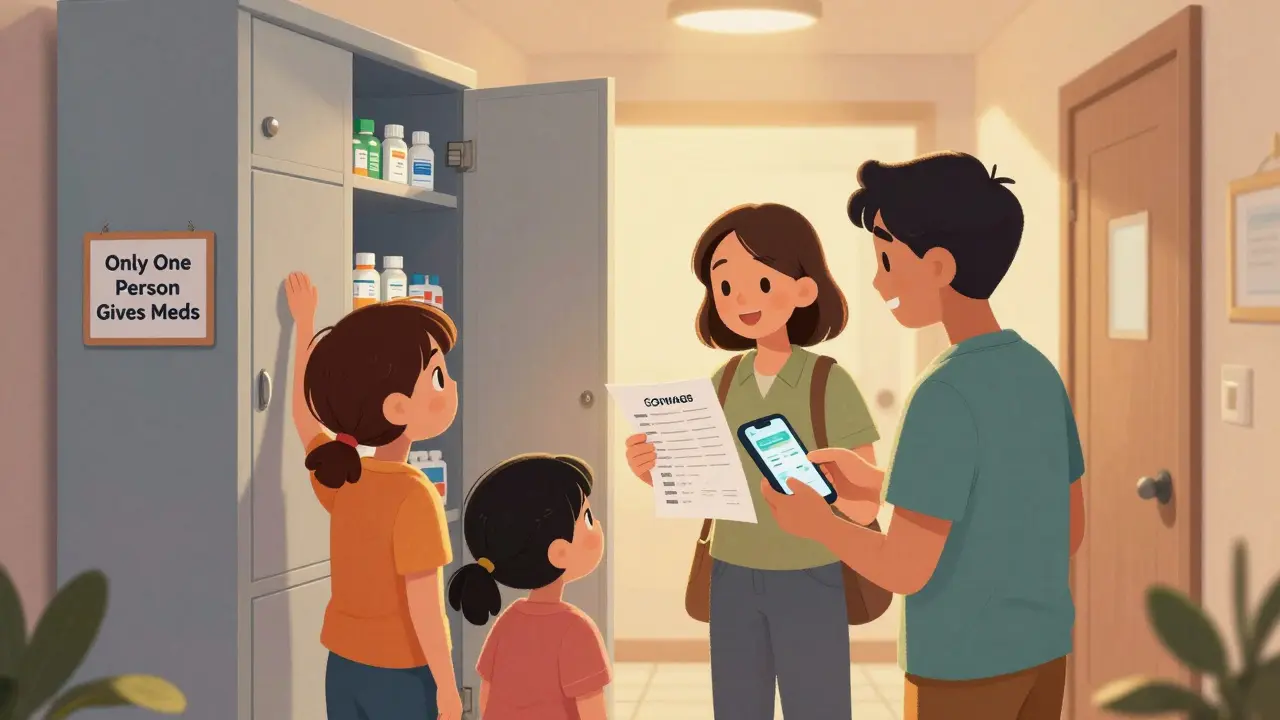
Link Medication Time to Daily Habits
Memory fails. Routines don’t. If you take your pill every time you brush your teeth, or right after breakfast, you’re far less likely to forget-or take it twice. St. Louis Children’s Hospital found that 78% of people who successfully avoided double-dosing tied their medication to a daily ritual. Pick a habit you never skip: morning coffee, evening shower, putting on pajamas. Attach the dose to it. Set a visual cue, too. Put the pill organizer next to your toothbrush. Tape a note to the fridge: “Meds after toast.” Make it automatic.What to Do If You Accidentally Double-Dose
Even with all these steps, mistakes happen. If you realize you’ve taken two doses, don’t panic. But don’t wait either. Call the National Poison Control Center at 1-800-222-1222 immediately. They’re available 24/7, free, and trained to handle exactly this situation. They’ll ask what you took, how much, and when. Then they’ll tell you what to do next-whether it’s watching for symptoms, drinking water, or going to the ER. Don’t rely on Google. Don’t wait to see if you feel sick. Poison control experts have saved thousands of lives by acting fast. If you’re caring for a child or elderly person, keep this number saved in your phone and written on the fridge.What’s Coming Next
The future of medication safety is smarter. Smart pill dispensers that lock after each dose are now available-reducing double-dosing by 76% in Johns Hopkins trials. AI systems that learn your routine and warn you when you’re about to take a duplicate are coming by 2026. But for now, the most powerful tools are still the simple ones: a plastic box, a phone alarm, a written list, and a clear rule: only one person gives the medicine. You don’t need expensive gadgets. You need consistency. You need communication. You need to treat medication safety like seatbelts-something you do every day, without thinking, because you know what happens if you don’t.What’s the most common cause of accidental double-dosing in older adults?
The most common cause is forgetting whether a dose was already taken, especially when managing multiple medications. Anxiety about missed doses leads people to take another pill “just in case.” Using a pill organizer and digital reminders cuts this risk by over 60%.
Can I use a kitchen spoon if I don’t have the measuring cup?
No. Kitchen spoons vary in size by up to 65%, which can lead to dangerous overdoses-especially with children’s liquid medications. Always use the syringe or dosing cup that came with the medicine. If you lost it, ask your pharmacist for a free replacement.
How do I know if two medications have the same active ingredient?
Check the “Active Ingredients” section on the label. Common duplicates include paracetamol (in Tylenol, Panadol, cold meds), ibuprofen (in Advil, Nurofen, some flu tablets), and diphenhydramine (in sleep aids and allergy meds). Keep a written list of all your meds and show it to your pharmacist-they’ll spot overlaps you might miss.
Are smartphone apps reliable for medication tracking?
Yes-when used correctly. Apps like Medisafe have been shown to improve adherence by 87% in clinical studies. They work best when family members have access to the log, so everyone knows what’s been taken. Setup takes 20-30 minutes, and most users master them within a few days.
What should I do if my child refuses medicine the first time?
Don’t give it again unless you’re certain it wasn’t swallowed. If they spit it out, try again with a different method-mix it with a small amount of applesauce, use a syringe, or ask your pharmacist for a better-tasting version. If another caregiver gives it later, check your medication log first. Never assume the first dose was lost.
Is it safe to store all my pills in one container?
No. Mixing pills from different bottles increases the risk of confusion and accidental double-dosing. Keep medications in their original containers unless you’re using a pill organizer that you fill carefully under supervision. Original labels include dosage info, expiration dates, and warnings you might need in an emergency.
What’s the best way to help an elderly relative remember their meds?
Combine a weekly pill organizer with a smartphone reminder app. Have a family member help set it up. Link doses to daily routines like meals or bathing. Keep a printed list of all meds on the fridge. Check in weekly to make sure they’re using the system. Simple, consistent habits reduce errors more than expensive tech.
8 Comments
The government and pharma companies want you to believe this is about safety
But they're the ones pushing all these pills in the first place
Who really benefits when grandma forgets her meds? Not her
It's the same people selling the pill organizers and apps
They profit off your fear
And don't even get me started on how they patent the same active ingredients under five different names
It's a racket
They want you dependent
And confused
And buying more stuff
Always more stuff
This is such a practical guide - really appreciate the clear steps
Especially the part about linking meds to daily habits like brushing teeth
I’ve seen so many families struggle with this, especially in multigenerational homes
Simple solutions like a pill box and shared app access make a huge difference
Don’t overcomplicate it - consistency beats fancy gadgets every time
You’ve made this feel manageable, not scary
If you’re still using kitchen spoons you deserve what you get
Stop being lazy
Pharmacies give out measuring tools for FREE
You think your child’s life is worth a 30-second trip to the pharmacy?
Or are you just too busy to care?
And yes - I’m talking to you
Stop making excuses
Medication safety isn’t optional
It’s basic responsibility
Get your act together
Love the tip about taping the measuring syringe to the bottle
I did that for my mom after she nearly gave my nephew a double dose
Simple, visual, impossible to ignore
Also - sharing app access with family is a game changer
My sister and I both check the Medisafe log now
No more guessing, no more guilt
Just clear, calm, safe care
Small changes = big peace of mind
This is why India has a 70% lower rate of accidental overdoses...
Because we don’t rely on plastic boxes or apps...
We rely on family...
And common sense...
And you people spend $200 on a 'smart dispenser' because you forgot how to talk to each other...
Also - who writes 'paracetamol' instead of 'acetaminophen'? ...
...are you even American?
Did you know the FDA quietly approved a new class of 'smart pills' in 2023 that transmit ingestion data to corporate servers?
They’re embedded in most new prescriptions
Every time you take a pill, your phone gets pinged
And your data is sold to insurers
That’s why they’re pushing apps so hard
It’s not about safety
It’s surveillance
And the pill organizer? It’s a placebo for control
They want you to feel safe while they track you
Wake up
While the recommendations provided are empirically sound and align with current best practices in medication adherence, it is imperative to acknowledge the sociocultural variability in implementation.
For instance, in households where multilingual caregivers are involved, digital applications may not be optimally utilized due to language barriers.
Furthermore, the assumption that all individuals possess digital literacy or access to smartphones may inadvertently exclude vulnerable populations.
Therefore, while the pill organizer remains a low-cost, high-impact intervention, complementary strategies must include printed, icon-based visual schedules and community health worker follow-ups to ensure equity.
Additionally, the use of the term 'medication manager' may unintentionally reinforce hierarchical family dynamics - a more inclusive term might be 'medication coordinator.'
These nuances, though subtle, are critical in translating evidence into practice across diverse communities.
Thank you for raising awareness - but let us not overlook the human context beneath the protocol.
You say 'only one person gives the medicine' - that’s a recipe for resentment
What if that person is an overworked spouse who’s already drowning?
What if they’re the one who forgot the first time?
What if the 'manager' is a 16-year-old?
And who checks the checklist when the manager is asleep?
And why are we pretending this isn’t a systemic failure of healthcare design?
You’re putting the burden on families while the system sells $300 smart dispensers and charges $12 for a new syringe
Fix the system - don’t just tell people to be better at surviving it