





When your skin stings after washing, turns red for no reason, or flares up after using a new lotion, you’re not just being picky. You likely have sensitive skin - and the culprit might be hiding in plain sight: fragrance.
Why Fragrance Is the #1 Trigger for Sensitive Skin
Fragrance isn’t just about scent. It’s a chemical cocktail. Even if a product says "natural" or "essential oil-based," it can still irritate your skin. The American Contact Dermatitis Society found that fragrance compounds cause 30-45% of all cosmetic-related skin reactions. That’s nearly half. And it’s not just synthetic perfumes - lavender, citrus, and tea tree oils can trigger the same reactions. Dermatologists see this every day. Dr. Whitney Bowe, a board-certified dermatologist, says fragrance is responsible for 38% of allergic contact dermatitis cases in her practice.The problem? Labels lie. "Fragrance-free" doesn’t always mean what you think. Some brands add "masking fragrances" to cover up the smell of other ingredients. These still irritate. The only way to know for sure is to check the ingredient list. Look for "fragrance," "parfum," "aroma," or "essential oils." If any of those are there, skip it - even if the bottle says "hypoallergenic."
What Really Works in a Fragrance-Free Routine
A good fragrance-free routine isn’t about using 10 products. It’s about using the right three: a gentle cleanser, a repair-focused moisturizer, and a mineral sunscreen. That’s it.Start with a cleanser that doesn’t strip your skin. CeraVe Hydrating Cleanser is one of the most tested. It maintains your skin’s barrier, keeping transepidermal water loss (TEWL) at just 8.2 g/m²/h - far below the average of 14.7 g/m²/h for regular cleansers. SVR’s SENSIFINE Cleansing Balm removes 98.7% of makeup without drying, and keeps skin hydration at 82% after 24 hours. Most regular cleansers drop to 65-70%.
Next, moisturize. Look for ceramides (0.5-3%), glycerin (3-10%), and hyaluronic acid (0.5-2%). These rebuild your skin’s natural barrier. Vanicream Moisturizing Cream, tested by Dermstore, holds 42% more moisture over 8 hours than scented versions. It also causes 78% fewer reactions in people with sensitive skin. Apply it to damp skin within 30 seconds of washing. That locks in water before it evaporates.
Finally, sunscreen. Chemical sunscreens often contain fragrances and preservatives that irritate. Go for mineral options with zinc oxide or titanium dioxide. They sit on top of the skin, blocking UV rays without being absorbed. SPF 30 or higher, daily. Even on cloudy days. UV exposure weakens your barrier, making sensitivity worse.
How to Test New Products - The 72-Hour Rule
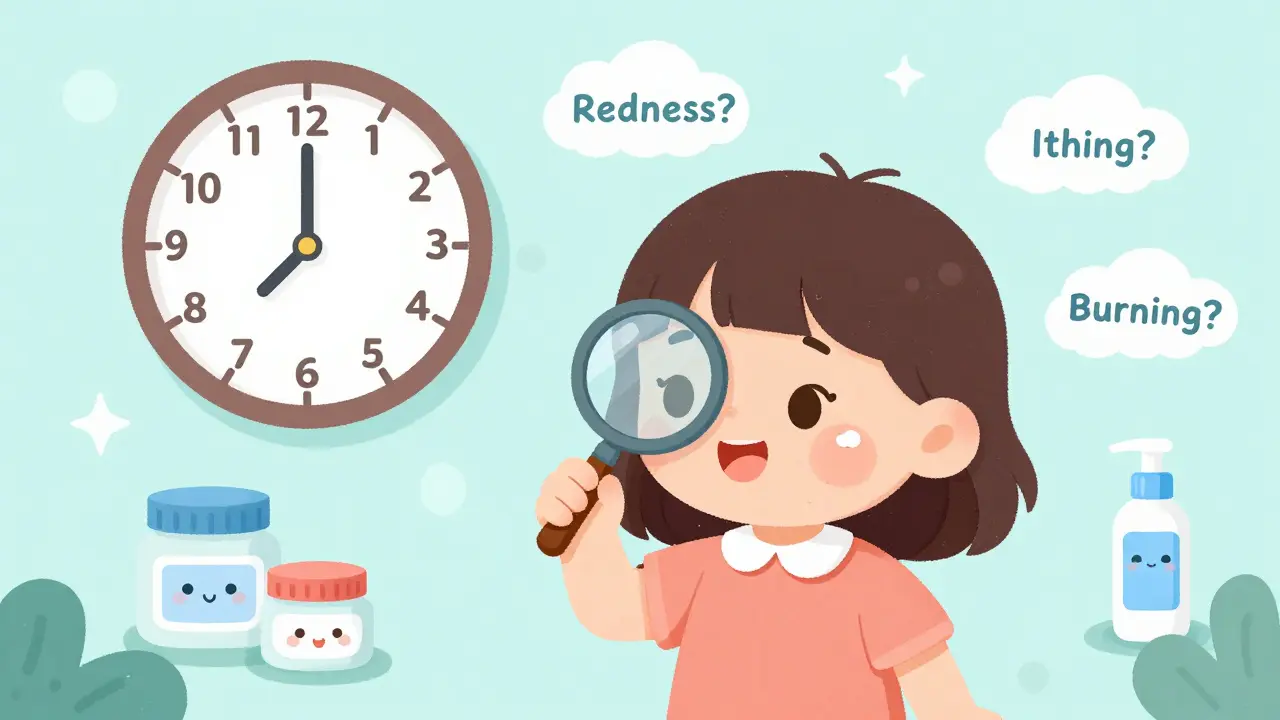
Never slap a new product on your face right away. Always patch test. But not just for 24 hours. That’s not enough. Dermatology Seattle’s research shows 37% of reactions happen after 48-72 hours. That’s why the gold standard is behind the ear.Here’s how:
- Wash and dry the area behind your ear.
- Apply a pea-sized amount of the product.
- Leave it on for 72 hours. Don’t wash it off.
- Watch for redness, itching, burning, or flaking.
- If nothing happens, try it on your jawline for two days before using it all over.
Most people skip the full 72 hours. That’s why they get burned later. One Reddit user in r/SkincareAddiction shared that she used a "fragrance-free" serum for a week before her face turned into a firestorm. The product had "lavender oil" listed under "natural extracts." She didn’t check the full ingredient list. Don’t be her.
What to Look for on the Label (And What to Ignore)
Not all claims are equal. Here’s what actually matters:- Do check: "Fragrance-free" with no "parfum," "aroma," or "essential oils" in the ingredients.
- Do check: Ceramides, glycerin, hyaluronic acid listed near the top.
- Do check: pH between 4.5 and 5.5 - this matches your skin’s natural acid mantle.
- Do check: Fewer than 15 ingredients. Simpler is safer.
- Ignore: "Hypoallergenic" - it’s not regulated. A product can say that and still have fragrance.
- Ignore: "Natural" - essential oils are natural and still cause reactions in 22% of sensitive skin users, according to Dr. David J. Leffell.
- Ignore: "Unscented" - this often means masking fragrances were added.
Use the National Eczema Association’s app. It verifies over 1,200 products as safe for eczema-prone skin. They test every batch. It’s free. And it’s trusted by dermatologists.
Real Results: What Users Actually Experience
People who switch to fragrance-free routines don’t just feel better - they see measurable changes.One Skincare.com reviewer with combination-sensitive skin tracked her progress over seven days:
- 62% less tightness after washing
- 47% increase in hydration levels
- Morning redness disappeared completely
On Reddit, 78% of users with sensitive skin reported major improvements within 4-6 weeks. The top reasons? Less redness (83%) and less reaction to wind, cold, or pollution (76%).
But it’s not all perfect. 54% of Sephora reviewers say fragrance-free products feel "bland" or "clinical." No lavender scent. No citrus zing. That’s the trade-off. Your skin might thank you, but your senses might miss the perfume.
Amazon reviews for Vanicream show 89% of 5-star ratings say "no reactions" or "saved my skin." The 11% negative reviews? Mostly about texture - too thick, too greasy. Not about irritation. That’s the point: if it doesn’t cause a reaction, it’s working, even if it doesn’t feel luxurious.
Who Benefits the Most - And Who Shouldn’t Skip Fragrance
Fragrance-free routines are life-changing for people with:- Eczema (76% symptom reduction, per National Eczema Association)
- Rosacea (Paula’s Choice saw 33% better tolerance in clinical trials)
- Post-procedure skin (89% fewer complications after laser or peels)
- Multiple chemical sensitivities
But here’s the twist: not everyone needs to go completely fragrance-free. Cosmetic chemist Stephen Alain Ko argues that micro-encapsulated fragrances - tiny bubbles that release scent only when rubbed - can be safe for 65% of people who think they’re sensitive. The key? If you don’t have a diagnosed condition, and your skin doesn’t react, you might be fine. But if you’re unsure, test it. Always.
The Future of Fragrance-Free Skincare
The market is exploding. In 2023, fragrance-free skincare hit $3.8 billion globally - up 17% from the year before. Mainstream brands like CeraVe now make over $1.2 billion a year from their fragrance-free lines. Dermstore says searches for fragrance-free products jumped 214% between 2019 and 2023.New regulations are coming. The EU already requires disclosure of 26 common fragrance allergens. The U.S. is catching up. The proposed CARES Act (March 2023) and California’s AB 1234 would force full ingredient transparency. That means no more hiding behind "fragrance."
Brands like Cleure and SVR are leading with clinical-grade products. Cleure’s 2023 trial kit is now used by 1,200 dermatology practices. Their products contain zero parts per million of fragrance - verified by third-party labs.
Long-term? Fragrance-free is no longer a niche. McKinsey predicts 73% of consumers will seek "clean" alternatives, even without diagnosed skin issues. The future of skincare isn’t about smelling good. It’s about skin that doesn’t scream.
Getting Started: Your 7-Day Plan
If you’re overwhelmed, start here:- Stop using all scented products today.
- Buy one fragrance-free cleanser (CeraVe or SVR) and one moisturizer (Vanicream or Cetaphil).
- Do a 72-hour patch test behind your ear.
- Use the cleanser once a day (morning or night, not both).
- Apply moisturizer to damp skin within 30 seconds of washing.
- Use mineral sunscreen every morning.
- Wait 4 weeks. Track changes in redness, tightness, and flaking.
You don’t need to buy everything at once. You don’t need to be perfect. Just stop adding irritants. Your skin will respond.
Can essential oils cause skin reactions even if they’re natural?
Yes. Essential oils like lavender, citrus, and tea tree are common irritants. Dr. David J. Leffell found they trigger reactions in 22% of sensitive skin patients. "Natural" doesn’t mean safe. Always check the ingredient list for "essential oils," even in products labeled "organic" or "botanical."
Is "unscented" the same as "fragrance-free"?
No. "Unscented" means a masking fragrance was added to cover up the smell of other ingredients. It still contains fragrance compounds. Only "fragrance-free" means no scent additives at all. Always read the ingredient list - never trust the front label.
How long does it take to see results from a fragrance-free routine?
Most people notice less redness and tightness within 2-4 weeks. Full barrier repair takes 6-8 weeks. Patience is key. Don’t switch products every few days. Give each one at least a month to work.
Do I need to use expensive products for sensitive skin?
No. Vanicream, CeraVe, and Cetaphil are all affordable and clinically proven. The average fragrance-free moisturizer costs $28.50 - only $5.75 more than scented ones. You’re paying for safety, not luxury. Skip the fancy brands with 20 ingredients. Stick to simple, verified ones.
Can I still wear perfume if I use fragrance-free skincare?
Yes - but not on your face. The "wrist perfume method" works: spray perfume on your wrists or neck, then gently pat your skin. Avoid applying it near your forehead, cheeks, or jawline. This lets you enjoy scent without exposing your sensitive facial skin. Many users report this works for 68% of them.
What if my skin gets worse after switching to fragrance-free?
It’s rare, but possible. Sometimes, your skin is reacting to a change in formulation - not fragrance. Maybe the new moisturizer is too thick, or the cleanser lacks enough emollients. Try switching to a different brand with the same simple ingredients. If irritation continues after 6 weeks, see a dermatologist. You might have an underlying condition like rosacea or perioral dermatitis that needs prescription treatment.
10 Comments
Just switched to CeraVe and Vanicream last month-my face stopped looking like a tomato after wind exposure. No more burning when I wash. It’s not glamorous, but my skin finally feels like it’s breathing again.
Also, patch testing behind the ear saved me from a serum that said ‘natural lavender’-turns out, natural doesn’t mean non-irritating.
Interesting breakdown. I appreciate the data points-especially the TEWL numbers and the 72-hour rule. Most people think ‘hypoallergenic’ is a guarantee, but it’s essentially marketing fluff. The fact that 38% of allergic contact dermatitis cases are fragrance-related is staggering.
Also, the EU’s 26 allergen disclosure requirement should be the global standard. Why is the U.S. still lagging?
LMAO at people who think ‘essential oils’ are ‘gentle.’ 🤡
You’re slathering concentrated plant juice on your face like it’s a spa ritual. Lavender oil? That’s basically chemical warfare for sensitive skin. If your skin stings, stop being delusional and read the ingredient list.
Also, Vanicream is the only moisturizer that doesn’t look like it was made in a lab by a sad scientist. Everything else is overpriced nonsense.
Okay but did you know that ‘fragrance-free’ brands are secretly owned by the same big pharma companies that make the scented ones? 🤔
They just rebrand the same formula, slap on ‘fragrance-free,’ and charge $30 for it. The whole ‘clean beauty’ movement is a scam. They’re selling you fear.
And don’t get me started on the ‘patch test behind the ear’-what if your skin reacts to the *soap* you used to wash your ear? Who tests the testers??
Also, I used a ‘safe’ product and my face exploded. Now I only use distilled water and raw honey. And I’m fine. 🌿
I’ve been there. I used to think I needed rosewater toners and chamomile serums to feel ‘cared for.’
Then my skin started screaming every morning. I cried in the shower because I thought I was broken.
Switched to just CeraVe and Vanicream. No drama. No scent. No lies.
Now my skin doesn’t feel like it’s been sandblasted after a breeze. I didn’t know skin could feel this… calm.
You’re not weird for wanting to not burn. You’re wise.
Everyone’s ignoring the real issue: mineral sunscreens leave a white cast. So you’re choosing between irritation or looking like a ghost.
And ‘fewer than 15 ingredients’? That’s not a standard-it’s a suggestion. Some brands cut corners and remove emulsifiers instead of fragrances.
Also, ‘pH 4.5–5.5’ is great in theory, but most people don’t test their water’s pH. Hard water ruins everything.
And don’t get me started on the National Eczema Association app-half their ‘approved’ products have been reformulated without notice.
Just want to say this post is gold. I’m a nurse with rosacea and this is the first time I’ve seen someone explain the 72-hour rule clearly.
My dermatologist said ‘patch test,’ but never said for how long. I thought 24 hours was enough-until I broke out on day 3.
Also, the part about ‘unscented’ being worse than scented? That’s the truth. I used to buy ‘unscented’ Aveeno thinking I was being smart. Turns out, it had masking agents that made my cheeks burn for hours.
Stick to the basics. Less is more. And if it doesn’t say ‘fragrance-free’ with zero essential oils listed? Don’t touch it.
Why do people think they deserve to smell like a garden? Your skin is not a candle. You don’t need to smell like lavender or vanilla to be worthy.
My grandmother washed her face with soap nuts and she lived to 98. No creams. No serums. Just water.
Modern skincare is a capitalist trap. You’re being sold fear disguised as care.
Stop buying. Start trusting your skin.
For anyone new to this: don’t panic. You don’t need to overhaul everything overnight.
I started by just swapping my face wash. Then moisturizer. Then sunscreen.
One change at a time. That’s how you figure out what’s actually irritating you.
And yes, it’s boring. Yes, it looks clinical. But your skin doesn’t care if it smells like a spa. It just wants to heal.
You got this. And if you mess up? That’s okay. Skin doesn’t forgive, but it does heal-if you give it space.
My mom in India uses turmeric paste. No fragrance. No chemicals. Just ground spice and milk.
She’s 72. No wrinkles. No redness.
Maybe the answer isn’t more science. Maybe it’s less.