


What Is a Pulmonary Embolism?
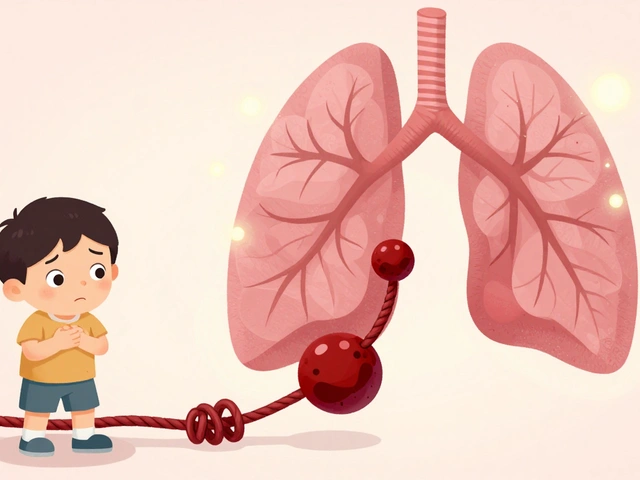
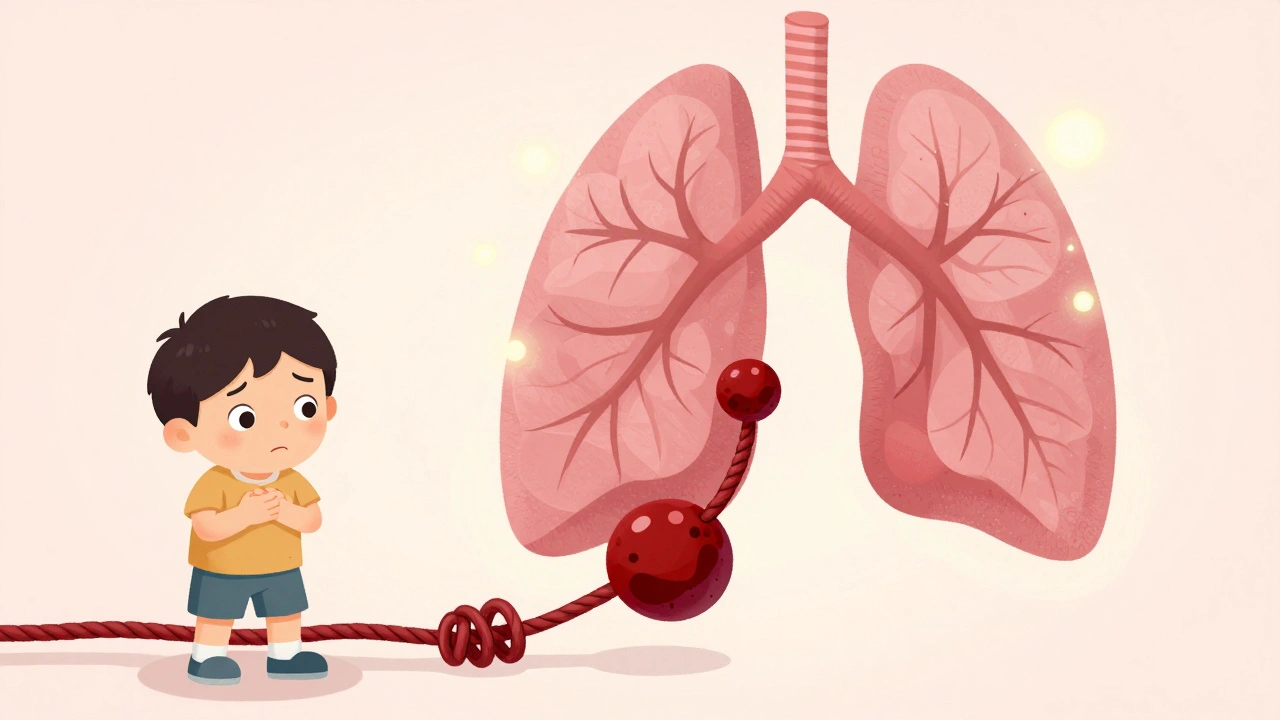
A pulmonary embolism (PE) happens when a blood clot blocks one or more arteries in your lungs. These clots usually start in the deep veins of your legs - a condition called deep vein thrombosis (DVT) - and travel upward until they get stuck in the lungs. About 70% of all PE cases come from clots in the legs. Once the clot blocks blood flow, your lungs can’t oxygenate your blood properly. That’s why sudden shortness of breath is the most common symptom, showing up in 85% of cases.
PE isn’t just uncomfortable - it’s life-threatening. In the U.S., around 100,000 people die from it each year. Many of those deaths happen because the symptoms are mistaken for something less serious, like a panic attack, asthma, or a bad chest cold. The problem? PE doesn’t always look like a textbook emergency. Sometimes it creeps in slowly. Other times, it hits like a lightning strike.
Why Sudden Shortness of Breath Is the Biggest Red Flag
If you’ve ever felt like you can’t catch your breath - even when sitting still - and it came out of nowhere, that’s a major warning sign. This isn’t the kind of breathlessness you get after running up stairs. It’s different. It’s sharp, unexpected, and doesn’t improve with rest. In massive PEs, where the clot blocks a large artery, 92% of people experience extreme shortness of breath even while lying down.
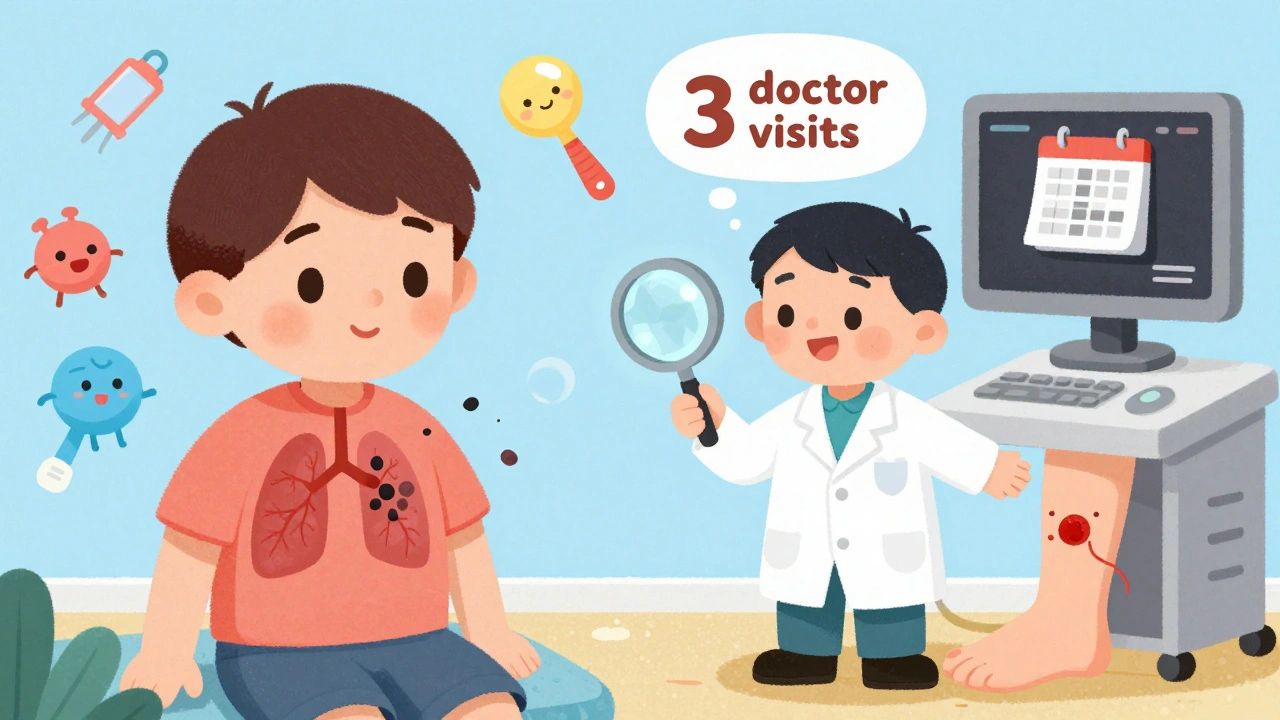
But here’s what trips people up: not everyone feels it the same way. If the clot is small and in a peripheral artery, you might just notice you’re breathing faster than usual during a walk. Some people think they’re just out of shape. Others blame stress. One patient on the American Lung Association’s forum said she was told she had anxiety after three doctor visits - until she collapsed. That’s not rare. In fact, 68% of PE patients see a healthcare provider at least twice before getting the right diagnosis.
The key is recognizing that this isn’t normal fatigue. If you’re suddenly struggling to breathe and you have risk factors - like recent surgery, long travel, pregnancy, cancer, or a history of blood clots - don’t wait. Don’t assume it’s nothing.
Other Symptoms You Might Miss
Shortness of breath doesn’t come alone. It often shows up with other signs that are easy to ignore:
- Chest pain - sharp, stabbing, worse when you breathe in or cough. It feels like a heart attack, and 74% of PE patients report it.
- Cough - sometimes dry, sometimes with blood. About 23% of people cough up blood, which is a red flag most doctors take seriously.
- Leg swelling - usually one leg. If one calf is noticeably bigger, warmer, or tender, it’s likely a clot is forming there.
- Fast heartbeat - over 100 beats per minute, even at rest.
- Fainting or dizziness - happens in about 14% of cases. This is a sign the clot is large enough to affect your blood pressure.
Some people have no chest pain at all. Others have no leg swelling. That’s why PE is so dangerous - it doesn’t follow a script. If you have two or more of these symptoms together, especially with no clear cause, you need to be evaluated immediately.
How Doctors Diagnose Pulmonary Embolism
There’s no single test that confirms PE right away. Doctors use a step-by-step approach to avoid missing it - or overtesting people who don’t have it.
The first step is figuring out how likely you are to have a clot. Two scoring systems are used: the Wells Criteria and the Geneva Score. These look at your symptoms, medical history, and risk factors to give you a low, moderate, or high probability score. When used correctly, they catch 89% of low-risk cases, meaning many people can skip imaging entirely.
If your score says you’re at low risk, the next step is a blood test: the D-dimer. This test checks for fragments of broken-down clots. If it’s negative and you’re low risk, PE is ruled out with 97% accuracy. But here’s the catch: D-dimer goes up with age, pregnancy, infection, or cancer. For people over 50, the test becomes less reliable. That’s why doctors now use an age-adjusted D-dimer - the cutoff increases by 10 ng/mL for every year over 50. This cuts down unnecessary scans by more than a third.
The Gold Standard: CTPA Scan
If your D-dimer is high or your clinical risk is moderate to high, the next step is a CT pulmonary angiogram - or CTPA. This is the most accurate test for PE. It uses contrast dye and a CT scanner to take detailed pictures of the blood vessels in your lungs. It finds clots in 95% of cases and misses very few.
It’s not perfect. You need to get an IV for the dye, and you’re exposed to a small amount of radiation (about the same as a cross-country flight). But for most people, the benefits far outweigh the risks. In emergency departments that use fast-track protocols, the time from arrival to scan has dropped from over two hours to under 45 minutes - and mortality has fallen from 8.2% to 3.1%.
If you can’t have a CTPA - maybe you’re allergic to contrast or have kidney problems - doctors turn to a ventilation/perfusion (V/Q) scan. This test compares air flow and blood flow in the lungs. It’s less common now, but still vital in certain cases. It’s 85% sensitive and 95% specific, meaning it’s very good at ruling out PE when the result is normal.
What About Ultrasound?
Ultrasound isn’t used to diagnose PE directly - but it’s often the first thing doctors check when PE is suspected. If you have leg swelling, they’ll scan your thighs and calves for DVT. Finding a clot in your leg makes PE much more likely. In fact, if you have symptoms of PE and a positive leg ultrasound, the chance you also have a clot in your lungs is over 96%.
Ultrasound is fast, safe, and doesn’t need contrast. Most emergency departments now have trained technicians who can do this in minutes. The trick? The tech needs to have done at least 50 supervised scans to be reliable. That’s why access matters - rural hospitals may not have staff trained in this skill.
When Time Is Critical: Emergency Signs
Some PEs are massive. They block the main artery to the lungs. This causes a sudden drop in blood pressure, shock, and sometimes cardiac arrest. In these cases, waiting for a CT scan could cost you your life.
Doctors use a quick bedside test called transthoracic echocardiography - basically an ultrasound of the heart. If the right side of the heart is strained or enlarged, it’s a sign the lungs are under pressure from a big clot. This test is 84% accurate at spotting massive PE. If it’s positive, treatment starts immediately - even before the CT scan.
These are the patients who need a Pulmonary Embolism Response Team (PERT). These specialized teams - now in over 250 hospitals worldwide - bring together cardiologists, pulmonologists, radiologists, and hematologists to act fast. Their data shows they reduce treatment delays by over three days and cut mortality by 4.1% in the most serious cases.
Who’s at Highest Risk?
Anyone can get a PE, but some groups are far more vulnerable:
- People who’ve had a previous DVT or PE - 33% will have another within 10 years.
- Cancer patients - their risk is nearly five times higher. D-dimer is less reliable here, so doctors rely more on imaging.
- Those who’ve had recent surgery, especially hip or knee replacements.
- People who’ve been immobile for long periods - hospital stays, long flights, car rides over 4 hours.
- Pregnant women and those in the first 6 weeks after delivery.
- Users of hormonal birth control or hormone therapy.
If you’re in one of these groups and you get sudden shortness of breath, don’t wait. Don’t call your GP and wait for an appointment. Go to the ER.
Why Diagnosis Takes So Long - And How It’s Getting Better
For years, PE was underdiagnosed because doctors didn’t have clear tools. Now, most U.S. hospitals use structured pathways - up from 67% in 2018 to 92% in 2023. That’s made a huge difference.
Artificial intelligence is now helping too. New algorithms like PE-Flow can analyze CT scans faster and more accurately than humans in some cases - spotting tiny clots that might be missed. One trial found AI detected 93.7% of PEs, compared to 89% by radiologists.
But gaps remain. In safety-net hospitals - those serving low-income communities - PE mortality is still 7.8%, compared to 3.9% in top academic centers. Access to CTPA, trained staff, and rapid-response teams isn’t equal. That’s the next frontier.
What Happens After Diagnosis?
If you’re diagnosed with PE, treatment starts immediately. Most people get blood thinners - anticoagulants - to stop the clot from growing and let your body dissolve it naturally. Some may need clot-busting drugs or surgery if it’s massive.
Recovery takes weeks to months. You’ll need regular follow-ups. And you’ll likely be on medication for at least three months - sometimes longer, especially if you have cancer or a genetic clotting disorder.
But the biggest lesson? Prevention matters. If you’re at risk, move often during long trips. Wear compression socks. Stay hydrated. Talk to your doctor about blood thinners if you’re having surgery.
Can a pulmonary embolism go away on its own?
Sometimes, small clots can dissolve on their own over weeks or months. But you can’t predict which ones are harmless. Even a small clot can grow or break off again. Without treatment, the risk of another clot - or death - is too high. Blood thinners are almost always recommended because they prevent new clots and reduce the chance of complications.
Is pulmonary embolism the same as a heart attack?
No. A heart attack happens when a clot blocks blood flow to the heart muscle. A pulmonary embolism blocks blood flow to the lungs. They both cause chest pain and shortness of breath, which is why they’re often confused. But they require completely different treatments. A heart attack needs immediate heart intervention; a PE needs anticoagulants or clot removal. Misdiagnosing one for the other can be deadly.
Can you have a pulmonary embolism without any symptoms?
Yes - but it’s rare. Most people have at least mild symptoms like shortness of breath or a cough. However, very small clots in the outer edges of the lungs might not cause noticeable problems. These are often found by accident during imaging for another reason. Even then, doctors usually treat them because there’s no way to know if they’ll grow or cause future problems.
How long does it take to recover from a pulmonary embolism?
Recovery varies. Most people feel better in a few weeks, but full recovery can take months. You may still feel tired or short of breath during activity. Blood thinners are typically taken for 3 to 6 months. If you have a genetic clotting disorder or cancer, you might need them longer. Regular follow-ups with your doctor are essential to monitor your progress and adjust treatment.
Can stress or anxiety cause symptoms like a pulmonary embolism?
Anxiety can cause rapid breathing, chest tightness, and dizziness - symptoms that mimic PE. But anxiety doesn’t cause low oxygen levels, leg swelling, or a fast heart rate that doesn’t respond to calming down. If you’re having these symptoms and you’re not in a panic attack, don’t assume it’s just stress. Always get checked. Many people are misdiagnosed with anxiety before PE is found - sometimes after they’ve collapsed.
Are there new tests for pulmonary embolism on the horizon?
Yes. Researchers are testing new blood markers beyond D-dimer - like soluble thrombomodulin and plasmin-antiplasmin complexes. Early results from the DETECT-PE trial show a new panel can rule out PE with 98.7% accuracy in intermediate-risk patients. This could mean fewer scans and faster decisions. AI-powered imaging tools are also improving rapidly, helping radiologists spot clots faster and with fewer errors.
What to Do If You Suspect a Pulmonary Embolism
If you or someone you know has sudden shortness of breath, especially with chest pain, leg swelling, or fainting - call emergency services. Don’t drive yourself. Don’t wait to see your doctor tomorrow. PE is a medical emergency.
Bring a list of your symptoms, when they started, and any risk factors you have - recent surgery, long travel, cancer, or past clots. This helps doctors act faster. If you’ve had a PE before, wear a medical alert bracelet. It could save your life.
The good news? With faster diagnosis and better protocols, PE deaths are dropping. But only if people speak up - and doctors listen.
14 Comments
This is one of those posts that makes you realize how lucky we are to have better diagnostics now. I had a cousin who waited weeks thinking it was just anxiety. By the time they did the scan, it was already a mess. Glad to see more hospitals using structured pathways. Simple stuff, but it saves lives.
i remember when my mom got diagnosed after her hip surgery. they thought it was just post-op fatigue. she was so tired she could barely sit up. turned out her calf was swollen but no one checked. if this post saves even one person from being told 'it's just stress'... worth it.
I’m not a doctor, but I’ve seen this play out in ERs. The ultrasound for DVT is the unsung hero here. Quick, painless, and if positive, it flips the script. More hospitals need to train their techs properly - it’s not just about machines, it’s about skill.
In India, access to CTPA is still a luxury in many areas. We rely heavily on clinical suspicion and D-dimer, even when it’s less reliable. The age-adjusted cutoff is a game-changer - it’s something we need to push harder for in rural clinics. Knowledge shouldn’t be a privilege.
I’m from a small town in Texas. Our ER doesn’t have a PERT team. We have one radiologist who does double duty. When I saw this article, I thought - this is exactly what people like me need to know. If you’re having symptoms and no one’s taking you seriously, go to the next town. Don’t wait.
The fact that 68% of patients see a doctor at least twice before being correctly diagnosed is horrifying. Not because the system is broken - because we’re still teaching doctors to default to anxiety, asthma, or 'just out of shape.' We need better training, not just better tech. Empathy without expertise is dangerous.
The AI thing is just hype wrapped in a white coat. Radiologists have been using algorithms for decades to flag abnormalities. What’s new is the marketing. And don’t get me started on the 'age-adjusted D-dimer' - it’s just a band-aid on a systemic failure to prioritize clinical judgment over lab numbers. The real problem is that medicine has become a spreadsheet game.
It is imperative that individuals who present with sudden dyspnea, particularly in the context of recent immobilization or surgical intervention, be evaluated with the utmost urgency. The mortality rate associated with delayed diagnosis remains unacceptably high. I urge all medical professionals to adhere strictly to established clinical pathways and avoid cognitive biases.
I’m not saying this is wrong, but why are we always blaming the patient for not knowing? If your average person can’t tell the difference between a panic attack and a pulmonary embolism, maybe the problem isn’t them - it’s that the medical system makes it impossible to know. We need public awareness campaigns, not just blog posts.
ai is just a tool to make radiologists look good while they get paid more. the real reason pe deaths are dropping? because hospitals are scared of lawsuits now. they scan everyone who even sneezes wrong. its not better medicine, its just better lawyers.
My dad had a PE after a 12-hour flight. No swelling, no chest pain. Just couldn’t catch his breath. They thought it was pneumonia. Took three days. He’s fine now but I still get scared every time he flies. This post? Exactly what I needed to show him.
The D-dimer is garbage. It’s elevated in every damn thing - infection, inflammation, even your period. And CTPA? Radiation exposure is cumulative. We’re creating a generation of cancer patients because we’re scanning for everything. The real solution is prevention - stop the clot before it forms. Compression socks aren’t just for flight attendants.
Oh great, another article telling people to panic when they’re out of breath. Next thing you know, we’ll be running to the ER every time we climb stairs. I’ve had shortness of breath since I was 18. Turns out I’m just out of shape. Not everyone needs a CT scan just because they’re lazy.
You know what they don’t tell you? The contrast dye in CTPA? It’s made by Big Pharma. They also make the blood thinners. And the AI? Owned by the same companies that control your insurance. They want you scared, scanned, and on meds forever. Don’t believe the hype. Ask your doctor: 'Is this really necessary?'