



When you’re taking medication to control seizures, the last thing you want to worry about is harming your baby. But for women of childbearing age, that fear is real-and backed by science. Some seizure medications carry clear, serious risks during pregnancy, from physical birth defects to long-term learning challenges. And it’s not just about the drug you’re on. What you take with it-like birth control or other prescriptions-can make things worse, or less effective, in ways most people don’t expect.
Some Seizure Medications Are Much Riskier Than Others
Not all seizure drugs are created equal when it comes to pregnancy. The biggest red flag is valproate (also called sodium valproate or valproic acid). Studies show that around 10% of babies exposed to this drug before birth develop major physical birth defects-like heart problems, cleft lip or palate, or spinal issues. That’s more than double the rate seen with most other seizure medications. It also raises the risk of autism by more than twice and ADHD by nearly double compared to other drugs.
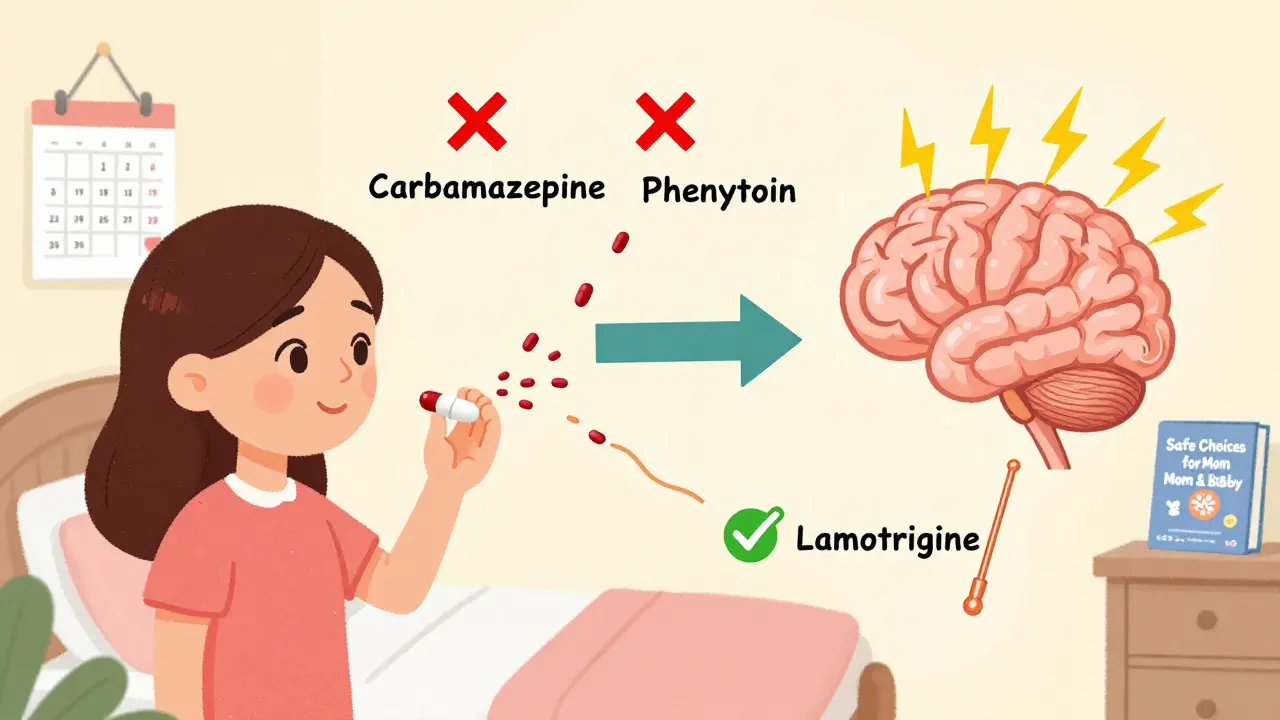
Other high-risk medications include carbamazepine (Tegretol), phenytoin (Epanutin), phenobarbital, and topiramate (Topamax). These are linked to increased chances of facial, brain, and urinary tract abnormalities. The risk goes up with higher doses, especially for carbamazepine and phenobarbital.
On the other side, two medications stand out as safer choices: lamotrigine (Lamictal) and levetiracetam (Keppra). Research from the UK’s Medicines and Healthcare products Regulatory Agency (MHRA) and multiple studies in JAMA Neurology show these drugs have birth defect rates close to the general population-around 2-3%. Children exposed to them in the womb show normal language development by age two, with no major delays compared to kids whose moms didn’t take seizure meds.
Birth Defects Are Real, But Most Babies Are Still Healthy
It’s easy to panic when you hear ‘10% risk.’ But here’s the truth: more than 90% of babies born to mothers with epilepsy are born without major birth defects-even if mom took a seizure drug. That’s not a reason to ignore the risks, but it’s a reason not to assume the worst.
Common defects linked to high-risk drugs include:
- Heart problems (1-2% risk with high-risk drugs)
- Cleft lip or palate
- Spinal cord malformations
- Slow fetal growth
- Microcephaly (small head size)-seen in 0.5-1% of valproate exposures
- Problems with nervous system development
- Urinary tract abnormalities
What’s changed since the 1960s? Back then, doctors told women with epilepsy not to have kids. Some U.S. states even banned them from marrying. Now, thanks to better science and safer drugs, women have real options. The rate of major birth defects dropped by 39% between 1997 and 2011-not because fewer women got pregnant, but because doctors started choosing safer medications and lower doses.
Drug Interactions Can Sabotage Your Birth Control-And Your Seizure Control
Here’s a hidden danger most people don’t know about: seizure meds can mess with birth control. And birth control can mess with seizure meds. It’s a two-way street.
Drugs like carbamazepine, phenytoin, phenobarbital, and high-dose topiramate can make hormonal birth control-pills, patches, rings-less effective. That means you could get pregnant even if you’re taking your pill every day. The same goes for oxcarbazepine.
And it works the other way, too. Hormonal contraceptives can lower the blood levels of lamotrigine, valproate, zonisamide, and rufinamide. If lamotrigine drops too low, seizures can come back. That’s dangerous for both you and your baby.
A 2023 study found that nearly 7 out of 10 women of childbearing age got this wrong. They didn’t know their seizure meds could cancel out their birth control-or that their birth control could make their seizures worse. And only 1 in 3 received care that matched their reproductive goals.
Uncontrolled Seizures Are More Dangerous Than Most Medications
It’s tempting to think, ‘I’ll just stop my meds if I get pregnant.’ Don’t. Stopping seizure medication without medical help is one of the riskiest things you can do.
Tonic-clonic seizures (the kind with convulsions) during pregnancy can cause miscarriage, premature labor, injury to the baby, or even death. The physical trauma of a fall or lack of oxygen during a seizure can harm the fetus more than most medications.
Experts from the American Epilepsy Society are clear: No seizure medication is as dangerous to mother or baby as uncontrolled seizures. The goal isn’t to avoid all meds-it’s to pick the safest one that still works.
Preconception Planning Is Non-Negotiable
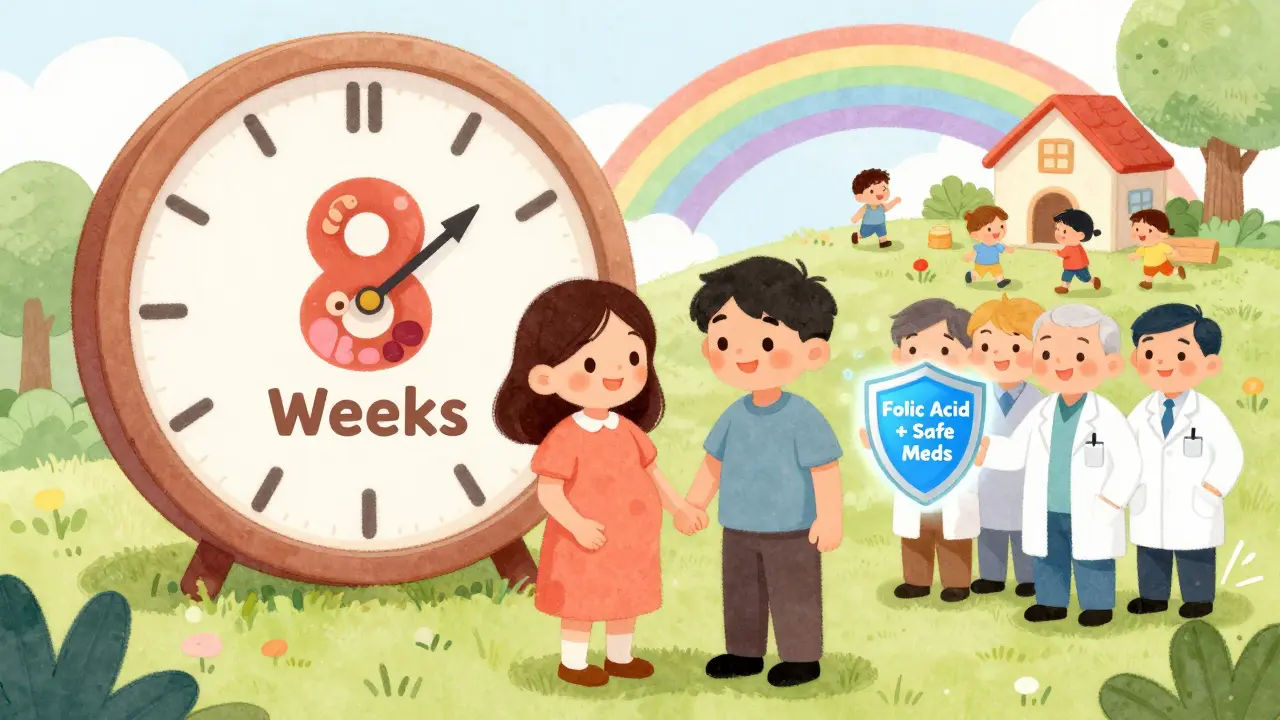
If you’re taking seizure meds and thinking about pregnancy-even if it’s years away-talk to your neurologist now. Waiting until you’re pregnant is too late. By then, the baby’s organs have already started forming in the first 8 weeks.
Here’s what you need to do:
- Review your current medication with your doctor. Ask: Is this the safest option for pregnancy?
- If you’re on valproate, ask about switching to lamotrigine or levetiracetam. Don’t stop cold turkey-switch slowly under medical supervision.
- Use non-hormonal birth control (like copper IUD) if you’re on high-risk meds and not trying to conceive.
- If you’re on lamotrigine and using hormonal birth control, ask about dose adjustments. Blood tests can check if your levels are still in the safe range.
- Take high-dose folic acid (at least 0.4 mg, often 4-5 mg) before and during pregnancy. It reduces neural tube defects, especially with seizure meds.
Women with fewer resources are more likely to be on high-risk drugs during pregnancy. That’s not because of poor choices-it’s because access to specialists, testing, and safer meds isn’t equal. If you’re struggling to get care, ask your doctor about patient support programs or community health services.
Newer Drugs Are Safer-But Not All Are Studied Enough
There are 11 other seizure medications currently on the market that don’t yet have enough data to say if they’re safe during pregnancy. That includes newer drugs like cenobamate, perampanel, and ezogabine. They may be great for controlling seizures, but we just don’t know enough about their effects on babies.
That’s why sticking with the well-studied, safer options-lamotrigine and levetiracetam-is still the smartest move for most women planning pregnancy.
Studies from Stanford and Indiana University show that with the right medication, women with epilepsy can have healthy pregnancies and healthy babies. One mother told researchers, ‘I thought I’d never be able to have kids. Now I’m holding my daughter, and she’s perfect.’
It’s not about being perfect. It’s about being informed. It’s about choosing the right drug, at the right dose, with the right support.
What If You’re Already Pregnant?
If you’re pregnant and taking a high-risk seizure medication, don’t panic. Don’t stop. Don’t switch on your own.
Call your neurologist and OB-GYN right away. They can:
- Check your drug levels
- Adjust your dose if needed
- Switch you to a safer drug if it’s early enough
- Set up more frequent ultrasounds to monitor fetal development
Many women switch medications safely during pregnancy. The key is doing it with a team-never alone.
Can I take seizure medication while pregnant?
Yes, but not all seizure medications are safe. Valproate carries the highest risk of birth defects and should be avoided if possible. Lamotrigine and levetiracetam are considered safer options. Never stop your medication without talking to your doctor-uncontrolled seizures are more dangerous to you and your baby than most drugs.
Do seizure medications cause autism?
Valproate is linked to more than double the risk of autism spectrum disorder (ASD) compared to other seizure medications. Other drugs like carbamazepine and phenobarbital have lower, but still present, risks. Lamotrigine and levetiracetam show no increased risk of autism in large studies. The risk depends on the drug, the dose, and how early in pregnancy you’re exposed.
Can birth control interfere with my seizure meds?
Yes. Hormonal birth control can lower the levels of lamotrigine, valproate, zonisamide, and rufinamide in your blood, which might make your seizures worse. Conversely, some seizure drugs like carbamazepine and phenytoin can make birth control pills, patches, or rings less effective, raising your risk of unplanned pregnancy. Talk to your doctor about the best birth control option for your meds.
What’s the safest seizure medication for pregnancy?
Lamotrigine (Lamictal) and levetiracetam (Keppra) are currently the safest options based on the largest studies. They have birth defect rates close to the general population (2-3%) and show no increased risk of developmental delays. Valproate is the riskiest and should be avoided unless no other option works.
Should I stop my seizure meds if I’m trying to get pregnant?
No. Stopping your medication increases the risk of seizures, which can cause miscarriage, injury to the baby, or even death. Instead, work with your neurologist to switch to a safer drug before conception. Use folic acid supplements and plan ahead. Waiting until you’re pregnant is too late to reduce the biggest risks.
How can I reduce the risk of birth defects from seizure meds?
Take high-dose folic acid (4-5 mg daily) at least 3 months before conception. Use the lowest effective dose of the safest medication (lamotrigine or levetiracetam). Avoid valproate. Get preconception counseling. Monitor your drug levels during pregnancy. Avoid alcohol and smoking. Work with a neurologist who specializes in epilepsy and pregnancy.
What Comes Next?
If you’re on seizure medication and thinking about having kids, your next step is simple: make an appointment with your neurologist. Bring a list of all your meds-including supplements and over-the-counter drugs. Ask: ‘Is this the safest option for pregnancy?’ and ‘What should I do if I get pregnant?’
If you can’t get to a specialist, ask your primary doctor to refer you. There are programs that help women with epilepsy get access to safer meds and prenatal care-even if money is tight.
You don’t have to choose between your health and your dreams of parenthood. With the right information and support, you can do both.
11 Comments
Lamotrigine and levetiracetam are the gold standard. Anything else is just medical negligence dressed up as tradition.
Valproate should be banned for women of childbearing age entirely. The data is undeniable.
It is imperative to underscore the significance of preconception counseling in this context. The empirical evidence, as cited from the MHRA and JAMA Neurology, unequivocally supports the clinical superiority of lamotrigine and levetiracetam in mitigating teratogenic risk. Furthermore, the pharmacokinetic interactions between hormonal contraceptives and antiepileptic drugs necessitate a multidisciplinary approach to patient care. Without structured pre-pregnancy planning, the potential for iatrogenic harm increases substantially.
Doctors still push valproate because it's cheap and insurance covers it
Women in poor neighborhoods have no choice
That's not medicine that's systemic violence
Of course the FDA and pharma want you to believe lamotrigine is safe
They just released a new version with a patent extension last year
They're hiding the real data
And don't get me started on folic acid - it's a placebo for guilt
Everyone's acting like seizures are some kind of moral failure
What about the men who pass on genetic epilepsy?
Why is all the burden on women?
And why are we pretending this isn't just another way to control reproductive choices under the guise of 'safety'?
I had a seizure during my second trimester
They told me to stop my meds
So I did
Three weeks later I lost the baby
Now I'm on lamotrigine and my daughter is 4
She's perfect
Don't listen to the internet
Listen to your neurologist
And never stop cold turkey
Let me guess - you’re one of those people who thinks 'uncontrolled seizures' are worse than teratogens?
That’s not science. That’s pharmaceutical propaganda.
Have you seen the side effects of levetiracetam? Mood swings, aggression, psychosis - all in utero.
And folic acid? It’s just a bandaid for a broken system.
Real solution? Stop having kids if you’re on meds.
Wait wait wait - so you’re telling me I can’t take my topiramate and my birth control pill together?
But I’ve been doing it for 5 years!
And now you’re saying I might’ve been pregnant and didn’t know?
Oh my god.
My therapist is gonna kill me.
Also, I think I saw a documentary about this on Netflix last night.
It was called 'The Hidden War on Women’s Health'.
It had a lot of dramatic music.
They’ve been lying to us since the 60s
They told women with epilepsy not to marry
Now they tell us to switch meds
But what if the whole system is rigged?
What if the 'safer' drugs are just the ones that make the most money?
Who funds the studies?
Who owns the patents?
Who decides what 'safe' even means?
Are we really choosing - or are we just being guided by invisible hands?
And what about the children who were born with defects because we listened to doctors?
Are they just collateral damage in the war on epilepsy?
Or are they the price we pay for a society that won’t accept disability?
…I need to sit down.
My neurologist switched me from valproate to levetiracetam before I got pregnant.
My OB checked my levels every 4 weeks.
I took 5mg folic acid.
My son is 3 and he’s a genius.
Don’t overthink it.
Just get the right care.
It’s not magic.
It’s medicine.
i just found out im pregnant and im on topiramate and i didnt even know it could mess with birth control omg im so scared i think i might be having a panic attack i need to call my dr but its 2am and im crying and my partner is asleep and i dont know what to do