


QT Prolongation Risk Calculator
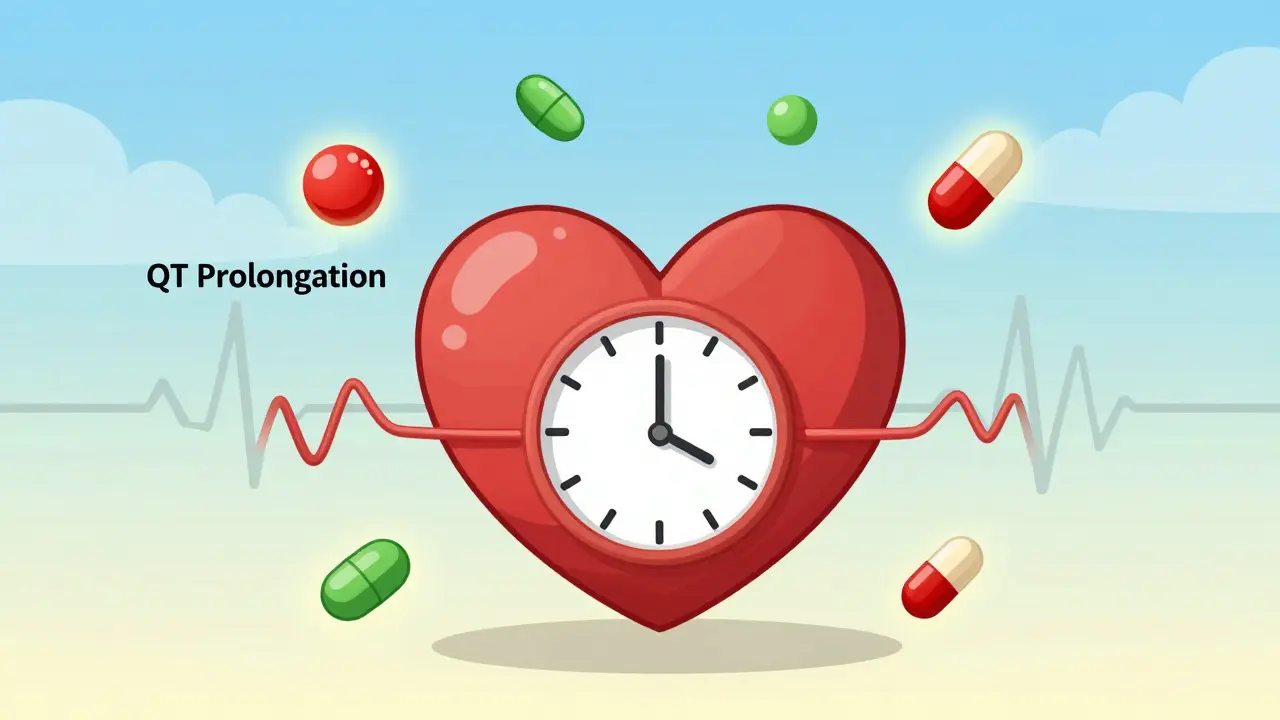
When you take an antipsychotic for schizophrenia, bipolar disorder, or severe depression, your doctor focuses on calming your mind. But there’s another system in your body that’s quietly at risk: your heart. Combining antipsychotics with other common medications can stretch out your heart’s electrical cycle - a dangerous condition called QT prolongation. This isn’t theoretical. It’s real, measurable, and sometimes deadly.
What QT Prolongation Actually Means
Your heart beats because of electrical signals. The QT interval on an ECG shows how long it takes for your heart’s lower chambers to recharge between beats. If that interval gets too long - over 450 ms in men, 460 ms in women - your heart can slip into a chaotic rhythm called torsades de pointes. It’s rare, but when it happens, it can lead to sudden cardiac death. This isn’t just about one drug. It’s about stacking them. About 70% of antipsychotics can cause QT prolongation. And if you’re also taking an antibiotic like moxifloxacin, an anti-nausea drug like ondansetron, or even a common heart medication like sotalol, the effect isn’t just added - it’s multiplied.Which Antipsychotics Are Riskiest?
Not all antipsychotics are created equal when it comes to heart risk. Some have a much stronger effect on the hERG potassium channel, which controls repolarization. Here’s how they break down:- High-risk: Thioridazine (withdrawn in the U.S. but still used elsewhere), ziprasidone, haloperidol
- Moderate-risk: Quetiapine, risperidone, olanzapine
- Low-risk: Aripiprazole, brexpiprazole, lurasidone
Real Cases, Real Consequences
Clinicians report cases that should make any prescriber pause. One 68-year-old woman on quetiapine 300 mg daily started ciprofloxacin for a urinary infection. In just 72 hours, her QTc jumped from 448 ms to 582 ms. She went into torsades de pointes. She survived - but barely. That’s not an outlier. Between 2010 and 2022, the FDA documented 128 cases of torsades linked to antipsychotic combinations. It’s not just antibiotics. Antidepressants like citalopram, antifungals like fluconazole, and even some over-the-counter supplements like licorice root can add to the risk. The problem? Many patients are on three, four, or five medications. And few providers check for this interaction unless they’re specialists.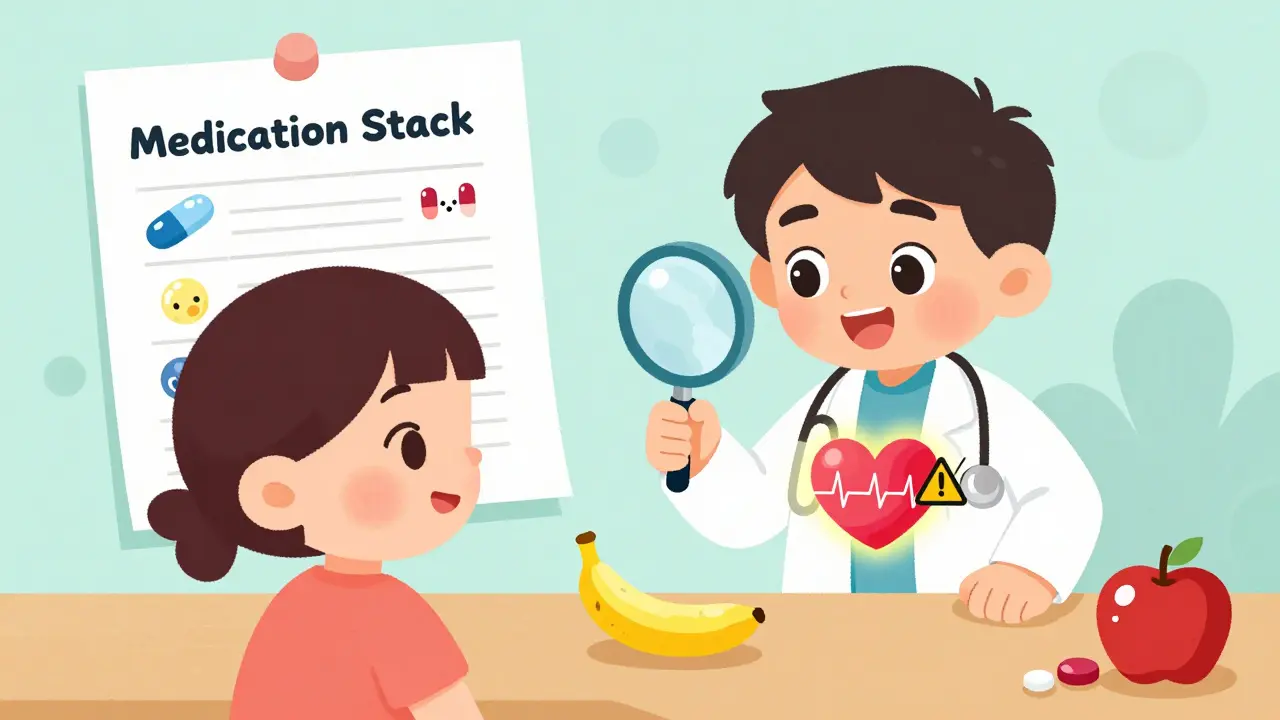
Who’s Most at Risk?
It’s not just about the drugs. Your body matters too. Certain factors make QT prolongation more likely:- Being female (adds about 12.8 ms to QTc)
- Age over 65 (adds 15.3 ms)
- Low potassium (below 3.5 mmol/L - adds 22.7 ms)
- Slow heart rate (under 50 bpm - adds 18.4 ms)
- History of heart disease or prior arrhythmia
- Genetic factors (like CYP2D6 poor metabolizer status - affects 7-10% of Caucasians)
What Should You Do? A Practical Checklist
If you’re on an antipsychotic - or thinking about starting one - here’s what you need to ask for:- Baseline ECG: Get one before starting any antipsychotic that’s not low-risk. Do it within the first week.
- Check electrolytes: Ask for a blood test to check potassium and magnesium. Low levels are a major trigger.
- Review all meds: Make sure your prescriber knows every pill, patch, or supplement you take - even ibuprofen or herbal teas.
- Monitor after changes: If a new drug is added, get another ECG within 72 hours. Most dangerous events happen in the first three days.
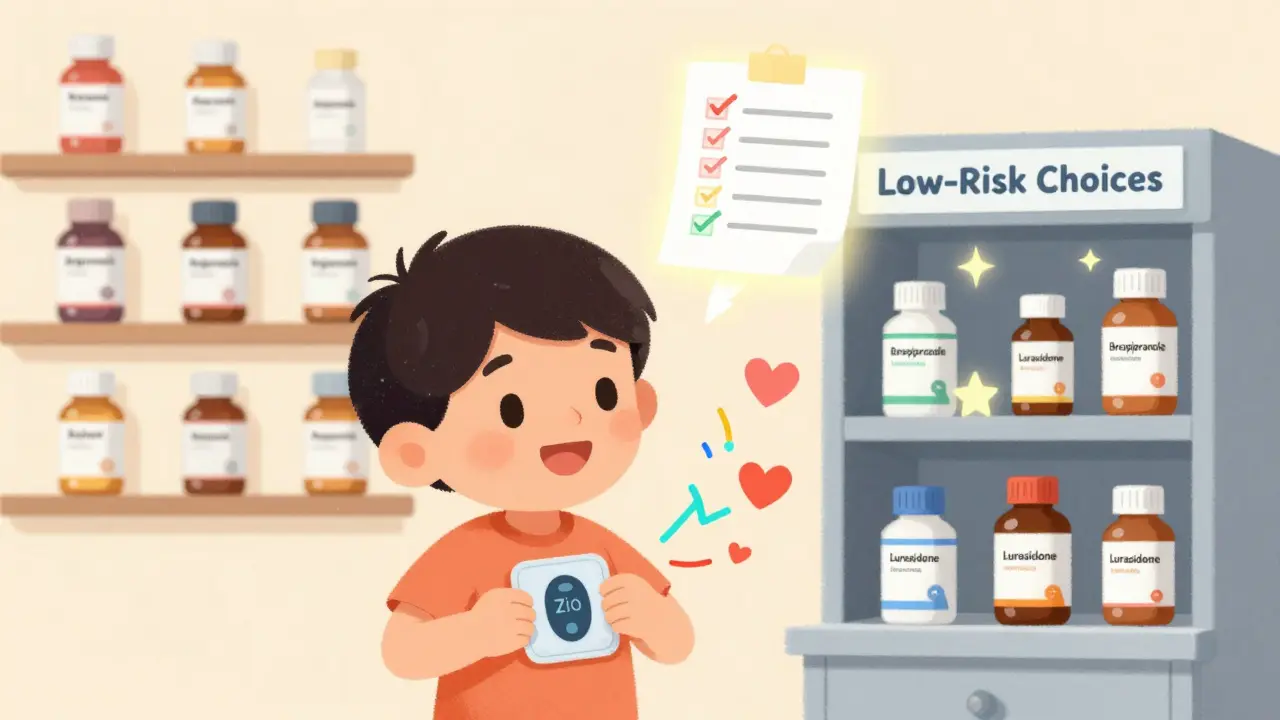
- Ask about alternatives: If you’re on quetiapine or risperidone, ask if aripiprazole or lurasidone could work instead. They’re just as effective for most people - with far less heart risk.
The Bigger Picture: Why This Isn’t Getting Fixed
Despite the data, the system is broken. Quetiapine and risperidone are still top sellers - partly because they’re cheap and widely prescribed. Low-risk options like aripiprazole are growing, but slowly. Meanwhile, the FDA has issued black box warnings for ziprasidone and iloperidone, but some experts argue those warnings scare patients unnecessarily. One study found the actual risk of torsades is about 1 in 25,000 patient-years - similar to non-QT-prolonging drugs. But here’s the catch: when you combine drugs, that risk jumps 4.3 times. And while the absolute risk is low, the consequences are catastrophic. One death is one too many. Worse, patients are scared off by misinformation. Nearly 30% of people stop their antipsychotics because they’re afraid of heart problems - even when their risk is minimal. And 61% say their doctor never explained the real numbers. That’s not safety - that’s fear.What’s Changing Now?
There’s progress. In 2024, the FDA approved the Zio XT patch - a wearable ECG monitor designed specifically for psychiatric patients. It’s small, lasts two weeks, and catches dangerous QT spikes without requiring clinic visits. Hospitals are starting to use it. The American Psychiatric Association is rolling out a new risk calculator in early 2025. It will weigh your age, sex, meds, and labs to give you a personalized QTc risk score. And Medicare is preparing to tie 2.3% of payments to whether clinics follow monitoring guidelines. By 2027, low-risk antipsychotics are projected to make up over half of new prescriptions. That’s not because they’re better - it’s because we’re finally starting to treat the heart as seriously as the mind.Bottom Line
You don’t have to choose between mental stability and heart safety. But you do have to be proactive. If you’re on an antipsychotic, ask: What’s my QTc? Are any of my other drugs on this list? Should I switch to something safer? The science is clear. The tools exist. The risk is real - but manageable. Don’t wait for a crisis. Ask for an ECG. Check your potassium. Know your meds. Your heart is counting on it.Can antipsychotics cause sudden death?
Yes - but only in rare cases when combined with other QT-prolonging drugs and in people with risk factors like low potassium, older age, or female sex. The overall risk of sudden death from torsades de pointes is about 1 in 25,000 patient-years with a single antipsychotic. But when two or more QT-prolonging drugs are used together, that risk can jump 4 to 5 times. Most cases occur within the first 72 hours of starting a new combination.
Which antipsychotic is safest for the heart?
Aripiprazole, brexpiprazole, and lurasidone are considered low-risk for QT prolongation. They have much weaker effects on the hERG potassium channel compared to drugs like ziprasidone, haloperidol, or quetiapine. Studies show these low-risk options carry no statistically significant increase in sudden cardiac death compared to non-users. They’re just as effective for treating psychosis and mood disorders in most patients.
Do I need an ECG if I’m on an antipsychotic?
If you’re taking a moderate- or high-risk antipsychotic - like quetiapine, risperidone, or haloperidol - yes. Guidelines recommend a baseline ECG within one week of starting the drug. If you’re also taking another QT-prolonging medication (like an antibiotic or anti-nausea drug), you need follow-up ECGs weekly for the first month, then monthly. Even if you feel fine, silent QT prolongation can happen without symptoms.
Can low potassium make antipsychotics more dangerous?
Absolutely. Low potassium (below 3.5 mmol/L) adds nearly 23 milliseconds to your QT interval - enough to push someone from safe to dangerous. Many people on antipsychotics have low potassium due to poor diet, diuretics, or vomiting. Checking potassium levels before and during treatment is one of the most effective ways to prevent torsades. Doctors often miss this - so ask for it.
Are there alternatives to antipsychotics with less heart risk?
Yes. Aripiprazole, brexpiprazole, and lurasidone are all effective for treating schizophrenia and bipolar disorder with minimal QT prolongation. In fact, they’re now recommended as first-line options in newer guidelines. Switching isn’t always easy - but if you’re on quetiapine or risperidone and have other risk factors, it’s worth discussing. Many patients switch successfully without losing symptom control.
Why aren’t doctors testing everyone’s QT interval?
Many clinics don’t have ECG machines. Insurance often denies requests for serial ECGs. There’s also a belief that the risk is too low to warrant routine testing. But studies show that 45% of antipsychotic users are on at least one other QT-prolonging drug - and 78% of torsades cases happen within 72 hours of adding a new medication. Without monitoring, you’re guessing. And in heart safety, guessing kills.
11 Comments
Just got prescribed quetiapine last week. Didn’t even know my heart was in the crosshairs. Thanks for the wake-up call.
So let me get this straight - we’re giving people meds that can stop their hearts… but the solution is to ask nicely for an ECG? 😅 The system is literally playing Russian roulette with a prescription pad.
As someone who’s been on risperidone for 8 years and just had a QTc spike after a course of azithromycin, this isn’t theoretical - it’s a lived reality. The electrolyte checks? Non-negotiable. The ECGs? Mandatory. I’ve seen too many people dismissed because "they’re fine" until they’re not. The hERG channel isn’t a suggestion - it’s a biological firewall. When you stack drugs that inhibit potassium efflux, you’re essentially disabling the heart’s emergency brake. And yes, low potassium? That’s not just a footnote - it’s the fuse. I now carry a potassium supplement and refuse to take anything new without a baseline and a follow-up. It’s not paranoia - it’s precision medicine. The fact that insurance denies this is criminal. Your mind matters, but so does your ventricular repolarization. We treat depression like a broken arm - we should treat cardiac risk like a broken spine.
Thank you for writing this. In India, doctors rarely mention this risk. I’m on olanzapine and just found out my mom’s friend had torsades after taking ondansetron. I’ll ask my doctor for the ECG next week 💙
OMG I just realized I’ve been taking fluconazole for yeast infections while on quetiapine 😱 I’m booking an ECG today. My heart is screaming. Thank you for saving me from myself 🙏❤️🩺
Why is this even a conversation?
So we’ve got a drug that calms the mind but risks the ticker - and the fix is… more paperwork? The real tragedy isn’t the QT interval - it’s that we treat mental health like a side project. You want me to get an ECG? Cool. Now get me a therapist who doesn’t charge $300/hour.
From a clinical pharmacology standpoint, the hERG liability profile is well-documented, but real-world adherence to monitoring protocols remains suboptimal due to systemic fragmentation. The 67% risk reduction with protocol adherence is statistically significant (p<0.001), yet implementation is patchy. The Zio XT is a promising wearable, but cost barriers persist in Medicaid populations. We need EHR-integrated alerts - not just guidelines.
1 in 25,000. That’s a small number. But if you’re the one? You’re 100% dead. So who’s counting? The insurance company? The pharma rep? The overworked resident? The math doesn’t care. The heart doesn’t care. Only you do.
Let’s not romanticize the low-risk drugs. Aripiprazole isn’t magic - it’s just less likely to kill you. But it still causes akathisia in 30% of patients. And if you’re a poor CYP2D6 metabolizer? Even "safe" drugs can pile up. We need genotyping before prescribing. Not after someone codes.
I’ve been on lurasidone for two years. No ECGs. No electrolyte checks. I feel fine. But I get it - I’m lucky. Not everyone is. This isn’t about fear. It’s about respect. Respect for the body that holds the mind. If we can monitor blood sugar for diabetes, why not QT intervals for mental meds? It’s not complicated. It’s just not prioritized. And that’s the real illness.