
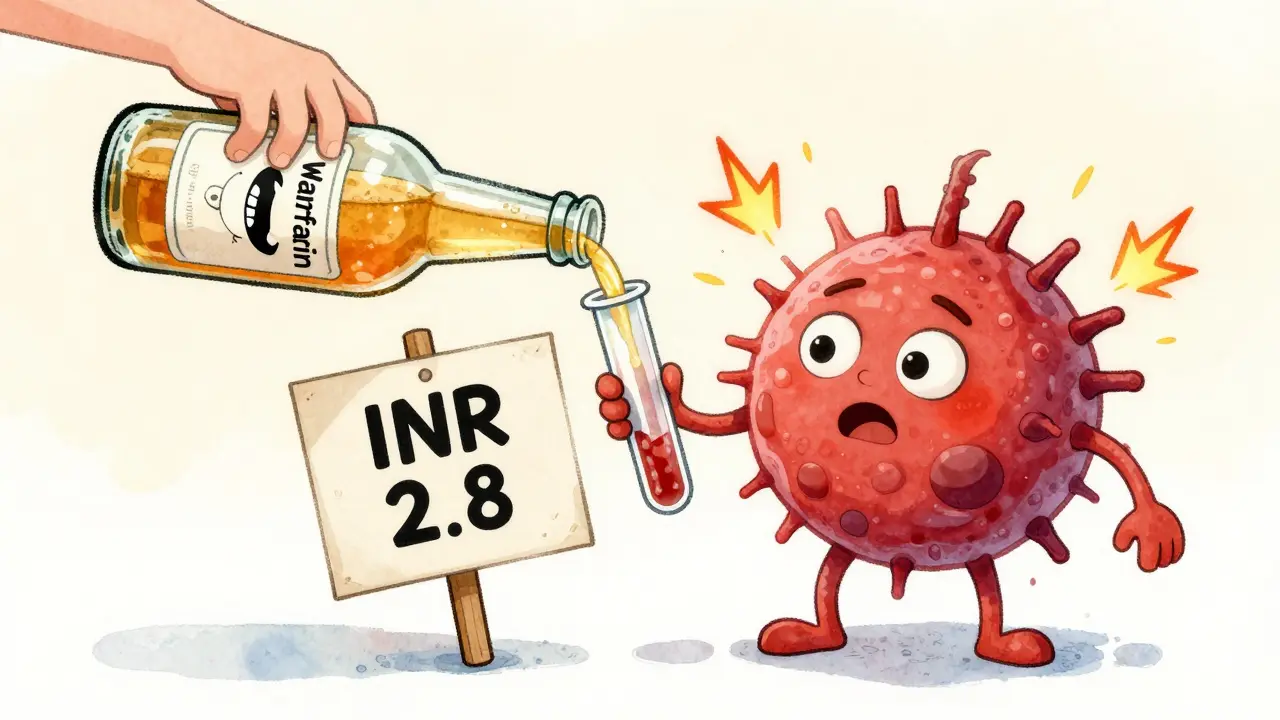
If you're taking warfarin - the most common blood thinner still prescribed today - and you enjoy a drink, you're not alone. About 30-40% of people on warfarin in the U.S. drink alcohol regularly. But here’s the problem: mixing alcohol with warfarin isn’t just a "maybe" risk. It’s a real, measurable threat that can send your INR skyrocketing and put you in the hospital - or worse.
What Is INR, and Why Does It Matter?
INR stands for International Normalized Ratio. It’s a blood test that tells doctors how long it takes your blood to clot. If you’re not on blood thinners, your INR should be around 0.8 to 1.1. But if you’re on warfarin, your target range is usually 2.0 to 3.0. For some conditions - like a mechanical heart valve - it might go as high as 2.5 to 3.5. Every 0.5-point increase above your target INR means your bleeding risk goes up by 30% to 50%. That’s not small. An INR over 3.5 is considered dangerous. An INR over 9? That’s life-threatening. Studies show that among hospitalized patients with INR above 9, 35% had major bleeding and 17% died.How Alcohol Throws Your INR Off
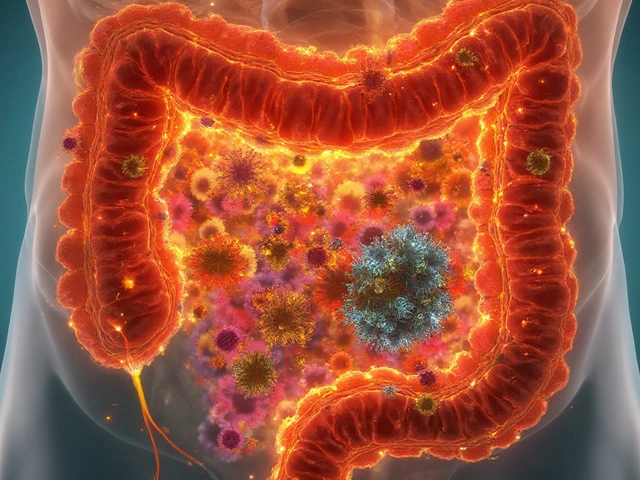
Alcohol doesn’t just make you feel loose - it messes with your liver, and your liver is the main place warfarin gets broken down. When you drink, especially in large amounts, your liver can’t process warfarin the way it normally does. This causes warfarin to build up in your system, which makes your blood thinner than it should be. But it’s not that simple. Sometimes, alcohol does the opposite. Heavy, long-term drinking can damage your liver so much that it starts making fewer clotting factors. That also makes your INR rise - even if you haven’t taken more warfarin. The result? Unpredictable INR swings. One week you’re stable at 2.6. The next, after a few drinks, you’re at 4.8. No warning. No symptoms - until you start bleeding.Real Cases: When a Drink Turns Dangerous
A 62-year-old man in the UK was doing fine on warfarin. His INR was steady at 2.8. Then he had six pints of beer over two days. Within 48 hours, his INR jumped to 5.2. He ended up in the ER with gastrointestinal bleeding. On Reddit, someone wrote: "I had four glasses of wine over the weekend. My INR went from 2.4 to 3.8. My doctor said this happens all the time." That’s not rare. It’s common. In one study, patients with INR above 9 who drank alcohol were far more likely to bleed than those who didn’t. And here’s the kicker: when their INR got that high, standard treatments like vitamin K or stopping warfarin didn’t work fast enough. Only plasma transfusions brought it down quickly.Warfarin vs. Newer Blood Thinners
You might be on one of the newer drugs - apixaban, rivaroxaban, dabigatran. These are called DOACs. They don’t need regular INR tests. They’re easier to use. And they don’t interact with alcohol the same way warfarin does. But that doesn’t mean you can drink freely. Even with DOACs, heavy drinking raises your bleeding risk. Alcohol thins your blood on its own. It can irritate your stomach lining. It can make you fall. All of that increases your chance of a bleed. The big difference? With warfarin, alcohol changes your INR. With DOACs, alcohol just makes bleeding more likely - and there’s no test to catch it before it happens.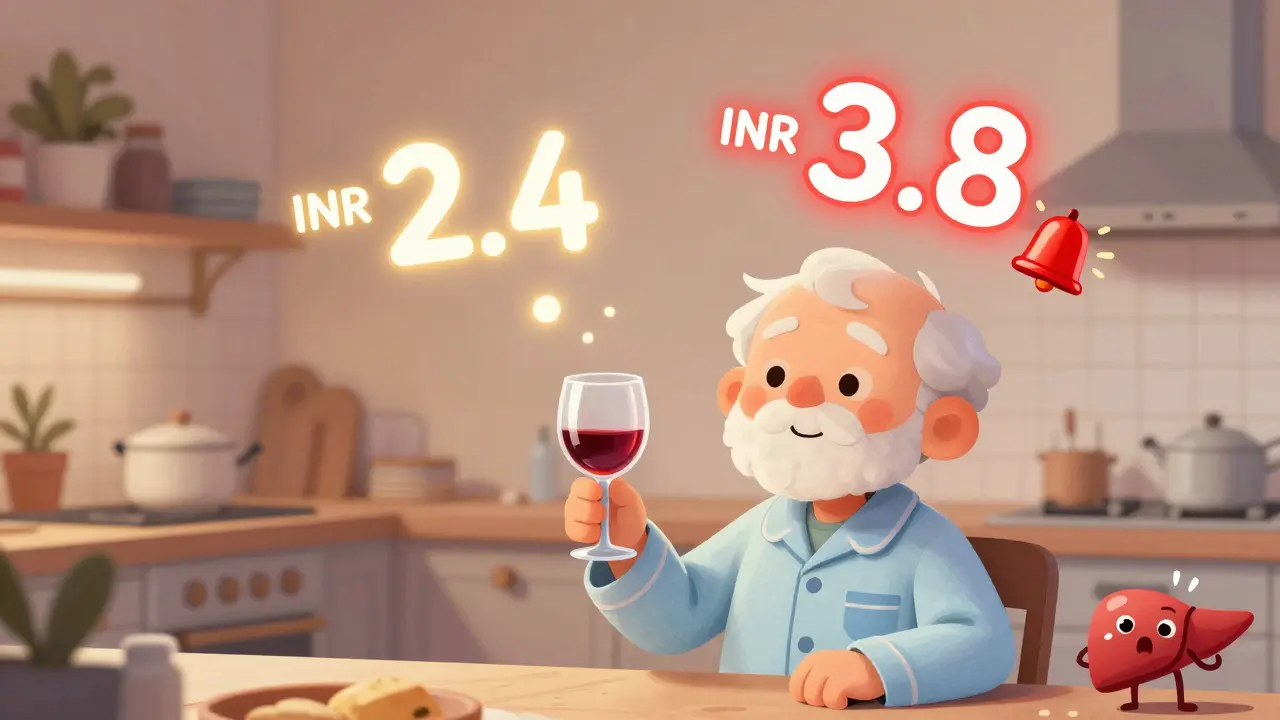
How Much Alcohol Is Safe?
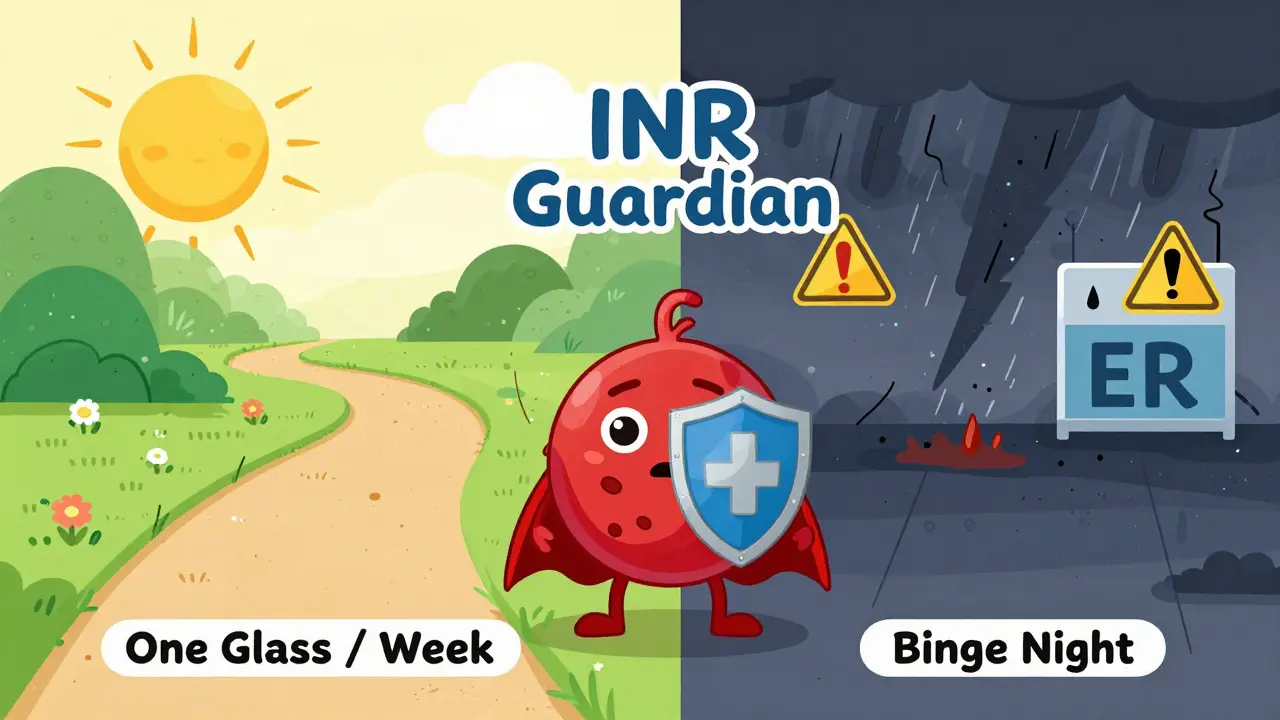
The British Heart Foundation says it’s okay to drink while on warfarin - if you stick to the rules. The UK Chief Medical Officers recommend no more than 14 units per week. That’s about six pints of beer or six medium glasses of wine. But here’s the catch: spread it out. Don’t save all 14 units for Friday night. Binge drinking - even just once - can spike your INR fast. One study showed that people who drank heavily in one sitting had twice the risk of dangerous bleeding compared to those who drank the same amount slowly over the week. Medical News Today defines "heavy drinking" as more than 14 drinks a week for men or 7 for women. That’s not a suggestion - it’s a red line. Exceed it, and your risk of major bleeding goes up significantly.Genetics Can Make It Worse
Some people are more sensitive to this interaction because of their genes. If you have variants in the CYP2C9 or VKORC1 genes, your body breaks down warfarin slower. Alcohol makes this worse. A 2015 NIH study found that people with these genetic variants had a much higher risk of bleeding when they drank - even moderately. If you’ve been on warfarin for a year or more and your INR keeps jumping for no obvious reason, ask your doctor about genetic testing. It might explain why you’re so sensitive.What to Watch For: Bleeding Signs You Can’t Ignore
Your INR can climb without you feeling a thing. That’s why you need to know the warning signs:- Red or brown urine
- Tar-like or bright red stools
- Nosebleeds that won’t stop
- Bleeding gums when brushing your teeth
- Unusually heavy periods
- Brown or bright red vomit
- Unexplained bruising, especially large patches
- Severe headache, dizziness, or weakness (could mean brain bleed)
What to Do If You Drink
If you’re on warfarin and you drink:- Keep it consistent. Don’t drink one week and skip the next. Your body needs stability.
- Never binge. One night of heavy drinking can ruin a month of stable INR control.
- Tell your anticoagulation clinic or doctor every time you drink - even if it’s just a glass of wine.
- Get your INR checked more often after drinking. Some clinics recommend testing within 48 hours after alcohol use.
- Don’t assume you’re "fine" because you’ve been drinking for years. Your body changes. So does your metabolism.
10 Comments
I’ve been on rivaroxaban for AFib and still avoid alcohol like it’s radioactive. One glass of wine used to give me heartburn so bad I thought I was having a stroke. Better safe than sorry, right? 🤷♂️
Warfarin users who drink are just playing Russian roulette with their internal organs and somehow think they’re being mature about it
This is why Africans don’t trust Western medicine. You give people a drug that can kill them if they drink ONE BEER and then act like it’s their fault? The system is broken. My cousin died because his doctor never told him about grapefruit juice. He drank orange juice and bled out in his sleep.
I get why people drink. It’s social, it’s relaxing, it’s part of culture. But when your body’s already on a tightrope, adding alcohol is like juggling chainsaws while blindfolded. Maybe the real question isn’t ‘how much is safe?’ but ‘is it worth the risk?’
The real tragedy here isn’t the alcohol-it’s that we’re still prescribing warfarin in 2025 like it’s 1999. DOACs are cheaper now, safer, and don’t turn your liver into a confused intern. If your doctor still pushes warfarin without discussing alternatives, find a new one. Your life isn’t a clinical trial.
According to the CDC’s 2023 Anticoagulation Safety Report, alcohol-induced INR fluctuations accounted for 19.7% of all warfarin-related emergency admissions in the United States. Furthermore, the statistical correlation between binge drinking and INR > 9 was r = 0.83, p < 0.001. This is not anecdotal. This is epidemiological fact.
My uncle he drink whiskey every day and his INR always 2.5. He say why you scare? He not die yet. So maybe not so bad? Maybe just fear from doctor?
I’ve been on warfarin for 8 years. I have one glass of wine with dinner every Friday. Never missed a PT/INR check. My clinic knows me by name. It’s not about giving up joy-it’s about respecting the balance. Small, steady, and supervised. That’s the key.
Just wanted to say thank you for this post. My mom’s on warfarin and I used to think she was being dramatic when she said she couldn’t have a beer. Now I get it. I’ll be bringing her sparkling water with lime next family dinner 🍋💙
The fact that we still need to explain this in 2025 is both baffling and terrifying. Warfarin isn’t a suggestion-it’s a precision instrument. Alcohol isn’t a garnish; it’s a variable that can’t be controlled in real time. If you’re going to drink, treat your INR like your phone battery: monitor it constantly, and never let it drop below 20%.