



When you walk into a clinic or urgent care center, you don’t see the behind-the-scenes math. But here’s the truth: bulk purchasing is one of the quietest, most powerful tools cutting drug costs in the U.S. healthcare system. It’s not about buying in huge volumes just for the sake of it-it’s about smart, strategic decisions that save clinics, hospitals, and even patients money. And for generic medications, which make up over 90% of all prescriptions filled, these savings aren’t small. They’re massive.
Why Bulk Buying Works for Generic Drugs
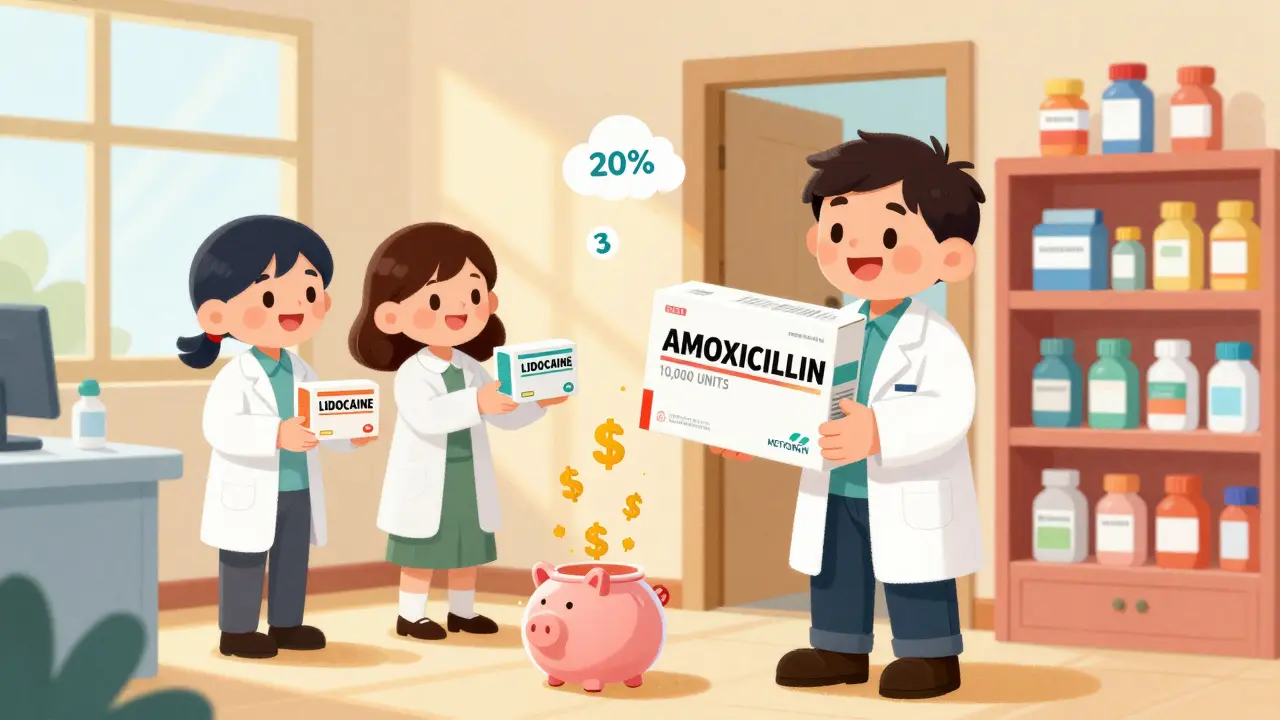
Generic drugs aren’t cheap because they’re low quality. They’re cheap because they don’t need expensive R&D. Once a brand-name drug’s patent expires, other manufacturers can legally produce the same medicine. That’s when competition kicks in. But without bulk purchasing, that competition doesn’t always translate into lower prices for providers.Here’s how it breaks down: for every $100 spent on retail prescriptions, only $17 goes to the actual cost of making the drug. The rest? That’s where pricing power lives. Manufacturers, pharmacy benefit managers (PBMs), and wholesalers all take a cut. Bulk purchasing flips the script. When a provider buys 10,000 units of amoxicillin instead of 1,000, manufacturers don’t just offer a small discount-they offer 20-30% off. That’s not a guess. That’s documented by the Academy of Managed Care Pharmacy’s 2023 framework.
And it’s not just about volume. There are layered discounts:
- Direct invoice discounts: 5-15% off when you order over 1,000 units of a single drug.
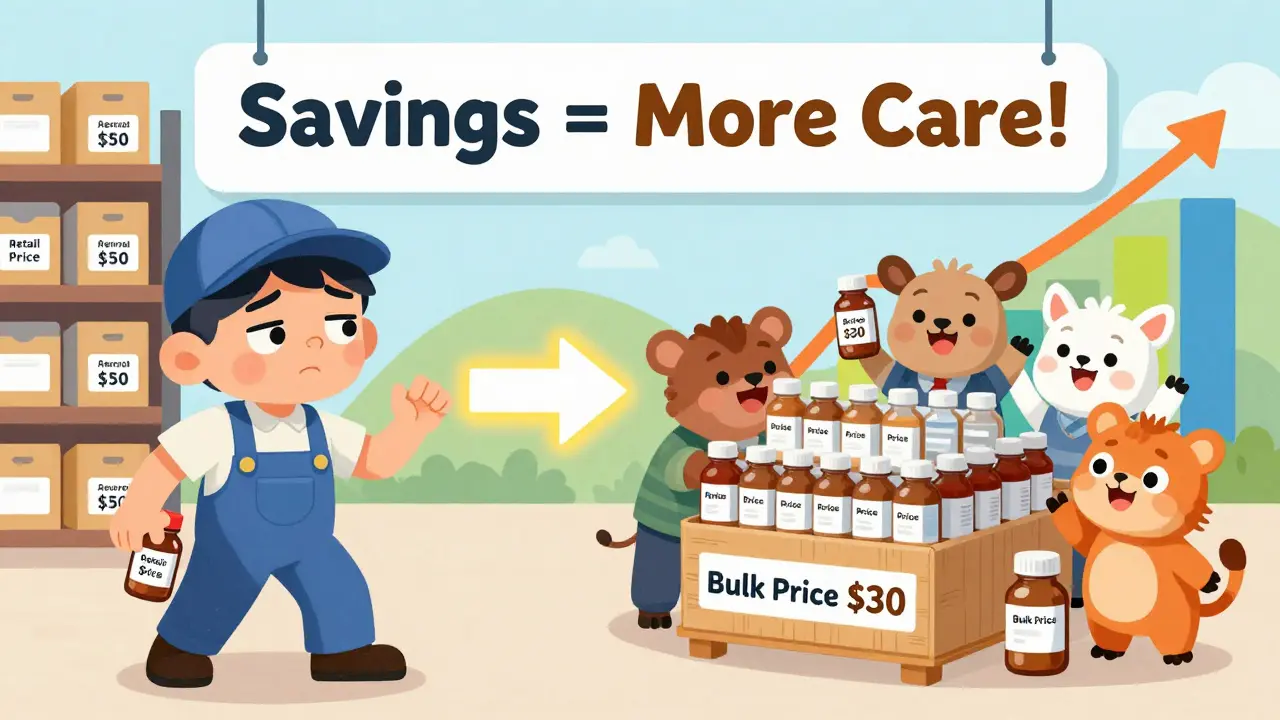
- Bulk discounts: Up to 30% off for orders of 10,000+ units.
- Rebates: PBMs negotiate 15-40% back from manufacturers, but only about half of that gets passed on to the buyer.
- Short-dated stock: Medications with 6-12 months left on their expiration date? They’re discounted 20-30%-and clinics that use them report 25% lower costs on injectables like lidocaine and antibiotics.
The real win? You don’t need to change your formulary. You just need to change how you buy.
Who’s Really Saving Money?
Not everyone benefits equally. The biggest savings go to those who bypass the traditional system.Primary wholesalers-McKesson, Cardinal Health, AmerisourceBergen-control 85% of the U.S. generic drug distribution. But their discounts? Often just 3-8%. Why? They’re not designed to compete on price. They’re designed to move volume through a system built on list prices and rebates.
Secondary distributors like Republic Pharmaceuticals are changing that. They specialize in bulk, short-dated, and overstocked generics. Their clients-urgent care centers, podiatry clinics, dermatology offices-report 20-25% savings within two months. One Ohio clinic slashed injectable costs by 25% just by switching 60% of their lidocaine and antibiotic orders to short-dated stock. No new drugs. No new protocols. Just smarter sourcing.
State Medicaid programs are also getting smarter. Through multi-state purchasing pools like the National Medicaid Pooling Initiative (NMPI) and the Sovereign States Drug Consortium (SSDC), participating states save 3-5% more than those buying alone. That’s not a drop in the bucket. In 2023, these pools collectively saved over $99 million since 2016.
But here’s the catch: PBMs, despite negotiating huge rebates, don’t always pass them along. The USC Schaeffer Center found that only 50-70% of rebate savings actually reach the health plan. So while PBMs claim to lower costs, their model can hide savings behind layers of complexity.
What Medications Benefit Most?
Bulk purchasing isn’t magic. It doesn’t work for every drug. It thrives on high-volume, low-complexity medications:- Antibiotics (amoxicillin, ciprofloxacin)
- Injectables (lidocaine, epinephrine, corticosteroids)
- Chronic care drugs (metformin, atorvastatin, lisinopril)
- IV fluids (normal saline, dextrose)
These are the drugs clinics use every day. A single urgent care center might go through 500 vials of lidocaine a month. Buy those in bulk? You’re not just saving money-you’re stabilizing your supply chain.
On the flip side, bulk buying fails for:
- Low-utilization drugs (used by only a few patients per month)
- Specialty medications (even if generic)
- Drugs in shortage (when inventory is tight, no one offers discounts)
The FDA tracked 298 active generic drug shortages as of November 2023. No amount of bulk ordering helps when the factory is offline.
How to Start-Step by Step
If you’re a clinic manager, pharmacist, or procurement officer, here’s how to begin:- Identify your top 15-20 SKUs. Look at your pharmacy logs. Which 10% of drugs make up 70% of your spending? That’s your target list.
- Check expiration dates. Find out which of those drugs are often purchased with 6-12 months left on their shelf life. That’s your short-dated stock opportunity.
- Reach out to secondary distributors. Companies like Republic Pharmaceuticals specialize in bulk and overstocked generics. They’ll give you pricing without minimum order traps.
- Test a 3-month pilot. Switch just one or two high-volume drugs. Track your savings. Measure inventory turnover.
- Build an inventory tracker. Use simple spreadsheets or basic EHR integrations. You need to know when stock expires-so you use it before it’s wasted.
Most clinics report a 4-6 week learning curve. It takes about 20 hours of staff time to get the system running. But after that? Monthly optimization takes just 5-10 hours. The Texas urgent care center that saved 20% didn’t hire new staff. They just changed how they ordered.
The Hidden Costs and Risks
Bulk purchasing isn’t risk-free. Here’s what you need to watch:- Upfront cash flow. Buying 10,000 units at once means a big payment upfront. MGMA found this requires 15-25% more working capital.
- Minimum order requirements. Some suppliers force you to buy 5,000 units of a drug you only use 500 of. That’s waste waiting to happen.
- Inventory mismanagement. If you don’t track expiration dates, you’ll throw away $10,000 in unused medication. One provider review said 28% of clinics struggle with this.
- Supplier inconsistency. Not all distributors are equal. Republic Pharmaceuticals scored 4.3/5 in user guides; primary wholesalers scored 3.1/5. Clarity matters.
And don’t forget: the system is still rigged in places. Wholesalers sometimes raise list prices just to offer “discounts” that look better on paper. The Commonwealth Fund calls this “leveraging list price increases.” It’s not fraud-it’s manipulation. That’s why transparency is the next frontier.
What’s Changing in 2026?
The game is shifting fast. The Inflation Reduction Act’s Medicare drug price negotiations are already in motion. By 2026, Medicare will pay 38-79% less for 10 top drugs. That’s not just for seniors-it’s a signal to the whole market.And PBMs? They’re rolling out integrated point-of-sale discounts. No more separate discount cards. When you fill a prescription for metformin, the system automatically applies the bulk-negotiated price. RxBenefits reports patients now pay 30-50% less out of pocket.
The FTC has 17 active investigations into drug pricing manipulation. Congress is pushing for rebate transparency. And secondary distributors are gaining market share-now handling 12% of non-340B generic procurement for independent practices.
What does this mean? Bulk purchasing is no longer a niche tactic. It’s becoming standard practice. The clinics that win are the ones who act now-not later.
Final Thought: It’s Not About Buying More. It’s About Buying Smarter.
Bulk purchasing isn’t about hoarding drugs. It’s about using market leverage to cut costs where it matters most. For clinics that rely on generics, this is the single most effective way to stretch budgets without cutting care.You don’t need a giant hospital system. You don’t need a PBM contract. You just need to know which drugs you use, how much you use, and where to buy them in bulk. The savings are real. The tools are available. And the window to act? It’s open.
Can small clinics really save money with bulk purchasing?
Yes. Even small clinics can save 20-25% by focusing on just 3-5 high-volume generic drugs. One urgent care center in Texas cut its lidocaine and antibiotic costs by 20% in two months by switching to quarterly bulk orders and short-dated stock. You don’t need to buy everything-just the drugs you use most.
What’s the difference between primary wholesalers and secondary distributors?
Primary wholesalers (like McKesson and Cardinal Health) serve large hospitals and pharmacies with standardized pricing and limited discounts. Secondary distributors (like Republic Pharmaceuticals) specialize in bulk, overstock, and short-dated inventory. They offer deeper discounts-often 20% or more-but may have fewer drug options. For clinics focused on cost savings, secondary distributors are often the better choice.
Are short-dated stocks safe to use?
Yes. Medications with 6-12 months left on their expiration date are still fully effective and safe. The FDA requires all drugs to remain stable until their labeled expiration date. The only risk is poor inventory management-if you don’t track expiration dates, you might end up discarding unused stock. But with a simple tracking system, clinics have achieved 95-98% utilization rates.
Do bulk discounts apply to all generic drugs?
No. Bulk discounts work best for high-volume, stable drugs like antibiotics, injectables, and common chronic care medications. They don’t apply to low-use drugs, specialty generics, or drugs in shortage. The FDA reported 298 active generic drug shortages in late 2023, and during shortages, discounts vanish because supply is tight.
How long does it take to see savings from bulk purchasing?
Most clinics see measurable savings within 4-6 weeks. The first step is identifying your top 15-20 drugs. The second is switching one or two to bulk orders. By month two, you’ll notice lower invoice amounts. By month three, you’ll have a system in place to scale it. The Texas urgent care center reported savings in their first billing cycle after switching suppliers.
13 Comments
omg i just read this and im like wowwwww i work in a tiny clinic in delhi and we buy everything in bulk from local pharma suppliers and yeah its insane how much we save like we get amoxicillin for like 1/5th of what the big hospitals pay and its still 100% legit no fake stuff lol the batch numbers are all there and the expiry is like 18 months away so why not right?? also we use short-dated lidocaine and no one ever dies from it like wtf are people scared of?? the fda says its fine so why are we overthinking this??
Thank you for this meticulously detailed and empirically grounded exposition. The structural analysis of procurement hierarchies, particularly the distinction between primary wholesalers and secondary distributors, offers a rare clarity in an otherwise opaque sector. I am particularly struck by the data on rebate pass-through rates-only 50–70% reaching end-users-as it underscores the systemic inefficiencies embedded in the current PBM architecture. A policy intervention focused on mandatory rebate transparency would be both ethically sound and economically prudent.
I’ve been doing this for 8 years in rural Oregon. We switched to Republic Pharmaceuticals for our antibiotics and injectables. First month? $12k saved. Second month? $14k. We didn’t even change our staff. We just stopped ordering from McKesson. Honestly? The whole system is broken. PBMs act like middlemen who take a cut just for existing. And don’t get me started on how they jack up list prices just to ‘discount’ them later. It’s theater. Pure theater. But yeah-bulk buys? Lifesaver. Short-dated stock? Genius. We use 98% of it. No waste. Just savings.
THIS IS WHY AMERICA IS DYING. YOU PEOPLE ARE JUST BUYING DRUGS FROM ‘SECONDARY DISTRIBUTORS’ LIKE SOME KIND OF BLACK MARKET DEALER? WHERE’S THE QUALITY CONTROL? WHERE’S THE REGULATION? THIS ISN’T BUYING USED LUGGAGE ON EBAY. PEOPLE’S LIVES ARE ON THE LINE. AND YOU’RE TALKING ABOUT ‘SHORT-DATED STOCK’ LIKE IT’S A FLEA MARKET DEAL? THE FDA DOESN’T SAY ‘SOME DRUGS ARE FINE’-IT SAYS ‘STAY WITH APPROVED SUPPLIERS.’ YOU’RE PLAYING RUSSIAN ROULETTE WITH PATIENTS AND YOU CALL IT ‘SMART BUYING’? I’M SICK OF THIS CULTURE OF CUTTING CORNERS.
Let us not mistake market mechanics for moral superiority. The notion that bulk purchasing is a ‘solution’ is a distraction from the deeper pathology of commodifying human health. When a drug’s price is determined not by need, but by volume, we have already surrendered the sanctity of care to the logic of capital. The fact that Medicaid pools save 3–5% is not triumph-it is a footnote in a system that still prices insulin at $300 because someone, somewhere, decided that suffering could be leveraged into profit. True reform lies not in better negotiation, but in abolition of the profit motive entirely.
Hey everyone-just wanted to say this is one of the most practical, actionable pieces I’ve read in ages. If you’re a small clinic owner, pharmacist, or even just someone who cares about healthcare access, this is your playbook. Start with your top 5 drugs. Find your short-dated stock. Talk to Republic or a similar secondary distributor. Try it for 3 months. Track it. You’ll be shocked. I’ve seen clinics go from ‘we can’t afford epinephrine’ to ‘we’re stocking extra’ in under 60 days. You don’t need a PhD. You just need to stop trusting the system and start asking: ‘Who else is doing this?’ Spoiler: more than you think.
Let’s deconstruct the ontological fallacy here: the assumption that ‘bulk purchasing’ is inherently efficacious. The data presented conflates correlation with causality. The 20–25% savings are contingent upon variable factors-supply chain volatility, regulatory arbitrage, and opaque rebate structures. Moreover, the normalization of short-dated stock ignores pharmacokinetic degradation thresholds, which, while statistically negligible, remain non-zero. Furthermore, the dismissal of primary wholesalers as ‘inefficient’ is a neoliberal myopia-these entities maintain cold-chain integrity, batch traceability, and regulatory compliance at scale. To advocate for secondary distributors without addressing their lack of FDA audit trails is not innovation-it is regulatory negligence masquerading as frugality.
Bro. I work in a dermatology clinic in Phoenix. We used to pay $42 a vial for lidocaine. Switched to Republic, bought 5k units of short-dated stock (11 months left), paid $9.50 each. We’ve used 4,980. Threw away 2. That’s not saving money-that’s printing cash. And guess what? No patient ever said ‘Hey, is this expired?’ because it’s not. It’s just old. Like that 2018 Toyota you drive. Still runs fine. Stop overthinking it. The system’s rigged. We’re just hacking it.
This was really helpful. I’ve been nervous about trying bulk buys because I didn’t know where to start. Your step-by-step guide made it feel doable. I’m going to talk to our pharmacist tomorrow about our top 10 drugs. Thank you for not making it sound impossible.
Interesting. I suppose if you’re okay with risking patient safety for a few bucks, then sure. But I’m not. I’d rather pay a little more and know my meds came from a reputable source. Not some guy in Ohio shipping pallets from a warehouse with no temperature control. Just saying.
Thank you for presenting this information with such clarity and care. The empirical evidence presented here is not only compelling but also deeply aligned with principles of ethical stewardship in healthcare resource allocation. The emphasis on inventory tracking and phased implementation demonstrates a commendable balance between fiscal responsibility and patient-centered care. I believe this model warrants broader dissemination across community health systems.
Oh wow. So we’re just supposed to trust that ‘short-dated stock’ is safe? Funny how the FDA never mentions that their ‘expiration dates’ are just suggestions written by a committee that got bored at 3 p.m. on a Friday. And PBMs? Yeah, they’re ‘negotiating rebates’-while charging you $100 for a $3 pill. And you think this isn’t a scam? Wake up. This isn’t healthcare. It’s a casino where the house always wins. The only reason you’re ‘saving’ is because someone else is being robbed. You’re not a hero. You’re a dupe.
I love how this post breaks it down without jargon. I work in a small OB/GYN clinic and we buy atorvastatin and amoxicillin in bulk now. Our savings are real-about 22% last quarter. And we’ve never had an issue with expiry. I think the fear around short-dated stock is way overblown. If you track it, you’re fine. Simple as that. Thanks for the practical advice!