

For years, cancer treatment meant chemotherapy, radiation, or surgery - harsh, blunt tools that damaged healthy cells along with tumors. But since 2011, a new kind of treatment has emerged: one that doesn’t attack cancer directly. Instead, it wakes up the body’s own immune system to do the job. This is immunotherapy, and two of its most powerful tools are checkpoint inhibitors and CAR-T cell therapy. They work in completely different ways, but both are changing survival rates for people with cancers that once had no real hope.
How Checkpoint Inhibitors Unleash the Immune System
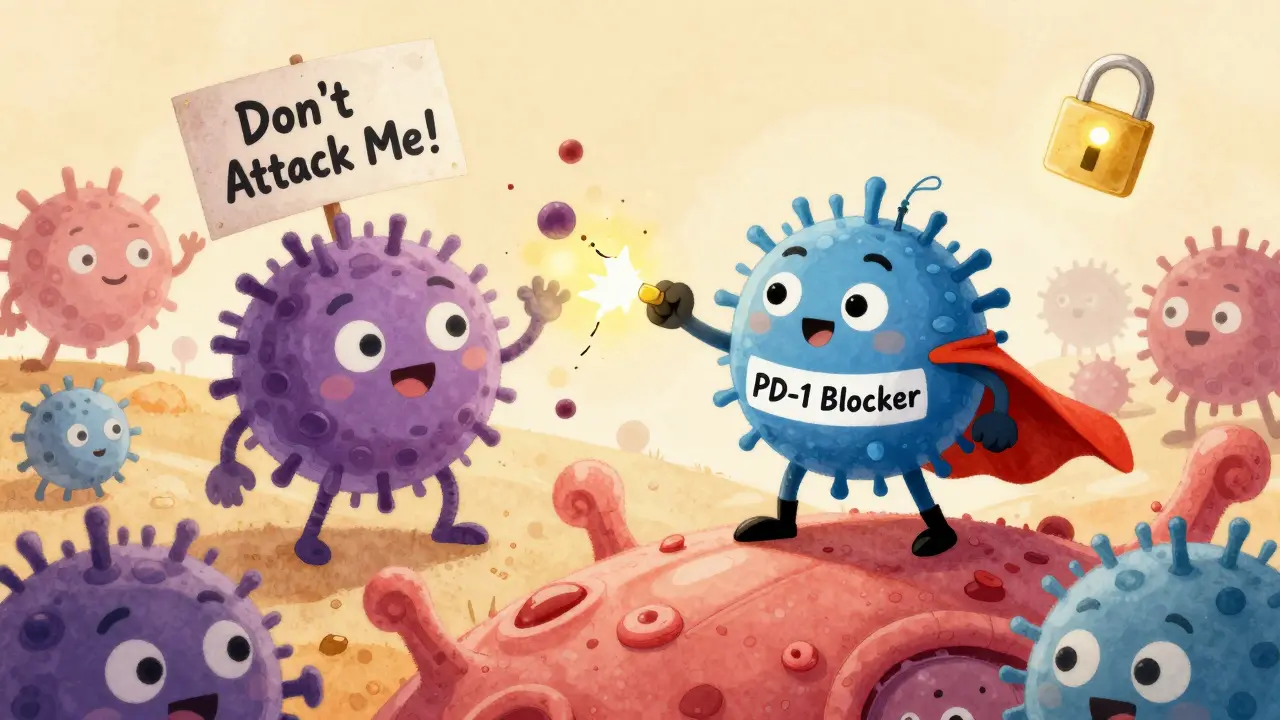
Your immune system has built-in brakes. These are called checkpoints - proteins like PD-1 and CTLA-4 that stop T cells from attacking too hard and harming healthy tissue. Cancer cells are sneaky. They learn to hijack these brakes by producing proteins like PD-L1 that latch onto PD-1 on T cells, telling them: “Don’t attack me.” That’s how tumors hide in plain sight.
Checkpoint inhibitors are lab-made antibodies that block this trick. Drugs like pembrolizumab (Keytruda) and nivolumab (Opdivo) block PD-1. Ipilimumab (Yervoy) blocks CTLA-4. By doing this, they take the brakes off the immune system. T cells wake up, recognize the cancer, and start killing it.
This approach works best in cancers with high mutation rates - like melanoma, lung cancer, and kidney cancer - where the immune system has more targets to recognize. Response rates? Around 20-40% in the best cases. But for those who respond, the results can be long-lasting. Some patients live for years, even decades, with no signs of cancer returning. That’s rare with traditional treatments.
But it’s not perfect. About 10-15% of people get serious side effects called immune-related adverse events (irAEs). The immune system, once unleashed, can turn on the body. That means colitis (inflammation of the colon), thyroid problems, rashes, or even lung inflammation. These are manageable if caught early, but they require careful monitoring. And not everyone responds. Many tumors are just too good at hiding.
How CAR-T Therapy Rewires Your Own Immune Cells
CAR-T therapy is like giving your immune system a GPS and a weapon - all in one. It’s personalized medicine at its most extreme. Here’s how it works:
- A patient’s blood is drawn, and T cells are separated out.
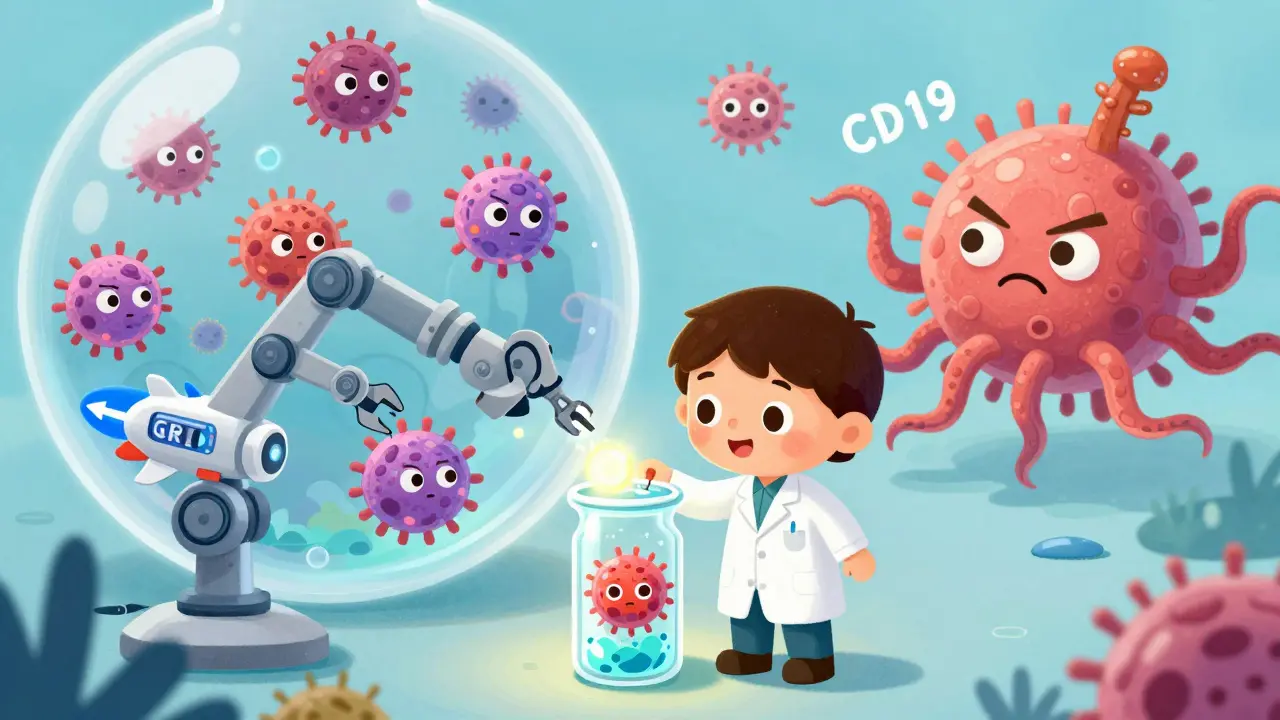
- Those T cells are sent to a lab, where they’re genetically modified to express a chimeric antigen receptor (CAR). This receptor is designed to recognize a specific protein on cancer cells - like CD19 on B-cell leukemias and lymphomas.
- The modified T cells are grown in huge numbers - billions - in bioreactors.
- The patient gets chemotherapy to wipe out their existing immune cells, making space.
- The engineered CAR-T cells are infused back into the patient.
Once inside, these supercharged T cells hunt down cancer cells like guided missiles. In some cases, especially in children with relapsed acute lymphoblastic leukemia (ALL), complete remission rates hit 80-90%. That’s unheard of with chemotherapy alone.
The first FDA-approved CAR-T therapy, tisagenlecleucel (Kymriah), came in 2017. Since then, several others have followed for lymphoma, multiple myeloma, and other blood cancers. The results are dramatic. Some patients who had run out of options are now cancer-free years later.
But CAR-T comes with big risks. About 50-70% of patients develop cytokine release syndrome (CRS) - a massive immune reaction that causes high fever, low blood pressure, and breathing trouble. Around 20-40% get neurotoxicity (ICANS), which can lead to confusion, seizures, or even coma. These are serious, but hospitals that treat many CAR-T patients have learned how to manage them with drugs like tocilizumab and steroids.
Another problem? CAR-T only works well for blood cancers. In solid tumors - like lung, breast, or colon cancer - it’s had very limited success. Less than 10% of patients respond. Why? The tumor environment is hostile. It’s full of signals that shut down T cells, physical barriers that block them from entering, and few targets for the CAR to latch onto.
Why Solid Tumors Are So Hard to Beat
Checkpoint inhibitors and CAR-T therapy both struggle with solid tumors - but for different reasons. Checkpoint inhibitors need immune cells already inside the tumor. If the tumor is “cold” - meaning no T cells are present - the drugs have nothing to activate. CAR-T cells can’t get through the tumor’s physical wall or survive its chemical environment.
Research shows solid tumors often lack the right signals to attract immune cells. They also produce proteins like PTP1B that quietly shut down T-cell activity from within. Even when CAR-T cells reach the tumor, they often become exhausted or die off within days.
That’s why scientists are now trying to combine the two therapies. Give CAR-T cells the power to find the tumor - then use checkpoint blockers to keep them alive and active once they get there. Early experiments in mice showed a 2.3-fold increase in tumor-killing T cells when CAR-T was paired with a drug that blocked PTP1B.
Even smarter: some teams are engineering CAR-T cells to make their own checkpoint inhibitors right at the tumor site. Instead of giving a patient a drug that floods the whole body with antibodies, they’re making the CAR-T cells secrete anti-PD-1 molecules locally. In lab studies, this cut immune side effects by 37% and boosted tumor killing. It’s like giving the immune system a sniper rifle instead of a shotgun.
Cost, Access, and the Real-World Divide
These treatments are expensive - and not everyone can get them.
A single CAR-T treatment costs between $373,000 and $475,000. The process takes 3-5 weeks from blood draw to infusion. Only specialized centers can handle it. In the U.S., 87% of CAR-T therapies are given at academic hospitals, even though they make up only 15% of cancer centers. That means people in rural areas or smaller towns often can’t access it.
Checkpoints inhibitors are cheaper and easier - they’re “off-the-shelf.” But even here, access is unequal. Studies show Medicaid patients are 23% less likely to get them than those with private insurance. Black patients are 31% less likely to receive CAR-T than white patients. These aren’t just medical gaps - they’re social ones.
Manufacturing CAR-T is complex. Each batch is custom-made for one person. If something goes wrong in the lab, the patient has to wait - or worse, the cancer progresses. That’s why researchers are racing to make “off-the-shelf” CAR-T cells from donor T cells. These could be ready in days, not weeks. Early trials are promising, but safety is still a concern - donor cells might attack the patient’s body.
What’s Next? The Future of Cancer Immunotherapy
The next five years will be about smarter engineering, not just bigger doses. Scientists are testing CAR-T cells with multiple targets, so they don’t miss cancer cells that change their surface proteins. Others are adding “armors” - tiny signals that help T cells survive in hostile tumors. Some are even combining CAR-T with radiation to make tumors more visible to the immune system.
There are over 47 active clinical trials right now testing CAR-T with checkpoint inhibitors, and 68% of them are focused on solid tumors. That’s where the biggest need is. If we can make these therapies work for lung, pancreatic, or ovarian cancer, millions more lives could be saved.
One thing is clear: immunotherapy isn’t a magic bullet. But for the first time, we’re not just treating cancer - we’re teaching the body how to fight it. And that’s a revolution.
Side Effects Compared: What Patients Actually Experience
| Side Effect | Checkpoint Inhibitors | CAR-T Therapy |
|---|---|---|
| Fatigue | 35-50% | 35-50% |
| Fever | 25-40% | 70-90% |
| Rash | 30-40% | 10-20% |
| Colitis | 10-15% | <5% |
| Hypothyroidism | 5-10% | <2% |
| Cytokine Release Syndrome (CRS) | <5% | 50-70% |
| Neurotoxicity (ICANS) | <2% | 20-40% |
| Immune Pneumonitis | 5-10% | 2-5% |
These numbers aren’t abstract - they’re what patients face. A fever after CAR-T isn’t just a cold. It’s a sign your immune system is going into overdrive. A rash after a checkpoint inhibitor might mean your body is attacking your skin. Knowing the difference helps patients speak up early - and saves lives.
Are checkpoint inhibitors and CAR-T therapy the same thing?
No. Checkpoint inhibitors are drugs that block signals cancer uses to hide from the immune system. They’re given through an IV like chemotherapy and work on any T cells in the body. CAR-T therapy is a personalized treatment where your own T cells are removed, genetically changed to attack cancer, and put back into your body. It’s like upgrading your immune system’s soldiers one by one.
Can these therapies cure cancer?
For some people, yes - especially in blood cancers like leukemia and lymphoma. In those cases, CAR-T can lead to complete, long-term remission. Checkpoint inhibitors have done the same for some melanoma and lung cancer patients. But “cure” is a strong word. Many patients still relapse. The goal now is to make remissions last longer and help more people reach them.
Why doesn’t immunotherapy work for everyone?
Cancer is smart. Some tumors don’t have enough targets for immune cells to recognize. Others create a shield around themselves - blocking T cells from entering or poisoning them with chemicals. Some people’s immune systems are too weak to respond, even when the brakes are released. We’re still learning why some respond and others don’t - and how to fix that.
Is CAR-T therapy only for kids?
No. CAR-T was first approved for children with leukemia, but it’s now used for adults too - especially with lymphoma and multiple myeloma. In fact, most CAR-T treatments today are given to adults. The biggest challenge isn’t age - it’s whether the cancer has the right target (like CD19) and whether the patient is healthy enough to handle the side effects.
How long does CAR-T therapy take from start to finish?
It usually takes 3 to 5 weeks. First, your blood is drawn and sent to a lab. Then your T cells are modified and grown - that’s the longest part. While you wait, you might get chemotherapy to clear space for the new cells. Then you’re infused with the CAR-T cells and monitored closely for at least a week. Some patients need to stay near the hospital for months after.
What’s the biggest challenge facing these therapies today?
Making them work for solid tumors. Checkpoint inhibitors help some lung and kidney cancer patients, but most solid tumors don’t respond well. CAR-T has barely moved the needle in breast, colon, or pancreatic cancer. The tumor environment is too hostile. The next breakthrough will come from combining these therapies with new tools - like engineering CAR-T cells to fight the tumor’s defenses or using radiation to make tumors more visible. That’s where the research is focused now.
What Should You Do If You’re Considering These Treatments?
If you or someone you know has cancer and is exploring options, ask your oncologist:
- Is my cancer type known to respond to immunotherapy?
- Have we tested for biomarkers like PD-L1 or tumor mutation burden?
- Am I eligible for CAR-T? What’s the timeline?
- What centers near me have experience with these therapies?
- Are there clinical trials combining these treatments?
Don’t assume you’re out of options. Immunotherapy is still new, and more patients are qualifying every year. Even if you’re not eligible now, the science is moving fast. What’s not possible today might be standard care in two years.
8 Comments
Checkpoint inhibitors are essentially immune system demobilizers - they disable the brakes so T-cells can go full throttle. The real magic is in the biomarker stratification: PD-L1 expression, TMB, MSI-H status - these aren’t just buzzwords, they’re the gatekeepers to durable responses. But we’re still flying blind for 60% of patients. We need better predictive models, not just more drugs.
My cousin got CAR-T. She screamed for three days. Then she smiled again. That’s all that matters.
so like... immunotherapy is just letting your body do the work instead of chemo wrecking everything? sounds legit. my uncle got keytruda and now he’s hiking in colorado like nothing happened. wild. also why is it so damn expensive tho???
The data is compelling, but the clinical applicability remains constrained by the same old structural failures: access inequality, manufacturing bottlenecks, and the illusion of personalization. CAR-T isn’t personalized if only 12% of the population can access it. This isn’t medicine - it’s luxury oncology.
God bless science but why do we let billionaires profit off dying people? 😔 I cried reading this. My mom didn’t get these treatments because her insurance said "not medically necessary." We lost her. This isn’t progress if it’s only for the rich. 🙏
Man, this hits different. In India, we don’t even have access to basic chemo in rural areas, let alone CAR-T. But the science? Pure poetry. Imagine if we could engineer CAR-T cells that survive the tumor’s acidic jungle - that’s the holy grail. And yeah, combining with checkpoint blockers? That’s like giving a sniper a silencer and a thermal scope. Brilliant.
I’ve seen patients with melanoma live 7 years on Keytruda. No scans, no symptoms, just living. That’s the dream. But we need global equity, not just innovation. Science should serve humanity, not just the lucky few.
Also, PTP1B inhibition? That’s next-level. Most folks don’t even know about that phosphatase. It’s the silent killer inside tumors - shuts down T-cell signaling like a firewall. Targeting it locally? Genius. Less systemic toxicity, more tumor kill. We’re not just fighting cancer anymore - we’re outsmarting its evolution.
And don’t get me started on the cost. $475k? That’s a house in Bangalore. Meanwhile, a kid in Bihar dies because her dad can’t afford a single cycle of pembrolizumab. We need open-source manufacturing. Open-access protocols. This shouldn’t be a privilege.
But hey - the fact that we’re even talking about engineered CAR-T cells secreting anti-PD-1 locally? That’s sci-fi made real. We’ve gone from poison bullets to smart bombs. And soon? Maybe even self-replicating immune drones. The future’s not coming. It’s already here. We just gotta make sure no one’s left behind.
One thing that’s rarely discussed is how immunotherapy forces us to redefine what "remission" means. With chemo, you’re hoping to shrink the tumor before it kills you. With checkpoint inhibitors, you’re hoping your immune system learns to live with the cancer - not eradicate it, but contain it. That’s a philosophical shift. It’s not about winning a war - it’s about negotiating peace with a traitor inside your body.
And CAR-T? That’s not treatment. That’s identity reprogramming. You’re taking a piece of yourself - your own T cells - and turning them into something alien, something engineered. Then you put them back. Who are you after that? Are you still the same person? Or are you now a hybrid of biology and biotech?
The side effects are terrifying, yes - CRS feels like your body is trying to burn itself alive. But that’s the price of awakening a sleeping god. The immune system doesn’t care about your comfort. It only cares about survival. And when it wakes up, it doesn’t ask permission.
What fascinates me most is how these therapies expose the limits of our medical paradigm. We’ve spent a century trying to kill cancer. Now we’re learning to collaborate with our own biology. That’s not just medical progress - it’s a new way of seeing ourselves. We’re not separate from our immune system. We’re its ecosystem. And maybe, just maybe, healing means helping it heal itself.
Also - the solid tumor problem isn’t just about biology. It’s about geography. The tumor microenvironment isn’t just hostile - it’s a fortress built over years of evolutionary warfare. T cells aren’t just blocked by physical barriers; they’re chemically sedated, starved, and psychologically demoralized. CAR-T cells need armor. They need metabolic support. They need local checkpoint inhibitors, not systemic ones. We need to engineer not just the soldiers, but the battlefield.
And the cost? It’s not just about money. It’s about time. Three to five weeks to make one batch? That’s an eternity when you’re dying. Off-the-shelf CAR-T is the only ethical path forward. If we can make it safe, we’ll save millions. If we don’t, we’re just building better toys for the wealthy.
But here’s the quiet truth: the real breakthrough won’t be in the lab. It’ll be in the courtroom. In the legislature. In the insurance forms. We’ve cracked the science. Now we have to crack the system.
Every time I read this, I think of my brother. He didn’t make it to CAR-T. But he lived longer than they said he would - because he had hope. And that’s what immunotherapy gives us: not just survival, but the chance to believe again. That’s worth more than any dollar amount.