
When you hear about drug safety alerts, knowing how to discuss them with your doctor can make all the difference. These alerts aren't just paperwork-they're critical updates about risks that could affect your health. But many patients feel unsure how to bring them up during appointments. This guide gives you clear, practical steps to have productive conversations about medication safety.
Finding the Official Drug Safety Alert
Never trust social media posts or news headlines about drug risks. Go straight to the source. The FDA Drug Safety Communications a system providing timely updates on newly identified risks with medications, medical devices, and other health products page is your starting point. Type your medication name into the search bar. For example, if you take metformin for diabetes, search "metformin FDA safety alert". You'll find official communications with dates, specific risks, and what doctors should do. The MedWatch the FDA's safety information and adverse event reporting program system delivers these alerts directly to healthcare providers, but patients can access them too. Always check the publication date-older alerts might have been updated or withdrawn.
Preparing Before Your Appointment
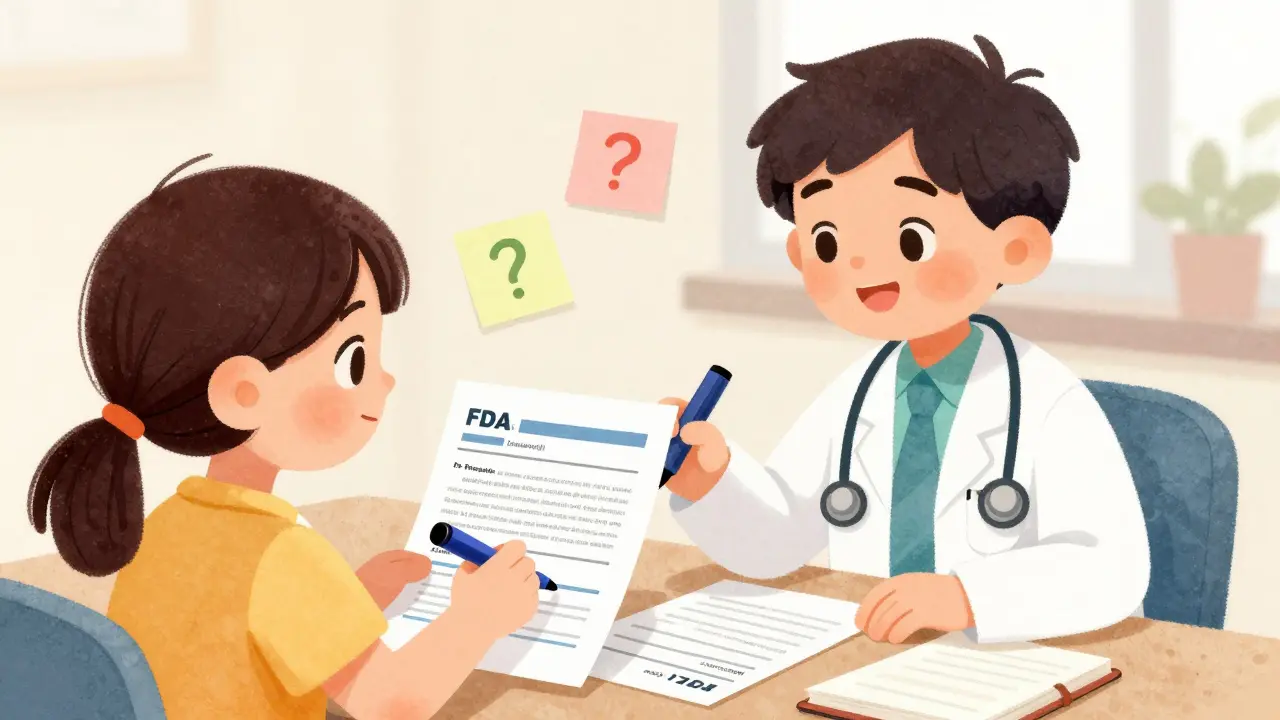
Bring printed copies of the official alert, not screenshots from your phone. Doctors appreciate seeing the exact document from the FDA website. Highlight the sections that apply to you. If the alert mentions "new risks for patients with kidney problems," and you have kidney disease, circle that part. Write down specific questions like: "Does this alert apply to me?" or "Should we check my blood work more often?" The CDC medication safety guidelines practical steps for patients to use medications safely recommend preparing a list of all medications you take, including supplements. This helps your doctor see potential interactions. Bring your pill bottles to the appointment too. If you're unsure about the alert, ask a pharmacist to explain it first-they're trained to interpret these updates.
How to Bring Up Safety Alerts During Your Visit
Start the conversation early. Don't wait until the end of your appointment. Say something like: "I read an FDA alert about my medication [name] dated [date]. Can we talk about how this affects my treatment?" Avoid saying "This drug is dangerous" or "I saw a scary post online." Doctors respond better to factual, specific language. For example, "The FDA updated warnings for [medication] regarding [specific risk] on [date]. My [condition] makes me wonder if this applies to me." The pharmacovigilance the science of detecting, assessing, and preventing adverse effects of medications process relies on clear communication between patients and doctors. If your doctor seems busy, say: "This won't take long, but it's important for my safety." Most doctors welcome this kind of preparation-it shows you're engaged in your care.
Key Questions to Ask Your Doctor
Instead of general worries, ask targeted questions. For example:
- "Does this new information change how we monitor my condition?"
- "Are there alternative medications we should consider based on this alert?"
- "Should I stop taking this right away, or is it safe to continue?"
- "What symptoms should I watch for that might indicate this risk?"
Handling Dismissiveness or Concerns
If your doctor dismisses the alert, stay calm. Say: "I understand you might not see this as urgent, but I'd like to understand why." Ask for clarification: "Could you explain how this alert doesn't apply to my situation?" Sometimes doctors miss alerts because they're overwhelmed. A 2021 study found only 37% of primary care doctors regularly check for new safety information. If your doctor still won't engage, ask: "Would it help if I got a second opinion?" or "Can you refer me to a specialist who handles this specific issue?" Never stop taking medication without consulting your doctor first. If you feel unheard, schedule a follow-up appointment or ask to speak with a nurse. Remember: your doctor wants you to be safe-your job is to share information clearly.
Real-World Examples of Drug Safety Alerts
Look at recent alerts for concrete examples. In May 2023, the FDA required updates to boxed warnings for prescription stimulants used to treat ADHD. This alert specifically mentioned risks of misuse, abuse, addiction, and overdose. For patients taking these medications long-term, it meant checking for signs of dependency. In August 2025, the FDA announced the removal of the REMS program for the antipsychotic drug Clozapine. This meant doctors no longer needed special monitoring for patients on this medication. Another example: the August 28, 2025 alert for Leqembi (lecanemab) recommended "additional, earlier MRI monitoring for patients with Alzheimer's disease." This alert directly affected treatment plans. Knowing these examples helps you recognize how alerts translate to real-world changes in care.
CDC's Simple Safety Tips for Medications
The CDC offers straightforward advice for everyday medication safety. Their "turn on a light when taking medicines" rule prevents misreading labels. "Ask questions if you don't understand label instructions" is another key tip. For instance, if your prescription says "take with food," ask what counts as food. The CDC also recommends getting necessary tests-like blood pressure checks before starting certain blood pressure medications. These tips aren't just for new drugs; they apply to any medication. If you're on multiple drugs, ask your doctor about potential interactions. The electronic health records digital systems storing patient medical information can flag dangerous combinations, but doctors rely on patients to mention all medications they take, including over-the-counter pills or herbal supplements.
How do I know if a drug safety alert applies to me?
Check the alert details for specific patient groups. For example, an alert might say "for patients with kidney disease" or "for those over 65." If it mentions your condition, age, or other health factors, it likely applies. If unsure, bring the alert to your doctor and ask: "Does this affect my situation?" Your doctor can explain why it might or might not apply based on your medical history.
Should I stop taking my medication right away if I see an alert?
Never stop taking prescribed medication without talking to your doctor first. Some alerts require gradual changes or monitoring, not immediate stopping. For example, an alert about potential side effects might mean checking blood work more often instead of stopping the drug. Stopping suddenly could cause serious health issues. Always discuss changes with your healthcare provider.
What if my doctor says the alert is outdated?
Ask for proof. Request to see the latest version of the alert on the FDA website. Sometimes alerts get updated or withdrawn. If your doctor insists it's outdated, ask: "Can you show me the current guidance?" If they can't, ask for a referral to a specialist or pharmacist who can review it. Drug safety information is constantly updated-what was true last year might not apply today.
How often should I check for new drug safety alerts?
Check the FDA Drug Safety Communications page every 3-6 months if you take long-term medications. For new medications, check monthly for the first six months. You can also sign up for email alerts on the FDA website for specific drugs or conditions. Pharmacists often update patients during refill appointments-ask them to mention new alerts when you pick up prescriptions.
Can I trust drug safety alerts from social media?
No. Social media posts often misinterpret or exaggerate alerts. For example, a tweet might say "Drug X causes cancer," but the actual FDA alert might say "risk of cancer in rare cases with long-term use." Always verify with the official FDA website. The CDC warns that misinformation from social media leads to unnecessary panic or dangerous decisions. Stick to trusted sources like FDA.gov or CDC.gov for accurate information.
10 Comments
Checked the FDA site for my blood pressure meds. Found a new alert. Brought it up with my doctor. They said it's not relevant. But why do I have to do all the work?
I read the FDA alert for my meds. Found a new risk. Brought it to my appointment. Doctor was impressed. But seriously, shouldn't they be telling us this?
I checked FDA site for my diabetes meds. Found an alert. Brought printed copys. Doctor explained it doesn't apply. But it's good to know how to check.
Check FDA. Bring docs. Ask questions. Done.
Always check the FDA website directly, not social media.
Ive been a patient before and this is really useful. Always check the FDA site not social media. Doctors appreciate when you come prepared. I always bring printed copies and my pill bottles.
I checked the FDA site for my meds! Found an alert! Brought it to my doctor! They were impressed! Always verify official sources!
I checked FDA for my meds. Found an alert. But I also checked another source. The FDA might not tell everything. Always be cautious.
I checked the FDA site for my medications. Found a new alert. Brought it to my doctor. They said it's not a concern for me. But being informed is key.
I checked FDA for my meds. Found an alert. Brought it to doctor. They confirmed it's safe. Always verify official sources.