


Every year, thousands of older adults end up in emergency rooms because they were taking two pills that did the same thing - and neither their doctor nor their pharmacist knew. It’s not rare. It’s not an accident. It’s a system failure. And it happens most often after a visit to a specialist.
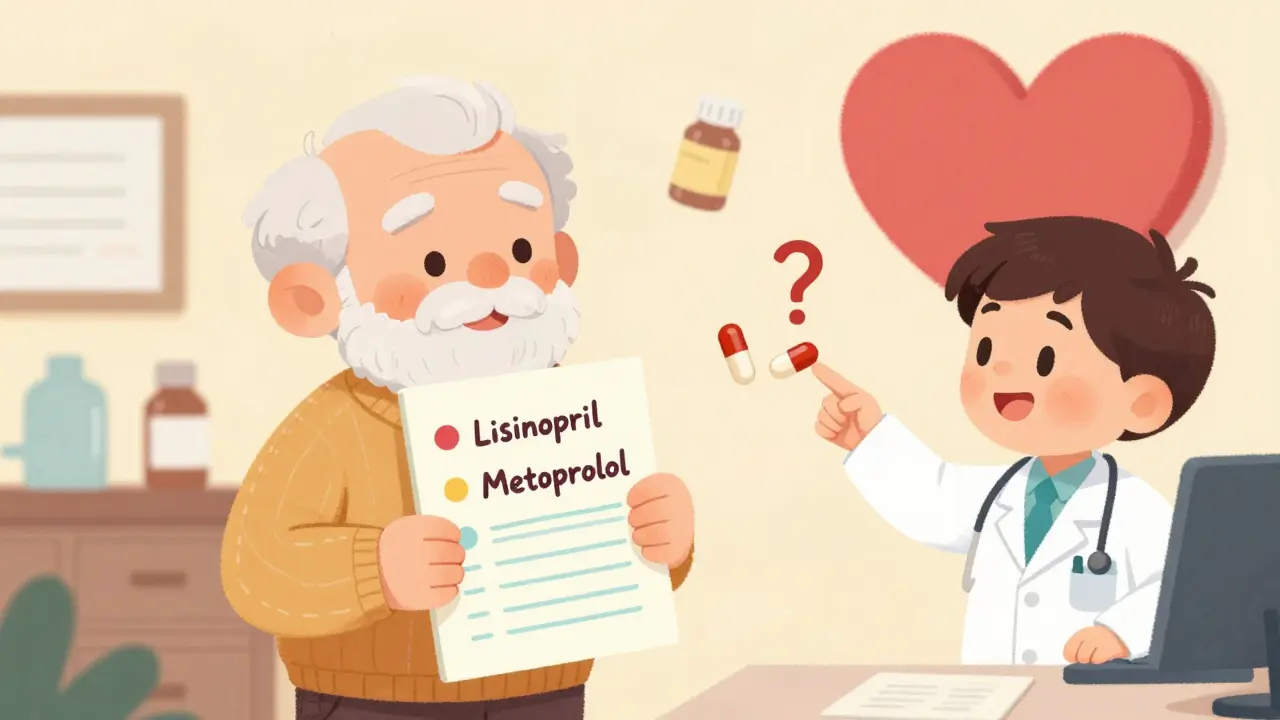
Imagine this: You’re 72 and have high blood pressure, diabetes, and arthritis. Your primary care doctor gives you lisinopril for blood pressure, metformin for diabetes, and ibuprofen for pain. Then you see a cardiologist. They hear your blood pressure is still high and prescribe metoprolol. They don’t know you’re already on lisinopril. Both drugs lower blood pressure. Together, they can drop it too far. You feel dizzy. You fall. You’re rushed to the hospital. This isn’t a story. It’s a common pattern.
Why Specialists Miss What Your Primary Doctor Prescribed
Specialists focus on one part of your health - heart, kidneys, joints. They’re trained to solve that one problem. But they rarely see your full medication list. Even if your records are electronic, the system might not show everything. A 2015 study in the Journal of the American Medical Informatics Association found that pharmacists saw an average of 20.4 duplicate medication alerts for every 100 prescriptions filled. That’s one in five prescriptions flagged as possibly overlapping. And in over a third of those cases, the pharmacist had to take action.
Why? Because specialists don’t always check what’s already been prescribed. They don’t always have time. They don’t always get alerts. And even when they do, studies show doctors override warnings 60% of the time - especially if they think the duplicate is "necessary."
What Duplicate Medication Really Means
Duplicate therapy isn’t just taking two pills with the same name. It’s taking two different drugs that do the same thing. For example:
- Lisinopril and losartan - both lower blood pressure
- Atorvastatin and rosuvastatin - both lower cholesterol
- Acetaminophen and combination painkillers like oxycodone/acetaminophen - both contain the same pain reliever
- Fluoxetine and sertraline - both are antidepressants from the same class
These aren’t mistakes you can spot just by looking at the bottle. You need to know the drug class. And most patients don’t. But pharmacists do. That’s why using one pharmacy matters.
Your Medication List Is Your Best Defense
The single most powerful tool you have is a written, updated list of everything you take - not just prescriptions.
That means:
- Every prescription - even if you’ve been on it for 10 years
- Every over-the-counter pill - like aspirin, ibuprofen, or melatonin
- Every vitamin, herb, or supplement - including ginkgo, fish oil, or turmeric
- The dose and how often you take it
Don’t rely on memory. Don’t write it on a napkin. Use your phone. Take pictures of your pill bottles. Or use a free app like Medisafe or MyTherapy. Print it out. Bring it to every appointment - even if it’s just a flu shot.
Studies show patients who bring their pill bottles to visits have 40% fewer medication errors. Why? Because labels have the exact name, dose, and manufacturer. Your doctor can match it to what’s in the system. If you say “I take a blue pill for blood pressure,” and the doctor sees you’re on a different blue pill, they’ll catch it.
Use One Pharmacy - Always
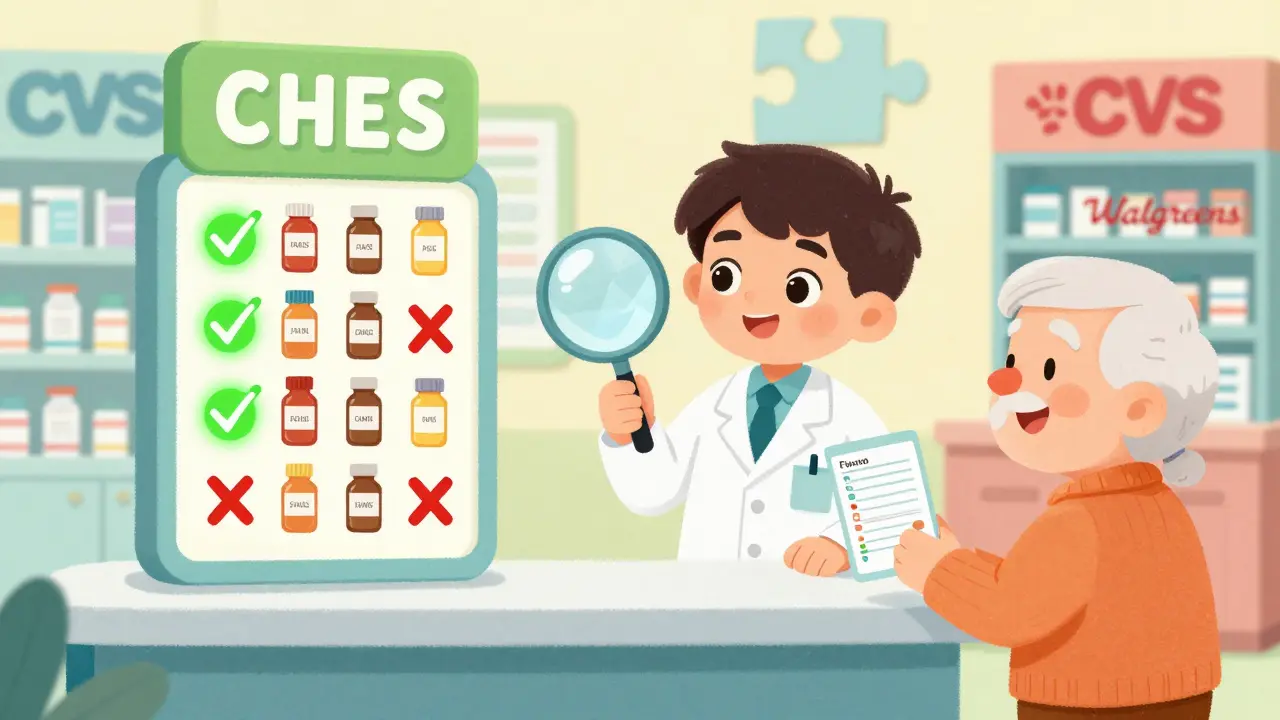
Pharmacists are the last line of defense. They see every prescription you fill. They have software that flags duplicates. But only if all your prescriptions come from them.
If you use CVS for your diabetes meds, Walgreens for your heart pills, and a mail-order service for your cholesterol drug, the system can’t connect the dots. Each pharmacy sees only part of your picture. But if you use one pharmacy - any one - they see everything. And they’re trained to spot duplication. A 2022 survey found that 68% of pharmacists see at least one duplicate medication error every week. Most of those were caught because the patient used one pharmacy.
Ask your doctor to send all new prescriptions to your main pharmacy. If they say they can’t, ask why. Most can. If they won’t, consider switching providers.
Ask These Three Questions at Every Specialist Visit
You don’t need to be an expert. Just ask these questions:
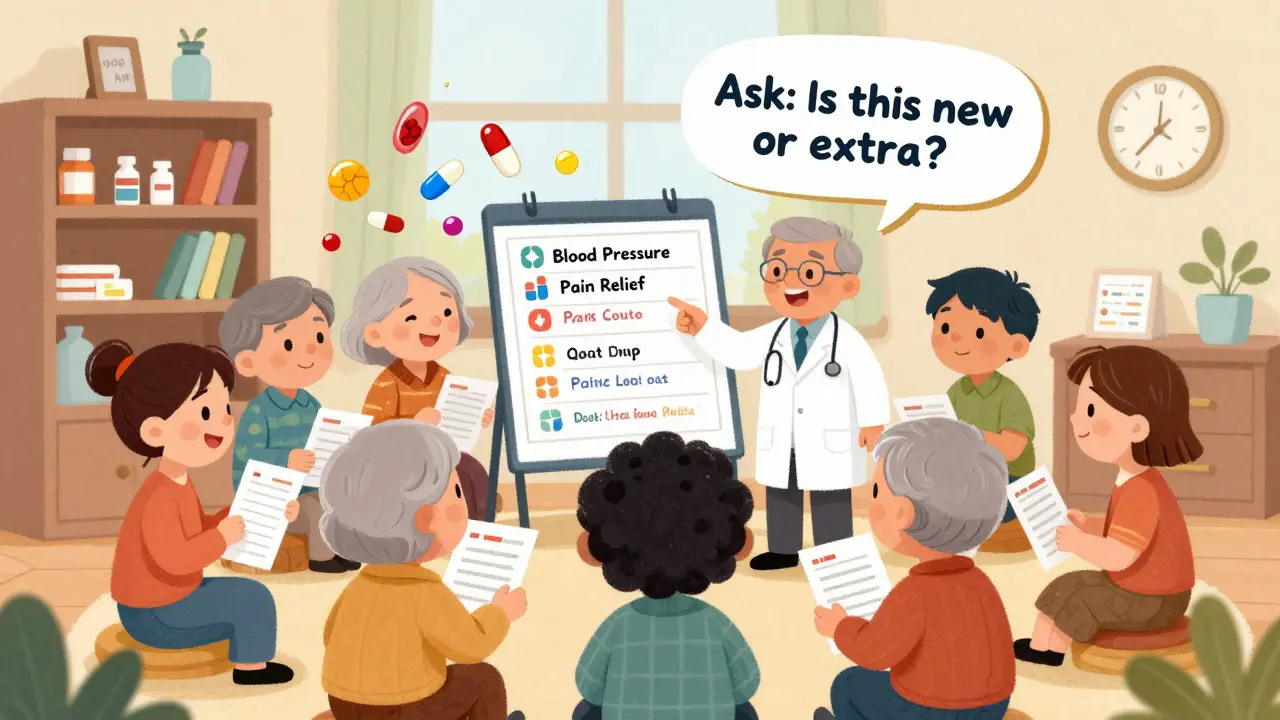
- “Is this new medication replacing something I’m already taking, or is it in addition?” If they say “in addition,” ask why.
- “What is this medicine for? I’m already taking something for this.” If you’re on two blood pressure pills, ask which one is more important. Sometimes one is for heart rate, another for kidney protection. But often, they’re just doubling up.
- “Can we review all my meds together?” If they say no, ask if they can send a note to your primary doctor. Say: “I’d like my primary care doctor to know about this change.”
These questions aren’t rude. They’re necessary. And they work. A 2021 study from Kaiser Permanente found that when doctors were required to write the reason for each prescription - like “for atrial fibrillation” or “for diabetic neuropathy” - duplicate medication errors dropped by 37%.
What to Do If You Suspect a Duplicate
Don’t stop taking a pill. Don’t guess. Call your pharmacist. They can check your history in minutes. If they confirm a duplicate, they’ll call your doctor. They’re trained to do this. They have protocols.
If you’re worried about side effects - dizziness, low blood pressure, stomach bleeding, confusion - call your doctor immediately. Don’t wait. A 2023 study in Nature showed that the more medications a person takes, the worse their health outcomes. Not because the drugs are bad. But because the more you take, the higher the chance of a hidden duplicate.
Technology Can Help - But Only If You Use It
Electronic health records are supposed to prevent this. But they’re not perfect. Some systems don’t talk to each other. Some alerts are too vague. Some doctors ignore them.
But there’s progress. Mayo Clinic’s new AI tool now catches 5.83% of duplicate prescriptions - up from 2.4%. That’s a 143% improvement. These tools scan your entire history: lab results, diagnoses, even notes from nurses. But they still need your input. If your list isn’t accurate, the AI can’t fix it.
That’s why your list matters more than any system.
Who’s at Highest Risk?
This isn’t just about being old. It’s about complexity. If you take five or more medications daily - especially for chronic conditions like heart disease, diabetes, or arthritis - you’re at high risk. The same goes if you see more than two specialists a year. The more providers you have, the more chances someone misses a prescription.
And it’s not just pills. Supplements can cause duplicates too. For example, if you take fish oil (which thins blood) and also take aspirin - both increase bleeding risk. Or if you take calcium with vitamin D, and your multivitamin already has both - you’re overdosing.
That’s why the list must include everything.
Final Rule: Never Assume Someone Else Is Checking
No one is watching your whole medication picture except you. Your primary doctor doesn’t know what your rheumatologist prescribed. Your cardiologist doesn’t know what your pain clinic gave you. Your pharmacist only sees what you fill there.
That’s why the answer isn’t more technology. It’s more communication. And you’re the only one who can make that happen.
Keep your list. Update it every month. Bring it to every appointment. Ask questions. Use one pharmacy. Talk to your pharmacist. If you do those five things, you cut your risk of a dangerous duplicate by 80%.
What should I do if I find out I’m taking two drugs that do the same thing?
Don’t stop either one on your own. Call your pharmacist immediately. They’ll check your history and contact your doctor. Most often, one of the medications can be stopped or switched. If you’re feeling side effects like dizziness, confusion, or unusual bruising, call your doctor right away. Never ignore symptoms - even if they seem mild.
Do I need to list vitamins and supplements too?
Yes. Vitamins, herbs, and supplements can cause dangerous interactions or duplicates. For example, taking a multivitamin with extra vitamin K while on warfarin can reduce its effect. Taking garlic supplements with blood thinners can increase bleeding risk. Even melatonin can interact with diabetes meds. Always include everything - even if you think it’s "natural."
Can my primary care doctor just fix this for me?
They can help - but only if they know what’s going on. Many primary doctors don’t have access to specialist records. That’s why you need to bring your own list. Ask your primary doctor to coordinate a full medication review. If they say no, ask if they can refer you to a pharmacist-led medication management program. These are often covered by insurance.
How often should I update my medication list?
Update it every time you start, stop, or change a medication - even if it’s just a one-time painkiller. Keep a digital copy on your phone and a printed version in your wallet. Review it every month. If you can’t remember what you’re taking, write it down. Your life depends on accuracy.
Is it okay to use different pharmacies for different medications?
It’s risky. Each pharmacy only sees part of your history. If you use multiple pharmacies, pharmacists can’t see if you’re getting duplicate drugs. Even if one pharmacy flags a warning, another might fill it anyway. Using one pharmacy gives them the full picture - and lets them protect you.
12 Comments
I swear, my grandma took 14 pills a day and swore none of them did the same thing. Then one day her pharmacist called and said, 'You're on three different blood pressure meds, two different painkillers, and your 'natural' turmeric is basically aspirin.' She cried. I cried. We now use one pharmacy and she has a binder. 🤦♀️💊
This is an exceptionally well-researched and vital piece of public health information. The systemic failure in medication reconciliation is not merely an oversight-it is a structural vulnerability in our healthcare architecture. I have personally witnessed elderly patients admitted for hypotensive syncope due to uncoordinated prescribing. The solution you propose-centralized pharmacy use and patient-held medication lists-is not merely advisable; it is ethically imperative.
Look, I get it. But let’s be real-most specialists don’t even look at the EHR. I’m a PA and I’ve seen it. They open the chart, scroll to the chief complaint, type the script, and hit send. The meds tab? That’s for people who have time. And don’t even get me started on how many times I’ve had to explain to a cardiologist that ‘yes, your patient is already on lisinopril, and no, you don’t need to add valsartan just because the BP is 145/85.’ It’s madness. The system is broken. Patient advocacy isn’t optional-it’s survival.
Man, I wish I read this 5 years ago. My dad was on 18 meds. We thought he was just old. Turns out he had two different statins, three different BP pills, and a supplement with melatonin that was messing with his diabetes. We switched to one pharmacy, started a Google Doc with pics of all bottles, and now he’s down to 9 meds. No more falls. No more ER trips. I’m telling everyone. Bring your damn pill bottles. It’s not weird-it’s smart. 💪
I mean… what if you just don’t trust doctors? Like, what if they’re all just pushing pills because they get paid to? I know this sounds crazy but my cousin’s doctor prescribed her 5 new meds after a 7-minute visit. She’s 68. She’s not sick. She’s just… being managed. 😅
Oh wow. Another feel-good article about how patients should be the ones fixing the broken system. Let me guess-no one’s holding the pharmaceutical reps accountable? No one’s auditing the EHR vendors who charge $20k/month to not talk to each other? And let’s not forget the insurers who incentivize polypharmacy to maximize formulary compliance. You’re asking grandma to be a full-time pharmacist while the real culprits sip lattes in corporate offices. Pathetic.
This is all a distraction. The real issue? The FDA allows drug companies to patent ‘new’ formulations of old drugs just to extend monopolies. Lisinopril? Generic. But add ‘extended-release’ and suddenly it’s $120/month. Then the docs get trained to prescribe the ‘new’ one. And the pharmacies? They’re paid per script, not per safety. This isn’t about patient lists-it’s about corporate greed. The system isn’t broken. It’s designed this way. 🤷♂️
i use 2 pharmacies bc one is near my work and one is near home. i thought that was fine? but now i think i should switch. also i forgot i took ginkgo last week. my head is spinning. lol
I started using Medisafe after my mom almost had a stroke from mixing warfarin and a new herbal tea. Now I screenshot every bottle, label, and even the little expiration date. I send it to my PCP every month. She says it’s the most organized patient she’s ever had. 😊 You don’t need to be perfect-you just need to be consistent. Start small. One pill. One photo. One month. You got this.
There’s a quiet philosophical truth here: autonomy in aging is not about independence from others-it’s about the courage to insist on being seen. We live in a world that treats the elderly as data points, not persons. To carry your own medication list isn’t just practical-it’s a quiet act of resistance. To say, ‘I am still here. I am still in charge. I will not let the system erase me.’ It’s not just about pills. It’s about dignity.
The most profound insight in this entire piece is the final rule: 'Never assume someone else is checking.' This reflects a deeper epistemological flaw in modern medicine: the delegation of responsibility without accountability. We have outsourced our health to systems that are not designed to integrate, but to compartmentalize. The solution is not more technology, but a reclamation of personal agency. You are not a patient. You are the curator of your own biological narrative.
I’m a pharmacist. I see this every single day. One woman came in with 17 prescriptions. She thought she was taking ‘vitamins.’ Turned out she had 5 different NSAIDs, 3 SSRIs, and a melatonin that was actually a 10mg dose (the max is 5). We called her PCP. She cried. We cried. We cut her meds to 6. She’s sleeping. She’s not dizzy. She’s alive. You don’t need to be a genius. Just be consistent. Bring the list. Ask the question. It saves lives. Seriously.