

When your kidneys aren’t working right, even common medicines can turn dangerous. It’s not about taking too many pills-it’s about your body not being able to clear them out. For someone with chronic kidney disease (CKD), a standard dose of ibuprofen or a diabetes pill might sit in the bloodstream for days instead of hours. That buildup doesn’t just cause side effects-it can land you in the hospital, or worse.
Why Your Kidneys Matter More Than You Think
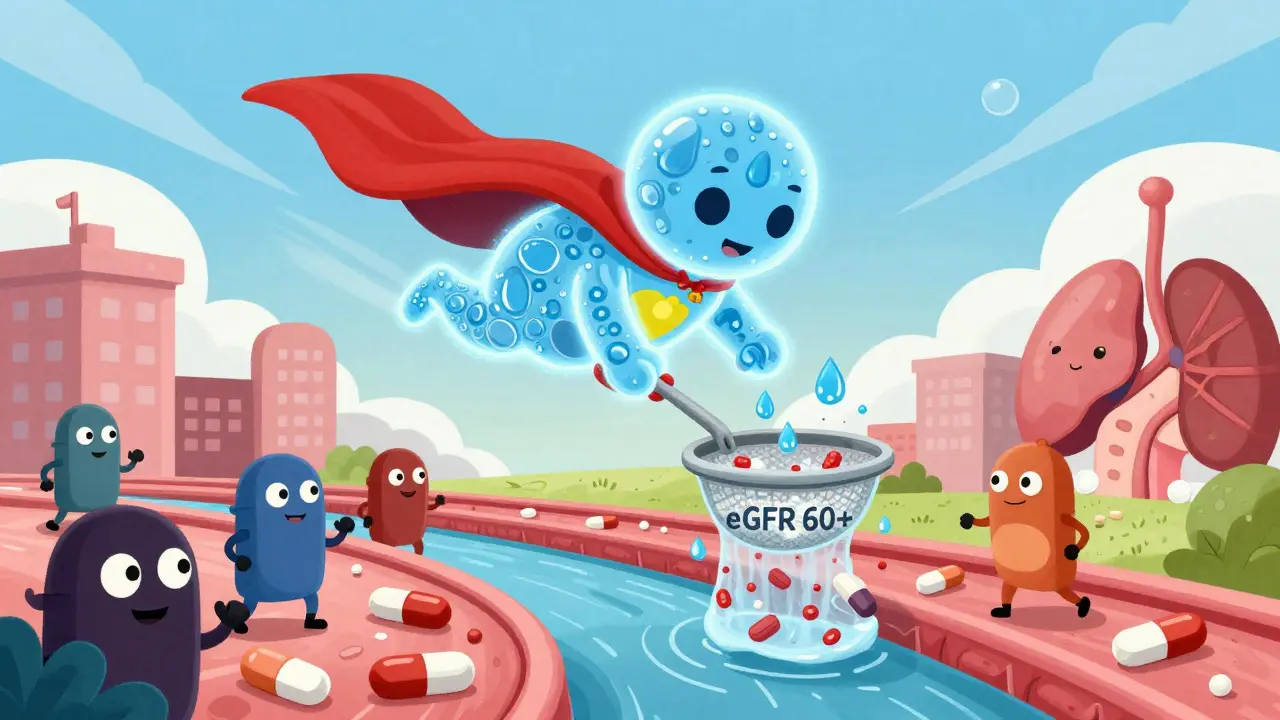
Your kidneys don’t just make urine. They filter about 30% of all medications you take. They break down drugs, flush out waste, and keep toxic levels from building up. When kidney function drops below normal-say, an eGFR under 60 mL/min/1.73m²-that filter starts to clog. At this stage, 40% of commonly prescribed drugs need dose changes. Yet, most people don’t know their eGFR, and many doctors don’t check it regularly.By the time someone reaches stage 3 CKD (eGFR 30-59), they’re often taking 10 or more medications-for diabetes, high blood pressure, heart disease, arthritis. Each one adds up. A 2022 survey found 78% of CKD patients got at least one medication without the right dose adjustment. That’s not a mistake-it’s a systemic blind spot.
Drugs That Turn Deadly in Kidney Disease
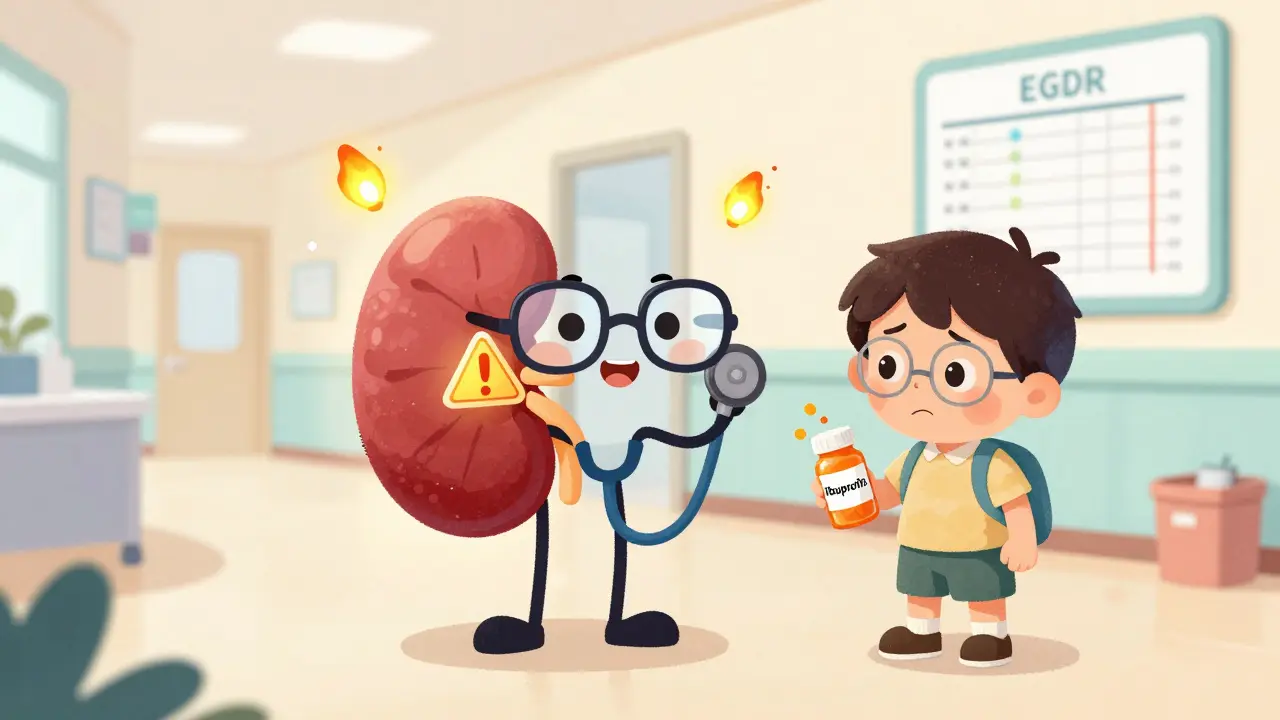
Some medications are safe for healthy people but risky for those with kidney issues. Here’s what to watch for:- NSAIDs (ibuprofen, naproxen, diclofenac): These painkillers block prostaglandins that keep blood flowing to your kidneys. In someone with eGFR under 60, they raise the risk of acute kidney injury by three times. One Reddit user shared how his creatinine jumped from 1.8 to 3.2 after taking standard ibuprofen for back pain. He was hospitalized for five days.
- Sulfonylureas (chlorpropamide, glyburide): These diabetes drugs cause dangerous low blood sugar in CKD. Chlorpropamide’s half-life goes from 34 hours to over 200 hours in stage 5 kidney failure. Glyburide’s active metabolite lingers so long, hypoglycemia can last more than three days. Glipizide, however, is safer-it’s cleared by the liver, not the kidneys.
- Trimethoprim (in co-trimoxazole): This antibiotic, often used for UTIs, can spike potassium levels by 1.2-1.8 mmol/L in just 48 hours when mixed with ACE inhibitors or ARBs. That’s a recipe for heart rhythm problems or cardiac arrest.
- Aciclovir: Used for shingles or cold sores, this antiviral can form crystals in the kidney tubules. In people with eGFR under 50, 5-15% develop crystal nephropathy. Some get confused, have seizures, or go into kidney failure.
- Metformin: The go-to diabetes drug is generally safe if used correctly. But when eGFR drops below 30, it’s stopped. Why? Risk of lactic acidosis. Still, a Cochrane review of 20,000 patients showed no cases when guidelines were followed.
- Direct Oral Anticoagulants (DOACs): Apixaban and rivaroxaban are easier to use than warfarin-but they’re cleared by the kidneys. In stage 4 CKD, bleeding risk jumps 40% compared to stage 2. Warfarin, cleared by the liver, stays safer.
- Tacrolimus and cyclosporine: These are life-saving for transplant patients, but they’re narrow-window drugs. Just 20-30% above the therapeutic level causes kidney damage. Long-term use leads to scarring in 25-30% of transplant recipients.
How Doctors Miss the Signs
A lot of this is preventable. Yet, mistakes keep happening.One big reason? Doctors rely on serum creatinine alone. But creatinine levels don’t tell the full story. A muscular 70-year-old might have a normal creatinine, but their kidneys are failing. That’s why eGFR matters. A 2021 JAMA study found 35% of primary care visits didn’t calculate eGFR at all.
Another issue? Dosing errors. The American Society of Health-System Pharmacists found a 42% error rate when prescribing drugs cleared more than 50% by the kidneys in patients with eGFR under 60. Vancomycin, for example, needs to go from every 12 hours to every 48-72 hours when eGFR drops below 30. Without monitoring blood levels, you’re guessing-and that’s dangerous.
Then there’s the interaction problem. Take NSAIDs plus ACE inhibitors. That combo triples kidney injury risk. Add trimethoprim? Risk spikes fivefold. No one checks the full list.
What You Can Do Right Now
If you have CKD-or think you might-you need to take control. Here’s how:- Know your eGFR. Ask your doctor for it. If they don’t know what it is, get a second opinion. Stage 3 is eGFR 30-59. Stage 4 is 15-29. Stage 5 is under 15.
- Make a full medication list. Include vitamins, supplements, and OTC drugs. Bring it to every appointment. Highlight any new meds or dose changes.
- Ask: “Is this safe for my kidneys?” Don’t assume it is. Ask specifically about renal clearance. If a drug is cleared more than 50% by the kidneys, it needs adjustment.
- Use tools like Meds & CKD. This app, developed by Healthmap Solutions, flags risky meds based on your eGFR. Users report 82% better conversations with their doctors after using it.
- Avoid NSAIDs. Use acetaminophen instead for pain. If you must take NSAIDs, use the lowest dose for the shortest time-and never without your doctor’s okay.
- Watch for symptoms. Dizziness, confusion, extreme fatigue, swelling, or irregular heartbeat could mean drug buildup. Don’t wait. Call your doctor.
The Bigger Picture: Why This Isn’t Just Your Problem
Drug-induced kidney injury adds $10,000 to $15,000 per hospitalization. In the U.S., preventable cases cost $18.7 billion a year. The FDA now fines drug companies $2.5 million if labels don’t include kidney dosing info. The European Medicines Agency logged over 12,000 cases in 2022-nearly half from wrong dosing.New tools are coming. KidneyIntelX, approved by the FDA in 2023, uses AI to predict your personal risk for drug toxicity with 89% accuracy. Stanford researchers are testing pharmacogenomic dosing-tailoring meds based on your genes. By 2030, electronic health records will likely auto-flag unsafe prescriptions before they’re even written.
But until then, the burden falls on you. You’re not just a patient. You’re your own best advocate. Your kidneys can’t speak up. You have to.
What’s Next? Monitoring and Prevention
Regular blood tests aren’t optional. Check your eGFR at least every 6 months if you have stage 3 or higher. If you’re on a high-risk drug, get blood levels checked-like vancomycin or tacrolimus. Ask for a kidney ultrasound if you’re on long-term nephrotoxic meds.Also, stay hydrated. Contrast dyes used in CT scans can cause kidney injury in 12-18% of CKD patients without proper hydration. With protocols? That drops to 1-2%. Simple steps matter.
And don’t ignore new meds. SGLT2 inhibitors like dapagliflozin are now used to protect kidneys in diabetes-but they need dose adjustments when eGFR falls below 45. New guidelines in 2024 will expand these recommendations. Stay updated.
Medication toxicity in kidney disease isn’t a rare edge case. It’s a daily risk for millions. And it’s mostly preventable.
Can I still take ibuprofen if I have kidney disease?
No, not safely. Ibuprofen and other NSAIDs reduce blood flow to your kidneys, which can cause sudden kidney injury-especially if your eGFR is below 60. Even short-term use can raise creatinine levels and lead to hospitalization. Use acetaminophen instead for pain relief, and always check with your doctor before taking any OTC painkiller.
How do I know if my meds need adjusting for kidney disease?
Ask your pharmacist or doctor to review all your medications using your eGFR number. Any drug cleared more than 50% by the kidneys (like metformin, vancomycin, or apixaban) likely needs a dose change if your eGFR is under 60. You can also use free tools like Meds & CKD or the National Kidney Foundation’s dosing guide to check your meds.
Is metformin safe for people with kidney disease?
Yes, but only if your eGFR is above 30. If your eGFR drops below 45, your dose should be reduced. If it falls below 30, you should stop taking it entirely because of the risk of lactic acidosis. But studies show that when guidelines are followed, the risk of lactic acidosis is virtually zero. Don’t stop metformin without talking to your doctor-it’s still the best first-line treatment for type 2 diabetes in most CKD patients.
What should I do if I feel dizzy or confused after starting a new medication?
Stop taking the medication and call your doctor immediately. Dizziness, confusion, or unusual fatigue can mean drug buildup in your blood-especially if you have kidney disease. These symptoms can be early signs of toxicity from drugs like trimethoprim, aciclovir, or even certain antibiotics or diabetes pills. Don’t wait for it to get worse.
Can kidney damage from medication be reversed?
Sometimes, yes-if caught early. Acute kidney injury from NSAIDs or contrast dye can improve within days or weeks after stopping the drug and getting proper hydration. But if the damage is chronic-like from long-term tacrolimus use or repeated episodes of injury-it can lead to permanent scarring. That’s why prevention is critical. Once kidney tissue turns to scar, it doesn’t heal.
Are there any apps or tools to help track safe medications for kidney disease?
Yes. The app Meds & CKD, developed by Healthmap Solutions, lets you enter your eGFR and lists which of your medications are risky and what the safe dose should be. It also alerts you to dangerous combinations, like NSAIDs with ACE inhibitors. Many patients report better communication with their doctors after using it. Other free resources include the National Kidney Foundation’s medication guide and the Renal PharmPK database from UCSF.
13 Comments
It’s wild how something as simple as ibuprofen can turn into a silent killer when your kidneys are tired. I used to pop them like candy for headaches-now I keep acetaminophen in my cabinet and never think twice. Your body doesn’t warn you until it’s too late. Glad this got shared.
We need more of these posts. Not just for CKD folks, but for their families too. My mom didn’t know her eGFR until she almost got hospitalized. Now she carries a laminated card with her meds and numbers in her purse. Small steps save lives.
Let’s be real-most primary care docs are still operating in the 2005 paradigm. eGFR isn’t even auto-populated in most EHRs unless you manually trigger it. And don’t get me started on the 42% dosing error rate for renally cleared drugs. Vancomycin troughs? Most clinics don’t even monitor them unless you’re inpatient.
Also, the fact that trimethoprim + ACEi is still being prescribed like it’s harmless is criminal. That combo spikes K+ faster than a TikTok trend. We need mandatory renal pharmacotherapy modules in med school. Not just ‘oh, check creatinine.’
This is exactly why we need standardized renal dosing protocols across all healthcare systems. The data is clear. The tools exist. The consequences are deadly. Yet, we’re still relying on individual vigilance instead of systemic safeguards.
As a healthcare administrator, I’ve pushed for automated eGFR alerts in our EHR. It cut preventable adverse events by 37% in six months. This isn’t about blame-it’s about design. If the system doesn’t protect patients, we’ve failed.
bro i had no idea metformin was safe till eGFR 30 😭 my uncle died from lactic acidosis and we thought it was just ‘old age’
now i use medskd app and show my doc every time he prescribes something new. he thinks i’m overdoing it but i dont care. better safe than sorry. also avoid NSAIDs like plague. acetaminophen is my bff now.
ps: ur post saved my dad. ty
I’ve been living with stage 3 CKD for five years now. I used to think ‘I’m fine, I don’t feel sick.’ Turns out, feeling fine doesn’t mean your kidneys are working.
What changed everything? I started writing down every single thing I take-even turmeric supplements. My pharmacist looked at my list and said, ‘You’re on six drugs that need adjustment.’ I had no idea.
Now I bring that list to every appointment. I ask, ‘Is this cleared by the kidneys?’ I don’t wait for them to say it. I say it first. It’s scary, but it’s empowering.
i just started taking dapagliflozin and my doc said it’s good for kidneys but i didn’t know about the dose thing for eGFR under 45. thanks for reminding me to ask
My cousin’s a transplant patient on tacrolimus. She’s on blood tests every week and wears a medical alert bracelet. One time her dose was off by 0.5 mg and she nearly lost her kidney. That drug is a knife’s edge.
But here’s the thing-she’s alive because she refused to let anyone guess. She printed out the dosing guidelines, laminated them, and taped them to her fridge. She says, ‘If I’m gonna live, I’m gonna do it right.’
I’m stealing that idea.
Just had my first kidney ultrasound after 10 years of hypertension. Turns out I’ve got mild scarring. My doc said it’s from years of unmonitored NSAIDs.
😭 I feel so stupid. But now I’ve downloaded Meds & CKD, stopped all ibuprofen, and I’m asking my pharmacist to review every med I take. If you’re reading this and you’re on painkillers or diabetes meds-do it too. Your future self will thank you.
💖
you people are overreacting its just kidney disease everyone gets old and their kidneys fail its not a conspiracy the system is fine you just need to stop being paranoid about meds
This is why America needs to stop letting unqualified doctors prescribe without checking eGFR! We have the technology! We have the data! But we’re still letting lazy clinicians kill people with OTC painkillers! This isn’t medical care-it’s negligence! And you wonder why healthcare costs are insane? Because people are getting sick from dumb mistakes!
A rather pedestrian overview. The real issue is the lack of nephrology training in primary care. And the fact that you're still relying on eGFR-crude, age- and muscle-mass-dependent. We need cystatin C, and we need it yesterday.
I’m a nurse in a dialysis center. Every week, someone comes in with a creatinine spike because they took Advil for a headache. Every. Week.
My favorite thing to say? ‘I’m not here to judge. I’m here to help you live.’
So I hand them a list of safe pain options. I show them the app. I tell them to text me if they’re unsure. No one’s ever been mad at someone who actually listens.
You’re not a burden. You’re a person. And you deserve to be heard.
There’s a new FDA-approved AI tool called KidneyIntelX that predicts drug toxicity risk with 89% accuracy. It’s not widely adopted yet, but hospitals in Minnesota and California are piloting it. It integrates with Epic and flags unsafe combinations before the script is even printed.
Imagine a world where your doctor’s EHR says, ‘Warning: Patient has eGFR 38. Naproxen + lisinopril = 5x AKI risk. Suggest acetaminophen + low-dose ARB.’
That’s not sci-fi. It’s coming. And we need to demand it now.