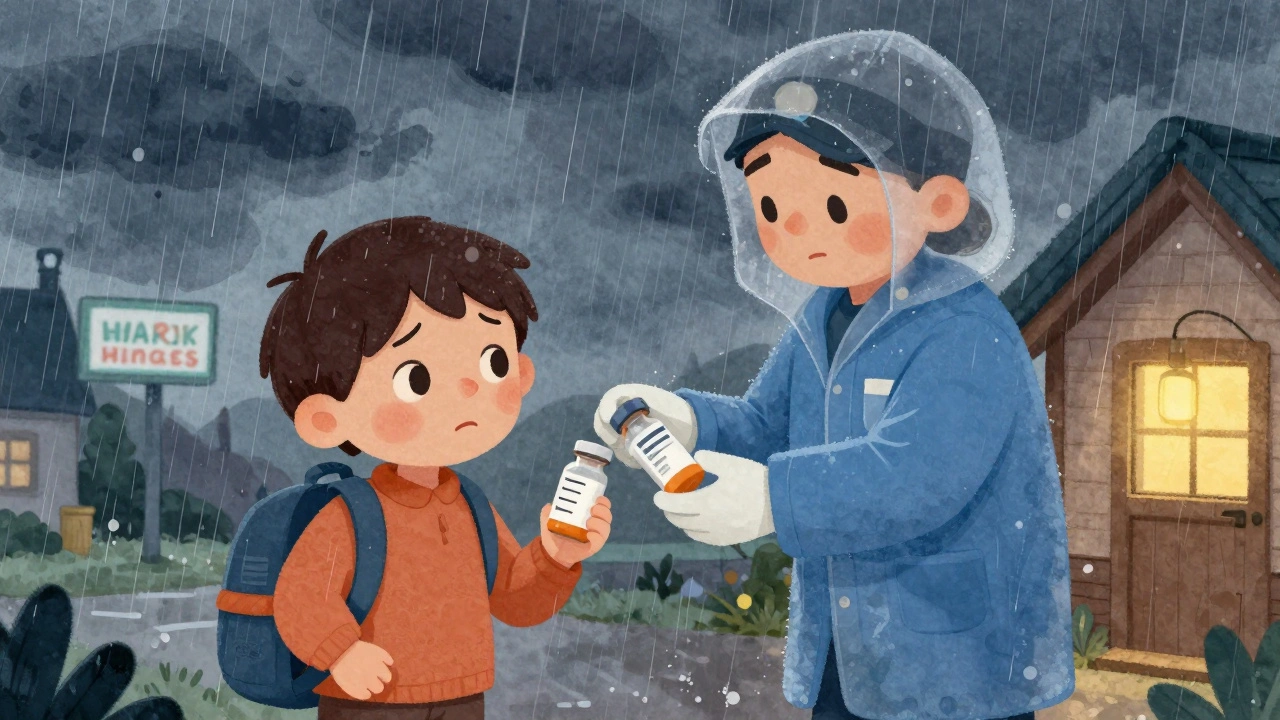
Most people toss out expired pills without a second thought. But what if you’re in a remote area during a storm, your insulin ran out, and the nearest pharmacy is 50 miles away? Or you’re a paramedic with no fresh epinephrine left after three straight anaphylaxis calls? In those moments, the question isn’t should you use an expired drug-it’s can you?
Expiration Dates Aren’t ‘Use-By’ Dates
The date printed on your medicine bottle doesn’t mean the drug suddenly turns toxic or useless. It’s a manufacturer’s guarantee: if stored properly, this pill will work as intended until this date. After that? No one’s tested it. But that doesn’t mean it’s dead. The FDA’s Shelf Life Extension Program (SLEP), run since 1985 with the Department of Defense, tested over 100 drugs stored under ideal conditions. Results? 90% retained at least 90% of their original potency-some for over 15 years past expiration. In one study, 88% of 122 military stockpiled drugs were still effective 8 years after their labeled expiration. The problem isn’t science-it’s liability. Drug companies set conservative dates to avoid lawsuits. If you take an expired aspirin and it doesn’t work, you might be annoyed. If you take an expired antibiotic and your infection gets worse? That’s a lawsuit waiting to happen.Not All Medicines Are Created Equal
Some drugs lose strength slowly. Others degrade fast-or worse, turn dangerous. Safe to use in emergencies (if no alternatives):- Acetaminophen (Tylenol)
- Ibuprofen (Advil)
- Diphenhydramine (Benadryl)
- Albuterol inhalers (if stored properly)
- Epinephrine auto-injectors
- Insulin
- Nitroglycerin
- Antibiotics (especially tetracycline)
- Seizure medications (like phenytoin)
- Warfarin (blood thinner)
Storage Matters More Than You Think
A pill sitting in a hot bathroom cabinet isn’t the same as one kept in a cool, dry drawer. - Temperature: Every 10°C above 25°C cuts shelf life in half. Medications stored above 30°C degrade 2-3 times faster. - Humidity: Moisture causes tablets to crumble and capsules to stick. - Light: Nitroglycerin and other light-sensitive drugs lose potency 15-25% faster if exposed to sunlight. - Form: Tablets last longer than liquids. A liquid antibiotic might be useless 6 months past expiration. A tablet of the same drug? Could still work 5 years later. Denver Metro EMS requires temperature logs for all refrigerated meds. If your insulin was left in a car on a 90°F day? Don’t use it-even if it’s “only” 2 weeks expired.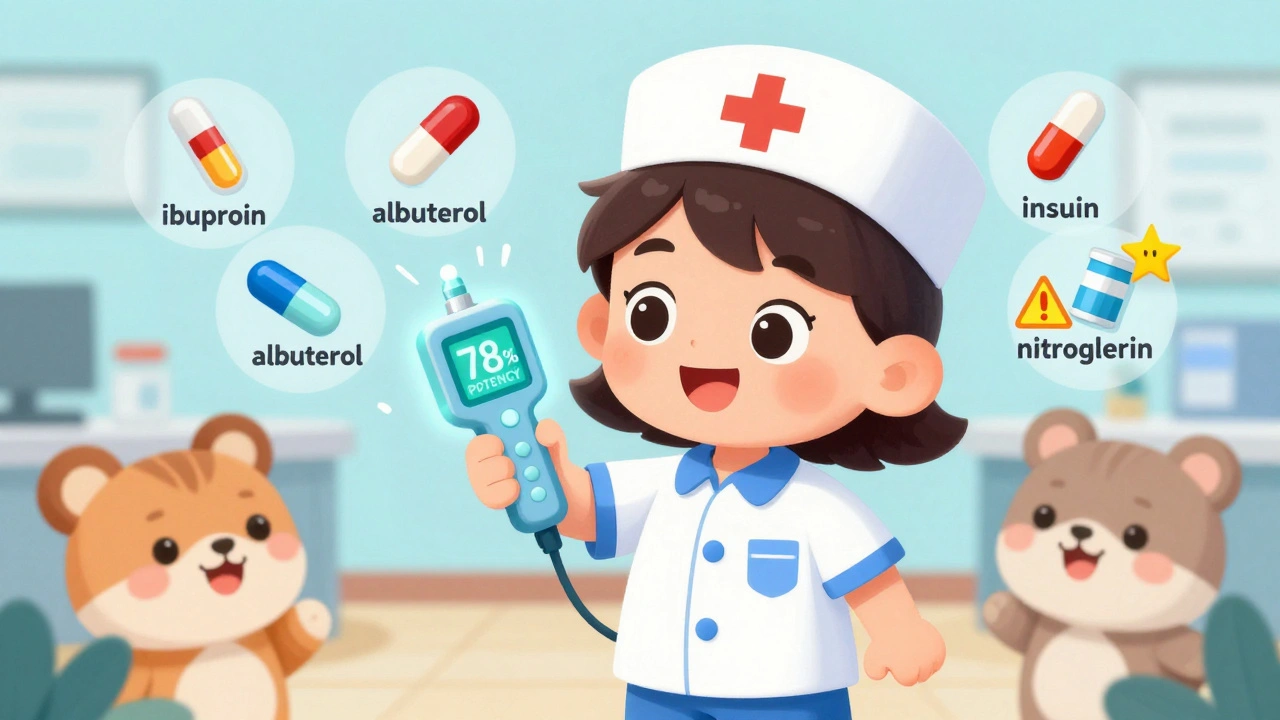
When Is It Okay to Use Expired Drugs?
The American College of Emergency Physicians (ACEP) has clear guidance: Never use expired: - Insulin - Epinephrine - Nitroglycerin - Liquid antibiotics Use only in emergencies: - Seizure meds - Warfarin - Thyroid pills - Inhalers Generally safe: - Pain relievers - Antihistamines - Antacids - Some vitamins The rule of thumb? Only use expired meds if: 1. There’s no alternative available. 2. The condition is life-threatening. 3. The drug is one of the lower-risk types. 4. It looks normal-no discoloration, smell, or particles. 5. You’re prepared to get to a hospital immediately after. EMS agencies in the U.S. started using expired meds during the 2021-2022 fentanyl shortage. 67% of agencies had formal protocols. One EMS director in Denver extended albuterol expiration dates by 90 days during a 2022 shortage. Zero adverse events reported.What Happens If You Use a Sub-Potent Drug?
Most of the time? Nothing dramatic. You might not feel relief from your headache. Or your allergy symptoms linger. But here’s the real danger: sub-potent antibiotics. If the dose is too low, it won’t kill all the bacteria. The survivors? They become resistant. That’s how superbugs like MRSA spread. A 2023 study in UH Hospitals blog warned: “Sub-potent antibiotics might not fully treat an infection, leading to more serious illness and possible antibiotic resistance.” Seizure meds? A 15% drop in potency can increase seizure risk by 35%. Warfarin? A 10% change can flip you from bleeding to clotting. These aren’t hypotheticals-they’re documented cases. A 2023 report in Prehospital Emergency Care described a man with status asthmaticus who got a 6-month expired albuterol inhaler. It didn’t work. He needed intubation. He survived. But he could have died.How to Assess an Expired Medication
Before you even think about using it:- Look: Is the pill discolored? Cracked? Stuck together? Is the liquid cloudy or has particles floated to the top?
- Smell: Does it smell odd? Rancid? Chemical? Throw it out.
- Check storage: Was it kept cool and dry? Or left in a hot car or humid bathroom?
- Know the drug: Is it high-risk? Low-risk?
What’s Changing in 2025?
The FDA released draft guidance in April 2023 proposing standardized rules for extending expiration dates of 12 critical drugs during shortages. The Department of Defense expanded its SLEP program in January 2024 to cover 35 drug classes. Researchers at the University of Florida are testing portable Raman spectroscopy devices-handheld tools that can measure a pill’s actual potency in seconds. Imagine an EMT scanning an expired epinephrine pen and seeing “78% potency” on a screen. That could change everything. But the FDA still says: “Expiration dates exist for patient safety.” Commissioner Robert Califf hasn’t changed his stance. The message remains: Don’t do this unless you have to.What Should You Do Now?
If you’re managing chronic conditions:- Keep a 30-day supply of critical meds on hand.
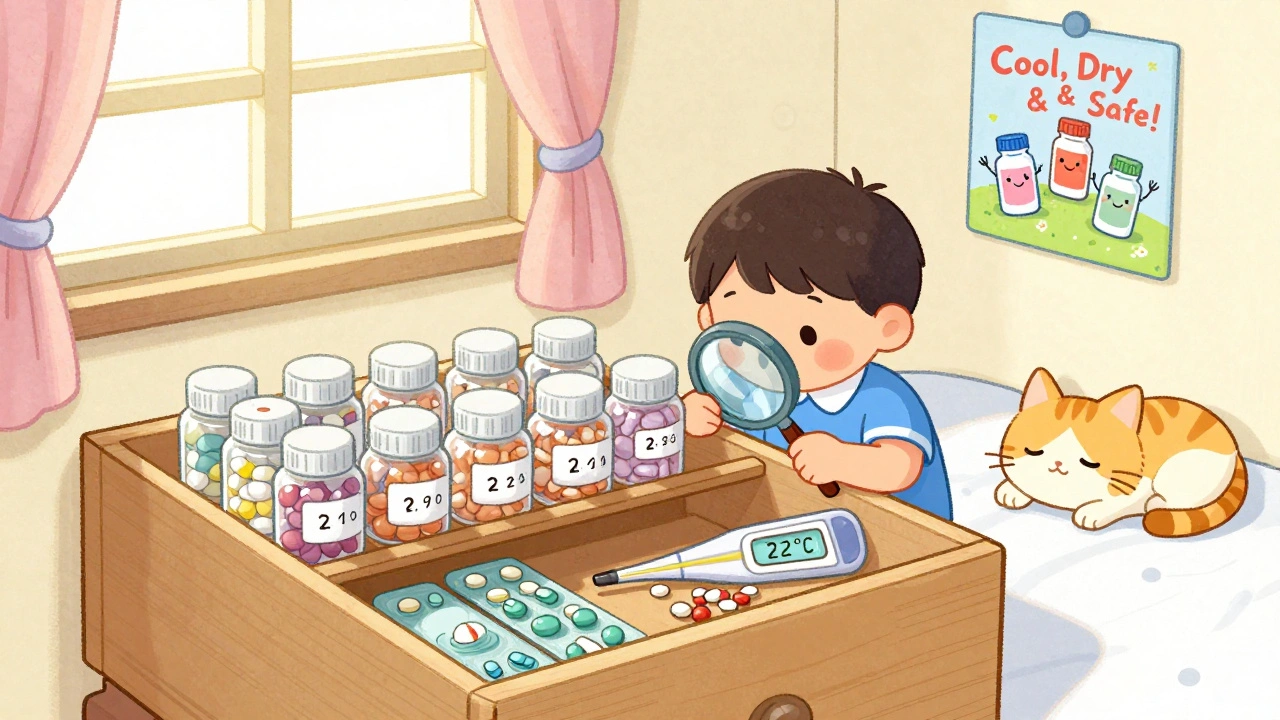
- Store them in a cool, dry place-like a bedroom drawer, not the bathroom.
- Check expiration dates every 6 months.
- Don’t hoard. Expired meds aren’t a stockpile-they’re a backup.
- Know your agency’s protocol.
- Train staff on visual inspection and risk categories.
- Document every use-storage conditions, drug name, expiration date, patient outcome.
Why This Matters
In 2022, the U.S. faced 312 drug shortages. Injectable meds made up 68% of them. Hospitals and EMS systems are already stretching supplies. By 2023, 43% of U.S. hospitals had formal expiration extension protocols. That number will keep rising. This isn’t about breaking rules. It’s about surviving them. The science says: most expired meds are still safe. The system says: never use them. The truth? It’s somewhere in between. And in emergencies, the person who knows the difference might be the one who saves a life.Is it safe to take expired painkillers like ibuprofen or Tylenol?
Yes, in most cases. Studies show ibuprofen and acetaminophen retain 85-90% of their potency up to 5 years past expiration if stored properly-cool, dry, and out of sunlight. They don’t become toxic. The main risk is reduced effectiveness. If you take an expired pill and your headache doesn’t go away, it’s not dangerous-it just didn’t work. For non-life-threatening pain, they’re generally safe to use during shortages.
Can expired epinephrine still save someone during anaphylaxis?
It can. Research shows expired epinephrine auto-injectors retain enough potency to reverse anaphylaxis in 78% of cases up to 12 months past expiration. But potency drops by about 25% per year. If it’s been 3 years past expiration? The risk increases. Still, in a true emergency with no other option, using an expired epinephrine pen is better than doing nothing. Always call 911 after-even if the person improves.
Why do drug companies set such short expiration dates?
It’s not about science-it’s about liability. Manufacturers test drugs for stability for a set period, then assign an expiration date that gives them a safety buffer. Extending it legally would require more testing and regulatory approval. They avoid that to prevent lawsuits. If someone takes an expired drug and has a bad reaction, the company could be held responsible-even if the drug was still effective. So they play it safe.
Are expired antibiotics dangerous?
They’re not usually toxic-but they can be dangerous. Sub-potent antibiotics may not fully kill bacteria, allowing the strongest strains to survive and multiply. This leads to antibiotic resistance, which is a global health crisis. Tetracycline is a special case: it can break down into toxic compounds after expiration. Never use expired antibiotics unless you’re in a life-or-death emergency with zero alternatives.
What should I do with expired medications?
For most pills, mix them with coffee grounds or cat litter, seal them in a bag, and throw them in the trash. Never flush them unless the label says to. For controlled substances like opioids, use a DEA-authorized take-back program. If you’re in an emergency and have no other option, keep the expired meds as a last-resort backup-but never rely on them for daily use. Always replace them as soon as possible.
13 Comments
Been keeping expired ibuprofen in my bug-out bag for years. Never had an issue. If your headache’s still there after a 5-year-old pill, at least you didn’t die.
I live in rural Montana and my mom’s on warfarin. We rotate her supply every 4 months, but last winter the pharmacy was closed for 11 days after a blizzard. We used her 8-month-expired bottles-she was fine. The docs told us not to, but they also didn’t show up. I’ve seen what happens when you wait for the system to work. Sometimes you just have to make the call.
The FDA’s stance is not arbitrary. It’s based on decades of liability litigation and public safety precedent. While anecdotal evidence suggests some drugs retain potency, the margin for error in life-critical medications is zero. The cost of one preventable death outweighs the convenience of saving a few dollars on prescriptions.
Let’s not romanticize this. The SLEP data is fascinating, sure-lab conditions, controlled temps, military-grade packaging. But most of us store meds in a hot bathroom drawer next to the shampoo. That’s not science, that’s a chemical weathering experiment. And don’t get me started on the myth that ‘if it looks fine, it’s fine.’ Degradation isn’t always visible. A 15% drop in insulin potency won’t make it turn green-it’ll just make your glucose spike silently while you sleep. The real issue isn’t the expiration date-it’s the systemic failure that forces people to gamble with their lives because healthcare is a luxury.
So you’re telling me the pharmaceutical industry is lying to us about expiration dates to make more money? Wow. What a shock. Next you’ll say the moon landing was faked and that the FDA is just a front for Big Pharma to sell more pills. I mean, if you’re gonna believe in expired epinephrine, why not just drink bleach and call it a day?
They don’t want you to know this but the FDA and drug companies are in cahoots. The real reason expired meds are banned? They’re too damn cheap to replace. If you could use a $2 bottle of insulin from 2018, the whole $300/month racket collapses. They’re keeping you sick on purpose. I’ve got a friend in the DEA who says they’ve got a secret list of drugs that turn toxic after expiration-tetracycline’s just the tip of the iceberg. They’re letting people die so the stock price stays up.
I’m not a doctor but I’ve been in the field long enough to know that sometimes you gotta do what you can. My cousin used an expired inhaler during a flare-up in the mountains and lived to tell about it. I don’t think we should glorify it, but we also shouldn’t pretend the system’s perfect. People are dying because they can’t afford meds. That’s the real crisis-not the pill’s expiration date.
wait so if its in a cool dry place and no discoloration… its kinda ok? i think i read that somewhere but im not sure… i think i have some tylenol from 2019? i hope its not bad…
The data cited here is cherry-picked. The SLEP program tested drugs under ideal conditions-refrigerated, sealed, oxygen-free. Real-world storage? Not even close. Also, potency ≠ safety. A drug can retain potency and still degrade into harmful byproducts. The study on epinephrine? Small sample size, no control group. This reads like a blog post masquerading as medical advice. Don’t trust anecdote over regulation.
While the empirical data regarding drug stability is compelling, the legal and ethical frameworks governing pharmaceutical use are not designed to accommodate situational exceptions. The principle of non-maleficence requires that we prioritize the integrity of standardized protocols over individualized risk calculus. To do otherwise is to undermine the very foundations of evidence-based practice.
I’ve been a nurse for 18 years and I’ve seen what happens when people use expired meds. Sometimes it’s fine. Sometimes it’s not. But I’ve also seen families who can’t afford to refill prescriptions, and I’ve held their hands while they cry because they’re choosing between food and insulin. I don’t have the answers. But I know we’re failing them.
Oh wow, so now we’re supposed to be heroes and use expired drugs like some kind of DIY survivalist? Meanwhile, the same people who wrote this post are probably sipping lattes in their air-conditioned offices while real people are dying because they can’t afford to refill. You’re not brave-you’re just privileged enough to think you can gamble with other people’s lives. Go read a textbook instead of writing clickbait.
As a former FDA compliance officer, I can confirm that the expiration date is not a suggestion-it is a legally binding assurance of safety and efficacy under specified storage conditions. While it is true that many compounds retain potency beyond their labeled date, the manufacturer’s liability exposure increases exponentially with each day past expiration. In the event of an adverse outcome, the prescribing clinician, the dispensing pharmacist, and the patient all become legally vulnerable. The only responsible course of action is to replace expired medications, regardless of perceived potency. The risk, however small, is not worth the liability.