


Most people don’t realize their drinking is slowly destroying their liver until it’s too late. You might feel fine. No pain. No jaundice. Just a little tired after work, a bit bloated after dinner. But behind the scenes, your liver is changing-bit by bit, year by year. Alcohol-associated liver disease (ALD) doesn’t hit like a heart attack. It creeps in. And by the time symptoms show up, the damage is often advanced.
The Three Stages of Alcohol-Associated Liver Disease
ALD isn’t one condition. It’s a progression. Three clear stages, each more serious than the last. And the scary part? The first stage is reversible-if you act fast.
Stage 1: Fatty Liver (Hepatic Steatosis)
This is where it starts. After just a few days of heavy drinking-say, 4 or more standard drinks daily-fat begins building up in your liver cells. It’s not inflammation yet. No scarring. Just fat. And it’s incredibly common. About 90% of people who drink heavily develop this stage. Men and women both get it, but women are more vulnerable. Even lower amounts of alcohol can trigger it in women because their bodies process alcohol differently.
Most people have no symptoms. No pain. No yellow skin. Just slightly elevated liver enzymes on a blood test-AST higher than ALT, often in a 2:1 ratio. That’s a red flag doctors look for. But unless you’re getting regular checkups, you might never know. A 2017 study showed that 85% of people who stopped drinking completely saw their fatty liver disappear within 6 weeks. No medication. No surgery. Just no alcohol.
This is your window. Your last chance to undo the damage without a fight.
Stage 2: Alcoholic Hepatitis (Alcohol-Associated Hepatitis)
If you keep drinking, the fat turns into inflammation. That’s alcoholic hepatitis. It’s not just fat anymore. Your liver is angry. Swollen. Damaged. About 30-35% of people with fatty liver who keep drinking will reach this stage-usually after 5 to 10 years of heavy use. But sometimes, it hits fast. A single binge of 100 grams of alcohol (about 7-8 drinks) in 24 hours can trigger it in someone already at risk.
Symptoms start showing now. Yellow eyes and skin (jaundice). Belly swelling from fluid buildup (ascites). Fever. Nausea. Confusion. Fatigue so deep it feels like you’re dragging through mud. Blood tests show liver enzymes spiking. The Maddrey Discriminant Function score is used to measure severity. A score over 32 means you’re in danger-30-40% chance of dying within a month if you don’t stop drinking and get treatment.
Doctors treat severe cases with steroids like prednisolone. The STOPAH trial found steroids lowered 28-day death rates from 20% to 17.6%. But only about 40% of patients respond. And if you keep drinking? The steroids won’t help. The damage keeps climbing.
Here’s the hard truth: half the people who end up in the hospital with alcoholic hepatitis had no idea they had liver disease before. No diagnosis. No warning. One day, they’re jaundiced. The next, they’re in intensive care.
Stage 3: Cirrhosis
This is the point of no return-or so people think. Cirrhosis means your liver is covered in scar tissue. More than 75% of healthy liver structure is gone. It’s stiff. It can’t filter toxins. It can’t make proteins. It can’t store energy. About 10-20% of heavy drinkers reach this stage. But it doesn’t happen overnight. It takes years. And even here, stopping alcohol can change your outcome.
Compensated cirrhosis means your liver is scarred but still working. You might feel okay. No swelling. No bleeding. No confusion. But the damage is there. An ultrasound or FibroScan can detect it without a biopsy. And if you stop drinking now? 50-60% of people stabilize. Their survival jumps from 30% to 70-90% over five years.
Decompensated cirrhosis is the crisis stage. Fluid floods your belly. You vomit blood from ruptured veins in your esophagus. You get confused, forgetful, even comatose from toxins your liver can’t remove. This is life-threatening. Half of these patients die within two years without a transplant.
Liver transplant is the only cure. But most centers require six months of verified abstinence before listing. And even then, you’re not guaranteed a match. The 5-year survival rate after transplant is 70-75%. But only if you stay sober.
What Makes Progression Worse?
Not everyone who drinks heavily gets cirrhosis. Why? Genetics matter. If you carry certain gene variants-like PNPLA3 or TM6SF2-you’re at higher risk, even with moderate drinking. Women are more vulnerable than men. People with obesity or diabetes (metabolic syndrome) see faster liver damage. And if you have hepatitis B or C on top of drinking? Your liver is under double attack.
Even moderate drinking-20 to 40 grams a day (about 2-3 drinks)-can speed up scarring in people with fatty liver from other causes, like poor diet. One study showed fibrosis advanced three times faster in drinkers with NAFLD than in those who quit.
And then there’s stigma. Many patients say doctors blamed them instead of helping. One patient told a support group: "My doctor said, ‘You did this to yourself,’ and walked out. I didn’t see another liver specialist for two years." That delay cost him his chance to reverse the damage.
How Is It Diagnosed?
There’s no single test. Doctors piece it together.
- Blood tests: Look for elevated AST, ALT, and bilirubin. An AST/ALT ratio over 2 is a classic sign.
- Imaging: Ultrasound, CT, or MRI can show fat or scarring. But they can’t always tell how bad it is.
- FibroScan: A non-invasive tool that measures liver stiffness. It’s 85-90% accurate at detecting advanced fibrosis. No needle. No hospital stay.
- Liver biopsy: The old gold standard. Now used less often because FibroScan works so well. But sometimes, it’s still needed to confirm the stage.
- Prognostic scores: Maddrey, GAHS, Lille Model-these help predict survival and whether steroids will work.
Early detection is rare. Most people don’t get tested until they’re sick. That’s why ALD kills so many. It’s silent until it’s not.
Can It Be Reversed?
Yes-up to a point.
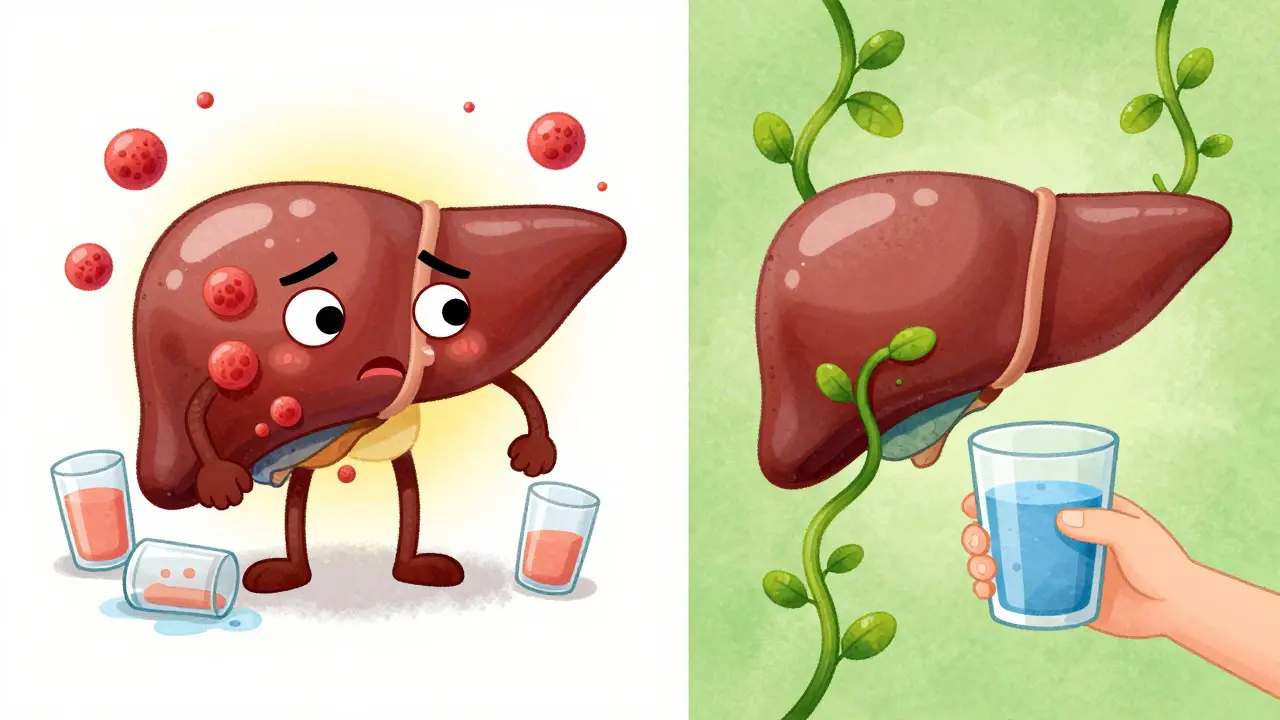
Fatty liver? Fully reversible in weeks with complete abstinence.
Alcoholic hepatitis? Reversible if caught early and you stop drinking. Steroids help, but only if you stop drinking. Keep drinking? No medicine in the world will save you.
Cirrhosis? The scarring doesn’t vanish. But stopping alcohol can stop it from getting worse. In fact, people who quit after cirrhosis diagnosis live 12+ years on average. Those who keep drinking? They live about 1.8 years.
Transplant is the only cure for end-stage disease. But it’s not a license to drink again. Most transplant centers require lifelong sobriety. And most patients who relapse lose their new liver within a few years.
What’s Next? New Hope on the Horizon
Science is catching up. Fecal microbiota transplants (FMT)-transferring healthy gut bacteria into patients with severe alcoholic hepatitis-showed a 40% improvement in 90-day survival in a 2022 Lancet study. New drugs like emricasan are being tested to reduce liver inflammation without steroids.
The ALive biomarker panel, now in phase 3 trials, could soon detect early liver damage from blood tests alone-no scan, no biopsy. That could change everything. Imagine knowing you’re at risk before your liver starts failing.
And treatment is shifting. The best outcomes now come from teams that combine liver specialists with addiction counselors. One 2023 study found that patients who got both types of care were twice as likely to stay sober after one year than those who saw only a liver doctor.
What Should You Do?
If you drink and have any of these:
- Unexplained fatigue
- Swelling in your belly or legs
- Yellowing of your skin or eyes
- Elevated liver enzymes on a blood test
- A family history of liver disease
Get tested. Don’t wait for symptoms. Don’t wait for a doctor to bring it up. Ask for a FibroScan or liver enzyme panel. Tell your doctor your drinking habits honestly. They’re not there to judge. They’re there to help.
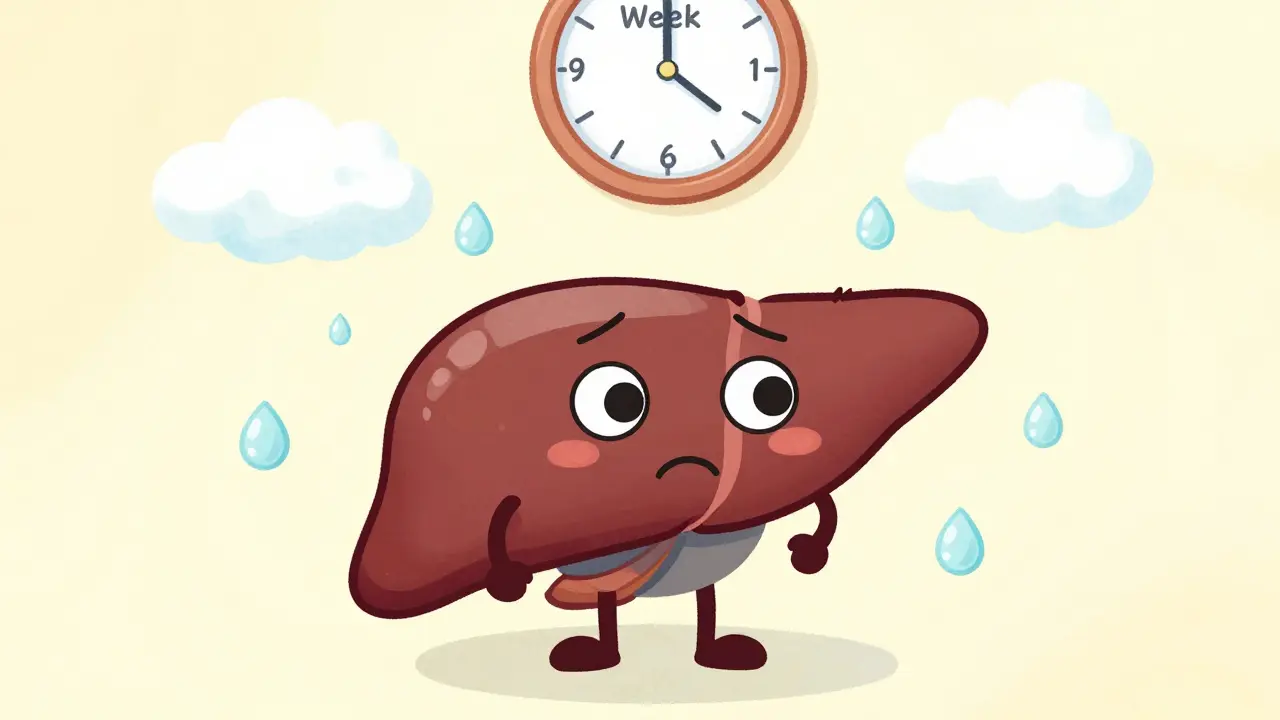
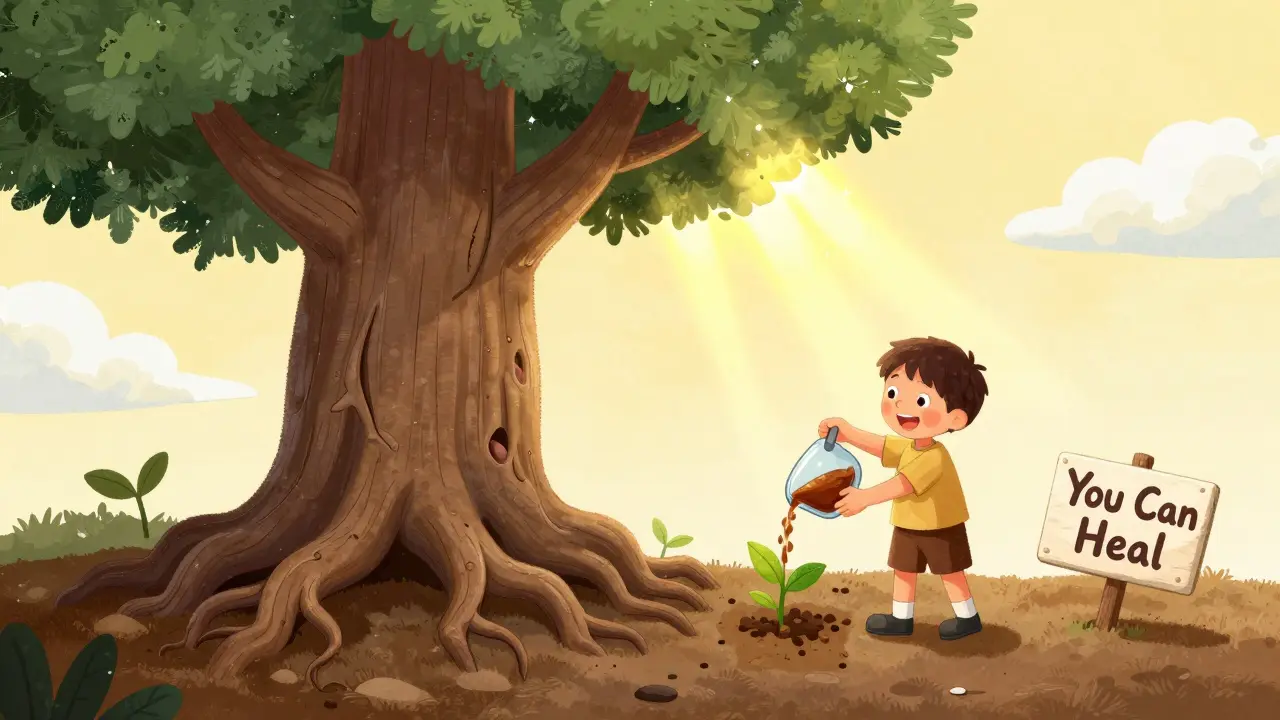
If you’ve been diagnosed with fatty liver? Stop drinking. Now. Don’t cut back. Don’t "cut it in half." Stop. Completely. You have 6 weeks to reverse it. After that, the clock keeps ticking.
If you’re in the hepatitis stage? You need medical help. Steroids. Nutrition. Support. And complete abstinence. This isn’t a lifestyle change. It’s a life-or-death decision.
If you have cirrhosis? It’s not the end. But it’s the start of a new chapter-one where sobriety isn’t optional. It’s your lifeline.
Alcohol-associated liver disease doesn’t care how much you drink. It only cares if you keep drinking. And it doesn’t care if you’re "not an alcoholic." It only cares about the alcohol you consume. One drink a day, every day, for years? That’s enough.
Your liver doesn’t scream. It whispers. Until it can’t whisper anymore.
Can you reverse alcoholic liver disease?
Yes-up to a point. Fatty liver can fully reverse with 4-6 weeks of complete alcohol abstinence. Alcoholic hepatitis can improve if caught early and you stop drinking. Cirrhosis can’t be undone, but stopping alcohol can stop it from worsening and dramatically improve survival. The earlier you quit, the better your chances.
How much alcohol causes liver damage?
There’s no safe amount, but damage starts with more than 4 units (about 32 grams) of pure alcohol daily. That’s roughly 2-3 standard drinks. For women, even lower amounts can cause harm. Heavy drinking-60-80 grams daily for 5-10 years-significantly raises the risk of hepatitis and cirrhosis. Binge drinking (100+ grams in 24 hours) can trigger acute hepatitis even in people without prior liver disease.
Why do women develop alcoholic liver disease faster than men?
Women have less water in their bodies and lower levels of the enzyme that breaks down alcohol in the stomach. That means more alcohol reaches the liver, and it stays there longer. Women also tend to develop liver damage after consuming less alcohol over a shorter time. Studies show women are 2-3 times more likely than men to progress to cirrhosis at the same level of alcohol intake.
Can you drink again after being diagnosed with alcoholic liver disease?
No. Even small amounts of alcohol can restart damage. In fatty liver, any drinking can prevent recovery. In alcoholic hepatitis, drinking makes treatment useless. In cirrhosis, drinking cuts survival in half. Abstinence isn’t a suggestion-it’s the only treatment that works.
What are the signs of advanced liver disease?
Yellow skin or eyes (jaundice), swelling in the belly or legs (ascites and edema), vomiting blood, confusion or memory loss (hepatic encephalopathy), extreme fatigue, and dark urine. These are signs your liver is failing. If you have any of these, seek emergency care immediately.
Is liver transplant an option for alcohol-related cirrhosis?
Yes, but only after at least 6 months of verified abstinence. Transplant centers require proof you won’t drink again. Success rates are high-70-75% survive 5 years or more-but relapse after transplant often leads to rejection and death. Long-term sobriety is non-negotiable.
Final Thought
You don’t have to be a heavy drinker to be at risk. You don’t have to be "addicted" to damage your liver. You just have to keep drinking. The liver doesn’t judge. It doesn’t care about your job, your family, or your reasons. It just reacts to the alcohol. And if you stop now, it can still heal. But if you wait? It won’t wait for you.
10 Comments
Man, I didn’t realize fatty liver could vanish in 6 weeks just by quitting. I thought it was permanent. I cut back last year after my bloodwork came back weird, but I didn’t stop. Guess I’m gonna go cold turkey now. No more beer after work. My liver deserves better.
Let’s be real-this isn’t about liver disease. It’s about accountability. People want to believe they can drink moderately and stay healthy, but biology doesn’t care about your ‘I’m not an alcoholic’ narrative. You’re not special. Your liver doesn’t give a damn if you’re a CEO, a teacher, or a ‘functional drinker.’ You’re poisoning yourself slowly, and now you want a medal for not drinking 12 beers a day? Wake up. The data is clear. Stop making excuses. Stop lying to yourself. Your liver is not a sponge-it’s an organ. And it’s dying because you keep pouring poison into it.
Everyone talks about stopping drinking like it’s a choice. But what about the people who can’t? The ones who wake up shaking? Who need a drink just to feel normal? This article reads like it’s written for people who still have control. What about the ones who lost it years ago? Where’s the help for them? Not just ‘stop drinking’-but real rehab, real support, real compassion. Otherwise, you’re just blaming the sick.
bro i got my fibroscan last month and it showed stage 2 fibrosis… i was in denial till the doc showed me the numbers. i’ve been drinking 2-3 whiskeys every night for 8 years. thought i was fine. turns out my liver was screaming and i was too busy scrolling tiktok to hear it. stopped cold turkey 3 weeks ago. still get anxious AF but my eyes are less yellow. thanks for the article, man. this shit hits different when it’s your liver.
Y’all in the US are so soft. Back in my day, we drank, we worked, we didn’t cry about our livers. This whole ‘alcohol is a silent killer’ thing is just woke medicine nonsense. You want to live longer? Stop being a baby. Drink whiskey, not kale smoothies. Your liver’s tougher than you think. Also, why are we letting women get special treatment? They’re not fragile. Just drink less if you’re smaller. Simple.
Okay but can we talk about how the medical system fails people? 😔 I told my doctor I drank 3 glasses of wine a night and he said ‘that’s fine, it’s heart-healthy!’ TWO YEARS LATER I had elevated AST. I’m so mad. Why do doctors act like alcohol is just… coffee? 🤬 My liver is not a coffee filter. 🚫🍷
Just wanted to say-this is the most helpful thing I’ve read in months. I was in stage 1 and didn’t even know it. I’ve been sober 42 days now. No more hangovers. No more brain fog. I can actually sleep. I didn’t think I’d feel this good. You don’t need to be a hero. Just stop. One day at a time. You got this. 💪
So let me get this straight. If I stop drinking now, my liver magically turns back into a 20-year-old’s? Cool. So what’s the catch? Oh right-no more whiskey on the rocks. No more Friday night bourbon. No more ‘I had a rough day’ ritual. Guess I’ll just… stop being human. Thanks for the guilt trip, science.
Here’s the real issue: we treat ALD like it’s a moral failure, not a medical condition. But it’s not. It’s a metabolic disorder fueled by neurobiology, genetics, and environmental stress. We need integrated care-liver specialists, addiction psychiatrists, nutritionists, and peer support-all under one roof. Not ‘just quit.’ Not ‘you did this to yourself.’ That’s not medicine. That’s punishment disguised as advice. We have the tools. We just refuse to use them.
Thank you for this. I’m the author of the post. I’ve been sober for 18 months after being diagnosed with compensated cirrhosis. I didn’t believe I could recover. I thought I was a goner. But I stopped. And every day since, I’ve felt a little more alive. This isn’t about shame. It’s about survival. If you’re reading this and you’re still drinking… you still have time. Don’t wait for the hospital. Don’t wait for the transplant list. Start today. Your liver is waiting.