




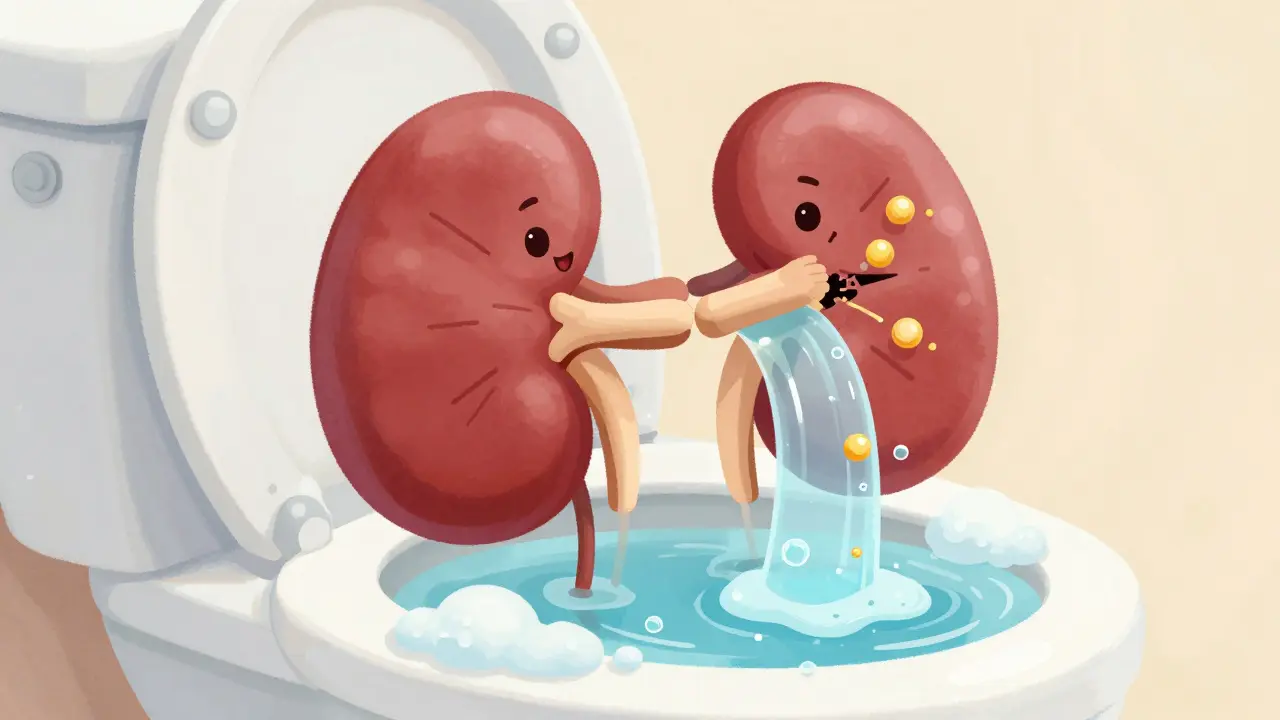
When your urine looks foamy or bubbly, it’s not just about how much you drank. It could be a quiet warning sign your kidneys are leaking protein - a condition called proteinuria. Most people don’t feel anything at first. No pain. No fever. Just a strange looking toilet. But if left unchecked, this small change can signal serious, lasting kidney damage. The good news? Catching it early gives you real power to stop it.
What Exactly Is Proteinuria?
Your kidneys are like fine sieves. They let waste and extra water out as urine, but they hold onto important stuff like protein - especially albumin - because your body needs it to repair tissues, fight infection, and keep fluids balanced. When the sieve gets damaged, protein slips through. That’s proteinuria.
Healthy kidneys filter less than 150 milligrams of protein a day. Anything above that, especially if it’s consistent, is a red flag. Doctors don’t just look for protein - they measure it precisely. The standard test is the urine albumin-to-creatinine ratio (UACR). If it’s over 30 mg/g, that’s abnormal. Over 300 mg/g? That’s severe. And when protein loss hits 1 gram or more per day, your risk of kidney failure within 10 years jumps sharply.
Why Does It Happen? The Real Causes
Not all protein in urine is the same. Sometimes it’s temporary. You had a fever, ran a marathon, or were under serious stress. That’s transient proteinuria - it goes away on its own. About 25% of healthy adults experience this at some point.
But if it sticks around? That’s the problem. Persistent proteinuria usually means something’s wrong with your kidneys or another system. The top causes in the UK and globally:
- Diabetes - responsible for 4 in 10 cases. High blood sugar slowly scars the kidney filters.
- High blood pressure - accounts for 25%. Constant pressure damages the tiny blood vessels in the kidneys.
- Glomerulonephritis - inflammation of the kidney’s filtering units. Makes up 15% of cases.
- Lupus and other autoimmune diseases - your immune system attacks your own kidneys.
- Preeclampsia - a dangerous pregnancy complication that can cause sudden proteinuria.
- Multiple myeloma - a blood cancer that releases abnormal proteins that spill into urine.
Heart disease can also contribute. When your heart doesn’t pump well, your kidneys don’t get enough blood flow - and they start leaking protein as a side effect.
How Do You Know You Have It?
Here’s the scary part: most people with early proteinuria feel nothing. No symptoms. That’s why routine checks matter - especially if you’re over 40, have diabetes, high blood pressure, or a family history of kidney disease.
When protein loss gets serious - over 1,000 mg per day - signs start to show:
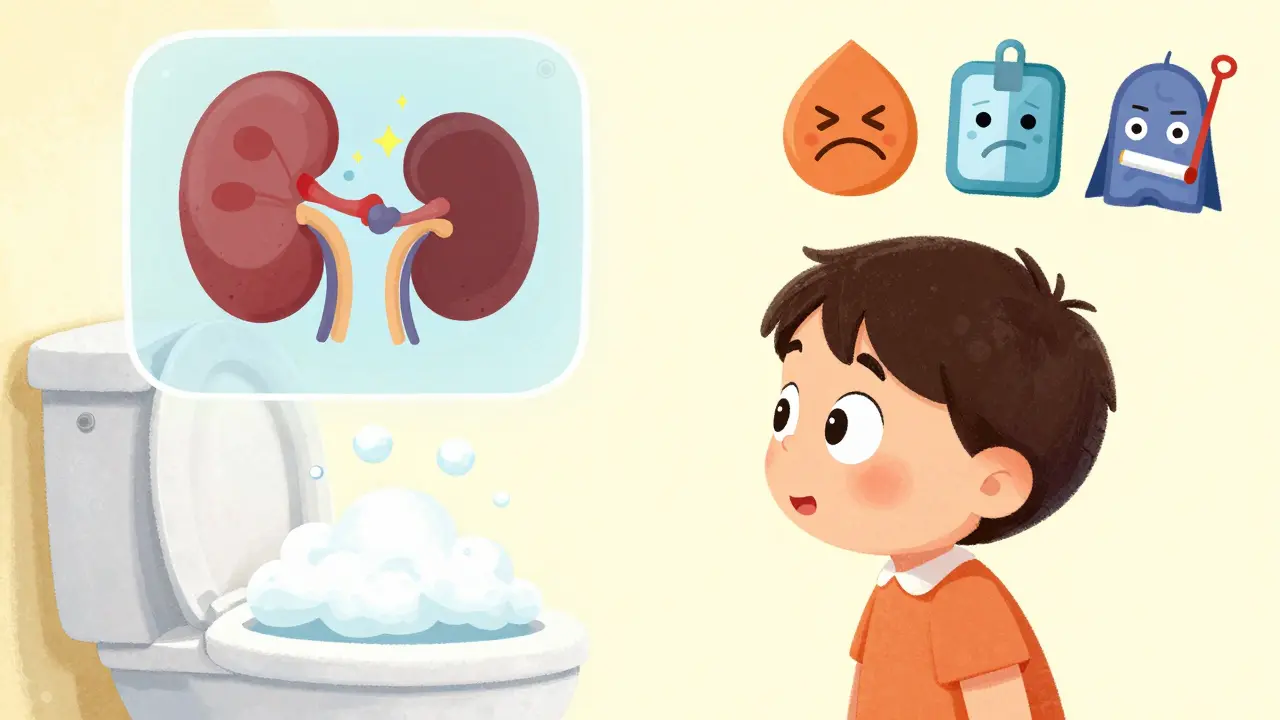
- Foamy or bubbly urine - the most common visible sign. Happens in 85% of people with moderate to severe proteinuria.
- Swelling - in ankles, feet, hands, face, or belly. That’s because low protein in blood pulls fluid into tissues.
- Fatigue - your body’s working harder to compensate.
- Increased urination - especially at night.
- Nausea or loss of appetite - signs your kidneys are struggling to clean your blood.
If you’re losing more than 3,500 mg of protein daily, you may have nephrotic syndrome - a serious condition with very low blood protein, high cholesterol, and major swelling. This needs urgent care.
How Is It Tested? The Right Way
Dipstick tests - the kind done in clinics - give a quick yes or no. But they’re not accurate for small amounts. A negative dipstick doesn’t rule out early kidney damage.
The real gold standard is the spot urine protein-to-creatinine ratio (UPCR). It’s done with one urine sample - no 24-hour collection needed. It’s fast, accurate, and matches 95% of 24-hour results. Your doctor will likely start here.
If UPCR is over 30 mg/g, you’ll need follow-up. For people with diabetes or high blood pressure, testing every 6 to 12 months is standard. If it’s over 100 mg/g, you need a full kidney evaluation within weeks.
In complex cases, doctors may use urine electrophoresis to see exactly what kind of protein is leaking - which helps spot conditions like multiple myeloma.
How to Reduce Proteinuria and Protect Your Kidneys
Reducing proteinuria isn’t just about fixing numbers - it’s about saving your kidneys long-term. Every 50% drop in protein loss lowers your risk of kidney failure by about 30%.
Medications that work:
- ACE inhibitors (like lisinopril) and ARBs (like losartan) - these blood pressure drugs are first-line. They reduce protein leakage by 30-50% and slow kidney damage by 20-30%.
- SGLT2 inhibitors (like canagliflozin) - originally for diabetes, they also cut proteinuria by 30-40% and protect kidney function even in non-diabetics.
- Finerenone - a newer drug for diabetic kidney disease. It cuts proteinuria by 32% and slows decline in kidney function.
- Immunosuppressants - for lupus or other autoimmune causes. Steroids or rituximab can bring proteinuria into remission in 60-70% of cases.
Lifestyle changes that matter:
- Control blood pressure - aim for under 130/80. Even small drops make a big difference.
- Manage blood sugar - if you have diabetes, HbA1c under 7% reduces kidney damage risk by half.
- Low-protein diet - 0.6 to 0.8 grams of protein per kilogram of body weight per day. Too much protein stresses damaged kidneys. A renal dietitian can help you plan this without getting malnourished.
- Reduce salt - less than 5 grams a day. Salt makes swelling worse and raises blood pressure.
- Quit smoking - smoking speeds up kidney damage by narrowing blood vessels.

What Happens If You Ignore It?
Proteinuria doesn’t just sit there. It’s a sign your kidneys are under attack - and the damage builds up over time. Without treatment, people losing over 1 gram of protein daily have a 50% chance of reaching kidney failure within 10 years. That means dialysis or a transplant.
But here’s the flip side: people who reduce their proteinuria by 30% or more within the first 3 months of treatment cut their risk of kidney failure in half. It’s not magic - it’s science. The earlier you act, the more you save.
What’s New in Testing and Treatment?
Technology is catching up. Smartphone apps that analyze urine color and foam with a camera are now hitting 85% accuracy compared to lab tests. They’re not replacements, but they help people monitor changes at home - especially useful for those with diabetes.
Researchers are also looking at new biomarkers. One study found that elevated levels of urinary TNF receptor-1 predict rapid kidney decline better than traditional tests. This could lead to earlier, more targeted treatment.
For rare conditions like Alport syndrome, a drug called bardoxolone methyl is showing promise in trials, cutting proteinuria by 35%. Personalized medicine based on genetics is the next frontier.
What Should You Do Now?
If you’re at risk - diabetic, hypertensive, over 50, or have a family history - ask your GP for a UPCR test. It’s simple, cheap, and covered by the NHS. Don’t wait for swelling or foamy urine. By then, damage may already be done.
If you’ve been diagnosed:
- Take your meds as prescribed. Even if you feel fine.
- Get your UPCR checked every 3-6 months. Track the trend, not just one number.
- Work with a dietitian. Protein restriction needs to be smart, not extreme.
- Monitor swelling daily. A 2-pound weight gain in a day? That’s fluid - call your doctor.
Proteinuria isn’t a death sentence. It’s a signal. And signals are meant to be answered - not ignored.
Is foamy urine always a sign of kidney problems?
Not always. Foamy urine can happen after vigorous urination, dehydration, or even from certain soaps in the toilet. But if it’s persistent - happening every time for more than a week - and you’re also swollen or tired, it’s a red flag. Get a urine test to be sure.
Can proteinuria go away on its own?
Yes, but only if it’s temporary - caused by fever, exercise, or stress. That’s transient proteinuria and it resolves within days. If it’s due to diabetes, high blood pressure, or kidney disease, it won’t go away without treatment. Left untreated, it gets worse.
Do I need a 24-hour urine collection?
Usually not. The spot urine protein-to-creatinine ratio (UPCR) is now the standard. It’s just as accurate and much easier. Doctors only use 24-hour collections if the spot test is unclear or if they suspect rare conditions like multiple myeloma.
Can I eat more protein if I have proteinuria?
No. Eating extra protein doesn’t fix the leak - it makes your kidneys work harder. Most guidelines recommend limiting protein to 0.6-0.8 grams per kilogram of body weight daily. For a 70kg person, that’s about 42-56 grams per day. Too little can cause muscle loss, so work with a dietitian to get the balance right.
Are there natural remedies for proteinuria?
No proven natural cures exist. Supplements, herbs, or detox teas won’t fix damaged kidney filters. Some may even harm your kidneys further. The only proven ways are medications like ACE inhibitors, strict blood pressure control, and a kidney-friendly diet. Don’t replace medical treatment with unproven remedies.
How often should I get tested if I have diabetes?
Every year. The NHS and kidney health guidelines recommend annual UPCR testing for all people with type 1 or type 2 diabetes. If your levels are already high or rising, you may need testing every 6 months. Don’t skip this - kidney damage from diabetes often has no symptoms until it’s advanced.
9 Comments
Foamy urine used to freak me out until I learned it’s just the body’s way of whispering before it screams. I thought it was my fancy toilet bowl soap-turns out, it was early diabetic nephropathy. Glad I got tested. Now I take my SGLT2 inhibitor like it’s coffee. No regrets.
Life’s weird like that-silent damage, loud consequences. We forget our bodies aren’t smartphones. You can’t just reboot them.
Let’s be real-90% of people reading this are ignoring it because they don’t ‘feel sick.’ That’s the problem. You don’t need to feel bad to be breaking down. My cousin had 400 mg/g UACR for two years and thought he was ‘fine’ because he didn’t have swelling. Then he needed dialysis at 48. Stop waiting for symptoms. Get the test. Now.
I didn’t know protein in pee was a thing. I just thought you drank too much soda or something. But now I get it-my dad’s been on ACE inhibitors for years and never told me why. Guess I should ask him. Thanks for explaining it so simply.
Yeah right. ‘Get a UPCR test.’ Like the healthcare system gives a damn. My insurance denied it three times. They’d rather pay for a $10k transplant than a $30 test. This isn’t medicine-it’s a profit model disguised as care.
It’s fascinating how society has normalized the silent erosion of biological integrity. Proteinuria isn’t a ‘symptom’-it’s a metaphysical indictment of our collective neglect of homeostasis. The kidneys, those exquisite sieves, are not merely organs-they are the literal gatekeepers of systemic equilibrium. And yet, we treat them like disposable filters in a coffee maker.
Moreover, the suggestion that ‘natural remedies’ are ineffective is not merely accurate-it’s a moral imperative. To promote unregulated herbalism in the face of glomerular damage is not ignorance-it is negligence dressed as wellness.
USA got the best doctors but still people die from this? In Nigeria we just drink bitter leaf juice and pray. You guys overcomplicate everything. Why you need 5 different drugs? Why not just eat less meat and drink water? This whole thing feels like pharma scam.
Okay, but-let’s pause for a second. The article says ‘UACR over 30 is abnormal’-but what if you’re an athlete? What if you just ran a marathon? Or did a 4am workout? You’re not ‘damaged’-you’re just stressed. This whole ‘test every 6 months’ thing feels like a money grab. They want you hooked on labs, not solutions. I’ve seen people get scared into taking meds they don’t need. Don’t trust the algorithm. Trust your body.
This post literally gave me chills. I’m 32, diabetic, and I’ve been ignoring my foamy pee for months because ‘it’s probably just dehydration.’ Now I’m booking my UPCR test tomorrow. Thank you for not sugarcoating it. I needed this. 🙏
Also-can we talk about how weird it is that we ignore our bodies until they scream? We’ll text back in 3 hours but won’t check our urine? 😅
As a nephrologist with 18 years in private practice, I must say: the article is technically accurate but dangerously oversimplified. The UPCR is indeed the gold standard-but only if the sample is properly collected, timed, and free of contamination. Many patients void after exercise or sexual activity and report ‘persistent proteinuria’ when it’s transient. Also, the claim that SGLT2 inhibitors work in non-diabetics? That’s off-label use-evidence is still emerging. And the ‘30% reduction lowers risk by 30%’ statistic? That’s a misinterpretation of relative risk. Absolute risk reduction is far smaller. Don’t let lay summaries replace clinical nuance. If you’re concerned, see a nephrologist-not Reddit.