
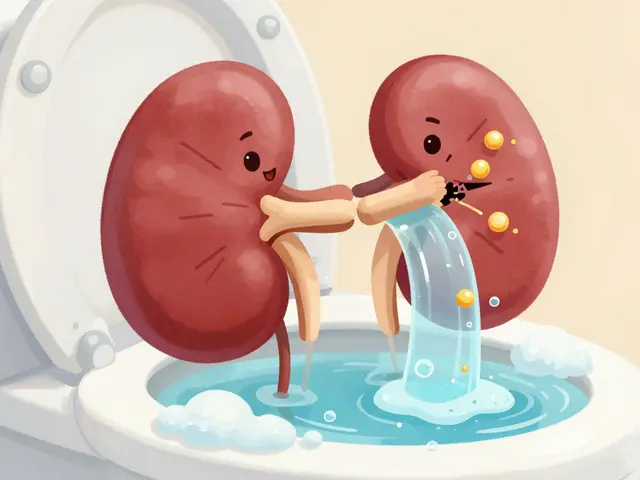



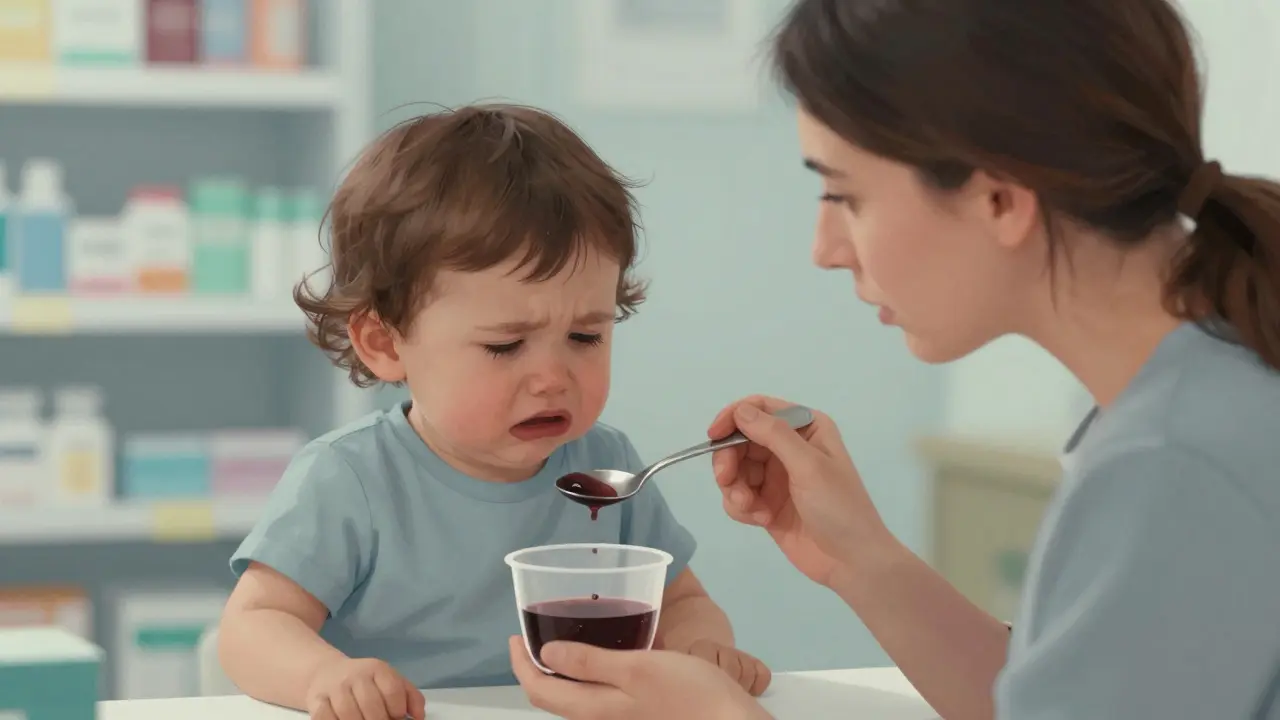
Watching a child gag on bitter liquid medicine is one of the most stressful moments for any parent. You hold them down, they spit it out, and you wonder if they actually swallowed enough to fight the infection. This isn't just a parenting hurdle; it is a medical crisis. Poor taste is the single biggest barrier to pediatric medication adherence, causing millions of treatments to fail every year. But there is a simple, low-cost solution sitting in your local pharmacy that many parents never ask about.
Pharmacies now offer specialized flavoring services that mask the terrible taste of antibiotics and other liquids without changing how the drug works. These services turn a nightly battle into a routine moment where kids actually look forward to their dose. Here is exactly how these systems work, why they are safer than mixing medicine with food at home, and how to get started today.
The Real Cost of Bad-Tasting Medicine
We often think of non-adherence as a behavioral issue-a kid being stubborn or a parent forgetting a dose. The data tells a different story. According to research from the National Community Pharmacists Association (NCPA), compliance rates for unflavored pediatric medications sit around a dismal 53 percent. That means nearly half of all prescribed doses are either rejected or not taken correctly because the child simply cannot stand the taste.
When pharmacists introduce custom flavoring, those numbers flip. Compliance jumps to over 90 percent. Another study by FLAVORx Pharmacies showed that when flavoring was applied, non-compliance dropped from 76 percent to just 20 percent. These aren't minor improvements; they are life-saving shifts in outcomes. If a child spits out half their antibiotic dose, the bacteria survive, mutate, and the infection returns stronger. The American Pharmacists Association puts it bluntly: medicines can't work if children don't take them.
The problem is systemic. Drug manufacturers prioritize stability and shelf-life over palatability. Many standard suspensions contain excipients that taste metallic, bitter, or chalky. Without intervention, parents resort to dangerous hacks like mixing meds with juice or hiding them in applesauce. These methods alter absorption rates and make it impossible to know the exact dosage consumed. Professional flavoring solves this by keeping the dose accurate while fixing the sensory experience.
How Pharmacy Flavoring Systems Work
You might assume adding flavor requires complex chemistry or special labs. It doesn't. Modern systems like FLAVORx is a standardized system used by community pharmacies to add safe, customized flavors to liquid medications. were designed specifically for busy retail environments. The process takes less than two minutes and uses standard pharmacy tools.
Here is the step-by-step workflow:
- Prescription Verification: The pharmacist checks the medication type. Not every drug can be flavored due to chemical stability issues, but most common pediatric suspensions are compatible.
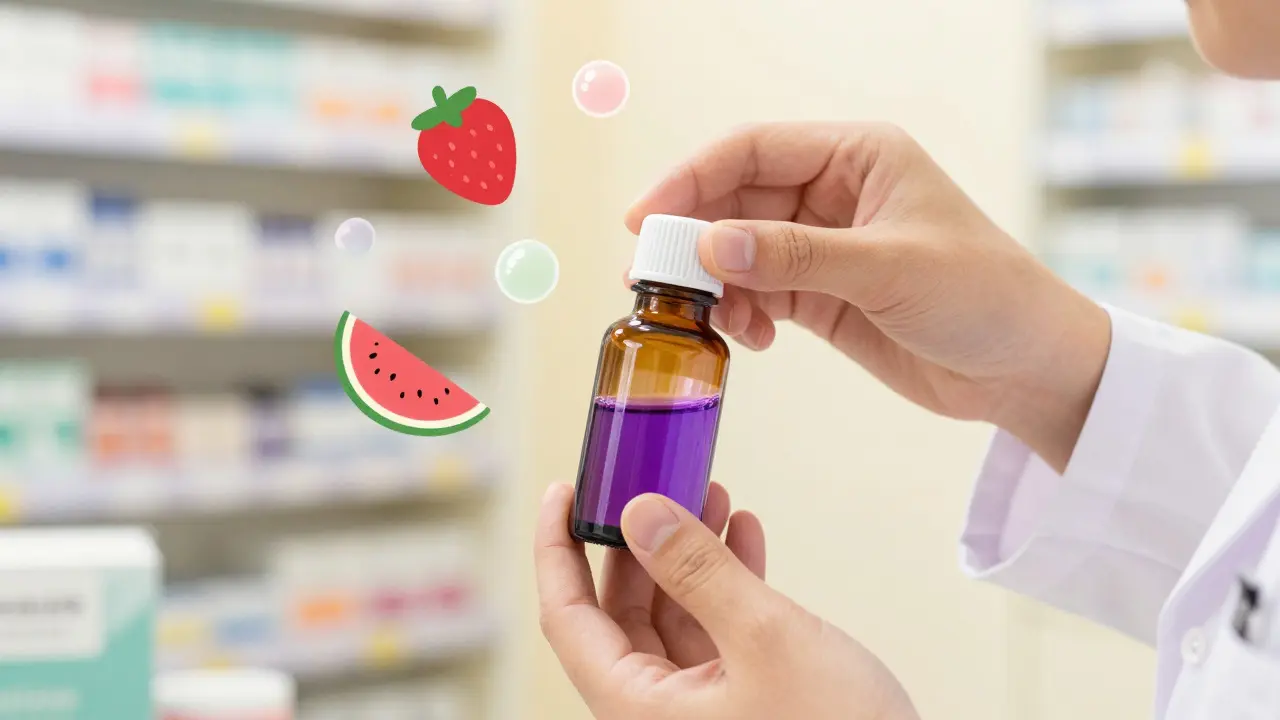
- Flavor Selection: The parent or child picks a preferred flavor. Common options include grape, bubblegum, strawberry, watermelon, and cherry.
- Application: The pharmacist adds a precise amount of flavoring agent directly to the bottle. These agents are dye-free and sugar-free, making them safe for children with allergies or dietary restrictions.
- Mixing: The bottle is shaken thoroughly to ensure even distribution without altering the viscosity or density of the medication.
The key here is precision. Unlike homemade mixes, professional flavoring agents do not interact with the active pharmaceutical ingredient (API). They coat the tongue's taste receptors to block bitterness but leave the drug's potency intact. Intermountain Healthcare implemented this system across their network in 2023, charging just $1.50 per prescription to cover the cost of the agent. For that small fee, you get a guaranteed improvement in the likelihood your child finishes the course.
Safety and Compatibility Concerns
Parents naturally worry about adding anything extra to their child's medicine. Is it safe? Will it cause an allergic reaction? The short answer is yes, it is safe, provided you use a certified pharmacy service rather than random household ingredients.
Certified flavoring systems use agents that are rigorously tested for compatibility. They are free from artificial dyes, which eliminates risks for children with dye sensitivities. They are also sugar-free, preventing tooth decay from frequent dosing. However, pharmacists must still exercise caution. Some medications have narrow therapeutic windows or specific pH requirements. Adding certain acids or sugars could theoretically destabilize the suspension.
This is why you should always let the pharmacist evaluate the script first. While the top five most commonly re-flavored drugs-Augmentin, Amoxicillin, Azithromycin, Cefdinir, and Clindamycin-are generally very stable, others may require specific handling. For example, some suspensions separate if shaken too vigorously after flavoring. The pharmacist knows which drugs need gentle mixing and which can handle a vigorous shake.
| Factor | Home Mixing (Food/Juice) | Professional Flavoring Service |
|---|---|---|
| Dosage Accuracy | Poor (medicine sticks to spoon/cup) | High (full dose remains in bottle) |
| Absorption Impact | Risk of altered absorption (e.g., dairy interactions) | No impact on bioavailability |
| Allergy Risk | Unknown (depends on food used) | Low (dye-free, sugar-free agents) |
| Cost | Free (but risky) | $1.50 - $3.00 per script |
| Adherence Rate | Inconsistent | Increases from ~53% to >90% |
Choosing the Right Flavor
It sounds simple, but picking a flavor is strategic. You want something strong enough to mask bitterness but not so overpowering that it causes nausea. Research from FLAVORx indicates that grape, bubblegum, and strawberry are the top preferences among children. Watermelon and cherry follow closely behind.
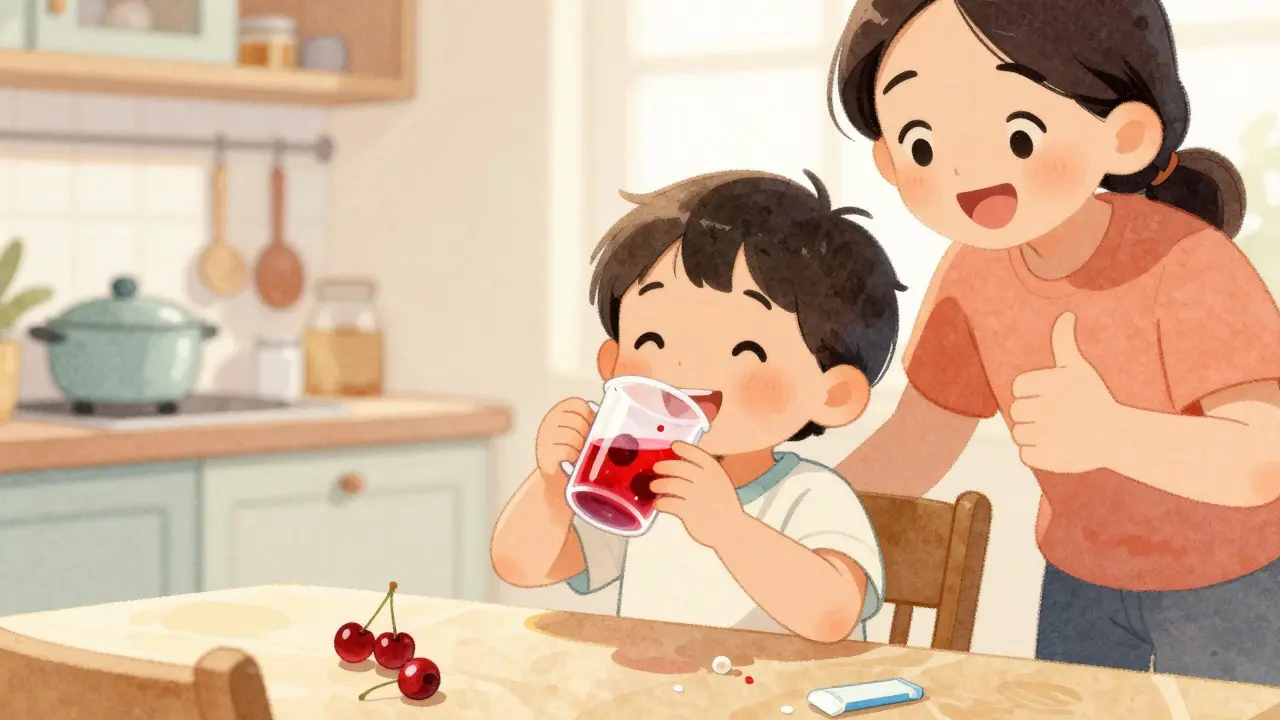
If you have a picky eater, involve them in the choice. Giving a child agency over their health care reduces anxiety. A study noted by Germantown Pharmacy in Mississippi found that allowing children to choose their flavor encouraged them to "take charge of their own health," creating a calmer experience for both parent and child. One parent reported their child actually asked for his medicine once it tasted like bubblegum.
However, avoid switching flavors between different prescriptions if possible. Consistency helps build a positive association. If your child loves grape for their ear infection medicine, try to stick with grape for their next throat infection. Changing flavors can sometimes confuse younger children or lead to rejection if the new taste isn't immediately familiar.
When Flavoring Isn't Enough
While flavoring services are powerful, they are not a universal cure-all. There are scenarios where formulation changes matter more than taste. For instance, a randomized trial in Africa compared liquid antimalarials to pre-packed chewable tablets. Compliance was only 42 percent for the liquid version versus 91 percent for the tablets, even when taste was considered. Sometimes, the act of swallowing a liquid is harder than chewing a pill.
If your child is old enough to swallow pills or chewables, ask your doctor if an alternative formulation exists. Chewable tablets or orally disintegrating tablets (ODTs) often come pre-flavored and bypass the liquid taste issue entirely. However, for infants and toddlers who cannot chew, liquid suspensions remain the gold standard, making flavoring services indispensable.
Additionally, some chronic conditions require long-term medication use. In these cases, "flavor fatigue" can set in. A child might love strawberry week one but hate it by week six. Pharmacists can help rotate flavors or suggest breaks where medically appropriate to keep the experience fresh.
How to Access These Services
The biggest barrier isn't availability-it's awareness. Many parents suffer through months of medication battles because they didn't know their pharmacy offered this service. FLAVORx research shows customer awareness is surprisingly low, yet demand is high. Once parents find out, they rarely go back.
To get started, simply call your local community pharmacy before picking up a pediatric prescription. Ask if they offer "custom medication flavoring" or "taste masking." Most independent pharmacies and large chains participating in networks like Intermountain or FLAVORx will say yes. If your current pharmacy doesn't offer it, consider switching. Pharmacies that provide this service often see higher customer loyalty because they solve a genuine pain point.
Remember to mention the service when you drop off the prescription, not after you've already left the counter. The pharmacist needs time to apply the flavor before you walk out the door. It costs almost nothing, takes seconds, and could mean the difference between a cured infection and a trip to the ER for complications.
Does adding flavor change how well the medicine works?
No. Professional flavoring agents are designed to be chemically inert regarding the active drug. They mask taste without altering potency, dosage, or absorption rates. Always have a licensed pharmacist apply the flavor to ensure compatibility.
How much does medication flavoring cost?
Most pharmacies charge between $1.50 and $3.00 per prescription for the service. This fee covers the cost of the flavoring agent and the pharmacist's time. Insurance rarely covers it, but the low out-of-pocket cost is worth the improvement in adherence.
Are the flavorings safe for children with allergies?
Yes, most modern systems like FLAVORx use dye-free and sugar-free formulations. They are generally safe for common food allergies. However, always inform your pharmacist of any specific allergies your child has before applying any additive.
Can I mix medicine with food instead of using flavoring?
You can, but it is risky. Mixing medicine with food can alter how the body absorbs the drug (e.g., dairy can bind to certain antibiotics). It also makes it hard to know if your child swallowed the full dose. Professional flavoring keeps the dose accurate and safe.
Which medications can be flavored?
Most liquid pediatric antibiotics can be flavored, including Augmentin, Amoxicillin, Azithromycin, Cefdinir, and Clindamycin. Your pharmacist will check the specific formulation to ensure stability before adding flavor.
8 Comments
Man, this is huge for parents who are tired of the nightly wrestling matches! I've seen so many kids struggle with that bitter taste, and it's not just about being difficult. It's a genuine physiological reaction to how nasty those suspensions taste. The fact that a simple $1.50 add-on can boost compliance from 53% to over 90% is mind-blowing. We need more awareness around this because every time a kid spits out half their antibiotic, we're feeding into the superbug crisis. Keep fighting the good fight, folks!
One must remain skeptical of such convenient solutions offered by pharmaceutical entities. The narrative suggests that flavoring agents are merely inert coatings, yet one wonders what long-term effects these chemical additives have on developing palates and metabolic processes. It is highly probable that the push for these services is driven by corporate interests seeking to increase prescription adherence for profit rather than genuine concern for pediatric health outcomes. The data cited likely comes from sources funded by the very companies selling the flavoring agents.
As a pharmacist, I can confirm that the FLAVORx system is incredibly reliable! It is important to note that not all medications are compatible, but for the most common antibiotics like Amoxicillin and Azithromycin, it works wonders. The key is always to let the pharmacist evaluate the script first to ensure stability. Many parents do not realize that mixing meds with juice at home can actually alter absorption rates due to acidity or dairy content. Professional flavoring avoids this risk entirely.
Let's be real here, this entire industry is built on exploiting parental anxiety. You pay extra for something that should be standard if they cared about efficacy. The 'compliance' stats are manipulated to make the service look essential when in reality, most kids will take medicine if you bribe them properly anyway. It is another way for pharmacies to squeeze pennies out of desperate parents who are already stressed enough dealing with a sick child. Typical upsell tactic disguised as healthcare innovation.
It is morally imperative that we prioritize the well-being of children over convenience or cost. If a simple intervention can prevent treatment failure and reduce the spread of resistant bacteria, then utilizing these services is an ethical duty. We often judge parents for 'bad habits' like hiding medicine in food, but the truth is, they are doing their best with limited information. Providing safe, effective tools to ensure medication adherence is a compassionate approach to public health.
The philosophical implication here is significant. We often view adherence as a behavioral failure, yet it is largely a sensory one. By addressing the root cause-taste-we respect the child's agency and biological reality. It shifts the dynamic from coercion to cooperation.
Look, I get why people hate the taste, but honestly, some parents are just too lazy to do the work right. 😅 Mixing it with applesauce is fine if you know what you are doing, but yeah, the pharmacy option is cleaner. Just don't expect miracles if your kid is going through a phase where they reject everything. Flavoring helps, but it isn't magic. Still, better than nothing, I suppose. 👍
In many cultures, we use natural remedies to mask tastes, but this standardized approach brings consistency that is hard to achieve at home. It is wonderful to see technology bridging the gap between traditional care and modern efficiency. Encouraging children to choose their own flavor empowers them, which aligns with supportive parenting practices globally. This small change can make a big difference in family dynamics during illness.