
Imagine landing in a new city, exhausted but excited, only to realize your insulin has turned cloudy or your blood pressure pills have melted into a sticky mess in your checked bag. It’s a nightmare scenario that happens far more often than you’d think. According to data from the Centers for Disease Control and Prevention (CDC), nearly half of travelers face some form of medication issue while away from home. The good news? Most of these disasters are entirely preventable with a little planning and the right gear.
Keeping your medications safe isn’t just about convenience; it’s about maintaining the chemical integrity of drugs that keep you healthy. Whether you’re dealing with simple over-the-counter pain relievers or complex biologic injectables, the rules of physics and chemistry don’t take a vacation. This guide breaks down exactly how to pack, store, and transport your medicines so they arrive at their destination working exactly as prescribed.
The Temperature Trap: Why Heat Is Your Enemy
The biggest threat to your medicine isn’t theft or loss-it’s heat. Most standard medications are designed to be stored between 68°F and 77°F (20°C-25°C). That’s room temperature. But what is "room temperature" inside a car parked in July? Or in the cargo hold of an airplane?
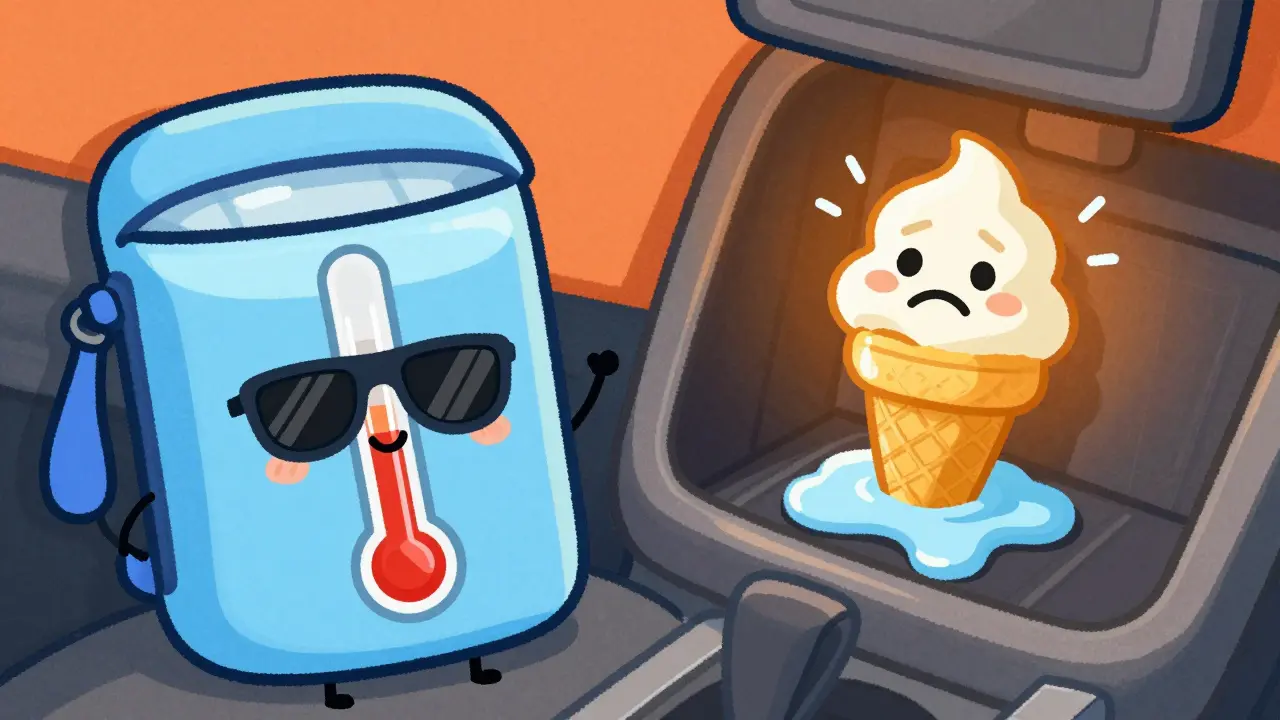
Research from the National Weather Service shows that car interiors can skyrocket to 158°F (70°C) on sunny days. If you leave your meds in the glove compartment, you aren’t storing them; you’re cooking them. A study by the University of Michigan tracked over 1,200 travelers and found that exposing medications to temperatures above 86°F (30°C) for just two hours could reduce their effectiveness by more than a third. For life-saving drugs like insulin, this degradation happens even faster. Every degree Celsius above the recommended 8°C can cause a measurable drop in potency every hour.
- Room Temp Meds: Keep between 68-77°F (20-25°C).
- Refrigerated Meds: Must stay between 36-46°F (2-8°C).
- Frozen Meds: Some biologics require freezing, but check specific labels.
If you’re traveling with refrigerated items, don’t rely on a regular ice pack unless it’s fully frozen solid (at 0°F/-18°C) for at least 12 hours before use. Phase-change material coolers, like the TempAid MedCooler, are engineered to maintain that critical 36-46°F range for up to 72 hours without leaking water. For short trips, a Frio Wallet can keep items cool for about 45 hours using evaporative cooling, though it needs to be hydrated regularly.
TSA Rules: Liquids, Gels, and Exceptions
Navigating airport security is where many travelers get nervous. You’ve heard of the 3-1-1 rule: containers must be 3.4 ounces (100ml) or less, all fitting in one quart-sized clear bag. But here’s the secret most people miss: medical liquids are exempt.
You can bring larger quantities of liquid medications, gels, and aerosols through security checkpoints. However, you must declare them to the Transportation Security Administration (TSA) officer before screening begins. They may need to test the liquid for explosives, which involves opening the container. To make this smoother, consider filling out the TSA Medical Notification Form (TSA-1400) ahead of time. While not mandatory, it signals to officers that you’re prepared and compliant.
Keep in mind that X-ray machines do not damage medications. You can safely send your pills and liquids through the scanner. If you prefer not to, you can request a manual inspection, but this takes longer. Always keep your meds in your carry-on bag. Never check them. Checked luggage goes into the cargo hold, where temperatures can fluctuate wildly-freezing at high altitudes and baking on the tarmac. If your luggage gets lost, your meds go with it. If it stays with you, you control the environment.
The Power of Original Packaging
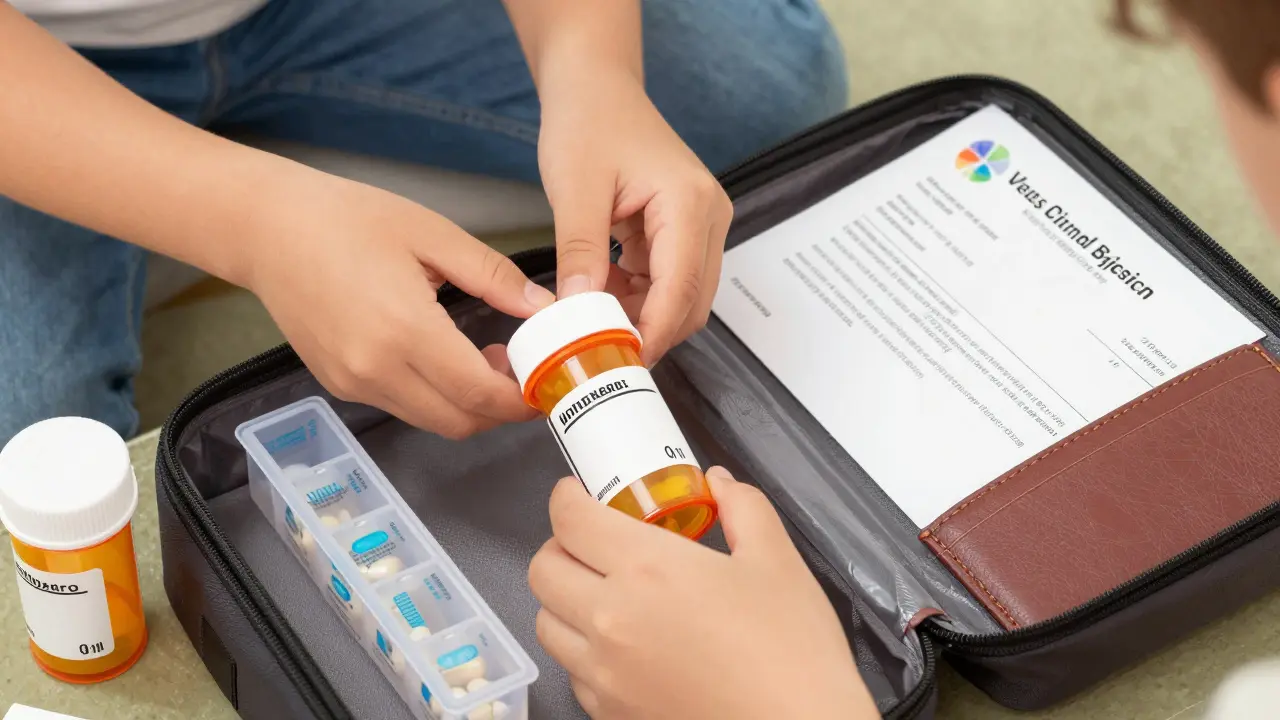
I know it’s tempting to dump everything into a sleek, color-coded pill organizer. It looks tidy and saves space. But when you’re traveling, especially internationally, original pharmacy packaging is your best friend-and sometimes your legal requirement.
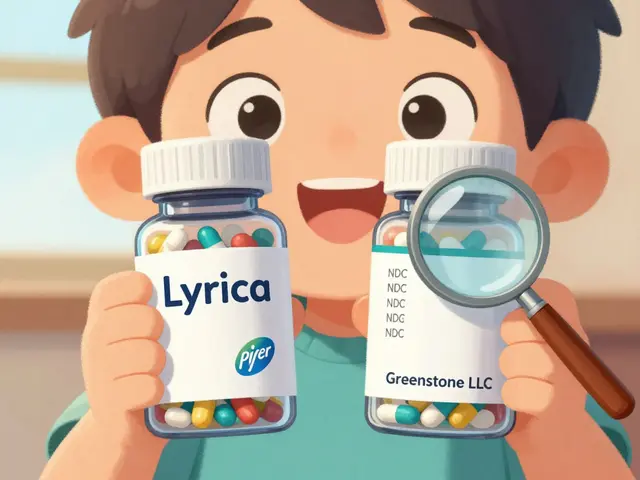
Dr. Sarah Thompson, a pharmacist at Johns Hopkins Hospital, notes that keeping meds in their original containers reduces identification errors by over 90% during travel incidents. Why does this matter? If you have a medical emergency abroad, local doctors need to know exactly what you’re taking, the dosage, and who prescribed it. A bottle labeled with your name, the prescribing doctor, and the National Drug Code (NDC) provides instant clarity.
In many countries, carrying prescription drugs in unmarked bags can lead to serious legal trouble. Customs officials may suspect illicit substances if they see loose pills. Furthermore, if you need to refill a prescription early due to a delay, having the original bottle helps pharmacies verify your history quickly. For controlled substances, such as ADHD medications or strong painkillers, original packaging is non-negotiable in many jurisdictions.
| Feature | Pill Organizer | Original Bottle |
|---|---|---|
| Identification Risk | High (Loose pills look suspicious) | Low (Clear labeling) |
| Customs Compliance | Often rejected | Accepted globally |
| Space Efficiency | High | Low (Bulky) |
| Emergency Clarity | Poor (No dosage info) | Excellent (Full details) |
Documentation: Your Medical Passport
Before you pack, pack your paperwork. A letter from your doctor on official letterhead is essential for international travel. This document should list:
- Your full name and date of birth.
- A list of all medications, including generic names and dosages.
- The reason for each medication (medical necessity).
- Your doctor’s contact information and license number.
Why is this so important? According to the International Association for Medical Assistance to Travellers, 92 countries require some form of documentation for prescription drugs. Without it, you risk confiscation or detention. Additionally, if you lose your meds, this letter helps you get replacements abroad. Carry both a physical copy in your wallet and a digital scan in your cloud storage.
Don’t forget insurance cards and policy numbers. If you end up in a hospital overseas, knowing your coverage limits and having direct access to your insurer’s emergency line can save thousands of dollars. Check if your plan covers emergency refills or if you need a separate travel health insurance policy.
Timing and Time Zones
Jet lag doesn’t just affect your sleep; it affects your dosing schedule. If you’re taking medication every 8 hours, crossing three time zones throws off your rhythm. Missing a dose or doubling up can be dangerous, especially for antibiotics or heart medications.
Consult your pharmacist or doctor at least seven days before your trip. They can help you adjust your schedule gradually. For example, if you’re flying east, you might shift your doses earlier by 15 minutes each day leading up to the trip. Use a world clock app to track the time at your destination and set alarms on your phone. Keep a spare supply of meds in your carry-on in case your main bag is delayed. Aim to pack enough for at least 14 days, even if your trip is shorter. This buffer protects you against flight cancellations, natural disasters, or unexpected extensions.
Smart Tech and Future Tools
Technology is changing how we manage travel meds. New temperature-indicating labels, like those from 3M, change color if exposed to heat above 86°F (30°C). This gives you a visual cue if your bag got too hot during transit. Smart pill bottles with Bluetooth connectivity are also emerging, sending alerts to your phone if a dose is missed or if the internal temperature spikes. While still pricey, these tools offer peace of mind for managing complex regimens.
For insulin users, continuous glucose monitors (CGMs) paired with smartphone apps provide real-time data on how travel stress and temperature changes affect blood sugar levels. This allows for proactive adjustments rather than reactive fixes.
Disposal and Safety Abroad
What happens when you return home with leftover meds? Or if you run out of a short-term antibiotic? Proper disposal is part of safe travel. Never flush medications down the toilet unless specifically instructed to do so (like certain opioids). Instead, look for drug take-back programs at local pharmacies or hospitals. In many countries, there are designated collection bins for hazardous waste. If no program exists, mix the pills with an unappealing substance like coffee grounds or cat litter, seal them in a bag, and throw them in the trash. Remove personal information from the label first.
While abroad, be cautious about buying over-the-counter meds. Ingredients vary widely by country. What’s sold as a simple cold remedy in one nation might contain prescription-strength stimulants in another. Stick to brands you recognize or ask a local pharmacist for guidance. Always check expiration dates before packing. Expired meds aren’t just ineffective; they can break down into harmful compounds.
Can I put my medication in checked luggage?
No, never check your medication. Cargo holds can reach freezing temperatures or extreme heat, ruining the efficacy of your drugs. Plus, if your luggage is lost, you’re stranded without your medicine. Always keep prescriptions in your carry-on bag.
Do I need a doctor's note for domestic flights?
For domestic flights within the same country, a doctor's note is usually not required. However, carrying one is still smart in case of emergencies or if you need to explain large quantities of pills to security. For international travel, a note is almost always mandatory.
How do I keep insulin cool without ice packs?
Use specialized products like the Frio Wallet, which uses evaporative cooling, or a hard-sided cooler with phase-change materials. Avoid direct contact with ice, as freezing can destroy insulin. Monitor the temperature closely with a small thermometer.
Are pill organizers safe for travel?
They are convenient but risky. Loose pills lack identifying labels, which can cause issues with customs and emergency medical staff. If you use an organizer, keep the original bottles in your backup bag or carry-on for verification purposes.
What if my medication expires while I'm traveling?
Check expiration dates before you leave. If a med expires mid-trip, consult a local pharmacist. In many cases, slight past-expiration is acceptable for stable drugs, but for critical meds like epinephrine or nitroglycerin, replace them immediately. Do not use visibly degraded pills.