

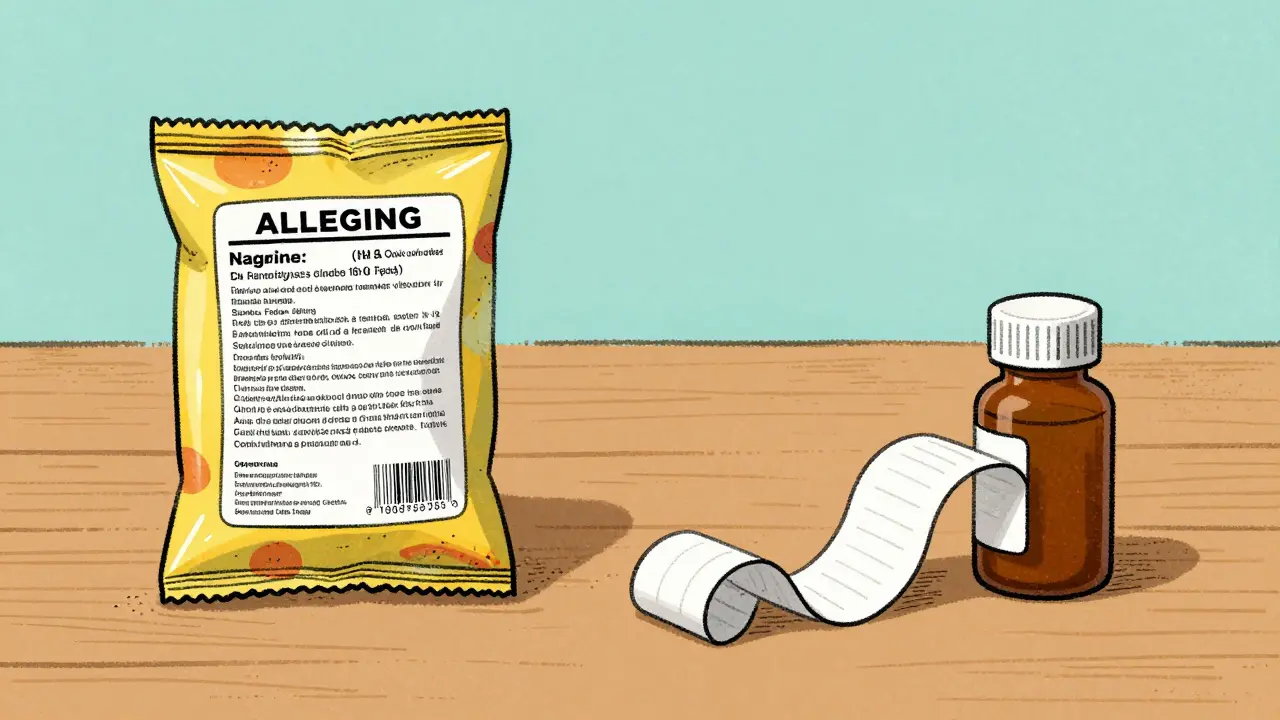
Most of us trust that a label tells the whole story. But for someone with a severe allergy, a tiny mistake in a list of ingredients isn't just a nuisance-it's a medical emergency. Whether you're scanning a box of crackers or reading a prescription labels slip from the pharmacy, the rules for what gets listed (and how) are surprisingly different. While food labels are strictly regulated to protect you, medicine labels often leave the heavy lifting to the patient.
| Feature | Packaged Foods | Medications/Prescriptions |
|---|---|---|
| Standardized Allergen List | Yes (9 Major Allergens) | No standardized system |
| "Contains" Statements | Required for major allergens | Not required; varies by brand |
| Inactive Ingredient Detail | Full list required | Often hidden in inserts/leaflets |
| Regulatory Body | FDA (FALCPA/FASTER Act) | FDA (CDER guidance) |
The Gold Standard for Food Labels
If you're shopping for food, you're protected by a few key laws. The Food Allergen Labeling and Consumer Protection Act (FALCPA) was the game-changer that forced companies to be clear about what's inside. More recently, the FASTER Act added sesame to the list of major allergens in 2023, recognizing it as a serious trigger for millions of people.
There are nine major allergens you should always look for: milk, eggs, fish, crustacean shellfish, tree nuts, peanuts, wheat, soy, and sesame. For the more complex ones-like tree nuts or fish-the law requires the specific species. You won't just see "tree nut"; you'll see "walnut" or "almond." This specificity is vital because someone might be fine with a cashew but react violently to a pecan.
When you pick up a product, look for the allergen info in two places:
- The Parenthetical Note: This is when the allergen is listed in parentheses right after the ingredient, like "lecithin (soy)."
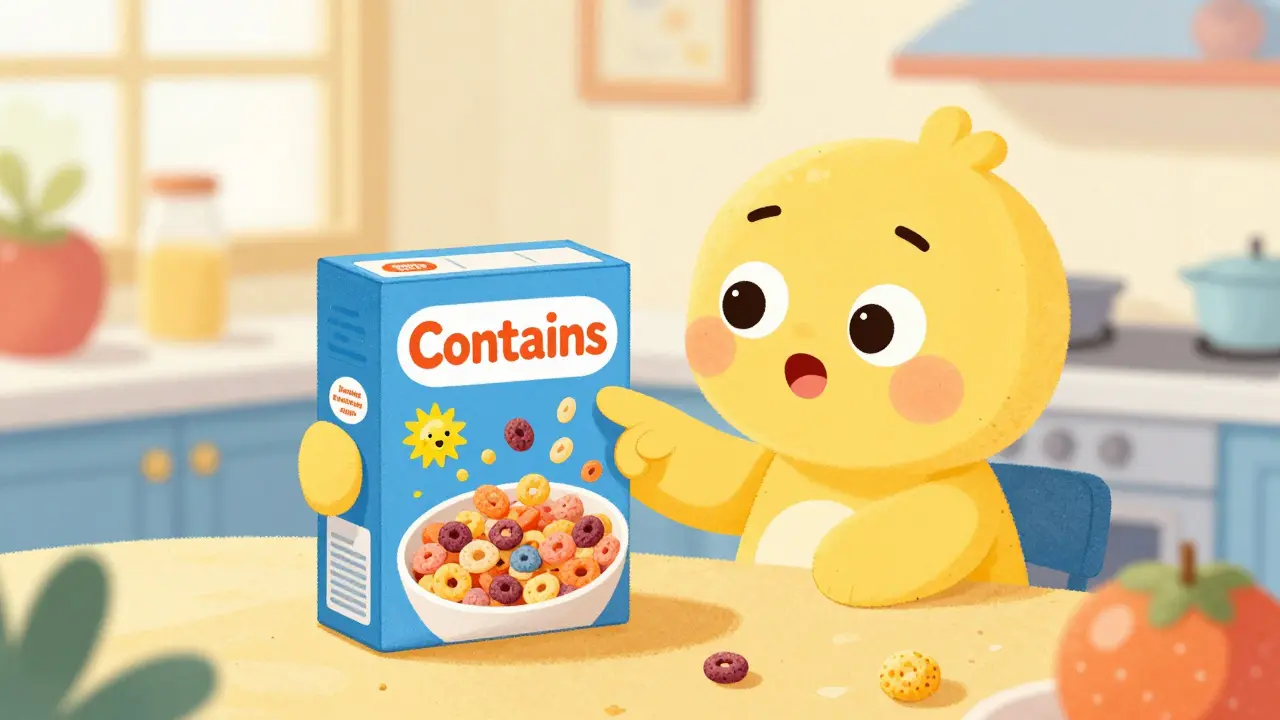
- The "Contains" Statement: This is a separate line usually found immediately after the ingredient list, such as "Contains: Milk, Soy, Almond."
The Danger Zone: Inactive Ingredients in Medicine
Here is where things get tricky. The strict rules that apply to your cereal do not apply to your prescriptions. Inactive ingredients are the substances that don't treat the illness but help the drug hold its shape or dissolve in your stomach. These can include fillers, binders, and dyes.
Because there is no standardized "Contains" statement for medications, allergens can hide in plain sight. For example, a pill might use lactose (a milk derivative) as a filler, or a capsule might use gelatin derived from a source you avoid. Some liquid medications even use peanut oil or soy lecithin. Unlike a bag of chips, where these would be bolded and obvious, a medicine label might bury this information in a tiny fold-out paper insert or under a section called "Prescribing Information."
If you have a medication allergy, don't rely on the box. The most reliable path is to ask your pharmacist for the complete list of inactive ingredients. Generic versions of the same drug can have entirely different fillers depending on which company manufactured them, so a drug you tolerated last year might be dangerous today if the pharmacy switched brands.
How to Read Labels Like a Pro
Don't just glance at the label; use a system. Allergy specialists suggest a three-step scan that takes about 20 seconds per product. This prevents the "autopilot" mistake where your brain sees a familiar package and assumes it's safe.
- Start with the "Contains" statement. This is the fastest way to spot the big nine. If you see your allergen here, put the item back immediately.
- Scan the full ingredient list. Look for those parenthetical mentions. Be wary of terms like "natural flavors," which are often umbrellas for milk or soy derivatives.
- Check for precautionary labels. These are the "May Contain" or "Processed in a facility with..." warnings. While the FDA notes these are voluntary and not a substitute for good manufacturing, they are a critical signal of potential cross-contact.
Be careful with technical terms. Many people have reactions because they didn't recognize a synonym. For instance, "casein" is a protein found in milk, and "arachis oil" is just another name for peanut oil. If a word looks scientific or unfamiliar, treat it as a red flag until you can verify it.
Common Pitfalls and Modern Solutions
One of the biggest risks is the "safe product" trap. A study in JAMA Network Open found that 78% of food allergy reactions in children happened from products the family thought were safe. This happens because companies change their recipes without warning. Always check the label every single time you buy the product, even if it's a brand you've used for a decade.
For those who find manual reading overwhelming, new tech is stepping in. Apps using optical character recognition (OCR) can now scan a label and highlight allergens instantly. While these are incredibly helpful, remember that they are tools, not replacements. A smudge on the label or a typo in the database can still lead to a mistake.
When dealing with imported products, be extra cautious. Labeling standards in other countries aren't always aligned with the FASTER Act or FALCPA. You might find "lecithin" listed without specifying whether it's soy, sunflower, or something else, which creates a dangerous guessing game.
What is the difference between an active and inactive ingredient?
An active ingredient is the chemical that actually treats your symptoms (like ibuprofen for pain). Inactive ingredients are the "extras" like colors, flavors, and binders that make the medication stable or easier to swallow. While they don't treat the illness, they can still cause allergic reactions.
Does "May Contain" mean the allergen is definitely in there?
Not necessarily. These are "precautionary" labels. They usually mean the allergen isn't an intentional ingredient, but the product is made on the same equipment as something that does contain the allergen. For people with severe allergies, these products are generally avoided.
Why aren't medicine labels as clear as food labels?
Current regulations for medications do not require the same standardized allergen declarations that food products do. While food labels must follow FALCPA, medicine labels focus more on drug interactions and side effects, often leaving inactive ingredient lists in detailed inserts rather than on the main packaging.
What are some hidden names for milk and peanut allergies?
For milk, look out for terms like casein, whey, or ghee. For peanuts, watch for arachis oil or ground nuts. Always be suspicious of "natural flavors" or "spices," as these can sometimes mask soy or sesame derivatives.
Should I trust a product if it says "Natural"?
No. "Natural" is a marketing term, not a safety guarantee. Natural products can still contain any of the nine major allergens. Always rely on the actual ingredient list and the "Contains" statement rather than front-of-package claims.
Next Steps for Your Safety
If you're managing multiple allergies, the best strategy is to create a "cheat sheet" of hidden names for your specific triggers. Keep this list on your phone to cross-reference when you see an unfamiliar chemical name on a label.
For those starting a new medication, make it a habit to ask three specific questions at the pharmacy: 1) Does this contain any food-based inactive ingredients? 2) Is there a different manufacturer for this generic that avoids my allergen? 3) Can you provide the full professional prescribing insert so I can read the complete ingredient list?
Finally, if you are traveling internationally, consider carrying a translation card that lists your allergies in the local language. Since labeling laws vary wildly across borders, being able to communicate your needs to a pharmacist or server is your best line of defense.
7 Comments
Oh, wow, a guide on how to read. Truly revolutionary stuff here. I'm sure the FDA is just waiting for this Reddit post to change their entire regulatory framework. Absolute genius level advice telling people to actually read the label they're holding in their hand.
I especially love the part where we're told to ask the pharmacist-because pharmacists are famously known for having nothing better to do than spend twenty minutes digging through a fold-out leaflet for a patient who can't use Google. Just brilliant.
This is such a helpful reminder for everyone! It's so easy to get into a routine and stop checking labels, but these tips really highlight why that's risky. I think the idea of a cheat sheet is wonderful and something that could really empower people with multiple allergies to feel more confident and safe while shopping or traveling. Let's all try to look out for one another by sharing these kinds of resources!
Omg yes!! 🌟 The cheat sheet idea is a total game changer! 📝✨ I'm definitely going to start one for my nephew! It's so scary how those ingredients hide, but we can totally handle it with a little prep! Stay safe everyone!!! ❤️💪🌈
Typical US govt logic. We have the best system in the world and yet some people still complain about the labels. If you can't read a simple English label then maybe you shouldn't be buying stuff from foreign countrees anyway. Just stick to American brands and you'll be fine. Honestly, these foreign standards are a joke and we should stop importin stuff that doesn't meet our strict rules. Pure madness.
It is quite concerning that medication labeling remains so inconsistent compared to food products. :) One would hope that the pharmaceutical industry would prioritize this level of transparency for the sake of patient safety. I appreciate the detailed breakdown of the three-step scan method; it provides a structured approach to a stressful task. (^_^)
I must strongly insist that the point regarding generic drug manufacturers is the most critical part of this entire discussion, because it is absolutely unacceptable that a patient should be put at risk simply because a pharmacy decided to switch suppliers for a cost-saving measure without any formal notification to the consumer! While I agree with the author's suggestions, I believe we must be even more aggressive in demanding that pharmacists provide a printed list of inactive ingredients for every single generic substitution made, regardless of whether the patient asks for it or not, to ensure a comprehensive safety net for all individuals suffering from severe hypersensitivities!
I completely agree with the point about international travel. Translation cards are an absolute necessity because you cannot bet your life on a waiter's vague understanding of an allergy. I've seen too many people take risks and it's just not worth it when a simple card can prevent a disaster.