

When you pick up a prescription at the pharmacy, you might not think about why one drug costs $10 and another costs $75-even if they treat the same condition. The reason lies in something most employees never see: your employer’s formulary. It’s a list of approved medications your health plan covers, and it’s designed to steer you toward cheaper options, mostly generics. But understanding how it works can save you hundreds-or even thousands-of dollars a year.
How Formularies Work: The Tiered System
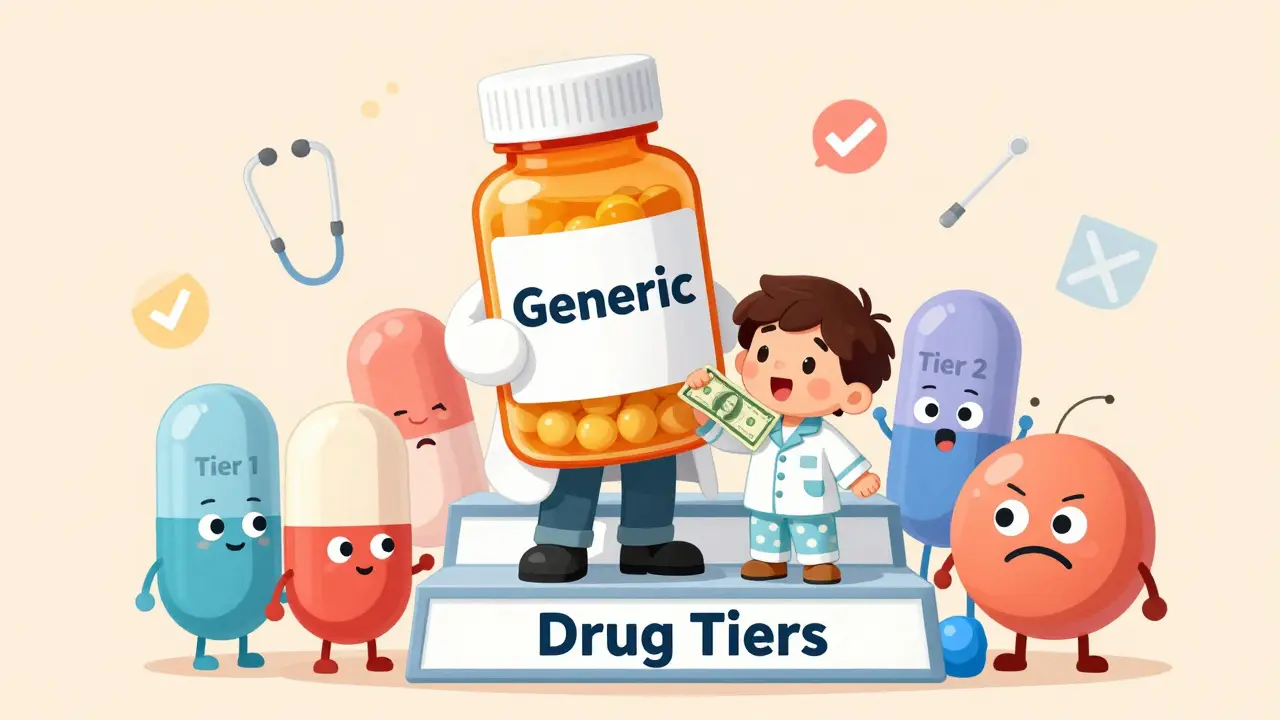
Most employer health plans use a tiered system to manage drug costs. Think of it like a pricing ladder. The bottom rung is for generic drugs, which cost the least. The higher you go, the more you pay out of pocket. Tier 1: Generics. These are chemically identical to brand-name drugs but cost 80-85% less. Most plans charge $10 or less for a 30-day supply. The FDA confirms they’re just as safe and effective. Tier 2: Preferred brand-name drugs. These are brand-name medications your plan has negotiated a deal on. You might pay $40. Tier 3: Non-preferred brand-name drugs. If a generic exists but you choose the brand, you pay more-often $75 or higher. Tier 4: Specialty drugs. These are for complex conditions like cancer, MS, or rheumatoid arthritis. Costs can run into hundreds or thousands per month. Coinsurance (a percentage of the price) is common here, not a flat copay. The system isn’t random. Pharmacy Benefit Managers (PBMs) like OptumRx, CVS Caremark, and Express Scripts-companies hired by your employer to manage drug benefits-decide which drugs go where. They do this to push you toward cheaper options. And it works. In 2023, generics saved the U.S. healthcare system over $150 billion annually.Why Your Plan Pushes Generics (And Why It Matters)
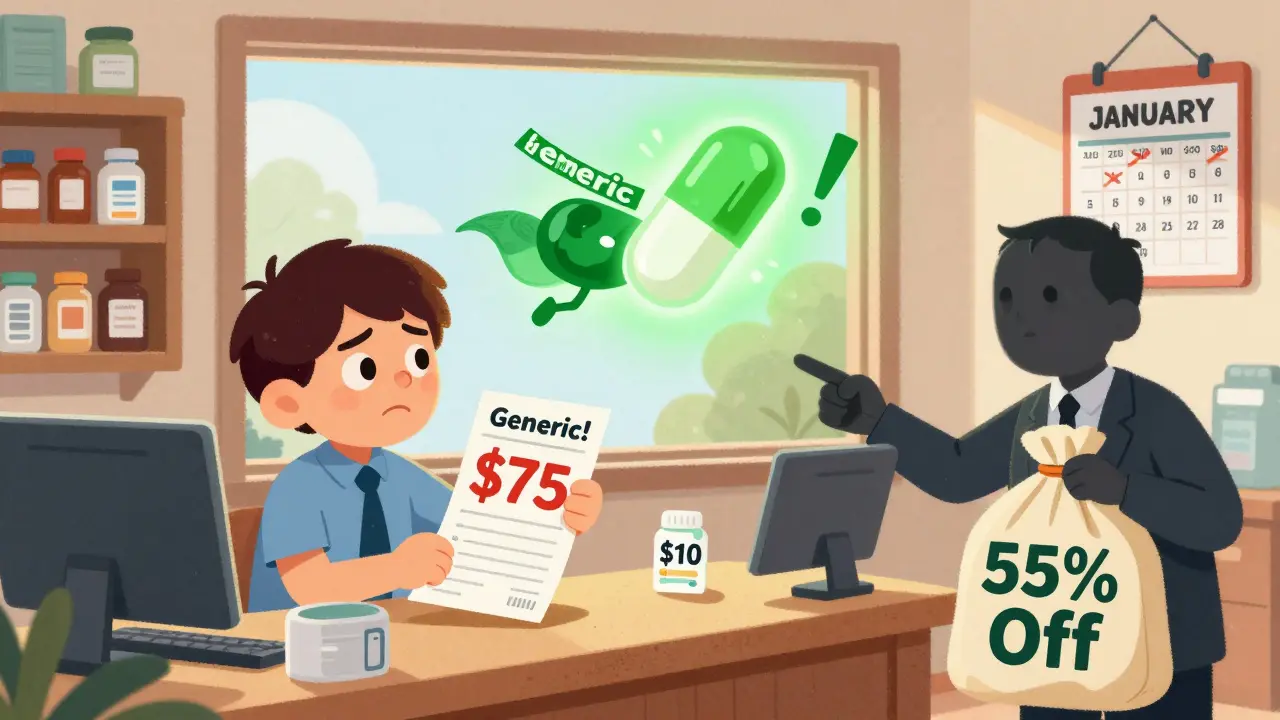
Your employer doesn’t just prefer generics because they’re cheap-they’re required to be. Insurance plans are structured to control rising drug costs. When a brand-name drug loses its patent, a generic version becomes available. At that point, PBMs automatically move the brand drug to Tier 3 or 4 and put the generic in Tier 1. For example, if you’ve been taking a brand-name blood pressure pill for years, and a generic becomes available, your next refill might suddenly cost $65 instead of $10. If you don’t switch, you’re paying the difference. Most people don’t realize this change happened until they get to the pharmacy. The savings are real. According to the Schauer Group, generic drugs save $3 billion every week. That’s money that stays in your employer’s budget-and could mean lower premiums or better benefits down the line. But here’s the catch: those savings don’t always reach you. PBMs get rebates from drugmakers to include certain drugs on their formularies. The average rebate is 55% of the drug’s list price, according to KPMG. But your copay doesn’t reflect that discount. You pay the same whether the PBM gets $5 or $50 back. So while the system saves money overall, you might not feel it at the register.What Happens When Your Drug Gets Removed
In January 2024, each of the three largest PBMs removed over 600 drugs from their formularies. That’s more than 1,800 medications pulled in total. These aren’t random removals. They’re negotiation tactics. If a drugmaker won’t offer a big enough rebate, the PBM drops the drug entirely. If your medication is removed, you’ll get a notice-sometimes after you’ve already filled your prescription. You have a few options:- Switch to a generic or preferred brand on the formulary
- Ask your doctor for a medical exception
- Pay full price out of pocket
- Appeal the decision through your plan
How to Find Out What’s Covered
You can’t guess your coverage. You need to check. Here’s how:- Visit your insurer’s website and search their drug list. Look for “formulary” or “drug list.”
- Review your Summary of Benefits and Coverage (SBC). It should list drug tiers and copays.
- Call your insurer directly. Ask: “Is [drug name] covered, and what tier is it on?”
- Ask your pharmacist. They often have real-time access to your plan’s formulary.
What Employers Are Doing to Help
Forward-thinking employers are using tools to make this easier:- Consumer Driven Health Plans (CDHPs): These combine high-deductible plans with health savings accounts (HSAs). They encourage employees to shop for the best prices, including generics.
- Formulary education: Some companies send emails, payroll inserts, or text reminders explaining why generics are safe and cost-effective.
- Care management programs: Programs like HealthOptions.org’s Chronic Illness Support Program assign care managers to help employees find affordable alternatives.
- Price Assure Programs: These automatically apply discounts when you fill prescriptions at in-network pharmacies.
What You Can Do Right Now
You don’t need to wait for your employer to act. Here’s your action plan:- Check your plan’s formulary. Do it now. Don’t wait for your next refill.
- If you’re on a brand-name drug with a generic available, ask your doctor if switching is safe.
- Use in-network pharmacies. Out-of-network fills often cost more-even for generics.
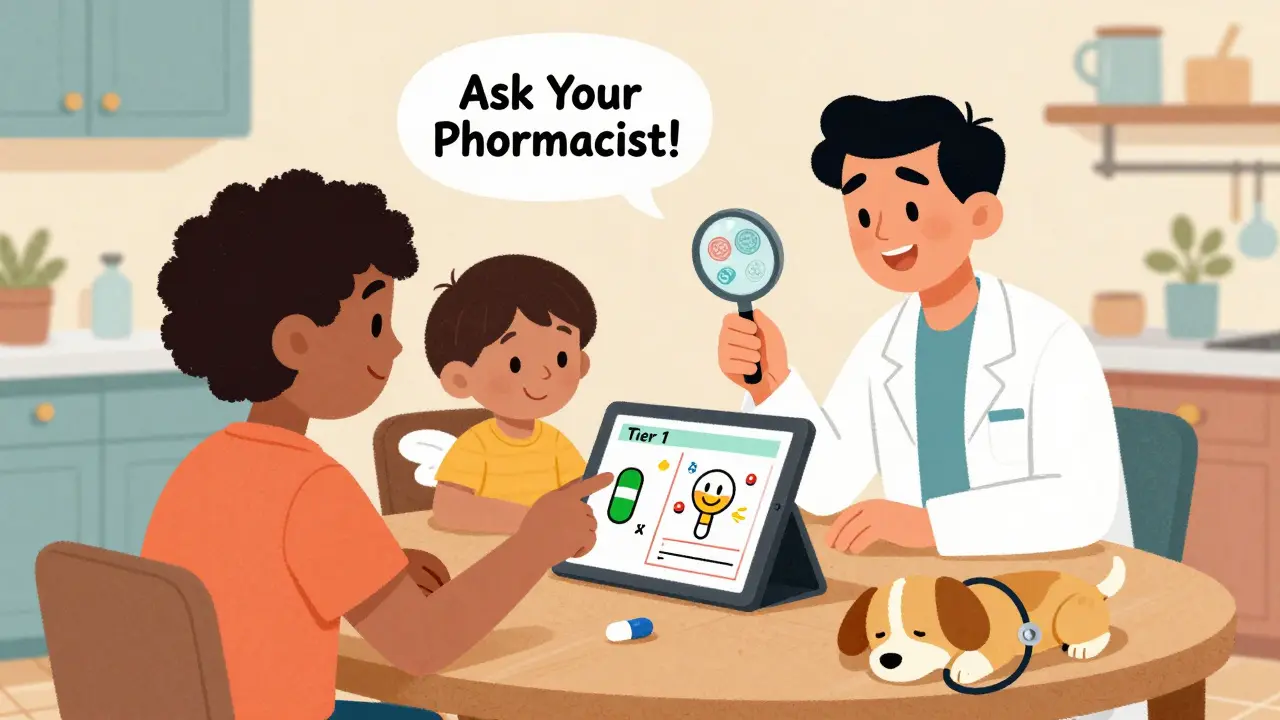
- Ask your pharmacist: “Is there a cheaper alternative on my plan?”
- If your drug was removed, request a medical exception. Don’t give up.
- Sign up for alerts from your insurer. Many offer email or text notifications when formularies change.
12 Comments
Okay, but have you ever tried to switch to a generic and your doctor acts like you’re asking them to amputate your leg? 😅 I asked for the generic version of my anxiety med-same active ingredient, same FDA stamp-and they looked at me like I’d just suggested I take aspirin for a heart attack. Meanwhile, my copay went from $12 to $65. Thanks, PBM.
It’s wild how the system is designed to save money, but the savings never reach the patient. PBMs get 55% rebates, yet we pay the same inflated price. It’s like a middleman skimming off the top while pretending they’re helping us. The real villain isn’t the brand-name drug-it’s the opaque, profit-driven machinery behind the scenes.
Just checked my formulary today-my blood thinner was moved to Tier 4. No notice. No warning. Just a $200 bill at the pharmacy. I’ve been on this med for 8 years. Now I’m filling out a 12-page exception form. Meanwhile, my employer’s HR portal still says ‘We care about your health.’ 🙄
THIS IS A COVER-UP. PBMs are in bed with Big Pharma. The ‘generics are just as good’ line? Total propaganda. They test generics on rats in basement labs while brand names get $2 billion R&D budgets. You think they’d let a $10 pill live if it didn’t threaten their monopoly? Wake up. This is capitalism, folks. And you’re the product.
As a Nigerian who moved to the US, I’m floored by how complicated this is. Back home, we just get the cheapest thing that works. No tiers, no forms, no PBM wizards. Here? You need a law degree just to fill a prescription. I switched to generic metformin last year-saved me $1,200. No side effects. Still alive. Still sane.
Of course you’re being told to switch to generics. But have you ever *read* the fine print on the generic label? The fillers and binders? Different manufacturers. Different absorption rates. Your ‘equivalent’ drug might not even be bioequivalent in practice. You’re not saving money-you’re gambling with your health. And your employer? They don’t care. They just want lower premiums.
Let’s be clear: the formulary system is a coercive, corporate-driven mechanism that pathologizes patient autonomy. The FDA’s bioequivalence standards are laughably permissive-20% variance in absorption is legally acceptable. This isn’t healthcare. It’s actuarial optimization disguised as beneficence. You’re not being empowered-you’re being managed.
My employer’s CDHP just sent a ‘Generics Are Great!’ email. Attached: a 47-page PDF with 12 hyperlinks and a quiz. I clicked ‘skip’ and took my brand-name statin. I’d rather pay $75 than spend 3 hours deciphering their ‘educational’ content. Someone please make this simpler.
My cousin in Lagos takes the same generic as me. Same pill. Same manufacturer. But in Nigeria, it’s $0.50. Here? $12. The system is broken. We’re not just paying for medicine-we’re paying for bureaucracy. I’m just glad I found a pharmacy that does price matching. 🙏
Generics? Please. The only thing ‘equivalent’ about them is their ability to make you feel like a second-class patient. My neurologist told me the brand-name version has ‘better consistency.’ Guess what? My migraines vanished when I switched back. You want to save money? Stop pretending that ‘same active ingredient’ means ‘same outcome.’ This isn’t science-it’s corporate theater.
Formulary changes happen all the time. You’re supposed to check. If you didn’t, that’s on you. Also, generics work. Stop being dramatic. And yes, your pharmacist knows more than your doctor about your plan. Use them. 🤷♀️
While the article presents a superficially pragmatic view of formulary systems, it conspicuously omits the ethical implications of PBM-driven formulary manipulation. The structural incentive to remove medications based on rebate economics-rather than clinical efficacy-constitutes a violation of the fiduciary duty owed to patients. This is not healthcare policy; it is market engineering at the expense of therapeutic integrity. One cannot credibly claim ‘affordability’ while actively suppressing access to clinically superior alternatives.