

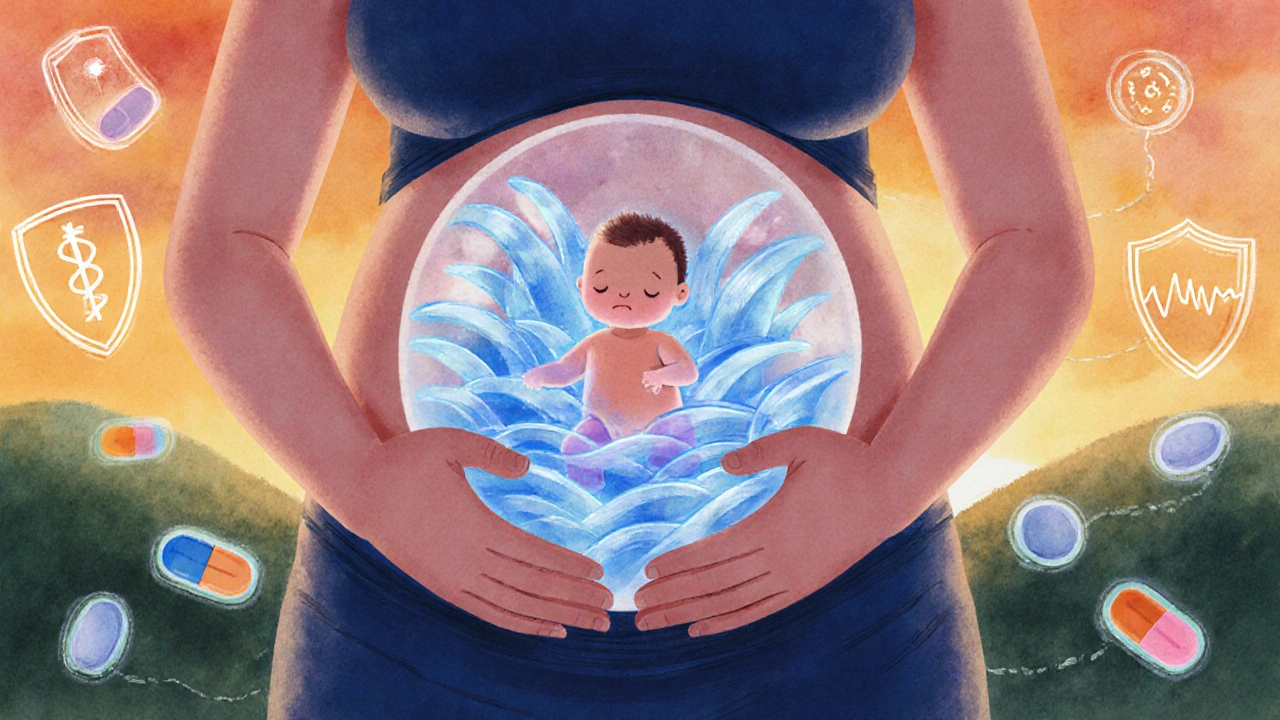
When a pregnant person is using opioids - whether prescribed for pain or as part of an opioid use disorder - the stakes are high. Not just for them, but for the baby growing inside. The fear isn’t just about addiction. It’s about what happens after birth: a newborn trembling, screaming, unable to eat or sleep. This isn’t rare. In the U.S., neonatal opioid withdrawal syndrome (NOWS), once called neonatal abstinence syndrome (NAS), has increased fivefold since 2010. Today, about 7 out of every 1,000 babies born in hospitals show signs of withdrawal. That’s tens of thousands of infants every year.
What Happens When Opioids Cross the Placenta
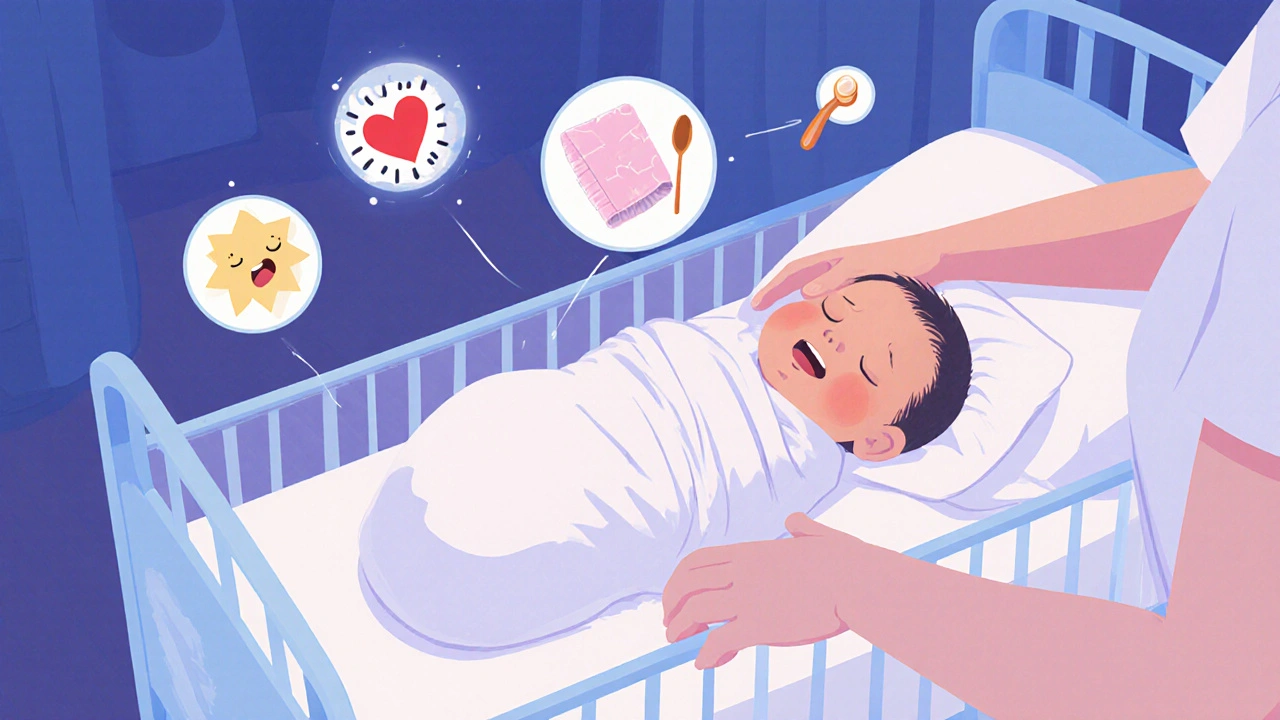
Opioids - including prescription painkillers like oxycodone, illegal drugs like heroin, and medications like methadone or buprenorphine - pass easily through the placenta. The baby’s body gets used to them, just like the parent’s. When the baby is born and that steady supply stops, the nervous system goes into overdrive. That’s NOWS. Symptoms usually show up 48 to 72 hours after birth. They’re not subtle: high-pitched crying, fever over 37.2°C, breathing faster than 60 breaths per minute, loose stools more than three times an hour, and jittery movements that won’t stop. Some babies can’t even be comforted by holding or feeding.
It’s not just about discomfort. Babies with severe withdrawal can have seizures, poor weight gain, and longer hospital stays - sometimes over three weeks. And while these symptoms are scary, they’re treatable. The goal isn’t to avoid all opioids during pregnancy - it’s to manage them safely.
Medication-Assisted Treatment Is the Standard - Not Withdrawal
For years, the idea was to get pregnant people off opioids completely. That changed. In 2017, the American College of Obstetricians and Gynecologists (ACOG) made it official: medically supervised withdrawal is dangerous. It increases the risk of miscarriage, preterm labor, and fetal distress. Relapse rates jump to 30-40% after withdrawal, putting both mother and baby at greater risk.
Today, the gold standard is medication-assisted treatment (MAT). Two medications are used: methadone and buprenorphine. Both are opioid agonists - they activate the same brain receptors as heroin or oxycodone, but more steadily and safely. They reduce cravings, prevent withdrawal, and help people stay in care.
Methadone is usually started at 10-20 mg per day and slowly increased to 60-120 mg. Buprenorphine starts lower - 2-4 mg sublingually - and can go up to 8-24 mg daily. Both are taken daily under supervision. Studies show MAT cuts relapse by 60-70% compared to quitting cold turkey. Babies born to people on MAT weigh about 200-300 grams more, are born closer to full term, and have larger head circumferences.
Comparing Methadone and Buprenorphine
Not all MAT is the same. Methadone and buprenorphine have different effects on the baby.
Methadone leads to more severe withdrawal symptoms in newborns. On average, babies exposed to methadone have Finnegan scores (a standard tool to measure withdrawal) of 14.3, compared to 11.8 for buprenorphine. Hospital stays are longer - 17.6 days versus 12.3 days. But methadone keeps more people in treatment. About 70-80% stay on it after six months, compared to 60-70% with buprenorphine.
Buprenorphine is easier to access. It can be prescribed by primary care doctors, not just specialized clinics. It’s also safer in overdose. But it still causes withdrawal in 50-80% of babies, and about half of those need medication to manage symptoms.
There’s a third option: naltrexone. It’s an opioid blocker, not an agonist. It doesn’t activate receptors - it blocks them. A 2022 Boston Medical Center study found that infants exposed to naltrexone had a 0% rate of NOWS during hospitalization. Their mothers were more likely to breastfeed successfully, and babies went home in just two days on average. But here’s the catch: these mothers started treatment later - at 28.4 weeks on average - compared to 19.7 weeks for those on buprenorphine. That delay raises red flags. Starting naltrexone too early can trigger withdrawal in the fetus, which is risky. It’s promising, but not yet recommended as a first-line treatment during early pregnancy.
Monitoring the Baby After Birth
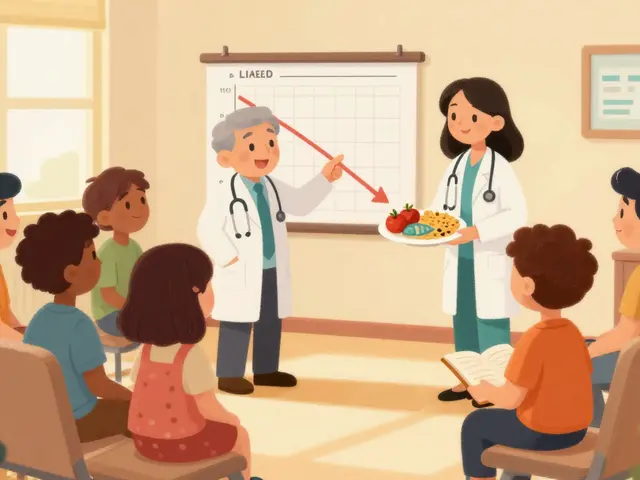
Every baby exposed to opioids in the womb needs careful monitoring after birth. The CDC says: at least 72 hours. That’s not optional. Hospitals using the Eat, Sleep, Console method - which focuses on whether the baby can feed, sleep for more than an hour, and be calmed without medication - have reduced the need for drugs by 30-40%.
Assessments happen every 3-4 hours in the first 24 hours, then every 4-6 hours after that. The Finnegan scale is still used in many places, but it’s flawed. A 2021 study found 37 different scoring systems across U.S. hospitals. That inconsistency means one baby might get medication in one hospital and be sent home in another.
Non-drug care comes first. Skin-to-skin contact, swaddling, dim lights, quiet rooms, and frequent feeding help. If the baby can’t sleep for an hour, can’t be consoled, or is losing weight, then medication like morphine or methadone may be needed. But it’s a slow wean - often over weeks. One parent on a recovery forum described her baby’s 14-day morphine taper as “terrifying.” Another said her baby needed 19 days of treatment.
Breastfeeding and Opioids
Can you breastfeed if you’re on methadone or buprenorphine? Yes. The amount of drug that passes into breast milk is very low - less than 1% of the maternal dose. The American Academy of Pediatrics says breastfeeding is encouraged for mothers on MAT. It helps calm the baby, reduces withdrawal severity, and strengthens bonding.
But not everyone gets support. Over half of mothers in recovery forums say they felt judged or discouraged from breastfeeding. Some providers still wrongly assume it’s unsafe. It’s not. Naltrexone users had an 83% success rate with breastfeeding - and no withdrawal symptoms. That’s a powerful combination.
The Bigger Picture: Access, Stigma, and Trauma
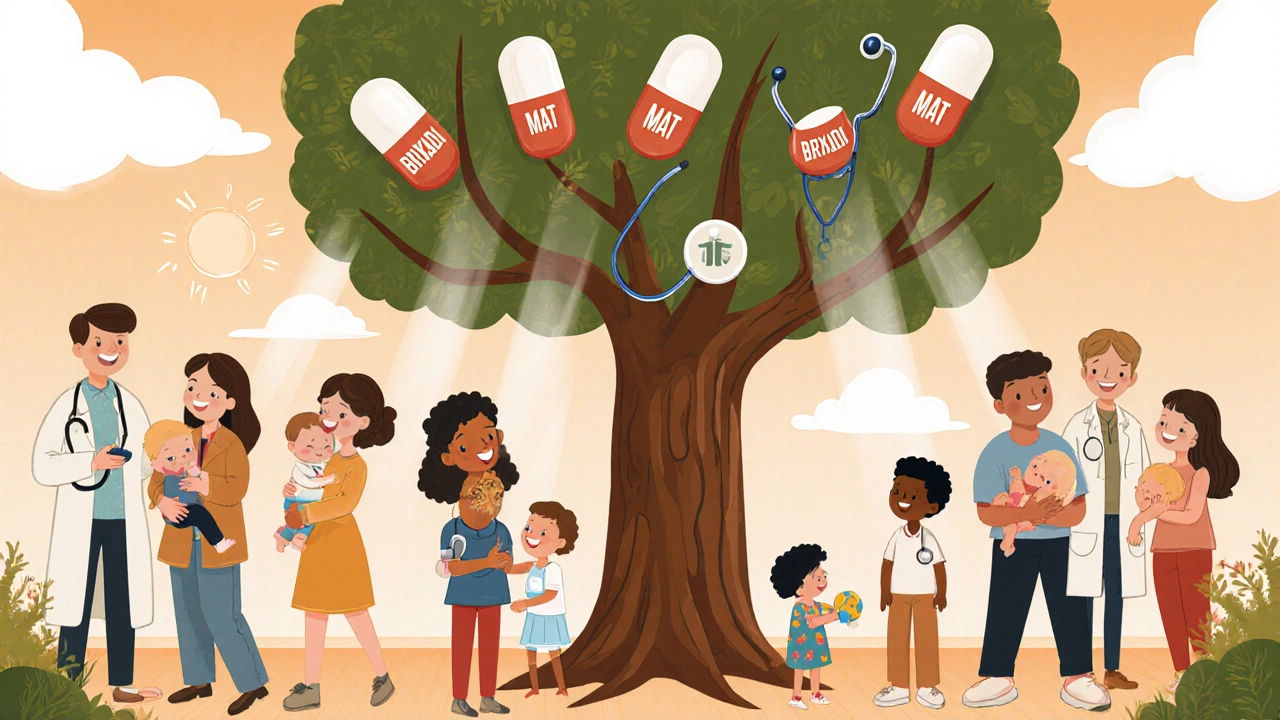
Getting treatment isn’t just about medicine. It’s about housing, transportation, mental health, and not being treated like a criminal. In 2021, only 45% of U.S. hospitals had standardized protocols for managing opioid use in pregnancy. In rural areas, that number drops to 28%. Many women don’t even get to their first prenatal visit until 20 weeks - too late for the best outcomes.
And stigma? It’s real. One mother shared that her OB said, “You’re lucky your baby is alive.” Another said a nurse refused to hold her newborn because she was “on drugs.” These moments don’t just hurt - they push people away from care.
Depression and trauma are common. Over 30% of pregnant women in substance use programs screen positive for moderate to severe depression. Nearly 42% report postpartum depression. Treatment must include therapy, peer support, and safe spaces - not just pills.
New Hope: Extended-Release Buprenorphine and Integrated Care
There’s progress. In 2023, the FDA approved Brixadi, an extended-release form of buprenorphine given as a weekly or monthly injection. In trials, 89% of pregnant women stayed on treatment at 24 weeks - much higher than with daily pills. This could be a game-changer for those who struggle with daily dosing.
The NIH’s HEALing Communities Study is testing full integration: prenatal care, MAT, mental health, housing help, and peer coaching - all in one place. Early results show a 22% drop in NAS severity when all these pieces work together. That’s not just better for babies - it’s better for families.
What’s clear now is this: opioid use during pregnancy isn’t a moral failure. It’s a medical condition. And like diabetes or high blood pressure, it can be managed. With the right care, mothers stay stable. Babies are healthier. Families stay together.
Is it safe to take methadone or buprenorphine while pregnant?
Yes. Methadone and buprenorphine are the standard treatments for opioid use disorder during pregnancy. They reduce the risk of miscarriage, preterm birth, and relapse. Babies born to mothers on these medications are more likely to be born at a healthy weight and full term. The benefits far outweigh the risks of withdrawal or continued illicit use.
Can I breastfeed if I’m on medication for opioid use?
Yes. Both methadone and buprenorphine are considered safe for breastfeeding. Only tiny amounts pass into breast milk - far less than what the baby was exposed to in the womb. Breastfeeding helps calm withdrawal symptoms and strengthens the bond between parent and baby. Avoid naltrexone if you plan to breastfeed until you’ve discussed it with your provider, as it’s not yet fully studied in this context.
Will my baby definitely have withdrawal symptoms?
Not always, but it’s common. Between 50% and 80% of babies exposed to opioids in the womb will show signs of withdrawal. The risk is higher with methadone than buprenorphine. With naltrexone, there’s been no reported withdrawal in hospital studies. But even if withdrawal happens, it’s treatable. Most babies respond well to non-drug care - feeding, holding, quiet rooms - and only some need medication.
How long will my baby stay in the hospital?
It depends. Babies on methadone may stay 15-20 days. Those on buprenorphine often stay 10-14 days. With naltrexone, hospital stays can be as short as two days. Using the Eat, Sleep, Console method can reduce hospital time by 30-40%. The goal is to monitor for at least 72 hours, but longer stays are common if symptoms are severe.
What if I used opioids before I knew I was pregnant?
It’s never too late to get help. Even if you used opioids in the first few weeks, starting medication-assisted treatment as soon as possible still improves outcomes. Many women don’t know they’re pregnant until 6-8 weeks. Starting MAT by 12 weeks gives the baby the best chance. Tell your provider - no judgment. Your care team’s job is to help, not to punish.
Are there alternatives to methadone and buprenorphine?
Naltrexone is being studied and shows promise - especially for mothers who are already stable and want to avoid opioid exposure. But it’s not recommended early in pregnancy because it can trigger withdrawal in the fetus. Medically supervised withdrawal is not advised - it increases risks of miscarriage, preterm birth, and relapse. MAT remains the safest, most effective option.
12 Comments
man i never knew this was so common. my cousin had her baby and they kept him for weeks just cause she was on methadone. they made her feel like trash too. why we treat moms like criminals instead of patients??
THIS. 🙌 breastfeeding while on MAT is a GAME CHANGER. my sister did it and her baby slept like an angel. no meds needed. 🤱💖
As someone who worked in neonatal care for 12 years, I’ve seen it all. The Eat, Sleep, Console method isn’t just a trend-it’s science. We cut our med use by nearly half just by training nurses to hold babies, dim the lights, and feed on demand. No judgment, just care. The babies respond better when they feel safe. And moms? They thrive when they’re treated like humans, not patients with a label.
It’s fascinating how we’ve pathologized addiction in pregnancy while treating other chronic conditions-diabetes, hypertension-with compassion. Why does the body of a pregnant person become a battleground for moral judgment instead of a vessel for medical care? The fact that naltrexone shows zero withdrawal in newborns but is discouraged early on speaks volumes about our reluctance to innovate unless the risk is ‘acceptable’ to society. What if the real barrier isn’t medical-it’s stigma dressed as caution?
Oh wow, so now we’re supposed to be impressed that naltrexone works… but only if you wait until 28 weeks? So the ‘safe’ option is the one that requires you to gamble with your baby’s early development? Brilliant. Just brilliant. 🙄
Let me tell you something-this isn’t just about drugs. It’s about the system failing women at every turn. I had a client who drove 90 miles each way just to get her buprenorphine because her town had no clinic. She missed three doses because her bus broke down. Then she got called ‘noncompliant’ and threatened with CPS. Meanwhile, the hospital had a brand-new NICU wing paid for by opioid lawsuits. The math doesn’t add up. We’re punishing people for being sick while profiting off their suffering. And we wonder why relapse rates are through the roof.
While the empirical data presented herein is undeniably compelling, it is imperative to recognize the epistemological limitations of observational studies in this domain. The conflation of correlation with causation, particularly regarding breastfeeding efficacy and neonatal outcomes, risks precipitating a paradigmatic shift that may not withstand longitudinal scrutiny. Moreover, the implicit valorization of non-pharmacological interventions, while aesthetically appealing, may inadvertently undermine the necessity of rigorous clinical protocols grounded in reproducible methodology.
ok but like... why is everyone acting like this is new?? like, i've been on reddit since 2018 and this has been going on FOREVER. also naltrexone?? sounds like a drug from a sci-fi movie. who even came up with this?? 🤦♀️😂😂😂
Let’s not pretend buprenorphine is a miracle. It’s still an opioid. The fact that babies still experience withdrawal in 50–80% of cases means we’re not curing anything-we’re just managing symptoms. And calling it ‘safe’ is misleading. We’re trading one problem for another. The real solution? Prevention. Better education. Less access to prescriptions. Not more meds for moms.
As a public health researcher with field experience in rural Appalachia, I can confirm: integrated care models reduce NAS severity not because of medication alone, but because they address housing instability, food insecurity, and trauma. One mother told me, ‘I didn’t need more pills. I needed someone to show up.’ That’s the real treatment. The injection buprenorphine? It’s a tool. But without trust, without dignity, it’s just another bandage.
Picture this: a tiny human, shaking like a leaf in a hurricane, eyes wide open, screaming like they’re being stabbed with a fork. And the nurses? They’re singing lullabies and swaddling like it’s yoga class. Meanwhile, the mom’s in the corner, eyes hollow, wondering if she’s a monster. This isn’t medicine. This is a war zone with a NICU sticker on it. And we call it ‘progress’? We’re just putting glitter on a broken bone.
Wait… so if I used opioids before I knew I was pregnant, it’s still okay? Like… what if it was just one pill? Like, a week before I found out? Would my baby be okay? I’m so scared now. I didn’t even know this was a thing. I thought it was only for heroin addicts. 😭