





When you hear "weight loss," you might think of diets, apps, or gym memberships. But for millions of people with obesity, losing weight isn’t about willpower-it’s about medicine. Medical weight management is a clinical approach backed by science, not slogans. It’s not a quick fix. It’s a long-term plan that treats obesity like diabetes or high blood pressure: as a chronic condition that needs ongoing care.
What Medical Weight Management Really Means
Medical weight management isn’t just seeing a doctor and getting a prescription. It’s a full-team approach. You work with physicians, dietitians, behavioral coaches, and sometimes nurses-all trained in obesity as a disease. The goal? Lose at least 5% of your body weight. That’s not a lot on the scale, but it’s enough to lower your blood pressure, improve insulin sensitivity, and reduce liver fat. Lose 10% or more, and you could see type 2 diabetes go into remission.
The American College of Cardiology laid out clear guidelines in 2025: obesity is a disease. And treating it properly means more than telling someone to eat less. It means using tools that work: nutrition plans tailored to your life, movement you can stick with, behavior change strategies, and medications that actually help.
Who Qualifies for Medical Weight Management?
You don’t need to be severely obese to qualify. Most clinics require a BMI of 30 or higher. If your BMI is 27 or above and you have conditions like high blood pressure, prediabetes, or sleep apnea, you’re still eligible. That’s a big shift from just a few years ago, when medications were only offered to people with BMI 35+.
Real-world programs like the one at West Virginia University Health System start with a simple check: your BMI, verified through medical records. Then comes an orientation-usually a video or handout-so you know what to expect. No surprise visits. No confusing instructions. You walk in prepared.
The Medications: What Works Now
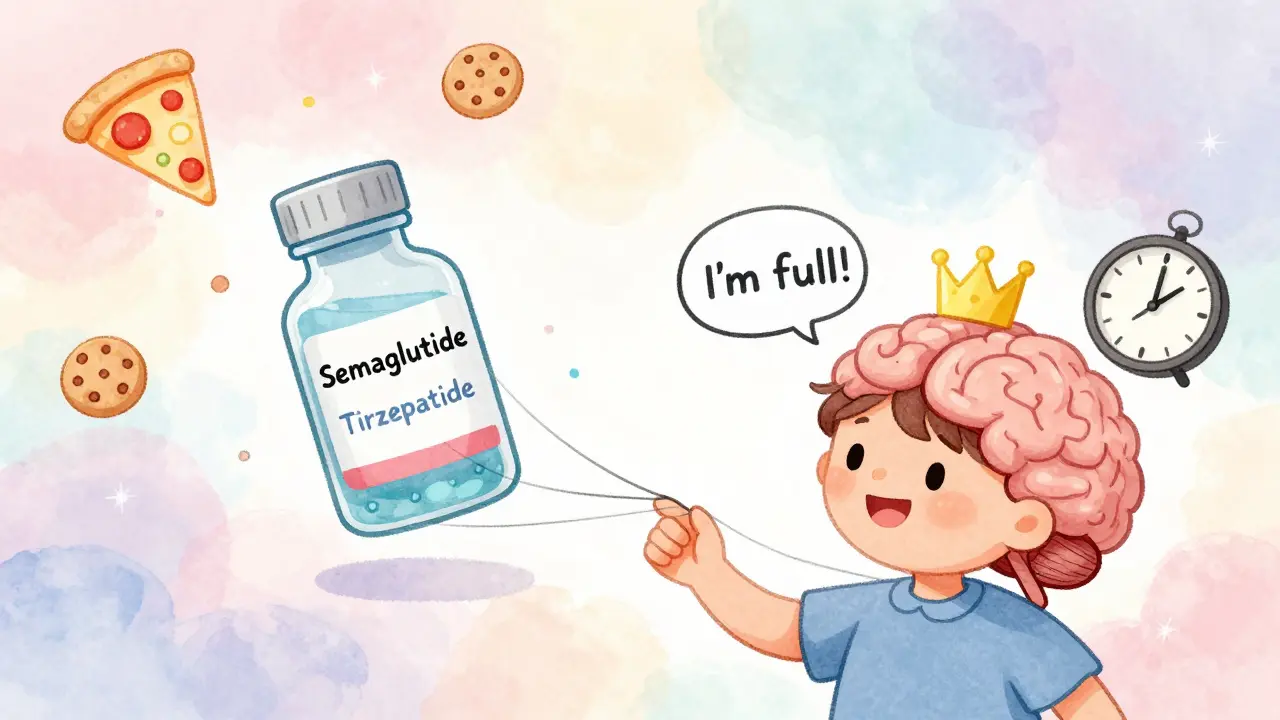
Medications are no longer a last resort. They’re front-line tools. Two drugs dominate the field today: semaglutide (Wegovy®) and tirzepatide (Zepbound®).
Semaglutide, a GLP-1 receptor agonist, helps people lose an average of 14.9% of their body weight over a year. Tirzepatide, which acts on two receptors (GLP-1 and GIP), does even better-20.2% weight loss in clinical trials. There’s also retatrutide, a new triple agonist still in trials, showing 24.2% weight loss in early studies.
These aren’t appetite suppressants. They work by slowing digestion, reducing cravings, and helping your brain feel full. That’s why they’re so effective. But they’re not cheap. Insurance coverage? Only 68% of commercial plans cover them in 2026. Medicare? Just 12% of Advantage plans do. Many patients wait 3 to 8 weeks just to get approval.
Clinics vs. Commercial Programs: The Real Difference
Compare a medical weight management clinic to a popular online program. One costs $150-$300 a month. The other, $20-$60. At first glance, the cheaper option wins. But here’s the catch: a 2024 JAMA study found that people in medical programs lost 9.2% of their weight in a year. Those in commercial programs? Only 5.1%.
Why? Medical clinics offer structure. You get a dietitian who adjusts your plan every few weeks. A behavioral coach who helps you deal with stress eating. A doctor who monitors your labs and adjusts meds. Commercial programs? Mostly apps, meal kits, and group chats. No medical oversight. No real accountability.
And safety? Medical weight management has a complication rate of just 0.2%. Bariatric surgery? Around 4.7%. That’s why clinics are the go-to for people with BMI 30-35-not just those with extreme obesity.
Monitoring: It’s Not Just Weighing In
At a medical clinic, you’re not just stepping on a scale every month. Your progress is tracked with precision. Blood pressure, waist circumference, blood sugar, cholesterol-all measured at least every 3 months during active treatment. The American Diabetes Association says this isn’t optional. It’s standard.
Some clinics use digital tools. West Virginia’s MyWVUChart app asks you to log meals, sleep, and mood before each visit. Patients say it helps them spot patterns: "I eat more when I’m stressed," or "I skip workouts when I don’t sleep well." That’s insight you can’t get from a Fitbit alone.
And it’s not just about weight. You’re tracking how you feel. Energy levels. Sleep quality. Mood. Because losing weight shouldn’t make you miserable. It should make you feel better.
What Happens in a Typical Appointment?
Your first visit lasts 60-90 minutes. You’ll talk about your history, your goals, your struggles. The doctor checks your vitals. A dietitian reviews your food diary-not to judge, but to find what’s working and what’s not. Maybe you’re eating too many processed carbs. Or you’re skipping meals because you’re too busy. The plan adjusts to your life, not the other way around.
Follow-ups are shorter-15 to 30 minutes-and happen every 2 to 4 weeks. You might get a new medication dose. A tweak to your protein intake. A tip to handle social events without derailing progress. The goal is consistency, not perfection.
And if you’re not losing weight? That’s not a failure. It’s data. Maybe your meds need adjusting. Maybe your stress levels are too high. Maybe you need more sleep. The team doesn’t blame you. They adapt.

The Hidden Barriers: Cost, Bias, and Access
Despite all the progress, big problems remain. Cost is the biggest. Even with insurance, co-pays for tirzepatide can hit $500 a month. Some patients skip doses to stretch their supply. Others drop out entirely.
Then there’s bias. A 2025 study found Black and Hispanic patients are 43% less likely to be offered weight-loss medications-even when they meet the same criteria as white patients. Clinics are now training staff to avoid language like "you just need to try harder." Instead, they use chairs without armrests, offer larger blood pressure cuffs, and ask open-ended questions: "What’s been hardest about this?"
And availability? There are only about 1,200 board-certified obesity medicine physicians in the U.S. That’s one for every 27,000 people with obesity. Wait times for appointments can be 6-12 weeks. Many clinics are hiring nurse practitioners and physician assistants to help fill the gap.
Why This Works Better Than Diets
Diets fail because they’re temporary. Medical weight management is designed to last. The Academy of Nutrition and Dietetics says one-size-fits-all plans have an 80% failure rate over five years. That’s because they ignore biology, behavior, and environment.
Medical programs don’t. They use the "5 pillars": nutrition, physical activity, behavior change, medication, and surgery (if needed). And they personalize everything. One person gets a low-carb plan because they have prediabetes. Another gets a Mediterranean diet because they love olive oil and fish. A third gets a meal replacement plan because they work 60-hour weeks.
Patients who stick with it report better sleep, more energy, and less joint pain. Many say they finally feel seen. "No one ever asked me why I ate when I was sad," one patient told a clinic survey. "They just told me to stop. This time, they listened."
What’s Next? The Future of Weight Management
By 2030, the American Diabetes Association predicts weight management will be as routine in diabetes care as checking HbA1c. That’s huge. It means doctors won’t wait for someone to develop complications before acting.
Employers are catching on too. Nearly half of Fortune 500 companies now offer medical weight management as part of their health benefits. That’s up from 18% in 2022. Why? Because every $1 spent on these programs saves $2.87 in future healthcare costs for diabetes and heart disease.
And the research keeps growing. New drugs are coming. Better monitoring tools. More training for providers. The message is clear: obesity isn’t a moral failing. It’s a medical condition. And like all medical conditions, it deserves expert care.
9 Comments
So we’re just gonna pharmacologically neuter hunger now? Next they’ll gene-edit our cravings like we’re lab rats with a subscription to Optimum Nutrition.
At this point, obesity isn’t a disease-it’s a market segment with a 20% ROI and a very loud pharmaceutical sales rep.
Hey I love this breakdown. The 9.2% vs 5.1% stat is wild-like comparing a Tesla to a bicycle with training wheels.
And the fact that insurance still treats these meds like luxury goods? Absolute madness. My cousin got on semaglutide after 11 months of paperwork. She lost 40 lbs and finally stopped getting stared at at the grocery store. That’s not a pill. That’s a life upgrade.
They don’t ask why you eat when you’re sad. They just give you a pill.
And call it care.
Let’s be real the GLP-1 agonists are just fancy appetite suppressants with a fancy name and a 500 dollar monthly price tag
And don’t even get me started on the fact that people think losing 5% is a win when you’re still obese
It’s not medicine it’s corporate wellness theater wrapped in JAMA studies
I’ve been in a medical weight program for 14 months. The meds helped, sure. But the real game-changer was the behavioral coach asking me ‘what’s the story you tell yourself when you binge?’
Turns out I was telling myself I didn’t deserve to feel good.
That’s not on the label. That’s the part no app can fix.
Obesity as a chronic disease? Cute. Let’s not forget we’re talking about a condition that’s been weaponized by capitalism for decades
First they made you feel guilty then they made you buy the solution
Now they’re monetizing your biology with triple-receptor agonists that cost more than your rent
And don’t get me started on the fact that clinics still use BMI like it’s the Ten Commandments
What about muscle mass? What about frame size? What about the fact that some people are just built different?
This isn’t science-it’s a bureaucratic circus with a white coat
My grandma was told to ‘just eat less’ for 30 years until she finally got into a real program
She lost 18% of her weight and now hikes every weekend
They didn’t just give her a pill-they gave her dignity
That’s what this is really about
Not the numbers on the scale
But the fact that someone finally looked her in the eye and said ‘we’re in this with you’
Wait so now we’re treating obesity like diabetes but still treating the patients like criminals?
One minute you’re told you’re ‘morally weak’
The next you’re handed a $500 pill and told ‘good luck’
And the worst part? The clinics still have tiny chairs and tiny blood pressure cuffs
Like they’re afraid you’ll break the furniture
Or worse-make them feel guilty for being thin
This isn’t care
This is trauma with a prescription pad
Just wanted to add something real quick-most clinics now use waist-to-height ratio alongside BMI. It’s more accurate for visceral fat.
And if you’re on tirzepatide and your A1c drops below 5.7? That’s not just weight loss-that’s type 2 diabetes remission.
That’s not magic. That’s medicine.
And yeah, it’s expensive.
But so is dialysis.
So is heart surgery.
Why are we okay paying for those and not this?