



Low back pain doesn’t just happen - it evolves. What starts as a sharp sting after lifting a suitcase can turn into a constant, dull ache that lingers for months. And the difference between those two versions isn’t just about time - it’s about your nervous system, your treatment options, and your chances of getting back to normal. Most people don’t realize that how you handle back pain in the first few days can change everything. If you’ve ever been told to "just rest it out," you might be setting yourself up for years of discomfort instead of weeks.
Acute Back Pain: The Short-Term Shock
Acute low back pain is the body’s alarm system going off. It’s sharp, localized, and usually tied to a clear event - twisting wrong while reaching for something, lifting a heavy box, or even sneezing too hard. According to clinical guidelines, this type of pain lasts less than four weeks. In fact, 90% of people with acute pain from a herniated disc or muscle strain see their symptoms disappear within 6 to 12 weeks without any specialist care.
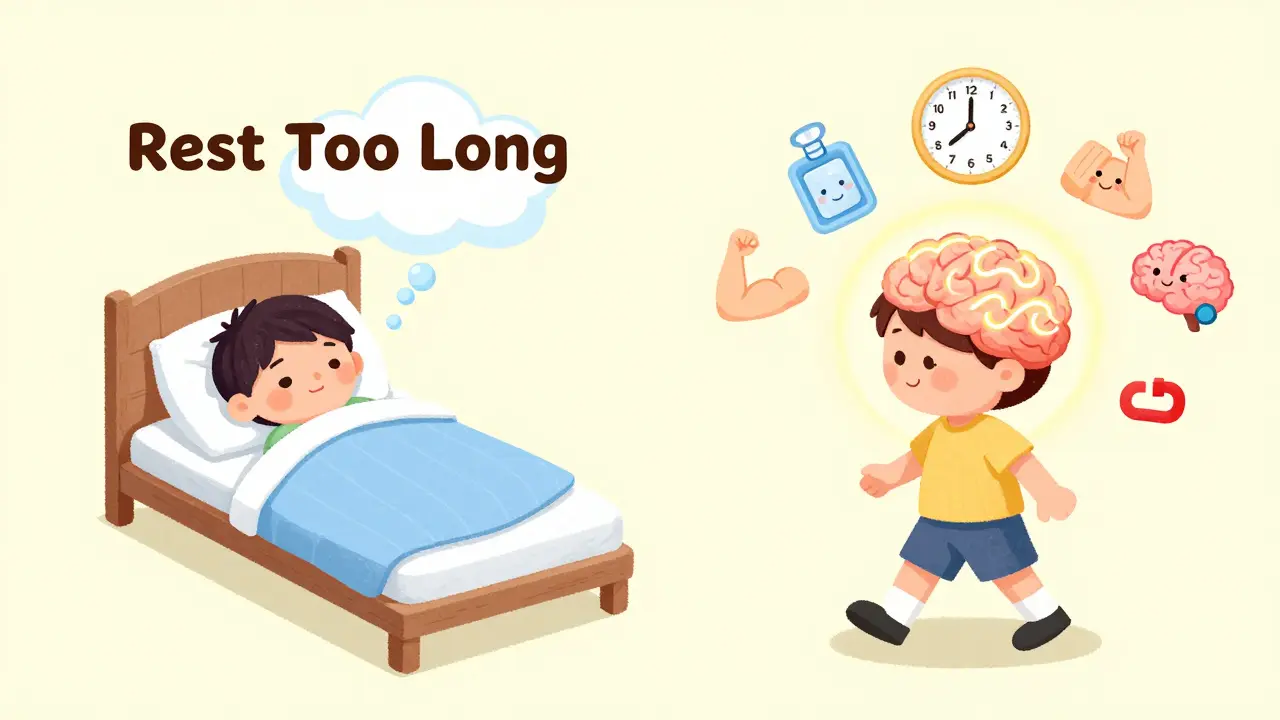
But here’s the catch: waiting too long to act increases your risk of it becoming chronic. Research from Newport Physical Therapy shows that getting physical therapy within 14 days of onset cuts the chance of long-term pain by 16% to 22%. Even more telling: if you start therapy within 72 hours, you reduce your risk of chronic pain by 22%. That’s not a small edge - that’s a life-changing window.
What does physical therapy do in these early days? It’s not about deep tissue massage or aggressive stretching. It’s about movement re-education. Therapists help you move safely again - teaching you how to bend, lift, and sit without triggering pain signals. A typical acute program lasts 6 to 12 sessions over 3 to 6 weeks. The first few visits focus on reducing inflammation with ice or heat, then quickly shift to gentle mobility drills and core activation. Most patients report 40% to 60% pain reduction after just 4 to 6 sessions. One patient from Healthgrades said: "After lifting a heavy box wrong, I saw a physical therapist within 3 days. By session 5, my pain was 90% gone."
Chronic Back Pain: When the Alarm Never Turns Off
Chronic low back pain is a different beast. Defined as pain lasting longer than 12 weeks - or in some definitions, over six months - it’s no longer about tissue damage. It’s about your nervous system. When pain sticks around past the healing timeline, your brain and spinal cord start misfiring. They become hypersensitive. Even normal movements feel painful. This is called central sensitization. It’s why someone with chronic pain can hurt from sitting too long, even if their spine is structurally fine.
Here’s the hard truth: only 20% to 30% of people with chronic back pain achieve complete pain relief, even with aggressive treatment. That’s not because therapy doesn’t work - it’s because the goal shifts. You’re not trying to "fix" a broken disc. You’re trying to retrain your nervous system.
Physical therapy for chronic pain looks nothing like it does for acute pain. Instead of 6 sessions, you’re looking at 15 to 25 sessions over 8 to 12 weeks. The focus? Pain neuroscience education. Therapists explain how your brain amplifies pain signals. They teach you that pain doesn’t always mean damage. They use graded exposure - slowly reintroducing movements you’ve been avoiding because they "hurt." And they tackle fear-avoidance behaviors, which are present in 70% of chronic cases.
One study from the Journal of Orthopaedic & Sports Physical Therapy found that combining movement therapy with pain education cut chronicity rates in high-risk acute patients from 28% down to 12%. That’s the power of early intervention. But even for those already in chronic pain, progress is possible. Patients who complete a full course of chronic pain PT report 30% to 50% pain reduction and 60% to 70% improvement in daily function. One Reddit user wrote: "I’ve done 20 PT sessions over 5 months and only have 30% relief." That’s common. But another said: "They finally explained why my pain didn’t go away - and how to reset my brain. That changed everything."
Why Timing Is Everything
The difference between acute and chronic isn’t just medical jargon - it’s financial, emotional, and life-altering. The U.S. spends $100 to $200 billion a year treating low back pain. Physical therapy accounts for $15.3 billion of that. But here’s the irony: acute cases make up 65% of all therapy visits, but only 45% of revenue. Why? Because they’re quick. Chronic cases are fewer, but they’re expensive - longer treatments, more sessions, more coordination with psychologists and pain specialists.
And yet, the system often fails people at the critical moment. A Stanford study found that over-medicalizing acute pain - getting MRIs too early, seeing specialists before trying movement - actually increases the chance of chronic pain by 27%. Why? Because it sends the message: "Your back is broken." That fear, more than the injury itself, drives people into inactivity, which worsens pain.
Physical therapists who specialize in acute care use mechanical diagnosis - like the McKenzie method - to quickly identify which movements relieve or worsen pain. Those who treat chronic pain need certification in pain neuroscience education. Studies show a correlation of 0.82 between therapist training in this area and patient outcomes. That’s stronger than most medical interventions.
Medicare is catching on. In 2023, they introduced a reimbursement bonus of 8.5% for physical therapists who successfully prevent acute pain from turning chronic. And in January 2024, new billing codes for chronic pain management kicked in, signaling a major shift toward long-term, non-drug solutions.
What Works - And What Doesn’t
Let’s cut through the noise. For acute back pain:
- Do: Start physical therapy within 72 hours. Move gently. Avoid bed rest beyond 2 days.
- Don’t: Get an MRI before trying movement-based care. Skip activity because it hurts. Assume pain = damage.
For chronic back pain:
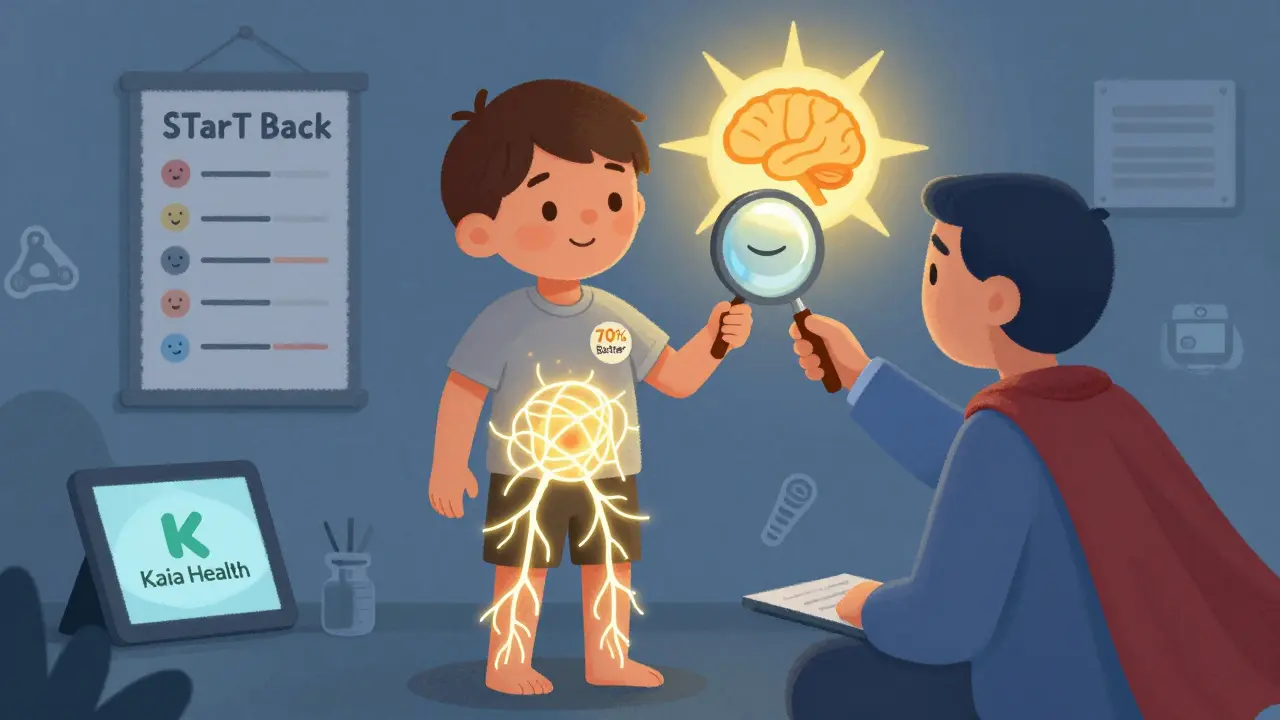
- Do: Find a therapist trained in pain neuroscience. Be patient - progress is slow. Challenge avoidance behaviors. Use tools like the STarT Back screening tool to guide your treatment intensity.
- Don’t: Expect quick fixes. Rely on passive treatments like massage or ultrasound alone. Believe that surgery or injections are the only answers.
And here’s something new: FDA-cleared digital platforms like Kaia Health now offer AI-guided physical therapy for chronic pain. In trials, users saw 45% pain reduction in 12 weeks. It’s not a replacement for human therapists - but it’s a powerful tool for people who can’t access one.
What You Should Do Right Now
If you have low back pain right now:
- Ask yourself: Is this new? Did it start after a clear injury? If yes, and it’s under 4 weeks - get physical therapy now. Don’t wait.
- Find a therapist who asks about your movement patterns, not just your pain level. They should test how bending, twisting, or sitting affects your symptoms.
- If your pain has lasted longer than 3 months, look for someone with training in pain neuroscience. Ask: "Have you been certified in pain education?" If they don’t know what you mean, keep looking.
- Stop Googling "herniated disc symptoms" or watching YouTube videos of spinal stretches. Fear and misinformation are your biggest enemies.
Low back pain is not a one-size-fits-all problem. The path out of it depends entirely on when you step onto it. The sooner you act, the less likely you are to spend years in pain. And if you’re already stuck in chronic pain - it’s not hopeless. It just requires a different kind of healing.
How do I know if my back pain is acute or chronic?
Acute back pain lasts less than 4 weeks and usually follows a clear injury - like lifting something heavy or twisting awkwardly. It’s sharp, localized, and often improves with rest and movement. Chronic back pain lasts longer than 12 weeks (or 6 months, depending on the source) and often feels like a constant ache, even without a clear cause. If your pain has lasted more than 3 months, it’s likely chronic - even if the original injury healed.
Can physical therapy really prevent acute pain from becoming chronic?
Yes - and the evidence is strong. Studies show that starting physical therapy within 14 days of acute back pain onset reduces the risk of chronic pain by 16% to 22%. If you begin within 72 hours, that risk drops by 22%. Early therapy helps retrain your nervous system before it gets stuck in a pain loop. Delaying treatment beyond 16 days increases your chance of chronic pain by 38%.
Why do some people still have pain after physical therapy?
For acute pain, it’s usually because treatment started too late or wasn’t consistent. For chronic pain, it’s often because the therapy didn’t address the nervous system. Many traditional PT programs focus only on muscles and joints. But if your brain is over-sensitized to pain, you need pain neuroscience education - learning how your nervous system works, why it’s amplifying pain, and how to calm it down. Without that, relief is limited.
Is imaging like MRI or X-ray necessary for low back pain?
For most cases of acute low back pain, no. Imaging rarely shows the true cause of pain and often reveals changes (like disc degeneration) that are normal for your age. A 2022 Stanford meta-analysis found that getting an MRI too early increased the chance of chronic pain by 27% - likely because it creates fear. Guidelines from the American College of Physicians recommend physical therapy before imaging, unless there are red flags like loss of bladder control, unexplained weight loss, or trauma.
What should I look for in a physical therapist for chronic back pain?
Ask if they’re trained in pain neuroscience education. Look for certifications like the Certified Pain Educator (CPE) or experience with the STarT Back tool. They should spend time explaining how pain works in the brain, not just how to stretch your back. They’ll likely use graded exposure - slowly helping you do activities you’ve been avoiding - and address fear-avoidance behaviors. If they only use heat, massage, or machines, they’re not equipped for chronic pain.
10 Comments
Been there. Lifted a dumbbell wrong, thought I’d be fine in a few days. Turns out, resting for a week just made my nervous system paranoid. Started PT at day 10 - barely helped. If I’d gone at day 2? No chronic pain. No anxiety about bending over. Just… movement. Simple. Weird how the body remembers fear more than injury.
Also, no one talks about how Google makes it worse. "Herniated disc" looks like a horror movie. I now avoid searches. Just move. Slowly. Like a robot learning to walk.
Early PT works. Period.
There’s a metaphysical layer here that no study quantifies. Pain isn’t just a signal - it’s a narrative your body writes when it feels abandoned. When you rest too long, you’re not healing. You’re negotiating with your own nervous system like a hostage. The therapist doesn’t fix your spine. They hand you back the pen. You rewrite the story. Movement is the syntax. Consistency, the grammar.
Chronic pain isn’t a malfunction. It’s a language your body learned because no one taught it how to say, "I’m safe now."
Let me guess - the article was written by a PT who’s never had a real injury. "22% reduction?" That’s not a miracle. That’s a marketing stat. I’ve done 3 rounds of PT. One therapist said "core strength." Another said "nerve glides." Third said "you’re scared." Turns out, none of them knew what they were doing. The only thing that helped? Time. And ignoring everyone.
Also, FDA-cleared AI apps? Next they’ll sell you a neural headset that vibrates when you think about your back. Capitalism is beautiful.
I want to say thank you to whoever wrote this. As someone who’s been in chronic pain for 5 years, this is the first time I’ve read something that didn’t make me feel broken. The part about retraining the nervous system? That’s it. That’s the key. I’ve been told to "just stretch more" for years. No one ever explained why my brain was screaming at me for sitting down. I cried reading that.
And yes - I found a therapist with pain neuroscience training. It took 8 months. But she didn’t touch my back once. We talked. We mapped fear. We moved. Slowly. And now? I can lift my toddler without bracing. That’s everything.
To anyone still waiting: You’re not lazy. You’re not weak. You just needed the right map. Keep going.
Chronic pain is the ghost in the machine. The disc? Fine. The muscle? Healed. The ligament? Done. But the nervous system? It’s still running the emergency protocol like it’s 2017. You’re not broken - you’re stuck in a loop of hyper-vigilance. It’s like your body’s alarm clock is set to 3 a.m. every day, forever.
And the worst part? Everyone thinks you’re exaggerating. Because you look fine. You’re not limping. You’re not screaming. You’re just… quiet. And that silence? That’s the loudest pain of all.
Therapy isn’t about fixing. It’s about reprogramming. Like updating firmware on a glitchy phone. No one tells you that. They just hand you a foam roller and hope for the best.
Oh wow. So if I just move within 72 hours, I can magically avoid 22% of future suffering? What a deal. Next you’ll tell me that drinking water prevents aging. I’m going to start a business: "PT in 72 Hours or Your Back Is Your Problem."
Also, why is this article 5000 words? Did someone get paid per comma?
Life is pain. But the real pain? Being told to "just rest" when your body is screaming to move. I’ve seen friends go from lifting groceries to living on couches. They were told to be careful. But caution isn’t care - it’s surrender.
PT isn’t magic. It’s poetry. Movement is the verse. Consistency, the rhythm. And the therapist? They’re the translator between your body and your fear.
Also, emojis are forbidden here, but if I could, I’d send a 🌱 for growth and a 🤲 for quiet courage.
Just wanted to say - this is the most hopeful thing I’ve read in years. I’m 6 months into chronic PT and I thought I was failing. But reading that 30-50% reduction is still progress? That’s not failure. That’s survival.
I used to think I needed to be pain-free to live. Now I know: I just need to be movement-ful. Even if it’s slow. Even if it’s scary. Even if it’s just 5 minutes a day.
Thank you for writing this. I’m sharing it with my whole family.
i just wanted to say i had acute pain last year and waited 3 weeks to see a pt because i was scared it would be expensive. i ended up going to 18 sessions. i wish i had known about the 72 hour window. it’s not just about pain - it’s about your whole life. i missed out on hiking, playing with my dog, even bending to tie my shoes. now i’m doing maintenance sessions and it’s changed everything. please don’t wait. i’m so sorry i didn’t listen sooner.