
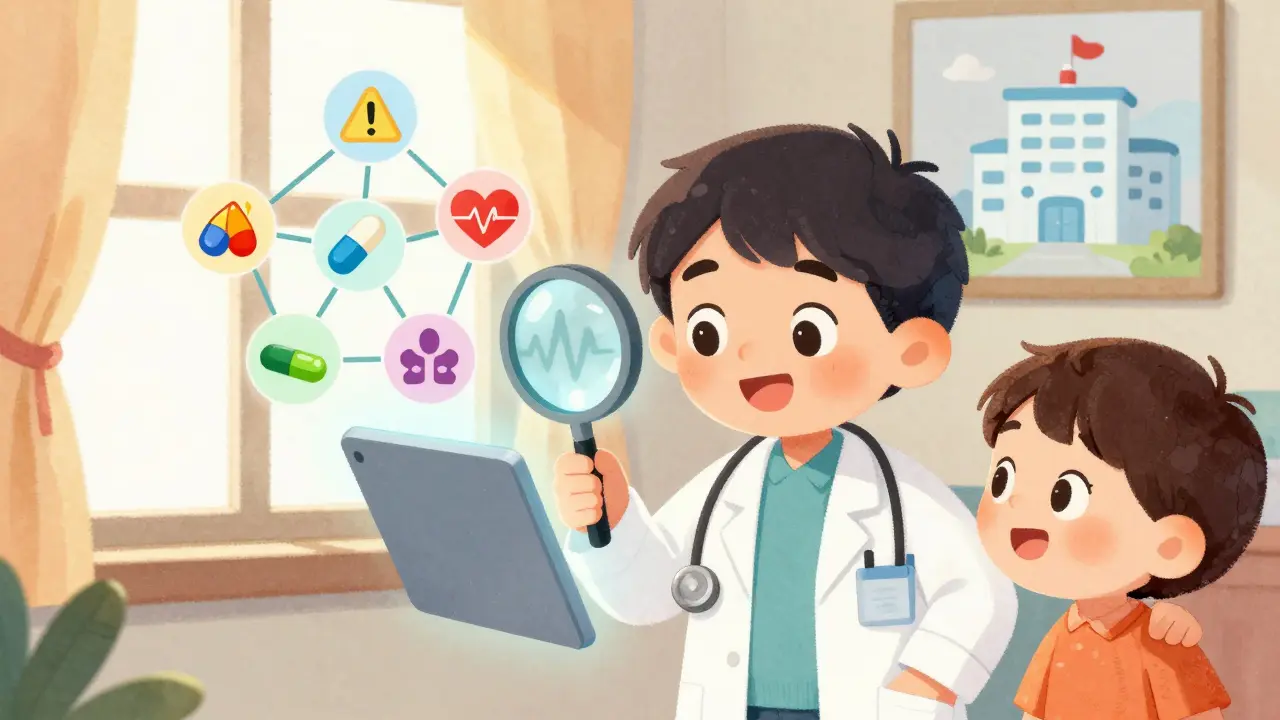
Drug safety isn’t just about what’s on the label. It’s about what happens when real patients take real medicines in real life. That’s where clinician portals and safety apps come in - turning scattered reports into actionable insights, and turning delays into early warnings. If you’re a doctor, pharmacist, or clinical researcher, ignoring these tools means missing signals that could prevent harm. The good news? You don’t need to be a data scientist to use them. You just need to know how to make them work for you.
Why Clinician Portals Are No Longer Optional
For decades, adverse drug reactions were reported on paper, mailed in, or entered manually into isolated databases. It took weeks - sometimes months - for a pattern to emerge. Now, with modern clinician portals, a serious reaction reported in a clinic in Atlanta can trigger an alert in a pharmacovigilance team in Berlin within minutes. That’s not science fiction. It’s what Cloudbyz, IQVIA, and even open-source tools like clinDataReview do every day.The shift happened because traditional systems couldn’t keep up. The FDA’s Sentinel Initiative, the EU’s Clinical Trial Regulation, and global pressure to reduce preventable drug deaths forced change. Today, 63% of U.S. physicians have access to drug safety alerts built into their EHR systems. If your practice still relies on spontaneous reporting forms, you’re operating on a 1990s model.
What You Actually Need to Know About the Tools
Not all platforms are the same. They fall into three main types, each serving a different need:- Hospital and clinic tools like Wolters Kluwer’s Medi-Span are built into your EHR. They pop up alerts when a patient’s medication list clashes with a new prescription - like warning against mixing warfarin with certain antibiotics. These are designed for daily use by frontline clinicians.
- Clinical trial platforms like Cloudbyz integrate directly with your trial data systems. They pull lab results, vital signs, and patient notes to spot safety signals in real time. This is critical for biotech firms running Phase III trials.
- Low-resource country systems like PViMS are simple, web-based tools that work even on slow internet. They use pre-coded MedDRA terms so a nurse in rural Kenya can report a reaction without typing a single sentence.
Here’s the reality: If you’re in a hospital, Medi-Span is your go-to. If you’re running a trial, Cloudbyz or similar CTMS-integrated tools are non-negotiable. If you’re in a clinic with limited tech, PViMS gives you the basics - and it’s free.
How to Start Using These Tools Effectively
You don’t just log in and wait for magic. You need to engage. Here’s how:- Know where your alerts come from. Is it a drug interaction? A lab trend? A patient note mentioning ‘rash’? Understand the source. Medi-Span flags interactions based on FDA and EMA databases. Cloudbyz uses CDISC-standardized data from your trial’s EDC system.
- Don’t ignore the ‘false positives.’ A 2024 FDA report found 22% of automated signals were false alarms. That’s not a bug - it’s a feature. These tools are designed to cast a wide net. Your job is to review, not react. Ask: Is this a one-off? Is the patient on ten other drugs? Did they just start a new supplement?
- Use the reporting function - every time. If you see something odd, even if you think it’s ‘just a coincidence,’ report it. In one hospital, a single report about a rare skin reaction led to the discovery of a contamination issue in a batch of insulin. That report saved lives.
- Check the audit trail. Cloudbyz and clinDataReview both create timestamped logs of every action. If you modify a report or override a warning, it’s recorded. This isn’t about surveillance - it’s about accountability. Regulatory audits are coming. Be ready.
What the Experts Say - And What They’re Worried About
Dr. Elena Rodriguez at IQVIA puts it plainly: “AI doesn’t replace the pharmacist. It empowers them.” That’s the key. These tools don’t make decisions. They surface patterns so you can.But there’s a dark side. In hospitals using Medi-Span, alert fatigue is real. One study found clinicians dismissed 70% of drug interaction warnings because they were too frequent or irrelevant. The fix? Customization. If your hospital sees mostly elderly patients on blood thinners, tune the system to focus on those risks - not every possible interaction.
Another concern? Over-reliance on automation. The Frontiers in Medicine study showed that systems using only keyword searches in clinical notes missed 35% of adverse events. Why? Because patients say “I feel weird” or “My legs are swollen,” not “I’m having a drug reaction.” The best tools now use natural language processing to read between the lines - but they still need a trained eye to interpret the context.
Implementation Tips Based on Your Setting
If you’re rolling this out in your organization, here’s what actually works:- Hospitals: Start with Medi-Span or similar EHR-integrated tools. Make sure your EHR (Epic, Cerner) is properly configured. Training should be hands-on - not a webinar. Assign one pharmacist to be the “safety champion” and run weekly huddles to review alerts.
- Clinical trials: Cloudbyz and similar platforms require deep integration. Expect 8-12 weeks. Map your data sources to CDISC standards early. Don’t wait until the last patient is enrolled. The biggest delay? Not having the right data fields defined in your EDC system.
- Low-resource clinics: PViMS is your friend. But don’t assume internet is reliable. Download offline reports daily. Train staff to use the pre-coded MedDRA dropdowns. Even if they only type three words, the system can still detect a signal.
Costs and Accessibility - What You Can Actually Afford
You don’t need a $200,000 annual license to get started. Here’s the real pricing landscape:| Platform | Best For | Annual Cost | Key Strength | Key Limitation |
|---|---|---|---|---|
| Wolters Kluwer Medi-Span | Hospitals, clinics | $22,500-$78,000 | Real-time EHR alerts, 43% U.S. hospital market share | Alert fatigue, high false positives |
| Cloudbyz | Clinical trials, pharma | ~$185,000 | 40% faster signal detection, CDISC integration | 6-8 week setup, complex data mapping |
| PViMS | LMICs, rural clinics | Free | Simple interface, 95% adoption in 28 countries | No advanced analytics, internet-dependent |
| clinDataReview | Regulatory compliance, research | Free (open-source) | 100% FDA/EMA compliance, reproducible reports | Requires R programming knowledge |
For most individual clinicians, the free tools - like PViMS or clinDataReview - are more than enough to start contributing to safety monitoring. You don’t need to buy software to be part of the solution.
Skills You Need to Master
You don’t need to code. But you do need to understand three things:- Clinical pharmacology - Know how drugs interact. Is that headache a side effect or a migraine? That’s your call.
- Data literacy - Can you read a trend line in a lab value? Can you spot a cluster of similar reports? That’s your job now.
- Regulatory awareness - You’re not just a clinician. You’re part of a safety network. Reporting isn’t optional. It’s part of your duty.
Most organizations report 80-120 hours of training is needed for staff to become proficient. That sounds like a lot - until you realize that one missed signal could lead to a recall, a lawsuit, or worse.
What’s Next? AI, Real-Time Data, and the Human Edge
The future isn’t about more alerts. It’s about smarter ones. Cloudbyz’s new version 5.0 uses machine learning to predict risks based on lab trends before symptoms even appear. IQVIA’s AI co-pilot helps safety officers review signals 35% faster by pulling together similar cases automatically.But here’s the catch: The FDA’s 2026 guidance will require all AI tools to explain how they reached a conclusion. No black boxes. That means you’ll need to understand the logic behind the alerts - not just accept them.
One thing won’t change: The final decision will always rest with you. Tools can spot patterns. Only you can decide if a rash is harmless - or the first sign of something deadly.
Do I need special training to use clinician portals for drug safety?
You don’t need to be a programmer, but you do need basic training. Most platforms are designed for clinicians, not IT staff. Hospitals typically offer 4-6 hours of hands-on training for tools like Medi-Span. For clinical trial systems like Cloudbyz, expect 2-3 days of training focused on data entry, alert review, and reporting workflows. Open-source tools like clinDataReview require more technical skill - often 3-5 days of R programming training. The key is understanding how to interpret alerts, not how to build them.
Can I use these tools if I work in a small clinic with limited tech?
Yes. PViMS was built for exactly this. It runs on any modern browser, needs no special hardware, and works with low bandwidth. It’s used in over 28 low- and middle-income countries. Even if your clinic only has a laptop and spotty internet, you can still report adverse events. Download reports daily, use the pre-coded MedDRA terms, and send reports when you have a connection. Your reports matter - even if they’re simple.
What’s the difference between a drug safety portal and a drug interaction checker?
A drug interaction checker - like the one in your EHR - warns you about known conflicts between two or more drugs. It’s reactive and rule-based. A full drug safety portal goes further. It tracks trends over time, links lab results to symptoms, identifies clusters of similar events across patients, and can even detect signals from unstructured clinical notes. It’s not just about two drugs clashing - it’s about spotting a hidden pattern that no one else has seen yet.
Are these tools only for big hospitals or pharmaceutical companies?
No. While enterprise platforms like Cloudbyz target large trials and pharma firms, tools like Medi-Span are used in 43% of U.S. hospitals with 500+ beds - and many smaller clinics use them too. Open-source tools like clinDataReview are free for anyone. And PViMS is free and available to any clinic worldwide. Drug safety isn’t a luxury. It’s a shared responsibility. Even a single report from a small clinic can trigger a national alert.
How do I know if a safety signal is real or just a false alarm?
Look at three things: frequency, consistency, and context. Is this reaction happening to multiple patients on the same drug? Does it match known patterns in the literature? And most importantly - is there a plausible biological link? For example, if five patients on a new antiviral develop sudden liver enzyme spikes, and all had pre-existing hepatitis, that’s a signal. If one patient on a common antibiotic reports a rash after taking it for the first time, it’s likely a coincidence. Always review the patient’s full history. Tools give you data. You give it meaning.
What happens if I don’t report an adverse reaction?
You might not face legal penalties as an individual clinician, but you’re contributing to a dangerous blind spot. The FDA and EMA rely on clinician reports to detect risks that weren’t seen in clinical trials. One missed report could mean the difference between a small warning and a nationwide recall. In 2023, a delayed report on a diabetes drug led to 17 cases of severe hypoglycemia that could have been prevented. Reporting isn’t bureaucracy - it’s patient protection.
13 Comments
These portals are just another way for Western pharma to control global health. In India, we’ve been reporting adverse reactions manually for decades - and we didn’t need $78K software to save lives. PViMS? That’s the real tool. Not some corporate EHR plug-in that alerts you every time someone takes aspirin with tea.
Think about it - we’re outsourcing our moral responsibility to algorithms. The machine tells us a rash is ‘likely’ related to a drug, so we don’t have to sit with the patient and ask, ‘What did you feel?’ The human element is being erased under the guise of efficiency. Is a 40% faster signal detection worth losing the quiet moment when a grandmother says, ‘My legs feel heavy since I started this pill’? That’s not data - that’s a soul speaking. And no algorithm can hear that unless we teach it to listen - which we won’t, because we’re too busy optimizing dashboards.
Alert fatigue is real, and it’s killing clinicians. I’ve seen residents ignore 10 warnings in a row because half of them were ‘possible interaction with vitamin D.’ That’s not safety - that’s noise. Customizing thresholds isn’t optional, it’s ethical. If your hospital has 80% elderly patients on warfarin, why are you getting flagged for every new antibiotic? Tune it. Or stop pretending you care.
I work in a rural clinic with spotty Wi-Fi and a 10-year-old laptop - and I use PViMS every day. No fancy training. No IT team. Just me, a dropdown menu, and the courage to hit ‘submit’ even when I’m not sure. One report last month flagged a pattern in a generic metformin batch. Turned out the filler was contaminated. We stopped prescribing it. No one died. That’s the power of small actions.
Wait, so clinDataReview is free? But you need to know R? That’s like giving someone a Ferrari and saying ‘here’s the manual, but it’s in Ancient Sumerian.’ Why not make a simple GUI? If we want frontline docs to use this stuff, we gotta meet them where they are - not where we think they should be.
u r right about pvims but why dont we make it offline first? i use it on my phone when net is down. just save as pdf n send later. simple.
Oh wow, so now we’re supposed to trust AI to ‘predict risks before symptoms appear’? Next they’ll say the algorithm knows your patient is gonna die before they even take the pill. This isn’t medicine - it’s sci-fi fanfiction wrapped in FDA compliance stickers. What’s next? A chatbot telling your diabetic patient they ‘should’ve eaten better’? We’re not building tools. We’re building a dystopia dressed in white coats.
I’ve been using Cloudbyz for Phase III trials and yeah, the setup is brutal - 8 weeks of mapping data fields, crying over CDISC standards, begging sponsors to fix their EDC. But once it’s live? It’s like having a second pair of eyes that never sleeps. We caught a cardiac signal in week 12 that no human would’ve spotted until month 6. That’s worth the pain.
Tools don’t replace intuition - they amplify it. But only if you let them. I used to think alerts were noise… until I saw a pattern in three patients who all said ‘I feel like my bones are melting’ - no lab spikes, no rash, just that phrase. The NLP pulled it from the notes. We found a rare toxicity. It wasn’t the tool. It was the *listening*. The tool just made me listen harder.
ok so i just started using clinDataReview and honestly?? its kinda fun?? like a puzzle. i dont know r but i copied the code from the tutorial and it just worked?? now i can make reports for my whole county and send em to the state. we got 12 reports last month. no one died. mission accomplished. p.s. dont let tech scare u. just click the buttons. its not magic, its math. and math is chill.
Signal detection sensitivity vs specificity tradeoff is non-trivial. Overly sensitive systems induce alert fatigue, reducing reporting fidelity. Underpowered systems miss Type II errors. Calibration requires domain-specific tuning - not one-size-fits-all defaults.
So let me get this straight - we’re spending $185K on Cloudbyz to catch something that PViMS (free) can also catch, but slower? And the only difference is we get a fancy dashboard? I feel like we’re just buying status symbols for pharma bros. Can we just… fix the basics first? Like, make sure the damn EHR doesn’t crash when you click ‘report’?
My favorite part? When the system flags a drug interaction, and I look at the patient’s chart and realize they’ve been taking it for 3 years with no issues. Turns out the algorithm didn’t know they were on a different brand of the same drug. We need better context - not more alerts. Let’s teach the machines to understand people, not just patterns.