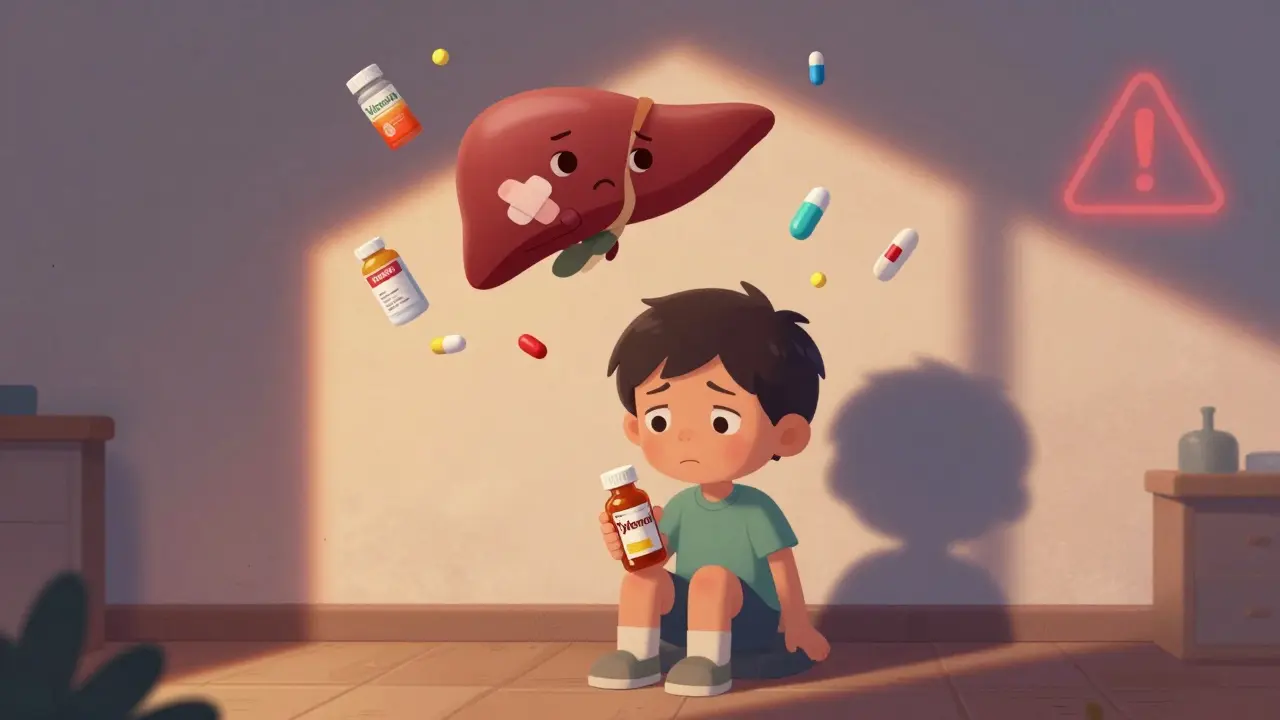
Every year, tens of thousands of people end up in emergency rooms because they took too much acetaminophen. Many didn’t mean to. They thought they were being careful-taking one extra pill for a bad headache, mixing painkillers, or not realizing their prescription medicine already had it inside. But acetaminophen, the active ingredient in Tylenol and hundreds of other products, is one of the most dangerous drugs when taken in excess. It doesn’t hurt right away. That’s what makes it so deadly.
How Acetaminophen Turns Toxic
Your liver normally breaks down acetaminophen safely. But when you take too much-more than 4,000 milligrams in 24 hours, or even less if you drink alcohol or have liver disease-it gets overwhelmed. A toxic byproduct called NAPQI builds up. Your liver uses glutathione to neutralize it. But when glutathione runs out, NAPQI starts destroying liver cells. This isn’t a slow burn. It can turn your liver into damaged tissue within hours.
The worst part? You might feel fine for the first day. No pain. No warning. That’s why so many people don’t realize they’ve overdosed until it’s too late. The American Addiction Centers reports that over half of all acetaminophen-related liver failures happen because people didn’t know they were taking too much.
Stage 1: The Silent Hours (0-24 Hours)
In the first 24 hours after an overdose, symptoms are vague-so vague that most people ignore them. Nausea? Maybe you ate something bad. Vomiting? Stress. Loss of appetite? You’re just not hungry. About 30-40% of people feel nothing at all. That’s why emergency room staff always ask: "Did you take any painkillers today?" Even if you say no, they check. Because if you took a few extra Tylenol pills, or a prescription like Vicodin (which contains 300 mg of acetaminophen per tablet), you could be in danger without knowing it.
Here’s what most people don’t realize: combining acetaminophen with alcohol increases your risk of liver damage by 3-4 times. Same with certain seizure medications like carbamazepine or phenytoin. Even if you’re not a heavy drinker, having just one or two drinks while taking acetaminophen can push you over the edge.
Stage 2: The Warning Signs (24-72 Hours)
By day two, your body starts screaming. Right upper abdominal pain becomes common-85% of patients feel it. That’s the area under your ribs on the right side. It’s not gas. It’s not indigestion. It’s your liver swelling and dying. Nausea and vomiting return, stronger this time. You might feel dizzy or weak. Your skin might look a little yellow. That’s jaundice.
Lab tests will show something alarming: your ALT (alanine aminotransferase) levels are climbing. Normal is 7-56 IU/L. In severe overdose, they spike above 10,000 IU/L. That’s not a typo. That’s a liver in freefall. At this point, you need treatment now. Delaying means your chances of survival drop fast.
Stage 3: The Crisis (72-96 Hours)
This is when things turn critical. Jaundice becomes obvious. Your eyes and skin turn yellow. You feel confused. Your blood can’t clot properly-your INR (a clotting test) goes above 1.5. You might start bleeding from your gums or bruising easily. Kidneys begin to fail. About half of patients with severe liver damage also develop kidney problems. Pancreatitis can kick in too, adding severe belly pain.
If you’re here, you’re in the ICU. You might need oxygen, IV fluids, and medications to support your blood pressure. Your liver is shutting down. Without treatment, death is likely.

The Only Antidote: N-Acetylcysteine (NAC)
There’s one drug that saves lives in acetaminophen overdose: N-acetylcysteine, or NAC. It’s not a miracle cure-it works best if given early. When given within 8 hours of ingestion, NAC is 98% effective. After 15 hours, that drops to 55%. Every hour counts.
The standard IV protocol: 150 mg/kg over the first hour, then 50 mg/kg over the next 4 hours, then 100 mg/kg over 16 hours. That’s a total of 21 hours. Oral NAC takes longer-72 hours of pills-but it’s still effective if you can’t get IV access.
NAC works by restoring glutathione and directly mopping up the toxic NAPQI. It doesn’t fix the liver-it gives your liver a chance to heal itself. That’s why even if you show up 24 hours late, doctors still give you NAC. It can still help up to 48 hours after ingestion.
What Happens If You Don’t Get Treated?
Without NAC, mortality jumps from under 1% to 25-40%. In the worst cases, the liver dies completely. That’s when doctors use the King’s College Criteria to decide if you need a transplant. If your blood pH is below 7.3, your INR is over 6.5, and your creatinine is above 3.4 mg/dL-you have almost no chance without a new liver. About 1-2% of severe cases end up on the transplant list. Of those, 85% survive five years or more.
Why People Overdose Without Realizing It
Most overdoses aren’t intentional. They’re mistakes. Here’s how they happen:
- Taking Tylenol for a headache while also taking Vicodin, Percocet, or other opioid painkillers that already contain acetaminophen.
- Using multiple cold medicines at once-each with hidden acetaminophen.
- Believing "more is better"-taking two pills instead of one because the pain isn’t gone.
- Drinking alcohol regularly and not knowing it makes acetaminophen far more toxic.
A 2022 survey on patient forums found that 68% of people didn’t know that prescription painkillers like Vicodin contain acetaminophen. That’s terrifying. One Vicodin tablet = 300 mg. Two = 600 mg. Add two Tylenol pills (1,000 mg), and you’re at 1,600 mg in one dose. Do that three times a day? You’re over the safe limit.
What to Do If You Think You’ve Overdosed
If you took too much acetaminophen-whether you meant to or not-do this right now:
- Call 911 or go to the nearest emergency room. Don’t wait. Don’t call your doctor first.
- Bring the pill bottle with you-even if it’s empty. Tell them exactly what you took, how much, and when.
- If it’s been less than 2 hours since you took it, they might give you activated charcoal to stop more absorption.
- They’ll draw blood to check your acetaminophen level and plot it on the Rumack-Matthew nomogram. If it’s above 150 µg/mL at 4 hours, you get NAC.
Don’t try to "wait it out." Don’t take more water or milk. Don’t induce vomiting unless instructed. Time is liver.
Recovery and Long-Term Outlook
If you get treated in time, your chances of full recovery are excellent. About 85-90% of patients who receive NAC within 8 hours recover completely. Most see their liver enzymes return to normal within 3 months. Cedars-Sinai found that 92% of survivors have full liver function back within 90 days.
But 8% have lingering mild liver enzyme elevations. They need follow-up. No more acetaminophen. No more alcohol. Regular blood tests. It’s not a death sentence-but it’s a permanent warning.
How to Prevent This From Happening
You can avoid acetaminophen overdose. Here’s how:
- Never take more than 4,000 mg in 24 hours. Many experts now say 3,000 mg is safer, especially if you drink or have liver issues.
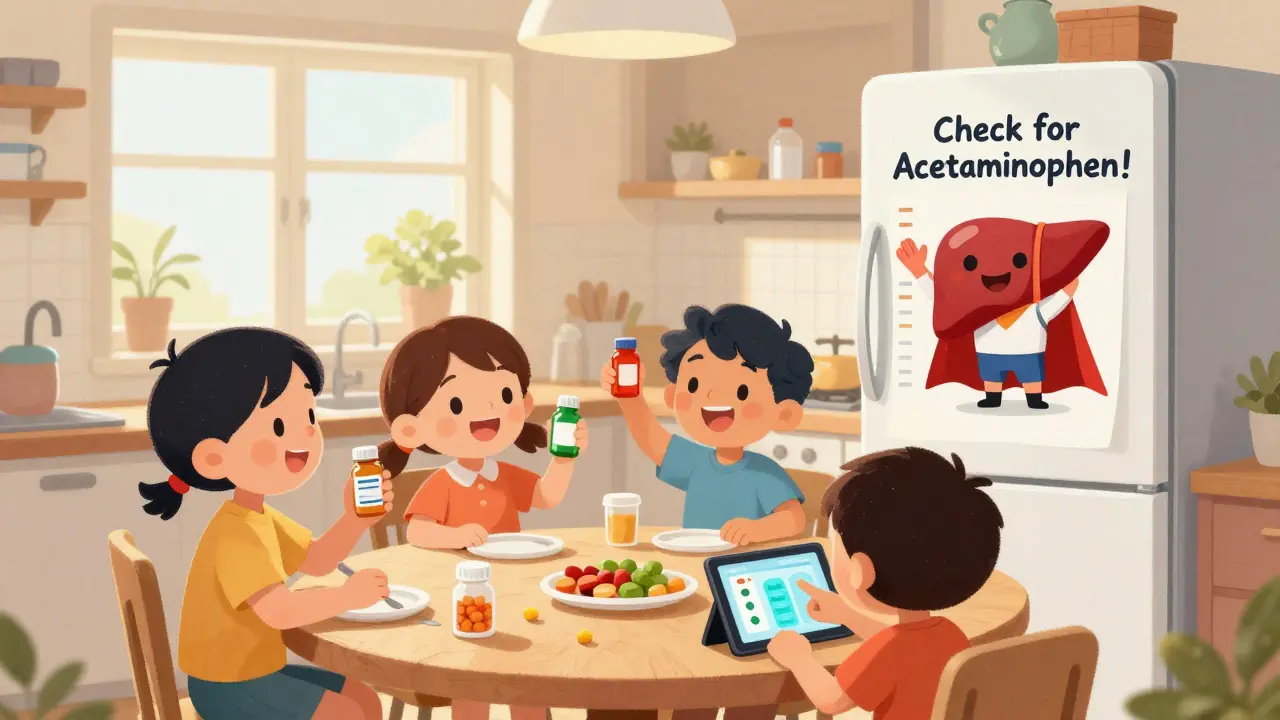
- Check every medicine label. Acetaminophen is in over 600 products-cold meds, sleep aids, migraine pills, and prescription painkillers.
- If you drink alcohol regularly, avoid acetaminophen entirely.
- If you have hepatitis B or C, your liver is already damaged. Use acetaminophen only under doctor supervision.
- Use a pill tracker app or write down every dose you take. Don’t rely on memory.
- Teach your family: acetaminophen isn’t "harmless." It’s the most common cause of acute liver failure in the U.S.
The FDA reduced the max dose in prescription products from 750 mg to 500 mg in 2011. That cut acetaminophen-related liver failures by 21% over the next decade. Education saves lives.
What’s Next in Treatment?
Scientists are looking for better ways to treat overdose. Early research at Harvard Stem Cell Institute shows nitric oxide may help the liver regenerate faster-even after the 8-hour window. Another promising test: microRNA-122, a blood marker that can detect liver damage within 2 hours of overdose. Right now, we wait 4-6 hours for lab results. In the future, we might know within minutes.
But for now, the best tool is still NAC-and the best defense is awareness.
Can you survive an acetaminophen overdose without treatment?
Yes, but it’s extremely risky. Without treatment, mortality ranges from 25% to 40%. With timely NAC, survival jumps to over 90%. Many people who survive without treatment do so because they took only slightly more than the limit and their liver recovered on its own. But waiting to see if you "get lucky" is dangerous. The damage can be silent until it’s too late.
Is Tylenol safer than other painkillers like ibuprofen?
It’s safer for your stomach and kidneys, but not your liver. Ibuprofen can cause stomach bleeding or kidney strain with long-term use, but it doesn’t cause acute liver failure like acetaminophen. If you have liver disease, ibuprofen may be a better choice-unless you have kidney problems. Always talk to your doctor about which painkiller is right for your body.
Can children overdose on acetaminophen too?
Yes, and it’s one of the most common pediatric poisonings. Children’s dosing is based on weight, not age. Giving a child adult Tylenol-or too much children’s Tylenol-can cause liver failure. Always use the dosing tool that comes with the bottle. Never guess. If you suspect a child took too much, call Poison Control at 1-800-222-1222 immediately.
How long does NAC stay in your system?
NAC is metabolized quickly, but its effects last. The IV treatment lasts 21 hours because it’s given in phases to maintain glutathione levels. The drug itself clears from your blood within hours, but it keeps working by helping your liver rebuild its defenses. You won’t feel better right away-symptoms may worsen before they improve. That’s normal. Don’t stop treatment early.
Can you take acetaminophen again after recovering from an overdose?
Doctors strongly advise against it. Even if your liver fully recovers, you’ve proven you’re vulnerable. The next overdose could be fatal. Most patients who survive an overdose are told to avoid acetaminophen permanently. Use alternatives like ibuprofen or naproxen if approved by your doctor. Your liver doesn’t forget what happened.