





Getting a flu shot or staying up to date on your COVID-19 boosters feels routine for most people. But if you are living with an autoimmune disease that requires immunosuppressive therapy, that simple trip to the pharmacy becomes a complex medical calculation.
You might wonder why your doctor is hesitant to let you get vaccinated right away. Or perhaps you’ve heard conflicting advice about whether the vaccine will even work while you are on medication like Rituximab. The core issue is not just safety-it is efficacy. Your immune system needs to be strong enough to recognize the vaccine and build protection, but weak enough to keep your autoimmune condition in check. Balancing these two forces requires precise timing.
The Core Challenge: Diminished Immune Response
To understand why timing matters, we first need to look at how vaccines work in a healthy body versus an immunocompromised one. A vaccine introduces a harmless piece of a virus to train your immune cells. In a typical patient, this triggers a robust production of antibodies. However, research shows that solid organ transplant recipients and those on heavy immunosuppressants often have significantly lower antibody levels. Data from the CDC in May 2021 revealed that transplant patients had 56% lower antibody titers after two doses of mRNA vaccines compared to the general population.
This isn’t just about numbers on a chart; it translates to real-world protection. A study published in July 2021 by the Veterans Health Administration found that mRNA vaccines were 80.4% effective against hospitalization in patients with inflammatory bowel disease on immunosuppressants, compared to 94.1% in the general public. While still protective, this gap highlights why "one size fits all" scheduling fails here. The goal is to maximize that response window before your next dose of medication dampens your immune activity.
General Rules for Vaccine Timing
If you are starting a new treatment, the golden rule is straightforward: vaccinate before you start. The Centers for Disease Control and Prevention (CDC) and the Infectious Diseases Society of America (IDSA) agree that you should receive inactivated vaccines at least 14 days prior to initiating immunosuppressive therapy. This gives your body a head start to build immunity without interference.
But what if you are already on treatment? The strategy shifts to finding the "least suppressed" window. Here are the key principles:
- Inactivated Vaccines: These are generally safe but may be less effective. They should ideally be given when your drug levels are lowest.
- Live Attenuated Vaccines: These contain weakened versions of the germ. For many heavily immunosuppressed patients, these are contraindicated because the weakened germ could cause actual infection. Always consult your specialist before considering live vaccines like MMR or Varicella.
- Community Transmission Levels: Recent guidelines emphasize flexibility. If local transmission rates are high (defined as >100 cases per 100,000 people), getting the vaccine sooner rather than later may be more important than waiting for the perfect biological window.

Medication-Specific Timing Guidelines
Different drugs affect your immune system in unique ways. Knowing which class of medication you are on helps determine your specific vaccine window. Below is a breakdown based on current guidance from the American College of Rheumatology (ACR) and MSK Cancer Center.
| Medication / Therapy Type | Recommended Timing for Vaccination | Key Considerations |
|---|---|---|
| Methotrexate | Hold medication for 2 weeks after receiving the influenza vaccine. | Primary care providers can administer the flu shot, then coordinate with rheumatologists to pause the drug temporarily. |
| Rituximab (B-cell depleting) | Wait 4-6 months after the last infusion. Ideally, wait 9-12 months for optimal response. | Vaccinating too early yields poor results because B-cells haven't repopulated. High community transmission may justify earlier vaccination despite lower efficacy. |
| Prednisone (Corticosteroids) | Defer non-influenza vaccines if daily dose exceeds 20mg. | Wait until the steroid taper brings the dose below 20mg daily to ensure adequate immune response. |
| Solid Organ Transplant Post-Op | At least 3 months post-transplant (per IDSA 2024). | Avoid vaccination during periods of pulse immunosuppression or active rejection episodes. |
Navigating Conflicting Guidelines
If you talk to different specialists, you might hear slightly different advice. This stems from variations in how major health organizations interpret the data. For instance, regarding B-cell depleting therapies like Rituximab, the National Comprehensive Cancer Network (NCCN) suggests administering vaccines "when available" for certain leukemia patients. In contrast, Memorial Sloan Kettering (MSK) mandates deferring vaccination until at least one month after completing therapy or until there is evidence of lymphocyte reconstitution.
Why the difference? It often comes down to risk tolerance. Oncologists may prioritize immediate protection against severe viral outbreaks, whereas rheumatologists might prioritize ensuring the vaccine actually generates a measurable immune response. Dr. David Lieberman from MSK noted in a 2023 commentary that blind adherence to fixed time intervals without considering individual disease activity can sometimes cause more harm than benefit, especially for patients with aggressive conditions needing immediate treatment.
The most recent comprehensive update, the IDSA’s February 2024 guidelines, attempts to bridge this gap. They recommend shared clinical decision-making. This means your doctor should weigh your specific disease stability against the current threat level in your community. If you are traveling or living in an area with a surge in respiratory viruses, the recommendation leans toward vaccinating sooner, even if your B-cell counts aren’t fully recovered.
Practical Steps for Patients
Taking control of your vaccination schedule doesn’t mean managing it alone. It requires coordination between your primary care provider, your specialist (rheumatologist, oncologist, or transplant team), and your pharmacist. Here is how to make it work:
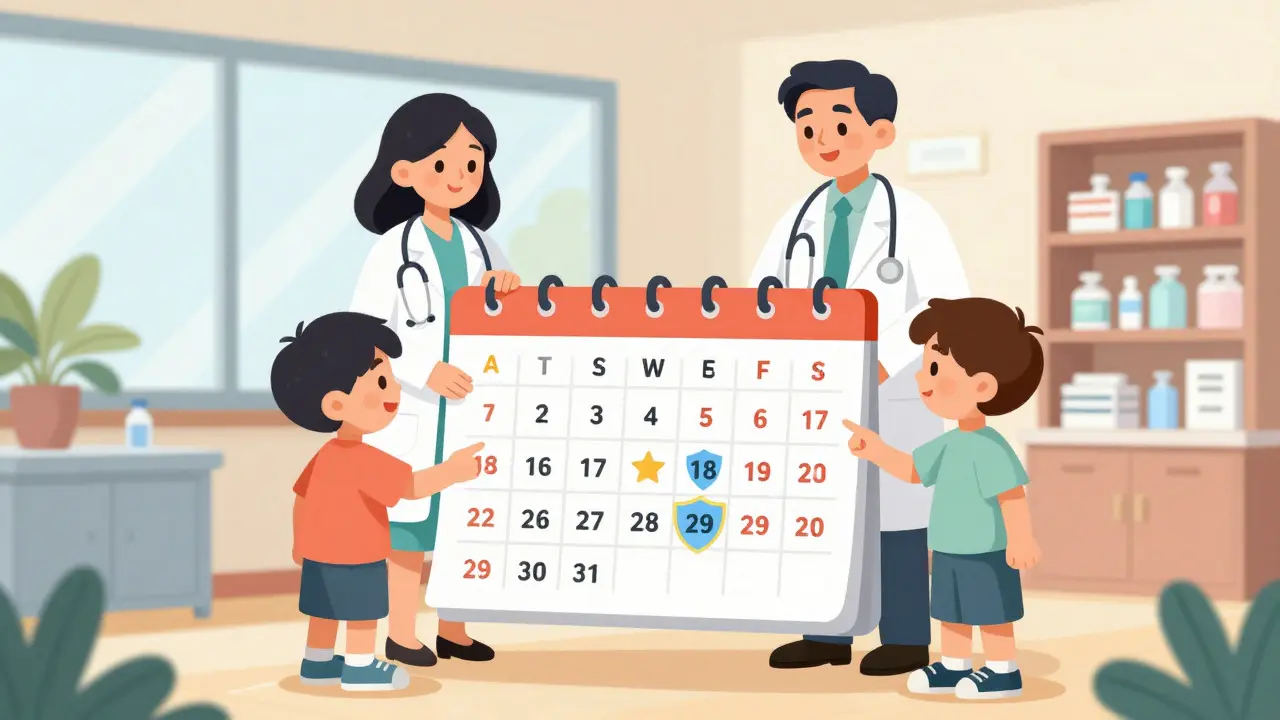
- Create a Unified Calendar: Keep a record of all your infusions, oral medication cycles, and scheduled vaccinations. Share this with every doctor involved in your care.
- Ask About "Holding" Medications: Before getting a flu shot or other annual vaccines, ask if you should hold medications like Methotrexate for two weeks afterward. This small pause can significantly boost efficacy.
- Monitor Community Data: Check local health department reports for transmission rates. If cases are spiking, inform your doctor. You may decide to get vaccinated outside the ideal window to gain partial protection quickly.
- Discuss Serology Testing: While not yet standard practice everywhere, some centers offer antibody testing after vaccination. This can help determine if you need additional booster doses. The NIH is currently funding trials to validate B-cell counts as biomarkers for timing, so this landscape is evolving rapidly.
Future Directions and Research
The field of vaccinology in immunocompromised populations is moving fast. The biggest unresolved question is whether we should rely on fixed calendar dates or biological markers. Currently, clinicians use fixed intervals (e.g., "wait 6 months") because they are easy to follow. However, a December 2023 study in Blood Advances showed that 60-70% of patients on B-cell depleting therapy still have suboptimal responses even when vaccinated at the recommended 6-month mark.
This suggests that personalized immune monitoring is the future. The NIH launched a multicenter trial in January 2024 to see if CD19+ B-cell counts can reliably predict the best time to vaccinate. Until such tools become widely available, sticking to established guidelines from the IDSA and CDC remains the safest bet. Remember, even a reduced immune response is better than no response at all. Vaccination remains a critical layer of defense, provided it is timed strategically.
Can I get the flu shot while taking Methotrexate?
Yes, but timing is crucial. According to the American College of Rheumatology, you should receive the influenza vaccine and then hold your Methotrexate dose for two weeks afterward. This allows your immune system to respond to the vaccine without immediate suppression from the drug.
How long should I wait after Rituximab to get vaccinated?
Ideally, you should wait at least 6 months after your last Rituximab infusion. Some experts recommend waiting 9 to 12 months for the best possible immune response, as B-cell depletion lasts a long time. However, if community transmission is very high, your doctor might advise vaccinating earlier despite potentially lower efficacy.
Are live vaccines safe for immunosuppressed patients?
Generally, live attenuated vaccines (like MMR, Varicella, or nasal spray flu) are avoided in heavily immunosuppressed patients because the weakened virus could replicate and cause illness. Safety depends on the degree of immunosuppression. Always consult your specialist before considering any live vaccine.
What does the IDSA 2024 guideline say about timing?
The IDSA 2024 guidelines emphasize shared decision-making. They recommend vaccinating at least 14 days before starting immunosuppression. For those already on treatment, they suggest flexibility based on community transmission levels, noting that getting vaccinated sooner may be preferable to delaying indefinitely in high-risk environments.
Will the vaccine work if I am on Prednisone?
If you are taking more than 20mg of Prednisone daily, your immune response to vaccines may be blunted. Guidelines suggest deferring non-influenza vaccines until your dose tapers below 20mg per day to ensure your body can generate adequate protection.