

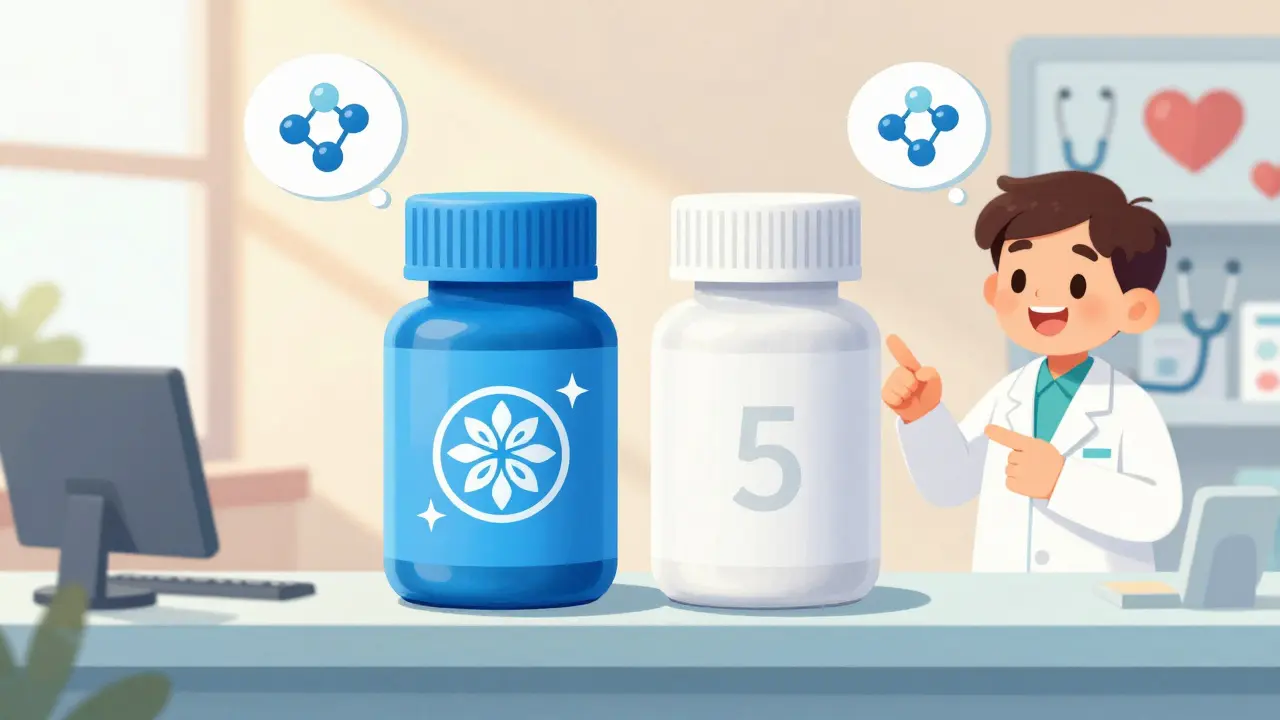
When you pick up a prescription, you might see two pills that look nothing alike-one is a bright blue capsule with a fancy logo, the other is a plain white tablet with a number stamped on it. The price difference is huge: $80 for the brand name, $5 for the generic. You might wonder: Are generic drugs really just as good as the ones your doctor originally prescribed? The answer isn’t just yes-it’s backed by decades of science, millions of patients, and strict government oversight.
They’re the Same Medicine, Just Cheaper
Generic drugs aren’t copies or knock-offs. They’re exact chemical duplicates of brand-name drugs. The active ingredient-the part that actually treats your condition-is identical in both. If your brand-name medication contains 10 milligrams of amlodipine for high blood pressure, so does the generic. Same strength. Same dosage form. Same way it’s taken-by mouth, injection, inhaler, you name it. The U.S. Food and Drug Administration (FDA) requires this. Before a generic drug can be sold, the manufacturer must prove it delivers the same amount of active ingredient into your bloodstream at the same rate as the brand-name version. That’s called bioequivalence. The standard? The amount of drug absorbed has to fall within 80% to 125% of the brand’s levels. That’s not a wide gap-it’s a tight window designed to ensure the effect is the same. For most drugs, that’s more than enough. But for drugs with a narrow therapeutic index-like warfarin (blood thinner), levothyroxine (thyroid hormone), or certain seizure meds-the rules get even stricter. Here, the acceptable range shrinks to 90% to 111%. That’s because tiny changes in blood levels can make a real difference. Even then, studies show most patients switch without issue.Why Do They Look Different?
You’ve probably noticed generics look different. That’s not a flaw-it’s the law. Trademark rules say generic manufacturers can’t copy the exact color, shape, or logo of the brand-name drug. So they change the inactive ingredients: different fillers, dyes, or coatings. One generic might use lactose as a binder; another might use cornstarch. One might be oval, another round. One might be white, another light yellow. These differences don’t affect how the drug works. But they can cause problems for a small number of people. If you’re allergic to a dye, like FD&C Yellow No. 5, or sensitive to lactose, you might react to one generic version but not another. That’s why it’s important to stick with the same generic brand if you’ve had no issues with it. Switching between different generic manufacturers can sometimes trigger minor side effects-not because the active ingredient changed, but because the filler did.What Does the Science Say?
The biggest fear people have is that generics don’t work as well. But the data doesn’t back that up. In 2019, researchers from Harvard and Johns Hopkins analyzed data from 3.5 million patients taking generics for conditions like high blood pressure, diabetes, depression, and osteoporosis. They found no difference in outcomes-no more hospital visits, no more heart attacks, no worse control of symptoms. The generics worked just as well. Even more surprising? A 2020 study in Austria looked at over a million patients on blood pressure meds. The results showed people taking generics had lower death rates and fewer heart attacks than those on brand names. At first glance, that sounds like generics are better. But experts quickly pointed out the real reason: people who took generics were more likely to be on lower-income plans, which meant they were more likely to take their meds consistently because they could afford them. The drug wasn’t better-it was just taken more reliably. For thyroid medication, a small group of patients-around 5 to 10%-do report feeling off after switching from brand to generic. That’s why endocrinologists often recommend staying on the same version, whether it’s brand or generic. But for the vast majority, switching causes no problem. One patient might feel better on a generic. Another might feel the same. Neither is wrong.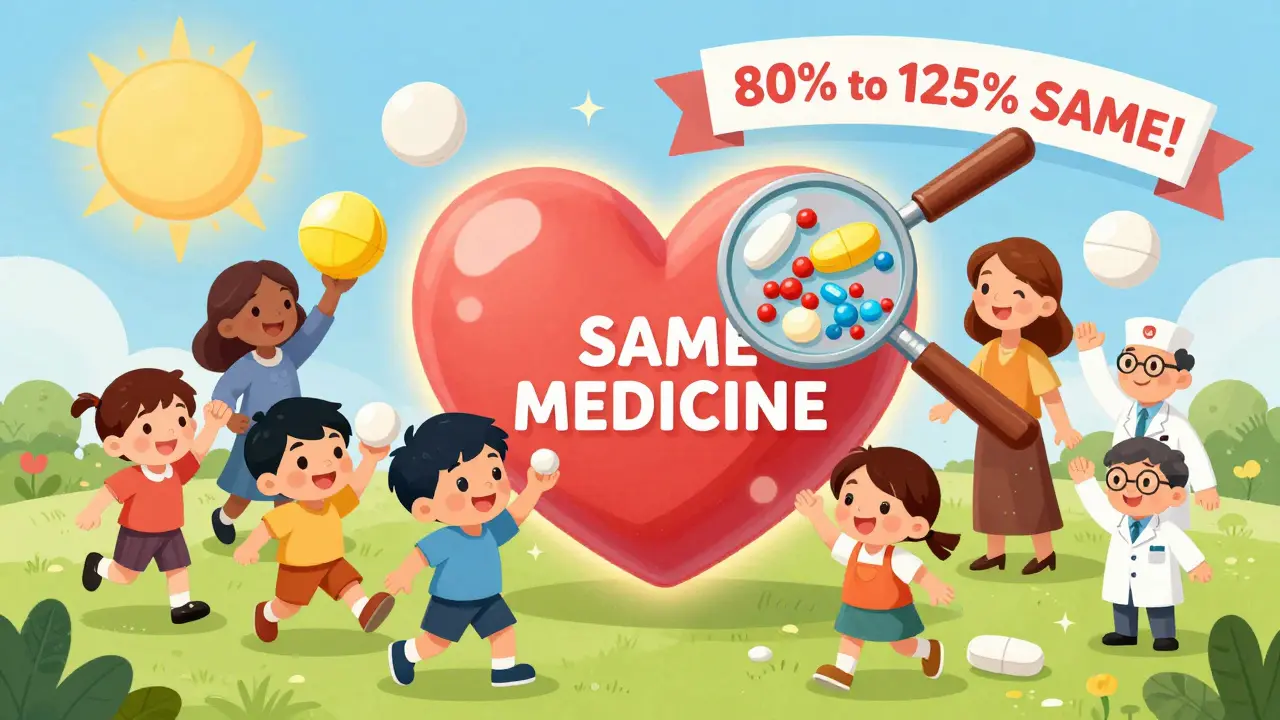
Why Do Some People Think Generics Don’t Work?
Perception is powerful. A 2022 Consumer Reports survey found that 42% of Americans believe generics are less effective. Why? Because they look different. Because they cost less. Because someone told them it was true. In one study, patients who believed generics were inferior were 20% more likely to stop taking them-even when their doctors said it was fine. That’s not a drug problem. That’s a psychology problem. Your brain expects something cheaper to be worse. And if you feel a little off after switching, your mind links it to the pill, not stress, sleep, diet, or a change in routine. The FDA launched a campaign called “It’s the Same Medicine” to fight this myth. Pharmacists are trained to explain it too. But the stigma sticks.Cost Isn’t Just a Number-It’s a Health Issue
Let’s talk numbers. In 2023, the average cash price for a brand-name prescription was $685. The generic? $15. That’s a 98% drop. For people on fixed incomes, that’s the difference between taking their medicine and skipping doses. Medicare Part D plans require pharmacies to use generics whenever possible. Why? Because if they didn’t, premiums would skyrocket. In 2022, generics saved the U.S. healthcare system $373 billion. That’s not a rounding error. That’s enough to cover millions of insulin prescriptions, cancer treatments, and heart medications for people who otherwise couldn’t afford them. When patients can’t pay, they cut pills in half. They skip days. They stop entirely. That’s when hospital visits happen. That’s when complications arise. Generics aren’t just a cost-saving trick-they’re a public health tool.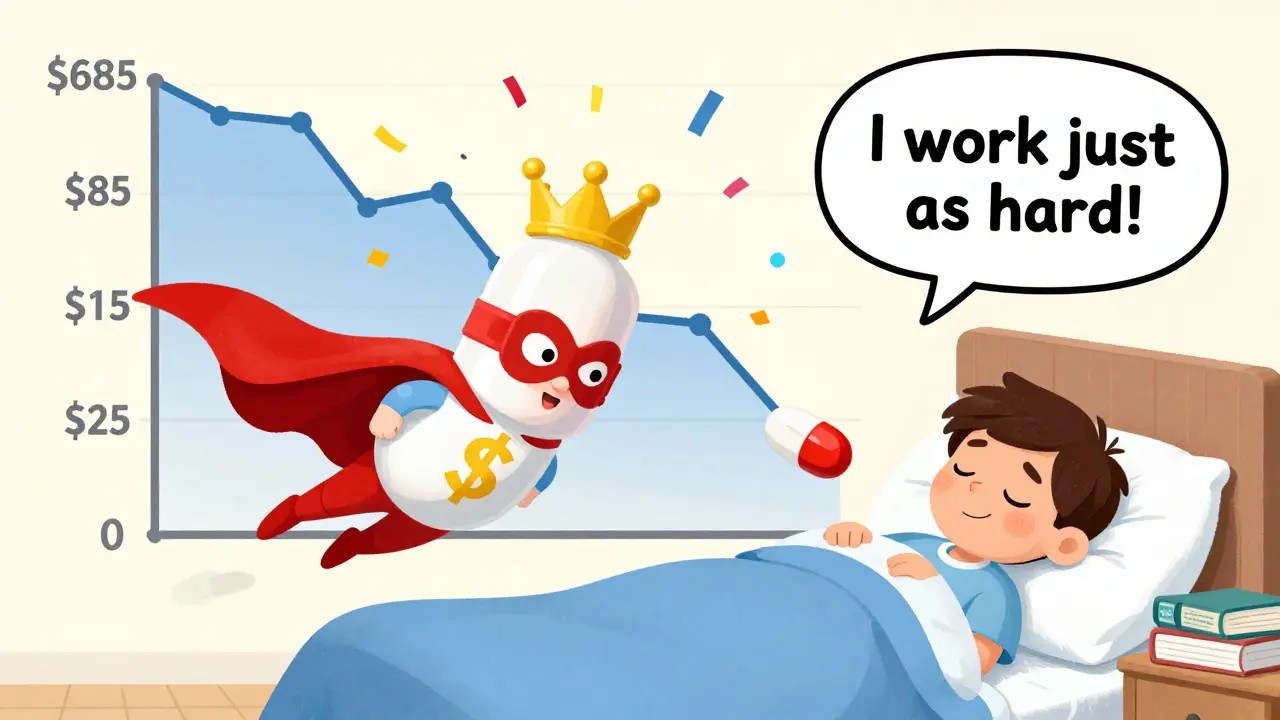
When You Should Be Careful
There are a few situations where extra caution matters:- Narrow therapeutic index drugs: Warfarin, levothyroxine, phenytoin, lithium. Stick with the same version (brand or generic) once you’ve found one that works. Don’t switch unless your doctor says it’s safe.
- Allergies or sensitivities: If you react to dyes, gluten, or lactose, check the inactive ingredients. Ask your pharmacist for the product information sheet.
- Seizure disorders: Some epilepsy patients report breakthrough seizures after switching. While large studies haven’t proven a link, if you’ve had stable control on one version, talk to your neurologist before switching.
What You Can Do
You don’t need to be a scientist to use generics wisely. Here’s what works:- Ask your pharmacist: “Is this a generic? Can you tell me the manufacturer?” They can help you track which version you’re on.
- Stick with one pharmacy: If you switch pharmacies, you might get a different generic version. That’s fine for most drugs-but for thyroid or seizure meds, consistency matters.
- Use the FDA’s Drugs@FDA database: Type in your drug name and you’ll see pictures of every approved version-brand and generic. It helps you recognize what you’re taking.
- Don’t panic if you feel different: A small change in how you feel doesn’t mean the drug isn’t working. Talk to your doctor before stopping. Sometimes it’s just your body adjusting.
The Bottom Line
Generic drugs are not second-rate. They’re not cheaper because they’re weaker. They’re cheaper because the company didn’t spend $1 billion on research, marketing, and ads. The active ingredient is the same. The manufacturing standards are the same. The FDA inspects the same factories-some in the U.S., many in India and China-that make the brand-name versions. For 9 out of 10 prescriptions filled in the U.S., generics are the standard. Hospitals use them for 97% of their medications. Doctors prescribe them because they know they work. If you’re worried, ask your doctor or pharmacist. But don’t let fear stop you from taking a medicine that could save you money-and maybe even your life.Are generic drugs less effective than brand-name drugs?
No. Generic drugs contain the same active ingredient, in the same strength, and work the same way as brand-name drugs. The FDA requires them to meet the same strict standards for safety, quality, and effectiveness. Studies involving millions of patients show no difference in outcomes for conditions like high blood pressure, diabetes, depression, and more.
Why do generic pills look different from brand-name ones?
By law, generic manufacturers can’t copy the exact appearance of brand-name drugs to avoid trademark violations. So they change the color, shape, size, or coating. These differences are in inactive ingredients like dyes or fillers, which don’t affect how the drug works. But if you have an allergy to a specific dye or filler, you may need to stick with one version.
Can switching to a generic drug cause side effects?
For most people, no. But a small number of patients-especially those on drugs with a narrow therapeutic index like levothyroxine or warfarin-may notice changes if they switch between different generic versions. This is usually due to differences in inactive ingredients, not the active drug. If you feel different after switching, talk to your doctor before stopping. Don’t assume it’s the drug-it could be something else.
Are generic drugs made in the same facilities as brand-name drugs?
Yes. Many generic drugs are made in the same factories as brand-name versions, or in facilities that are inspected to the same standards by the FDA. About 78% of the active ingredients in generics come from India and China, but those facilities are subject to the same inspections as U.S.-based ones. The FDA doesn’t treat them differently based on where they’re made.
Why do insurance companies push generics?
Because generics cost 80-85% less than brand-name drugs. This keeps premiums lower for everyone. Medicare Part D plans, for example, require pharmacies to use generics whenever possible. It’s not about saving money for the insurer-it’s about making sure patients can afford their medicine. When people can’t pay, they skip doses-and that leads to worse health outcomes.
Should I avoid generics if I have a chronic condition?
Not unless your doctor advises it. For most chronic conditions-high blood pressure, cholesterol, diabetes, depression-generics are just as safe and effective. The only exceptions are drugs with a narrow therapeutic index, like thyroid or seizure meds. Even then, most patients do fine on generics. If you’ve been stable on a brand-name drug, you can usually switch safely, but it’s best to stick with the same version once you find one that works.
15 Comments
Just wanted to say this post literally saved me money last month. I switched my blood pressure med to generic and didn’t even notice a difference. My pharmacist even showed me the FDA data-same active ingredient, same results. I’m not some health nerd, I just like not paying $80 for a pill that does the same thing as the $5 one.
Also, my grandma’s been on generic levothyroxine for 12 years. Still alive. Still functional. Still not dead. So yeah, trust the science, not the fear.
Oh please. The FDA is in bed with Big Pharma. You think they really test generics the same way? Nah. The real story is they let Indian factories pump out cheap pills with 60% of the active ingredient and call it ‘within 80-125% range.’ That’s not science-that’s corporate math. And don’t get me started on how the same factory makes both brand and generic. Coincidence? I think not.
My cousin took a generic antidepressant and started seeing shadows. The brand made him feel fine. Coincidence? I think not.
As a pharmacist for 18 years, I can confirm: generics are held to the exact same standards. The bioequivalence requirement isn’t a suggestion-it’s a legal mandate. And yes, the FDA inspects Indian and Chinese plants just like U.S. ones. I’ve toured both.
That said, I always tell patients: if you’re on warfarin or levothyroxine, stick with the same version. Not because generics are bad, but because tiny variations in fillers can affect absorption in sensitive cases. For 95% of other meds? Totally fine.
And if you’re worried about the color? That’s just trademark law. The pill doesn’t care what shade it is.
lol so generics are fine unless u r poor and then they magically become dangerous? wow. what a shocker. next u’ll tell me water is safe unless u r homeless and then it turns into poison. genius logic. also typo: ‘u’ not ‘you’. i’m not even mad, just impressed.
also my dog took a generic flea pill and now he barks at shadows. coincidence? i think not.
I used to be super skeptical too. I thought generics were like knockoff sneakers-looks the same, falls apart in a week. But after switching my antidepressant, I actually felt better. Not because the drug changed, but because I could finally afford to take it every day without skipping.
Turns out, the problem wasn’t the pill-it was the price. I’d been skipping doses to make it last. When I went generic, I stopped rationing. That’s when my mood stabilized. So maybe it’s not about the medicine being different… maybe it’s about being able to take it consistently.
Also, my pharmacist gave me a printout of the FDA equivalence data. It’s wild how many people don’t even know that exists. Maybe we need more education, not more fear.
In India, we make over 40% of the world’s generic drugs. Our factories are modern, clean, and inspected by the FDA, WHO, and EU regulators. We don’t cut corners-we deliver quality at scale. The West acts like Indian-made medicine is dangerous, but they don’t realize their own lives depend on it.
When your grandmother takes her blood pressure pill, and it costs $5 instead of $80, it’s because of Indian scientists and engineers who work 12-hour days to make it possible. We don’t get credit. We don’t get praise. But we save lives.
Don’t fear the label. Fear the greed that makes you pay $80 for a pill that costs $0.15 to make.
My doctor switched me to generic statins last year. I didn’t feel a thing. My cholesterol’s down. My wallet’s happy. I don’t need a PhD to understand that if two pills have the same active ingredient, they do the same thing.
Also, the color thing? Yeah, mine went from blue to white. Looked weird at first. Now I don’t even notice. Funny how your brain adapts.
Just take the damn pill.
There is a deeper truth here, beyond bioequivalence and FDA standards. The real question is not whether generics work-but why we have been conditioned to distrust them. In our culture, value is tied to price. Expensive = good. Cheap = inferior. This is not rational. It is psychological programming.
The pharmaceutical industry has spent billions selling not medicine-but identity. Brand-name pills are status symbols. Generics are the medicine of the working class. And yet, they are the same.
We must question not just the pill, but the system that makes us feel guilty for choosing the cheaper option.
When you take a generic, you are not choosing less-you are choosing freedom from exploitation.
My mom switched to generic thyroid med and started feeling dizzy. We thought it was the pill. Turned out she’d been stressed and sleeping less. The generic was fine. She just needed to check her sleep and stress levels.
So yeah, sometimes it’s not the drug. It’s everything else.
Just talk to your doc before quitting. Easy.
The ontological status of the generic drug is not contingent upon its price point, but upon its pharmacokinetic equivalence as determined by regulatory bodies operating under the auspices of public health mandates. The aesthetic discontinuity between brand and generic is a semiotic artifact of trademark law, not pharmacological integrity.
One must therefore interrogate the epistemological foundations of pharmaceutical perception, which are rooted in capitalist commodification and the myth of scarcity as a mechanism of value attribution.
It is not the pill that is inferior. It is the narrative.
I used to be scared of generics too. Then I started reading the labels. Same active ingredient. Same dose. Same instructions. Just no fancy logo.
My husband’s cholesterol dropped. My sister’s diabetes is under control. My mom’s blood pressure is stable.
Maybe it’s just me… but I think they work fine.
Let’s be honest-this whole ‘generic equals safe’ narrative is a neoliberal placebo. The FDA’s bioequivalence window of 80–125% is a regulatory loophole masquerading as science. A 45% variance in bioavailability? That’s not equivalence-that’s a gamble. And you’re the one holding the dice.
Meanwhile, the pharmaceutical conglomerates have quietly consolidated manufacturing in a handful of overseas facilities, all while marketing generics as ‘identical.’ Identical? In what universe? The inactive ingredients alone vary by formulation, and those can trigger immune responses in susceptible populations.
And don’t get me started on the fact that 78% of API comes from China and India-two countries with wildly divergent regulatory enforcement histories. You think the FDA inspects every batch? Please. They inspect one per year.
This isn’t medicine. It’s supply chain roulette.
As someone who has reviewed FDA inspection reports for over a decade, I can confirm: the manufacturing standards for generics are identical to brand-name. The same inspectors. The same protocols. The same penalties for noncompliance.
And yes, many facilities produce both. It’s the same line, same equipment, same quality control. The only difference is the label.
There is no hidden agenda. No conspiracy. Just science and regulation.
It’s the perception that’s broken-not the medicine.
One must not confuse the material substrate of pharmaceutical efficacy with the symbolic capital assigned to its packaging. The brand-name pill, with its chromatic logo and ergonomic capsule, functions not merely as a therapeutic agent but as a cultural signifier of trust, privilege, and institutional legitimacy.
The generic, by contrast, is a demystified object-a pure pharmacological entity stripped of narrative. Its very austerity renders it suspect in a society that equates cost with virtue.
It is not the drug that is less potent. It is the myth of value that has been inverted.
Perhaps the true therapeutic intervention is not the active ingredient, but the dismantling of this epistemic hierarchy.
For anyone still skeptical: look up the WHO’s prequalification program. It’s the global gold standard for generics. Countries like Kenya, Brazil, and South Africa rely on them to save millions of lives. If they work for people without access to insurance, they work for you.
And if you’re worried about quality? Check the FDA’s inspection database. Type in the manufacturer. See the reports. They’re public. No secrets.
Generics aren’t the problem. Fear is.