

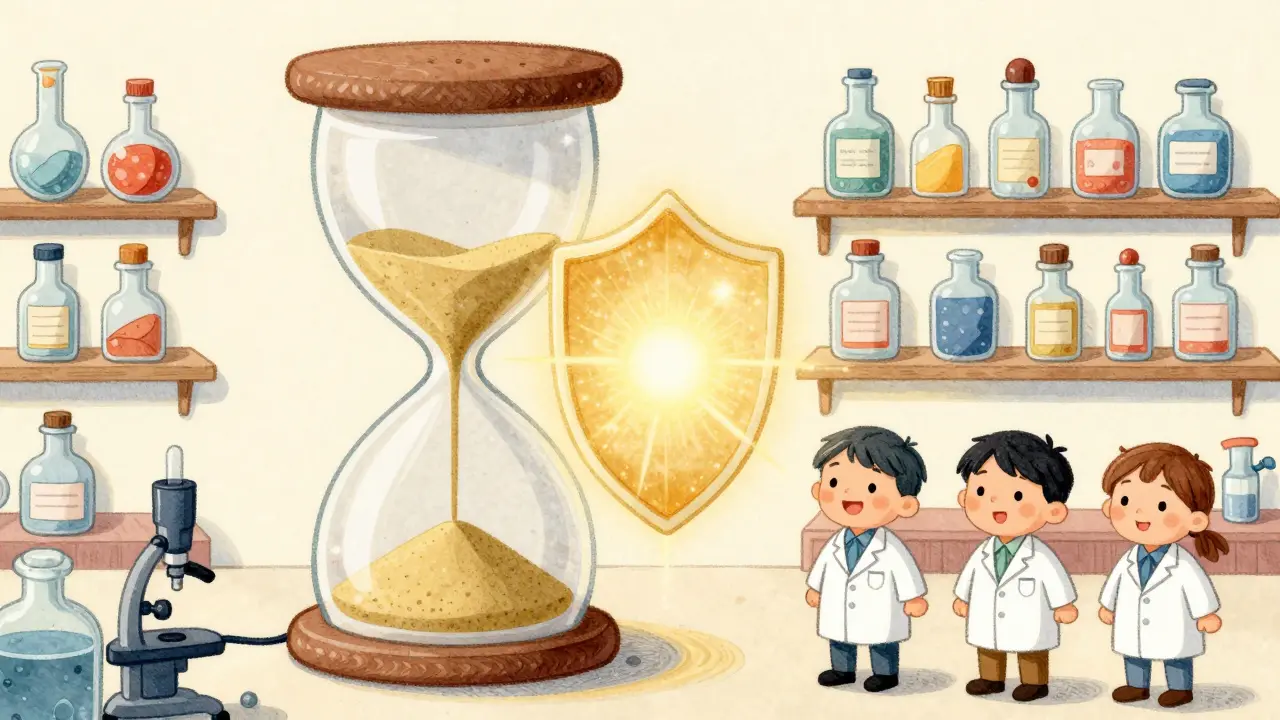
Imagine spending twelve years developing a life-saving drug, only to discover your patent expires three months after it gets approved. That is the harsh reality for many innovators without specific legal protections. In the pharmaceutical world, time is money, and the clock starts ticking the moment a patent files. Patent Term Restoration (PTR), often referred to as Patent Term Extension (PTE), acts as the safety net that recovers the years lost waiting for regulatory clearance. It is not just a bureaucratic formality; it is a critical financial lever that determines whether a company recoups its billions in research investment.
This mechanism allows patent holders to recover part of the time consumed by the regulatory review process. Without it, effective protection for new medicines would drop drastically, potentially discouraging innovation in high-risk therapeutic areas. While the law exists primarily in the United States through the Hatch-Waxman framework, understanding it provides insight into global IP strategy. Companies rely on these extensions to maintain revenue streams long enough to fund the next round of discovery.
The Mechanics of Time Recovery
At its core, Patent Term Restoration addresses a specific mismatch. Standard patents last twenty years from the filing date. However, the path from filing an Investigational New Drug (IND) application to receiving full FDA approval takes an average of eight years. During this period, the company cannot sell the product, yet the patent continues to tick away. The Hatch-Waxman Act fixes this imbalance by adding back a portion of the delay.
The calculation is precise and governed by 35 U.S.C. § 156. The total extension period equals half of the "testing phase" plus the entire "approval phase," capped at five years. Crucially, the extended term cannot exceed fourteen years from the date of FDA approval. This double cap ensures that while companies get relief, they do not gain indefinite monopolies. For example, if the testing phase took six years and the review took two years, the maximum eligible restoration would be calculated carefully to fit within statutory limits.
| Component | Definition | Limitation |
|---|---|---|
| Maximum Term | Time added to original patent | Not exceeding 5 years |
| Total Post-Approval Life | Extension + Approval Date | Cannot exceed 14 years |
| Coverage Scope | Protected activities | Limited to approved use/product |
It is important to distinguish between the testing phase and the review phase. The testing phase begins when the IND is filed and ends when the New Drug Application (NDA) is submitted. The approval phase runs from NDA submission until actual approval. Periods where the applicant fails to act with due diligence are subtracted from these totals. This ensures that companies move quickly and do not artificially inflate delays to claim longer terms.
Eligibility Rules and Product Scope
Not every patent qualifies for an extension. The law requires that the product itself-or a method of using it-must be covered by the patent in question. Furthermore, there can only be one extension per patent, even if that patent covers multiple active ingredients. This forces strategic decisions early in the development cycle. If a company has multiple drugs under a single patent umbrella, they must decide which product receives the restoration benefit.
The FDA defines the "product" strictly. It applies to human drug products, medical devices, food additives, or color additives that require pre-market approval. For animal drugs, separate legislation like the Generic Animal Drug and Patent Term Restoration Act applies. The extension applies solely to the specific approved use. If a patent claims a molecule generally, the restored term only protects that molecule for the indication approved by the agency. Generic competitors selling the same molecule for an unapproved indication might still face legal hurdles depending on the specific claims.
A critical restriction involves the sequence of approvals. You cannot obtain a restoration extension if the marketing approval was obtained before the patent issued, although exceptions exist for older patents. Additionally, the first significant change to a product usually resets the clock for eligibility purposes. This means minor formulation tweaks later in the lifecycle rarely qualify for a second round of restoration.

Navigating the Application Process
Filing for PTR is a race against the calendar. The applicant must submit their request to the FDA within 60 days of FDA approval for the product. Missing this window results in permanent disqualification. The FDA then publishes the proposed regulatory review period in the Federal Register. This triggers a public notice period where third parties can object or petition regarding due diligence claims. These objections can stall the finalization of the term extension for months or even years.
Once the FDA finalizes the calculation, the application moves to the USPTO for grant issuance. The Patent Term Adjustment (PTA) is a different concept handled solely by the USPTO, compensating for office delays during prosecution, whereas PTR specifically targets FDA review delays. Confusing the two is a common error for legal teams. The final certificate adjusts the actual patent expiration date, which updates automatically in official registries. Failure to properly identify the "patent to be extended" at the start causes rejection in nearly 30% of initial applications.
Companies often hire specialized counsel to manage this workflow. The learning curve is steep, involving simultaneous knowledge of FDA administrative procedure and patent examination rules. Documentation must prove that no undue delays occurred during clinical trials. If a trial stopped recruitment unexpectedly, proving "due diligence" becomes a complex factual dispute rather than a simple math problem.

Economic Impact and Industry Debate
The economic stakes are massive. Research suggests PTR increases the net present value of drug development projects significantly. It extends the window of price protection before generic competition enters the market. Once generics launch, prices typically plummet by over 80%. Therefore, even a six-month extension can translate into hundreds of millions of dollars in preserved revenue. For top-selling blockbusters, this difference defines the profitability of the entire R&D pipeline.
However, this power invites scrutiny. Critics argue that PTR contributes to the phenomenon of "evergreening," where companies make trivial changes to reset exclusivity periods. While the law restricts PTR to one extension per product, companies often file secondary patents on formulations or dosing schedules to layer additional protections on top of the original extension. Regulatory bodies monitor this closely to prevent abuse of the exclusivity framework.
Payer organizations like Medicare view PTR as a cost driver. Analyses indicate that these extensions delay generic entry, keeping Medicare payments higher than they would be otherwise. Yet, proponents argue that without this incentive structure, companies would abandon the development of risky therapies like antibiotics or rare disease treatments where the return on investment is marginal without extra market exclusivity time.
Risks and Common Pitfalls
Success is not guaranteed. Approximately 40% of first-time applicants make technical errors in their filings. These often involve miscalculating the regulatory review period or failing to account for periods of non-diligence. Another frequent pitfall is the misalignment between the patent claims and the FDA-approved label. If the approved label does not match the patent scope exactly, the extension may be granted but offer limited protection against infringement.
Third-party challenges have increased significantly in recent years. Generic manufacturers actively scan for weaknesses in the PTR application to accelerate their own market entry. They may file petitions arguing that the applicant lacked diligence during the clinical phases. If successful, these challenges can shave years off the intended extension or deny it completely. Monitoring these opposition windows is essential for maintaining exclusivity rights.
Future legislative changes also pose a risk. Periodic congressional reviews of the Hatch-Waxman balance often propose capping extensions lower than the current five-year maximum. Industry groups must lobby aggressively to preserve these terms, knowing that policy shifts could alter portfolio valuations overnight. Staying updated on proposed bills is part of the strategic planning process.
Can a company get more than one patent term extension?
No. The law permits only one restoration extension per patent, even if that patent covers multiple FDA-approved products. Each product also requires a unique patent claim for the extension to apply.
How long does the application process take?
The process varies. Initially, the FDA takes about 60 days to review the application and determine the period. If challenged by third parties during the public comment phase, it can stretch to several months or even a year before the USPTO grants the adjustment.
Does this apply outside the United States?
Patent Term Restoration as described here is specific to US law under the Hatch-Waxman Act. Other regions use different mechanisms, such as Supplementary Protection Certificates (SPCs) in Europe, which operate under different rules and timelines.
What happens if due diligence is proven lacking?
Any period where the applicant failed to act with due diligence during testing or regulatory review is deducted from the total time used to calculate the extension. Significant gaps can reduce the extension to zero or result in denial.
Can biological products use PTR?
Yes, though coverage rates differ. Biologics are eligible, but adoption statistics show slightly lower extension rates compared to small-molecule drugs, likely due to complex regulatory pathways and alternative exclusivity periods available under the Biologics Price Competition and Innovation Act.
14 Comments
This is such a crucial piece of legislation for our future healthcare systems! Without these protections many companies would stop innovating completely. Think about the billions spent just on research and development phases alone. It takes so much time to get through FDA review processes too! The clock is always ticking against every single inventor involved. We need to ensure they get enough return on their investment risks. Otherwise who will spend money finding cures for rare diseases? That sounds pretty bad for patients needing those specific treatments. I really appreciate the detailed table showing the five year limits! It shows exactly how the government balances monopoly concerns fairly. Sometimes the bureaucracy feels incredibly slow during these filings though. But at least we have rules preventing total abuse of the system now. Generic competitors still have a clear path once the term ends officially. Market competition eventually brings prices down for everyone else. We should support policies that encourage new drug discovery efforts! It is vital we keep this law working as intended for decades!
The regulatory delay compensation makes sense.
Another way for big corps to milk cash from regular folks 😠💸
Time is a currency we cannot buy back so we must value it highly! The metaphor of the ticking clock speaks volumes to the human condition. We fear the passage of years while waiting for answers to arrive. Patents are shields protecting that journey from outside theft.
Exactly!!! You missed the due diligence part!!!!!! Important!!!! The clock pauses only if you prove active work was done!! Failure leads to zero extensions!!!!! Be careful out there!!!!
Keep spreading awareness about how this works properly! 🙏✨ Great insights on the filing deadlines too! We need to support these researchers 💊
The Hatch-Waxman framework interacts uniquely with ANDA filings and Paragraph IV certifications! This creates a complex ecosystem for generic market entry timing. Lifecycle management strategies often rely heavily on these supplementary protection certificates. Industry stakeholders must navigate USPTO administrative procedures alongside FDA regulatory approvals simultaneously.
You clearly lack basic legal understanding here regarding the scope of claims. Your assertion implies a misunderstanding of statutory limitations under Section 156. Do not confuse regulatory exclusivity with patent rights completely. Your ignorance on this topic is frankly embarrassing to witness.
Most laypeople fail to grasp the complexity of § 156 requirements. The math behind the calculation is tedious and requires precision. Only specialists understand the true value of these extension windows.
While frustration is understandable regulations maintain industry standards effectively.
Big pharma loves this loophole honestly. They extend terms just to delay cheaper options. It feels rigged for profit over patient needs.
Its scarry when they just keep extending everthing without checking safety first!!!! Prices wil go way to high and nobody can aford meds anymore.
Balance is key here between innovation incentives and public access.
Good read 👍