

When you pick up a prescription, you might not notice the difference between your brand-name pill and the one you got last time. But if you’re paying attention to the packaging, you could be holding an authorized generic-a drug that’s identical to the brand version, just sold under a different label. And knowing how to spot one can save you money without sacrificing effectiveness.
What Exactly Is an Authorized Generic?
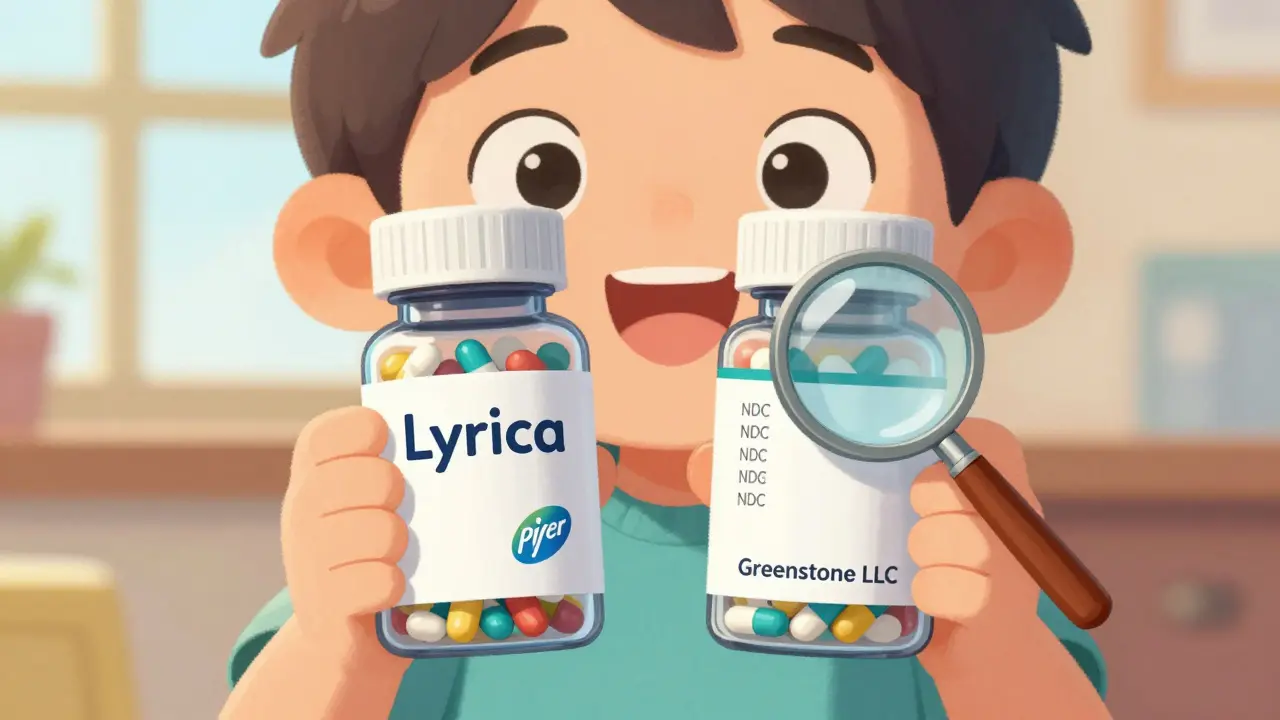
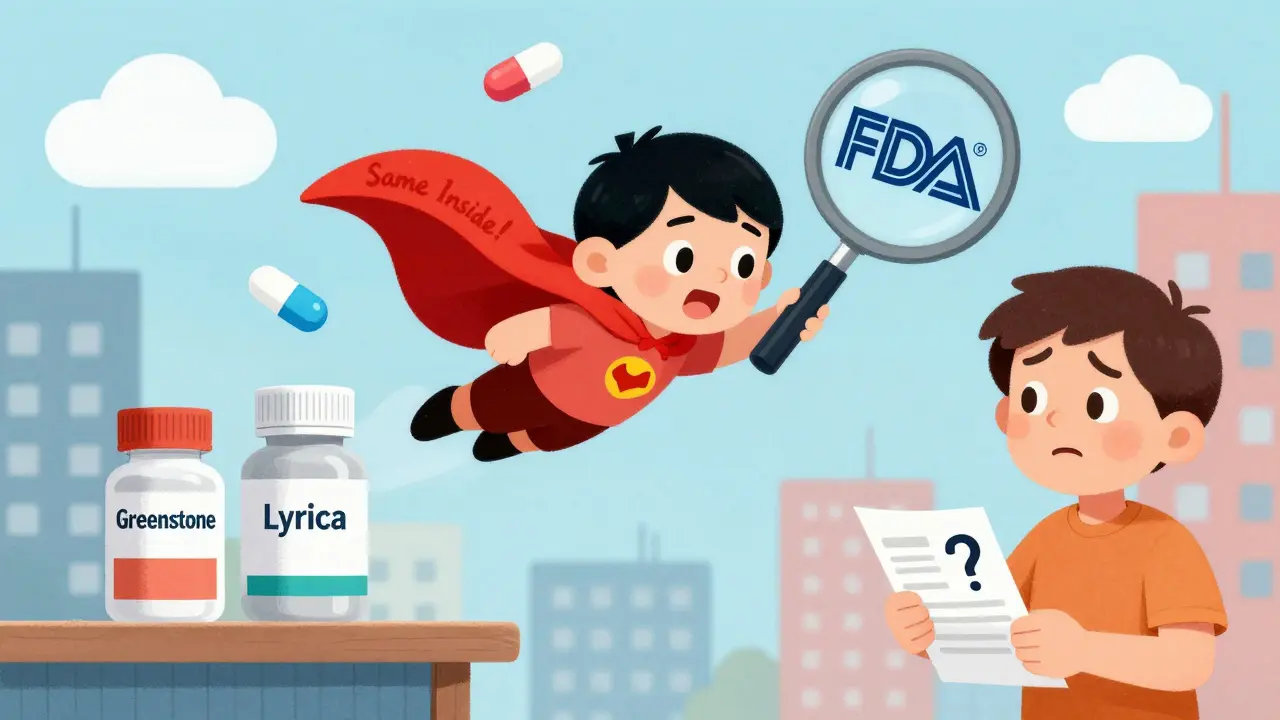
An authorized generic is not a traditional generic. It’s made by the same company that makes the brand-name drug, in the same factory, using the exact same ingredients and process. The only differences? The box, the label, and the name on it. For example, when Pfizer made the brand drug Lyrica (pregabalin), they also produced an authorized generic version sold under the name Greenstone LLC. The capsule inside looks and works exactly the same. But instead of saying "Pfizer" on the label, it says "Greenstone LLC"-a subsidiary. The FDA allows this under the Medicare Prescription Drug, Improvement, and Modernization Act of 2003. The goal? Let brand companies compete with their own generics during the first 180 days after patent expiry, when only one generic company has exclusive rights to sell. Unlike regular generics, which go through the Abbreviated New Drug Application (ANDA) process and must prove they’re bioequivalent, authorized generics don’t need to prove anything. They’re the real thing, just repackaged.How to Spot an Authorized Generic by Its Packaging
The easiest way to tell if you’ve got an authorized generic is to look at three things: the National Drug Code (NDC), the manufacturer name, and the labeling language. The NDC code is your best clue. Every drug has a unique 10- or 11-digit NDC number broken into three parts: labeler code, product code, and package code. For an authorized generic, the labeler code (the first set of numbers) changes-it’s the distributor’s code, not the brand’s. But the product code (second set) and package code (third set) stay exactly the same as the brand version. Take Protonix (pantoprazole). The brand version has an NDC of 00071-0001-01. The authorized generic, distributed by Dr. Reddy’s, has an NDC of 55111-0001-01. Same product, same package size. Just a different labeler code. Check the manufacturer/distributor line. On the label, you’ll see "Distributed by" or "Manufactured for," followed by a company name you don’t recognize-like Greenstone, Amneal, or Mylan. That’s not a mistake. That’s the authorized generic. The brand manufacturer (say, AstraZeneca or Johnson & Johnson) still made it. They just let their partner sell it under a different name. Look for missing branding. No trademark symbols (® or ™). No marketing claims like "#1 Prescribed for Acid Reflux." No colorful logos. Authorized generics have plain, clinical labeling. They must include all safety info, but they can’t include promotional language.Why Authorized Generics Are Hard to Tell Apart
Here’s the problem: they look too much like the brand. A 2022 survey by the National Community Pharmacists Association found that 63% of pharmacists took over two minutes per prescription just to confirm if a drug was an authorized generic. Why? Because the pills inside are identical. The color, shape, size, and imprint code match the brand. In some cases, the packaging is nearly indistinguishable-same bottle type, same font, same layout. Reddit’s r/pharmacy community had a thread in 2022 where over 140 pharmacists shared stories. One wrote: "I had a patient ask me why her Prozac looked different. I checked the NDC. It was an authorized generic. She didn’t believe me until I showed her the labeler code change. She said, ‘But it’s the same pill!’ And she was right." That’s the paradox: authorized generics are the most reliable generics you can get-because they’re the original drug. But they’re also the hardest to identify without checking the NDC.Authorized Generics vs. Traditional Generics: The Key Differences
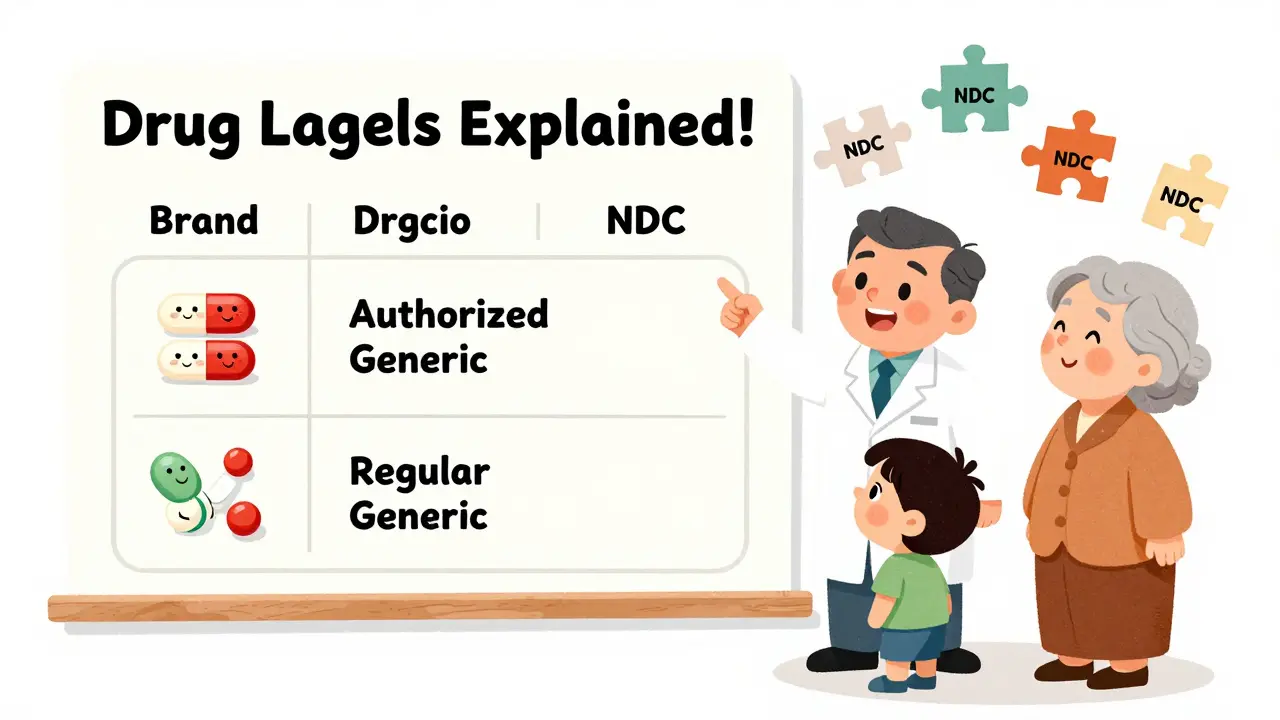
It’s easy to confuse authorized generics with regular generics. But they’re not the same.| Feature | Authorized Generic | Traditional Generic |
|---|---|---|
| Manufacturer | Same as brand-name maker | Separate company |
| Approval Path | Under original NDA | Through ANDA |
| Ingredients | Identical to brand | Same active ingredient, different inactive ones |
| NDC Code | Same product & package code; different labeler code | Completely different NDC |
| Labeling | No brand name, no marketing claims | May include "bioequivalent" statement |
| Updates | Auto-updates with brand label | Must be manually updated by generic maker |
Where to Verify an Authorized Generic
Don’t guess. Check. The FDA publishes a Quarterly Authorized Generic List, updated every January, April, July, and October. The latest update was October 2, 2023, and it listed 147 active authorized generic products. You can find it on the FDA’s website under "Drug Approvals and Databases." Pharmacists use systems like First Databank and Medi-Span, which flag authorized generics in their software. If you’re a patient, ask your pharmacist to check the NDC against the FDA list. Most pharmacies have this info in their system. If you’re unsure, call the manufacturer’s customer service line. For example, if you see "Distributed by Greenstone LLC," call Greenstone. They’ll tell you if it’s an authorized version of a brand drug.Why It Matters for You
You might wonder: "Does it really make a difference?" Yes. Authorized generics are priced 15-25% lower than the brand-name drug but only 5-15% cheaper than traditional generics. That makes them a sweet spot: better than the brand, more consistent than the generic. A 2022 Medscape survey of 1,200 patients found that 92.6% reported no difference in effectiveness between their brand and the authorized generic. That’s higher than the 88% who reported no difference with traditional generics. But confusion is still common. One in five patients thought a different-looking package meant the drug was fake or weaker. That’s not just a misunderstanding-it’s a barrier to cost savings.What to Do If You’re Unsure
If you get a prescription refill and the pill looks different:- Check the NDC code on the bottle label.
- Compare it to the NDC on your last bottle.
- If the first set of numbers changed but the rest stayed the same, it’s likely an authorized generic.
- Look for "Distributed by" or "Manufactured for" followed by a different company name.
- Ask your pharmacist: "Is this an authorized generic?"
What’s Changing in 2024
The FDA plans to integrate authorized generic identifiers directly into the National Drug Code Directory by mid-2024. That means pharmacy systems will automatically flag them-no manual checks needed. Until then, you’re still the best line of defense. Knowing how to read the label gives you control over your medication-and your spending.Frequently Asked Questions
Are authorized generics as safe as brand-name drugs?
Yes. Authorized generics are made in the same facility, with the same ingredients, using the same process as the brand-name drug. The FDA inspects these facilities just like they do for brand manufacturers. There is no difference in safety or effectiveness.
Why does the label say a different company made it?
The brand-name company owns the drug and manufactures it, but they contract with another company (often a subsidiary) to distribute it under a different label. This is allowed by the FDA. The actual manufacturing is unchanged.
Can I trust an authorized generic if it looks different from the brand?
Yes. U.S. trademark laws prevent generic drugs from looking exactly like the brand, even if they’re identical inside. So authorized generics may have a different color, shape, or imprint-but the active ingredient is the same. Always verify with the NDC code to be sure.
Are authorized generics cheaper than regular generics?
Usually not. Authorized generics typically cost slightly more than traditional generics-by about 5-15%-but they’re still 15-25% cheaper than the brand-name version. The trade-off is consistency: fewer side effects from inactive ingredients, and identical formulation.
How do I find out if my drug has an authorized generic version?
Check the FDA’s Quarterly Authorized Generic List at fda.gov. You can also ask your pharmacist or use drug databases like First Databank. If your drug is on the list, your pharmacy can switch you to the authorized generic if it’s available and covered by your insurance.
Next Steps for Patients and Caregivers
If you’re on a long-term medication and want to save money without risking effectiveness:- Ask your doctor or pharmacist: "Is there an authorized generic for this drug?"
- Keep a record of your NDC codes from each refill.
- When you see a new bottle, compare the labeler code to your last one.
- Don’t assume a cheaper pill is better-check the source.
13 Comments
lol authorized generics are just brand drugs with a cheaper label. why do we even need this whole system?
Let me be perfectly clear: the FDA’s regulatory architecture around authorized generics is a masterclass in corporate capture disguised as consumer protection. The 2003 MMA provision didn’t foster competition-it weaponized exclusivity. When Pfizer manufactures Lyrica under Greenstone’s label, they’re not lowering prices-they’re extracting monopoly rents under a new costume. The NDC code change? A theatrical illusion. The active ingredient doesn’t change, but the profit margin does. This isn’t transparency-it’s obfuscation dressed as innovation. And patients? They’re the ones left sifting through labels like forensic accountants instead of getting real price reform.
There is a profound philosophical underpinning to the authorized generic phenomenon that transcends mere pharmacology. It speaks to the tension between authenticity and commodification in modern healthcare. The pill itself remains unchanged-its molecular structure, its therapeutic intent, its biological fidelity-yet its identity is erased, repackaged, and rebranded as a commodity. This mirrors the broader alienation of the patient from the source of their healing. We have turned medicine into a supply chain puzzle, where the truth lies not in the substance, but in the bureaucratic metadata of the NDC. The real tragedy is not that we can’t tell the difference-it’s that we’ve stopped caring enough to ask why the difference even matters.
Hey, just wanted to say this is super helpful! I’ve been on Prozac for years and never knew my refill was an authorized generic until I checked the NDC. My pharmacist showed me the labeler code change and I was like, ‘Wait, so this is the exact same pill?’ Yep. And it saved me like $40 a month. Seriously, if you’re on a med long-term, this is a total win. Don’t overthink it-just check the label. Your wallet will thank you.
I’ve been a pharmacy tech for 12 years, and I’ll tell you-authorized generics are the quiet heroes of the Rx world. I’ve seen patients panic because their pill changed color or the bottle looked different, convinced they got the wrong drug. But when I pull up the NDC and show them that the product and package codes are identical? Their whole body relaxes. It’s like watching someone realize they’ve been worrying about a ghost. And honestly? The fact that they’re made in the same factory, with the same people, same quality control-it’s the closest thing to a no-brainer cost-saver in this broken system. I wish more people knew this. Not every generic is created equal, but an authorized one? It’s the original, wearing a disguise.
Ah, the authorized generic-such a beautifully ironic construct. A pharmaceutical Kafkaesque parable wrapped in a blister pack. The brand, once a sacred icon of innovation, now becomes a spectral echo, haunting its own offspring. The labeler code change? A linguistic séance. We summon the ghost of the original, yet deny it its name. This is not medicine-it is semiotic performance art, curated by corporate lawyers and FDA bureaucrats. The patient, bewildered, holds the same molecule, but now it is a stranger. And we wonder why trust in healthcare is collapsing? Because we’ve turned truth into a puzzle only pharmacists can solve.
Man, I didn’t even know this was a thing until last month. My insurance switched me to an authorized generic for my blood pressure med. At first I was like, ‘Is this legit?’ But then I checked the NDC-same product code, different labeler. Called the manufacturer’s line and they confirmed it was made in the same plant as the brand. I’ve been on it for 3 months now. No side effects, no drop in efficacy. Honestly? I’m kind of mad I didn’t know this sooner. Why isn’t this more common knowledge?
ok so i was reading this and i think the whole NDC thing is overcomplicated. like, why do we need to check 3 sets of numbers? its just the first part that changes right? and the rest stays the same? i mean, if the pill looks and works the same, why are we making it so hard? also, i think the FDA should just make a big red stamp on the bottle that says "SAME AS BRAND". people are dumb. they panic when the pill looks different. i got a generic for my antidepressant once and i thought it was fake bc the color was lighter. turned out it was an authorized generic. i felt dumb. we need simpler labels. not more codes.
You people are overthinking this. Authorized generics are just the brand drug with a cheaper label. That’s it. If you’re worried about the pill working, you’re a fool. The FDA doesn’t let companies lie about this stuff. If the NDC labeler code changed but the rest is the same, it’s the same pill. End of story. Stop wasting time on philosophy and check your receipt. Save your money. Simple.
wait so if the brand and authorized generic are identical, why does the generic cost less? if they're made in the same factory, same workers, same materials, then why isn't the price the same? this smells like price gouging disguised as competition. the company is just using a subsidiary to undercut the real generic makers. it's not helping consumers-it's just letting the brand keep control. someone needs to call out this loophole. the FDA should require the same price for both versions. this is just corporate gaming.
Oh my god. I just realized my insulin is an authorized generic. I’ve been paying $300 a month for the brand. My last refill? Same pill, same bottle shape, same imprint-just says "Distributed by Apotex". I called my pharmacy. They confirmed it. I’m now saving $180 a month. I cried. Not because I’m emotional-I’m from Johannesburg, we don’t cry over money, we survive it. But this? This is dignity. This is access. I didn’t know this was possible. Thank you for writing this. I’m telling everyone I know.
This is such a useful breakdown! I’m a caregiver for my mom and we’ve had so many mix-ups with her meds. I printed out the NDC comparison chart and taped it to the fridge. Now when she gets a new bottle, I check the first set of numbers. We’ve caught two authorized generics already-saved over $200 in three months. I also started asking the pharmacist, "Is this an authorized generic?" They’re always surprised someone knows to ask. Honestly, I think this should be taught in high school health class. Knowledge = power, and power = savings.
Let’s be real: authorized generics are a distraction. The real issue is that brand companies are allowed to manufacture their own generics. That’s not competition-that’s collusion. The 180-day exclusivity window for generic manufacturers? That’s the real problem. The FDA should force brand companies to spin off their generic divisions into completely separate entities with independent pricing. Otherwise, this whole system is just a shell game where the brand wins no matter what. And don’t get me started on how pharmacists are left holding the bag, trying to explain NDC codes to confused patients who just want their meds to work. This isn’t healthcare reform. It’s regulatory theater.