

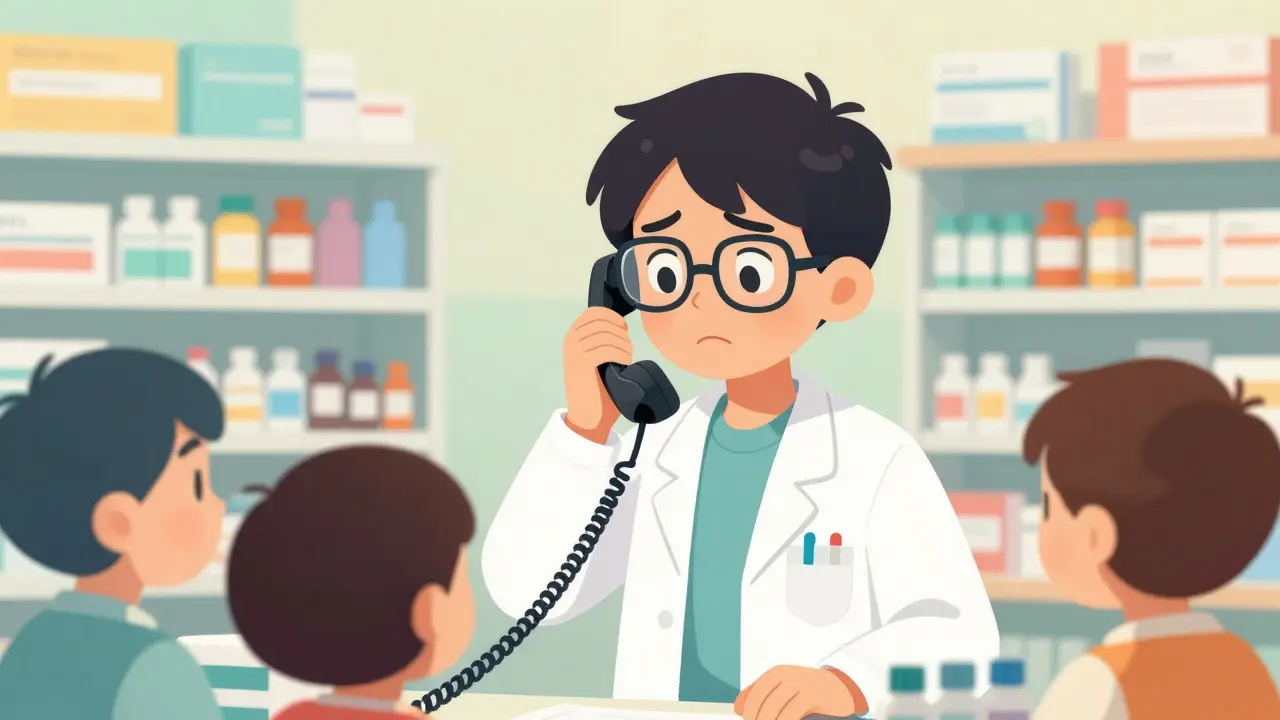
Imagine this: you’re running a busy hospital pharmacy. Your phone rings. It’s the FDA or a manufacturer with urgent news-a specific batch of insulin has been recalled due to contamination. You have hours, not days, to find every vial in your facility, remove it from shelves, and identify which patients might have already received it. If you miss one lot, the consequences could be fatal for a patient and catastrophic for your license.
This isn’t just a hypothetical nightmare; it’s the daily reality for healthcare professionals managing medication recalls, defined as the removal or correction of a marketed drug that violates the law and is within the control of the firm initiating the recall. The stakes are incredibly high. In 2022 alone, the FDA issued over 7,142 drug recalls, a 12.3% jump from the previous year. Most were driven by manufacturing defects, meaning the product itself was compromised before it ever reached your shelf.
Verifying these notices isn't about panic; it's about precision. You need a systematic way to confirm if you hold the affected stock and act fast. This guide breaks down exactly how to verify recall notices and affected medication lots, moving from manual checks to automated systems, ensuring you protect your patients and stay compliant with strict regulations like those from the Joint Commission and the FDA.
Understanding the Recall Landscape
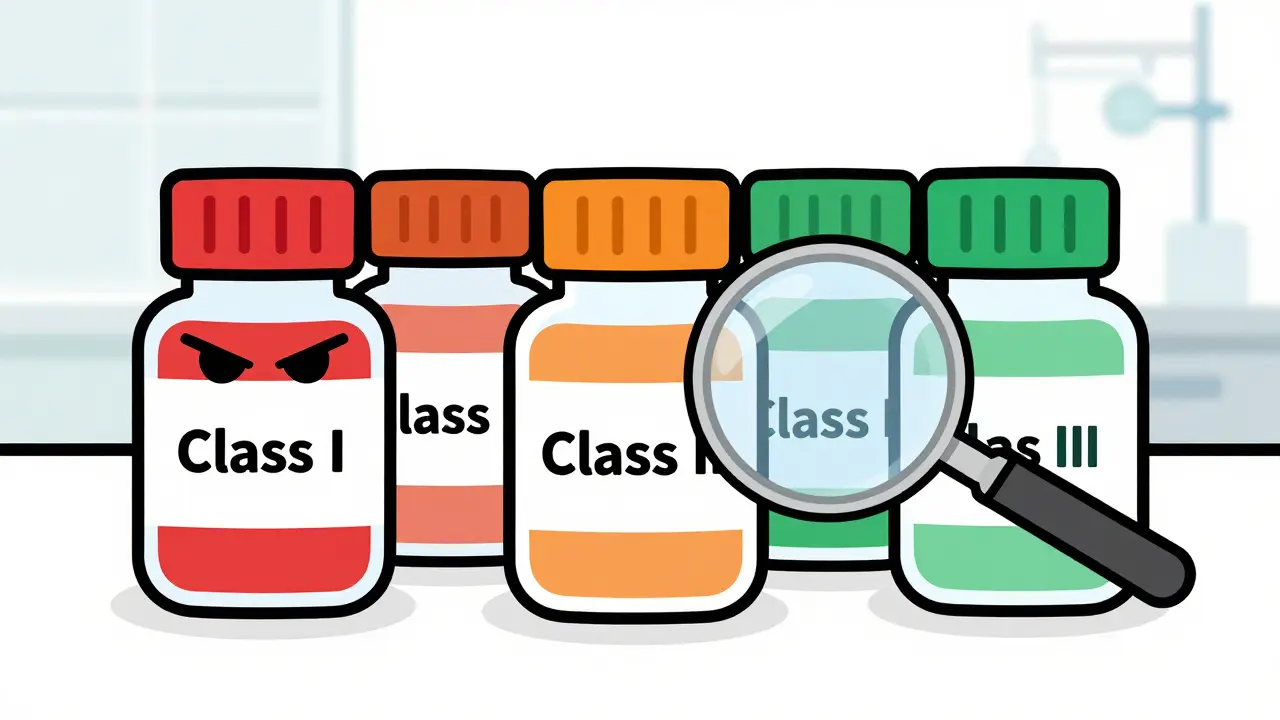
Before you can verify a recall, you need to understand what you're looking at. Not all recalls are created equal. The FDA categorizes them into three classes based on the potential health hazard:
- Class I Recalls: These involve dangerous or defective products that could cause serious health problems or death. Think contaminated injectables or life-saving drugs with incorrect dosages. For these, speed is everything.
- Class II Recalls: These involve products that might cause temporary or medically reversible adverse health consequences, or where the probability of serious harm is remote.
- Class III Recalls: These involve violations that are unlikely to cause adverse health reactions, such as labeling errors or minor packaging issues.
The urgency of your verification process depends entirely on this classification. For Class I recalls, the FDA mandates that effectiveness checks must verify that 100% of direct customers received notification and that there is 80% compliance with removal instructions. If you treat a Class III recall with the same frantic energy as a Class I, you waste resources. But if you treat a Class I like a Class III, you risk lives.
A critical insight from Dr. Jane Axelrad, former FDA Deputy Director of Drug Policy, is that verification must include physical location checks, not just electronic inventory matches. Her data showed that 23% of recalls involved products misfiled in wrong storage locations. So, checking your computer database is only half the battle.
The Seven-Step Verification Protocol
How do you actually execute this? The California State Board of Pharmacy outlines seven mandatory steps that serve as the gold standard for verification. Let’s walk through them.
- Pre-positioning: Never rely solely on the US Postal Service. Set up multiple channels to receive notice-email alerts, dedicated hotlines, and software integrations. The American Society of Health-System Pharmacists (ASHP) warns against single-source dependency because delays here cascade into every subsequent step.
- Identification: Cross-reference the recalled lot numbers against your inventory records. This requires exact matching of the National Drug Code (NDC), lot number, expiration date, and packaging size. Even a slight mismatch in the NDC structure can lead to false negatives.
- Removal: Remove the product from all patient care areas within 24 hours. This means pulling it from automated dispensing cabinets (ADCs), nurse stations, and emergency crash carts.
- Patient Identification: Identify potentially affected patients. Who received this drug since the last verified safe lot? This often requires digging into Electronic Health Records (EHR).
- Alternative Sourcing: Find alternative products immediately. A recall creates a supply vacuum. You need to know what therapeutic equivalents are available before you run out.
- Return/Quarantine: Return quarantined products to the supplier or dispose of them according to hazardous waste protocols, depending on the nature of the defect.
- Documentation: Document all actions. The Joint Commission Standard LDR.04.03.05 requires detailed logs including dates of notification, quantities removed by lot number, staff notified, and patient contacts.
The biggest pitfall in this process? Human error in lot matching. A 2022 survey by Pharmacy Times found that 63% of hospital pharmacists encountered "false positive" recalls where their system flagged products not actually affected, wasting an average of 2.7 hours per incident. Precision in step two prevents this chaos later.
Manual vs. Automated Verification Systems
You can try to do this manually, but the data suggests it’s a losing battle. According to ASHP’s 2022 Medication Safety Benchmarking study, manual verification takes an average of 4.7 hours per recall event with an 18.3% error rate. Compare that to automated systems, which average 1.2 hours with a mere 2.1% error rate.
| Feature | Manual Verification | Automated Systems (e.g., TruMed, Navitus) |
|---|---|---|
| Average Time per Recall | 4.7 hours | 1.2 hours |
| Error Rate | 18.3% | 2.1% |
| Labor Intensity | High (staff check physical inventory) | Low (system flags automatically) |
| Integration | None (standalone process) | Integrates with Pharmacy Management Systems |
| Cost Efficiency | Hidden costs in labor time | Subscription fees ($2,995-$4,800/year) |
Automated solutions like TruMed’s AccuSite dashboard flag recalled medications during dispensing with 99.8% accuracy. They integrate directly with your existing pharmacy management system, provided it runs on Windows Server 2016 or later. When University Medical Center implemented such a system, they slashed verification time from 4.5 hours to just 22 minutes per recall.
However, automation isn’t a magic bullet for everyone. A case study in the Journal of the American Pharmacists Association noted that automated systems can fail in rural clinics with limited IT infrastructure. If your network is unstable or your legacy systems don’t support API integration, you might be stuck with manual processes. In those cases, having a robust "recall playbook" is non-negotiable.
Common Pitfalls and How to Avoid Them
Even with the best intentions, verification fails. Why? Usually because of fragmented notifications and inconsistent lot numbering.
Sarah Chen, a pharmacist at Johns Hopkins Hospital, highlighted a major issue: "We receive recall notices via 7 different channels with conflicting lot numbers, causing dangerous confusion during verification." If one email says Lot #12345 is bad, and another fax says Lot #12345A is fine, which one do you trust? You need a central point of truth. That’s why dedicated Recall Teams are so effective. Facilities with formal teams completed verification 3.2 times faster than those without, according to ASHP.
Another massive blind spot is unopened emergency kits. An FDA audit of 150 hospitals found that 68% had incomplete lot number verification, with the most common error being failure to check unopened emergency kits, cited in 41% of deficiencies. Those sealed bags in the crash cart? They contain expired or recalled drugs too. Your verification protocol must explicitly state that ADCs and emergency kits are subject to the same scrutiny as open shelves.
Also, watch out for after-hours recalls. Data from the Cleveland Clinic shows that 68% of recalls occur outside business hours. Do you have an on-call team? Do they have access to the inventory system? If not, your verification timeline starts ticking while your staff is asleep, increasing the risk of patient exposure.
Building Your Recall Readiness Plan
You can’t wait for a recall to build your process. The FDA recommends a 30-day preparation period for establishing verification protocols. Here’s how to get started:
- Create a Written Policy: Use ASHP’s 12-point checklist to draft a policy that defines roles. Who gets the alert? Who checks the inventory? Who calls the patients?
- Train Staff Annually: The Joint Commission requires minimum 2 hours of annual training. Make sure this includes hands-on drills, not just PowerPoint presentations.
- Standardize Lot Number Formats: The FDA found inconsistent lot numbering formats in 47% of recalls. Work with ISMP’s standardized cross-reference templates to ensure your team knows how to read and match lots from different manufacturers.
- Establish a Recall Playbook: Top-performing facilities adopt a "recall playbook" with pre-identified staff responsibilities. This reduces decision fatigue during a crisis.
Dr. Michael Cohen, President of the Institute for Safe Medication Practices (ISMP), warned that overreliance on manufacturer notification alone misses 37% of recalls. You need proactive monitoring. Subscribe to services like First Databank or Grayson’s RecallTrac if you aren’t using an integrated platform. While First Databank costs around $4,800/year, its direct integration with 98% of major pharmacy management systems makes it a strong contender for large hospitals. Grayson’s cloud-based solution at $2,995/year is cost-effective but requires a minimum of 50 concurrent users to justify the expense.
The Future of Verification
The landscape is shifting rapidly. By 2027, the Drug Supply Chain Security Act amendments will require electronic verification for all prescription drugs. We are already seeing pilot programs, like the FDA’s January 2024 initiative requiring real-time electronic verification reporting for high-risk drugs.
Blockchain technology is also entering the mix. Pfizer and Walgreens tested a distributed ledger solution in 2023 that reduced verification time to 17 minutes per recall. By 2026, industry analysts predict that 85% of verification will occur through integrated supply chain platforms, effectively eliminating manual lot number checks. If you’re still relying on clipboards and faxes, you’re falling behind.
But until that future arrives, your job remains the same: verify quickly, accurately, and thoroughly. Protect your patients. Protect your practice.
What is the difference between a Class I, II, and III recall?
Class I recalls involve dangerous products that could cause serious health problems or death. Class II recalls involve products that might cause temporary or medically reversible adverse health consequences. Class III recalls involve violations unlikely to cause adverse health reactions, such as labeling errors. The urgency of verification decreases from Class I to Class III.
How long do I have to verify a recall notice?
For Class I recalls, the FDA mandates verifying 100% of affected lots within 48 hours. California State Board of Pharmacy requirements suggest completing verification of affected lots within 72 hours. However, best practice is to remove products from patient care areas within 24 hours of receiving notice.
Why is manual verification prone to errors?
Manual verification relies on staff physically checking inventory against paper or digital notices, leading to an 18.3% error rate compared to 2.1% for automated systems. Common errors include missing misfiled products, failing to check emergency kits, and misinterpreting inconsistent lot numbering formats across different manufacturers.
Do I need to check emergency crash carts for recalls?
Yes. An FDA audit found that 41% of verification deficiencies involved failure to check unopened emergency kits. Sealed bags in crash carts often contain older stock that may be part of a recalled lot. Your verification protocol must explicitly include these sealed units.
What information must I document during a recall?
Per Joint Commission standards, you must document the exact dates of notification and action, quantities removed by lot number, staff notified, and patient contacts. For Class I recalls, you must also provide proof of effectiveness checks contacting 100% of direct customers.