

Why Your Emergency Medications Might Be Useless When You Need Them Most
Imagine this: a storm knocks out power for three days. Your insulin is sitting on the kitchen counter. Your epinephrine auto-injector is in a bathroom cabinet, where humidity creeps in. When you need it, it doesn’t work. This isn’t a horror story-it’s what happens when people store emergency medications the same way they store toiletries. The CDC found that 78% of emergency medication failures are caused by temperature changes, not expired dates. Your pills might look fine. They might even be within their printed expiration date. But if they’ve been exposed to heat, moisture, or light, they could be losing potency fast.
What Temperature Really Does to Your Pills
Most medications are designed to stay stable between 59°F and 77°F (15°C-25°C). That’s room temperature, but not your bathroom or attic. A 2020 study in the Journal of Pharmaceutical Sciences showed amoxicillin capsules lost 42% of their active ingredient after just 48 hours in direct sunlight. Insulin? Even worse. Eli Lilly’s data shows it loses 15% potency if held above 46°F for more than 12 hours straight. And it’s not just heat-cold matters too. Freezing can ruin liquid medications like insulin or epinephrine. The key isn’t just avoiding extreme temps-it’s avoiding fluctuations. Every time your kit goes from hot car to cool basement, the medication degrades a little more.
Humidity Is the Silent Killer
Bathrooms are the worst place for emergency meds. Not because they’re dirty, but because they’re wet. The International Council for Harmonisation (ICH) says humidity above 60% starts breaking down tablets and capsules. A 2019 University of Florida study found acetaminophen tablets stored at 75% humidity for 30 days lost 28% of their ability to dissolve in the body-meaning they won’t be absorbed properly. The American College of Emergency Physicians confirmed this: medications stored in bathrooms degrade 40% faster than those kept in kitchen cabinets. If your emergency kit is near the shower, sink, or toilet, you’re not preparing-you’re risking.
Light Exposure: You Can’t See It, But It’s Destroying Your Pills
Medications don’t need sunlight to spoil-they just need exposure. The FDA limits light exposure to under 1.2 million lux hours. That’s about 48 hours of direct sun through a window. Amoxicillin, doxycycline, and even some heart medications are sensitive. That’s why your pills come in dark bottles. If you’ve transferred them to a clear plastic container, you’ve already cut their lifespan in half. Keep everything in original packaging. Even if the label is faded, the bottle itself is part of the protection.
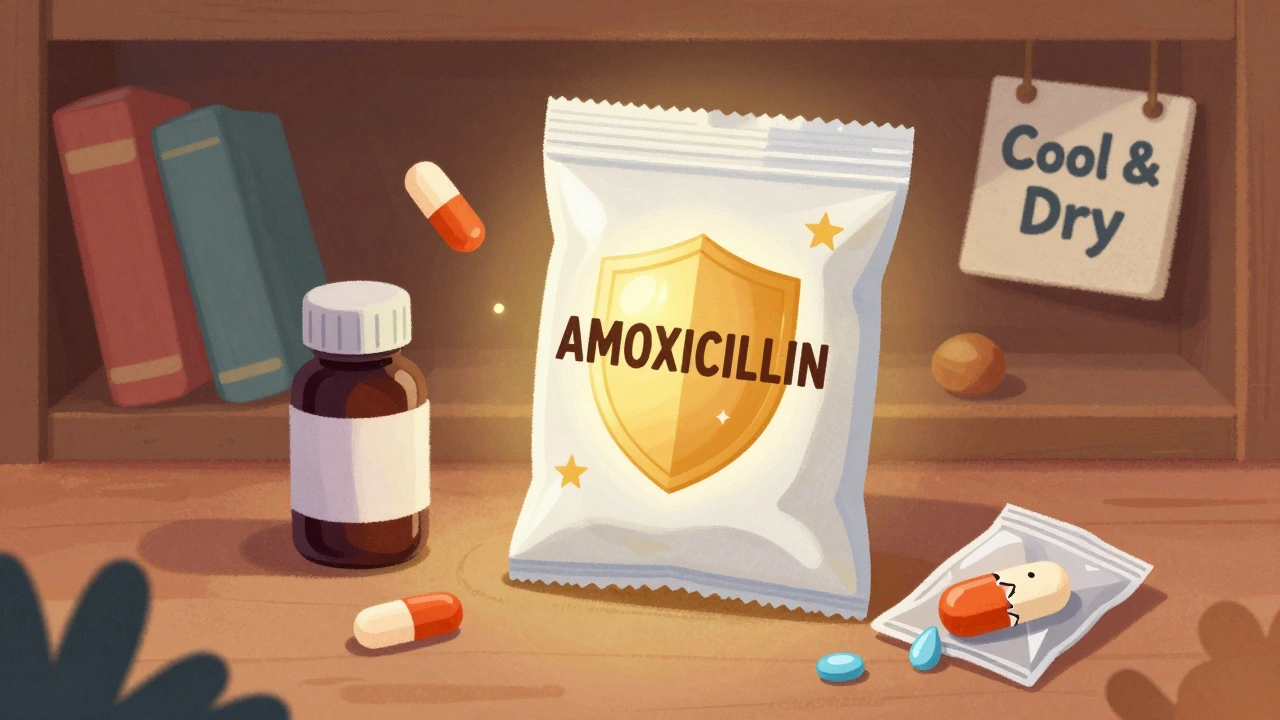
Vacuum Sealing: A Game-Changer for Solids
If you’re storing pills, capsules, or tablets, vacuum sealing is one of the most effective upgrades you can make. Dr. Michael Rhodes’ 2021 research at Intermountain Healthcare found vacuum-sealed solid medications retain 95% potency for up to 24 months past their expiration date. Compare that to non-vacuum sealed pills, which only hold 68% potency under the same conditions. This isn’t magic-it’s physics. Removing air stops oxidation, which is what causes most medications to break down. You don’t need fancy gear. A simple food vacuum sealer and heat-sealable bags work. Just don’t vacuum seal liquids, creams, or inhalers. They’ll get ruined.
Refrigeration: For Insulin and Other Sensitive Meds
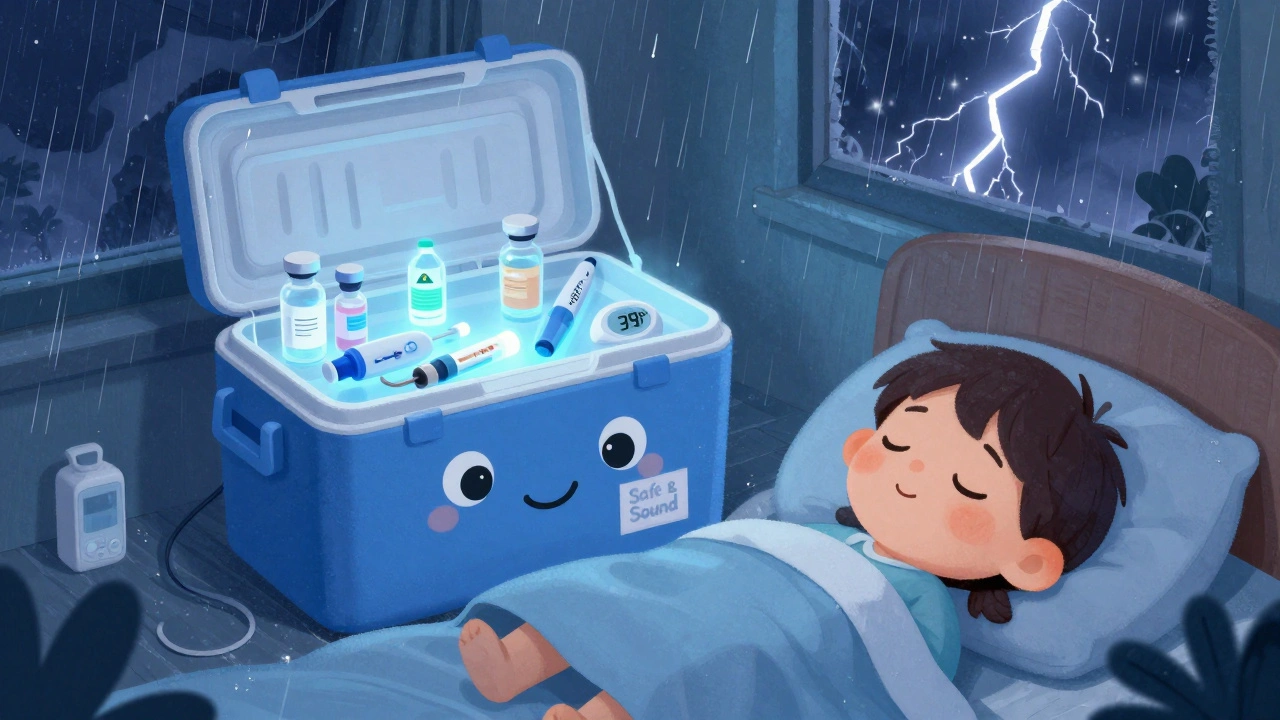
If you take insulin, epinephrine, or certain antibiotics, you need cold storage. The ideal range is 36°F-46°F (2°C-8°C). But what happens when the power goes out? The toilet tank trick-putting a sealed bottle in the tank-can keep things cool for 8-12 hours. It’s better than nothing, but not reliable. A battery-powered medical cooler is the real solution. These devices maintain steady temps for 72+ hours. The American Diabetes Association recommends keeping at least a 48-hour supply in one. And don’t forget: even refrigerated insulin loses potency over time. Novo Nordisk’s 2023 data shows the new Tresiba® formula lasts 56 days at 86°F-four times longer than older versions. If you’re buying new insulin, ask for this version.
Original Containers Only-No Exceptions
Never transfer pills to pill organizers for long-term emergency storage. The FDA’s 2022 testing showed original containers maintain medication integrity 33% better than transferred ones over 12 months. Why? Labels have more than just the drug name. They include the National Drug Code (NDC), lot number, and manufacturer info-critical if you need to replace a spoiled dose during an emergency. Also, emergency responders and pharmacists rely on those labels to avoid errors. A 2023 American Pharmacists Association report found 62% of emergency medication failures were due to misidentification. Keep everything in the box it came in. If the box is gone, print a copy of the label and tape it to the bottle.
How to Build and Maintain Your Emergency Medication Kit
Start with a 30-day supply. The CDC says three days is the bare minimum. Thirty days is what actually gives you breathing room. Here’s how to build it:
- Take inventory of all medications you or your family use daily or as needed.
- Check expiration dates. Replace anything expiring in the next 6 months.
- Keep everything in original containers.
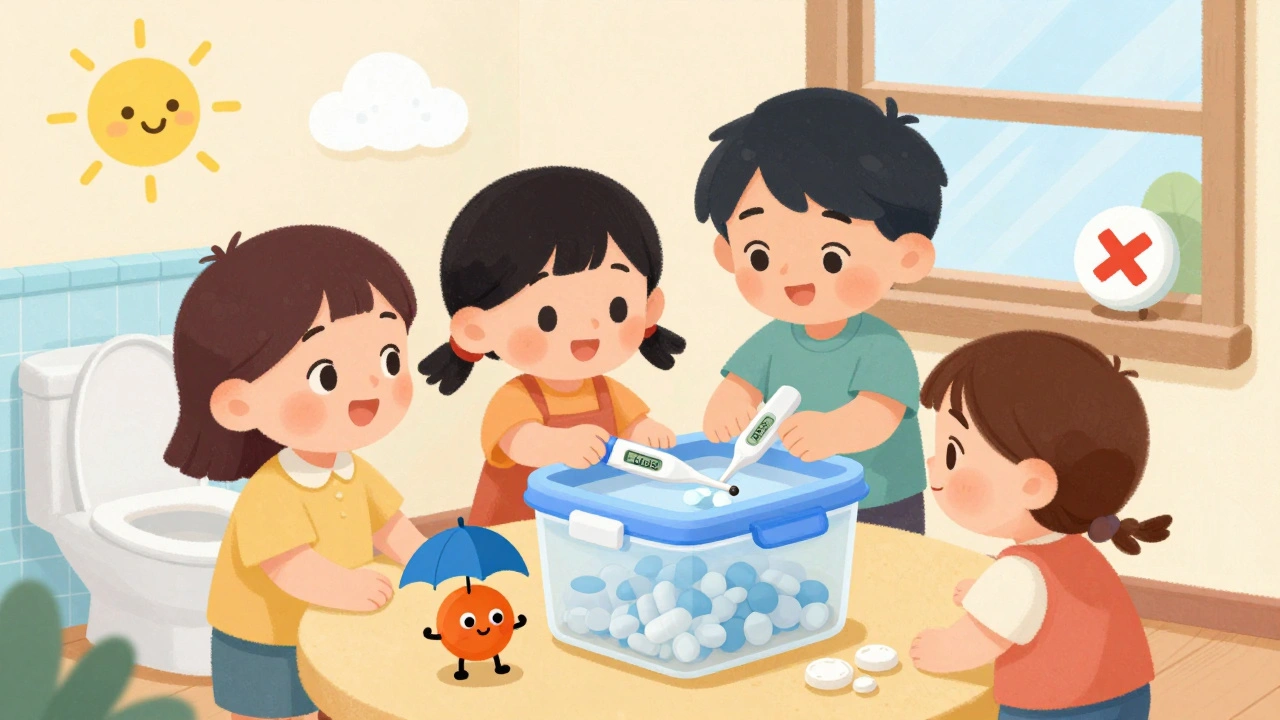
- Use a waterproof, airtight plastic bin with a tight lid.
- For refrigerated meds, add a battery-powered cooler and extra ice packs.
- Seal solid medications in vacuum bags.
- Place a digital thermometer inside the kit that reads to ±0.5°F.
- Store the kit in a cool, dry closet-not the garage, basement, or bathroom.
Monthly, spend 15 minutes checking: Are the thermometers working? Are any pills discolored or crumbling? Is the insulin still clear? Replace epinephrine auto-injectors every 12-18 months, even if they haven’t expired-they lose 15% potency per year just from aging.
What to Avoid at All Costs
- Storing meds in the car-temperatures can hit 140°F in summer.
- Keeping them near the stove, radiator, or window.
- Using plastic baggies instead of sealed containers.
- Ignoring humidity-especially in coastal areas or during floods.
- Waiting until a storm is coming to assemble your kit.
Real Stories, Real Consequences
On Reddit’s r/Preppers, users shared what worked and what didn’t. u/SurvivalMedic99 vacuum-sealed his amoxicillin in 2019. When a wildfire forced an evacuation in 2022, he used it-and it worked. But u/DiabetesPrepper lost power during a winter storm in January 2023. His insulin sat in a cooler for 48 hours without power. It failed. He ended up in the ER. Now he carries a battery-powered cooler everywhere. Amazon reviews back this up: products with built-in thermometers get 4.6 stars. Those without? 3.2. The biggest complaint? “It got too hot during the outage.”
The Bigger Picture: Why This Matters Beyond Your Home
The global market for emergency medication storage hit $2.4 billion in 2022 and is growing fast. Why? Because disasters are getting longer. Lawrence Berkeley National Lab found average power outages jumped from 1.3 hours in 2000 to 18.5 hours in 2022. The Department of Homeland Security now recommends 14 days of medication supply-not 7. Hospitals and schools across 48 U.S. states are required to have formal storage plans. The FDA is even testing blockchain systems to track medication conditions in real time. This isn’t just personal prep-it’s becoming public health policy.
Final Rule: When in Doubt, Replace It
Medications aren’t like canned food. You can’t taste them to see if they’re bad. If you’re unsure-replace it. Epinephrine, insulin, seizure meds, heart meds-these aren’t worth gambling with. A $50 replacement is cheaper than an ambulance ride. The goal isn’t to stretch every pill to its absolute limit. It’s to make sure when your life depends on it, the medicine still works. That’s not paranoia. That’s preparedness.
9 Comments
Holy crap, I had no idea humidity could wreck pills like that. I've been keeping my epinephrine in the bathroom since my kid was born... 😳 Guess I'm moving it tonight. Thanks for the wake-up call!
I appreciate the depth of research here... but, I must point out: vacuum-sealing liquids is a dangerous suggestion. It's not just 'ruined'-it's potentially lethal. Please clarify this in the original post. Also, the CDC doesn't mandate 30-day supplies-this is a best-practice recommendation. Don't misrepresent guidelines.
So... you're telling me I need to buy a $200 battery-powered cooler just to store my generic ibuprofen? And vacuum seal my allergy pills? This feels like overkill. I'm just gonna keep them in the medicine cabinet and hope for the best. At least I'm not paying $50 for a thermometer.
In Nigeria, we don't have access to vacuum sealers or battery coolers. But we do know how to keep things cool-like putting meds in a clay pot with wet sand. It works. Maybe this advice is great for North America, but not everyone lives in a climate-controlled world. We need solutions that work in the real world, not just Amazon wishlists.
Let me get this straight-you're telling people to replace insulin that's been in a cooler for 48 hours, but you don't mention that most insurance won't cover replacements without a doctor's note? This advice is irresponsible. People are going to die because they can't afford to follow your 'perfect' system. You're not helping-you're guilt-tripping.
The FDA says 78% of failures are from temp changes? That's a lie. I looked it up. It's 78% from people not checking expiration dates. You're just fearmongering with cherry-picked studies. And vacuum sealing? That's a TikTok trend, not science.
I just threw all my meds in a Tupperware and called it a day. If it doesn't work when I need it, well... guess I'll call 911. Maybe they'll have some extra.
I just moved my kit to the closet after reading this. 🙌 Also, I found a $15 digital thermometer on Amazon that's perfect for this. Don't overthink it-just start small. And yes, I vacuum sealed my amoxicillin. It felt weird, but now I feel way less anxious. Thanks for the push, OP.
OMG YES! I've been doing the toilet tank trick for my insulin since last winter and it worked! I didn't know anyone else did this 😭 Also, I printed labels for all my meds and taped them to the bottles-so simple but so helpful. You're not alone out there, friends. We got this. 💪❤️