



Medication Eye Safety & Risk Checker
Select your medication and symptoms to receive personalized eye safety advice.
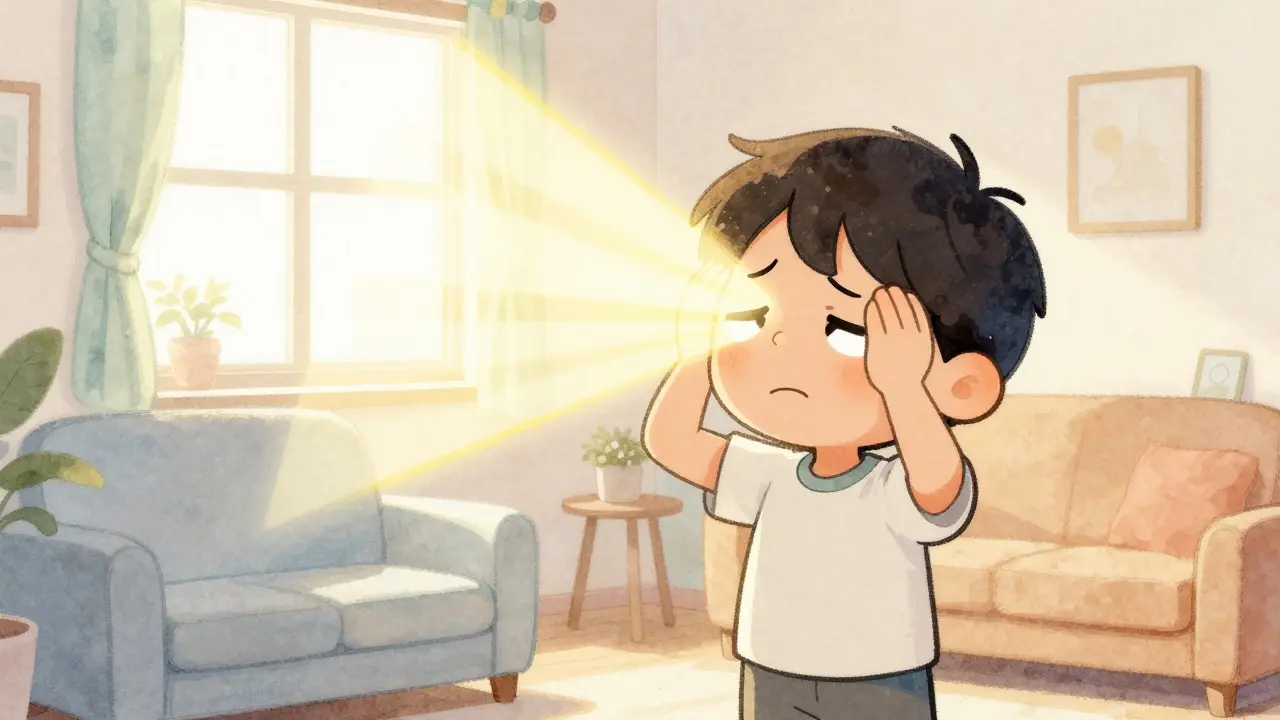
Imagine stepping outside on a sunny afternoon or turning on the kitchen lights, only to feel a sharp, stabbing pain behind your eyes. Or perhaps you look at streetlights at night and see ugly, glowing rings that make driving terrifying. If this sounds familiar, you might not just be dealing with an eye problem-you could be reacting to a medication.
We often think of pills as curing our ailments, but many common drugs carry hidden visual side effects. Two of the most distressing are photophobia (extreme light sensitivity) and seeing halos around lights. These aren't just minor annoyances; they can impact your ability to work, drive, and enjoy daily life. The good news? Understanding which medications cause these issues and knowing how to protect your eyes can make a massive difference in your quality of life.
Why Do Medications Affect Your Eyes?
Your eyes are incredibly sensitive organs, and many drugs interact with them in surprising ways. When you take certain medications, they don’t just stay in your bloodstream. They can accumulate in the cornea, lens, or retina-the parts of your eye responsible for focusing light and processing images.
For instance, some drugs alter the way your brain processes sensory input. Research from Rexon-Eye explains that medications can trigger "thalamic hyperactivity." This means the part of your brain that handles sensory signals becomes overactive, making normal light levels feel painfully bright. Other drugs, like certain antibiotics or heart medications, physically change the structure of the eye’s surface or internal tissues, leading to blurred vision or those annoying halos.
It’s also worth noting that the condition you’re treating might be contributing to the problem. Migraines, for example, already cause light sensitivity. Taking NSAIDs like ibuprofen to treat the pain can sometimes worsen this sensitivity in about 1% of users, creating a frustrating cycle.
Common Medications That Cause Visual Disturbances
Not all drugs affect vision equally, but several categories are notorious for causing halos and light sensitivity. Here is a breakdown of the most common culprits based on clinical data and patient reports.
| Medication Class | Specific Drugs | Primary Visual Side Effect | Risk Level / Notes |
|---|---|---|---|
| Antiarrhythmics | Amiodarone | Green-yellow halos around lights | Affects 1-10% of patients; often reversible after stopping. |
| Antimalarials | Hydroxychloroquine (Plaquenil) | Retinal damage, light sensitivity | High risk after 5+ years; requires annual monitoring. |
| NSAIDs | Ibuprofen, Naproxen | Painful light sensitivity | ~1% incidence; often underreported. |
| Antiseizure Meds | Phenytoin (Dilantin) | Photophobia, nystagmus | Common side effect; may require dosage adjustment. |
| ED Medications | Sildenafil (Viagra) | Blue-tinted vision, light sensitivity | Temporary; usually resolves within 24 hours. |
| Beta-Blockers | Propranolol | Halos, blurred vision | Can indicate dry eyes or other ocular changes. |
Hydroxychloroquine deserves special attention. Used for lupus and rheumatoid arthritis, it accumulates in the retinal pigment epithelium. According to the American Academy of Ophthalmology, toxicity risk jumps significantly after five years of use. The scary part? Early retinal damage is often asymptomatic. You might not notice anything wrong until significant, irreversible damage has occurred.
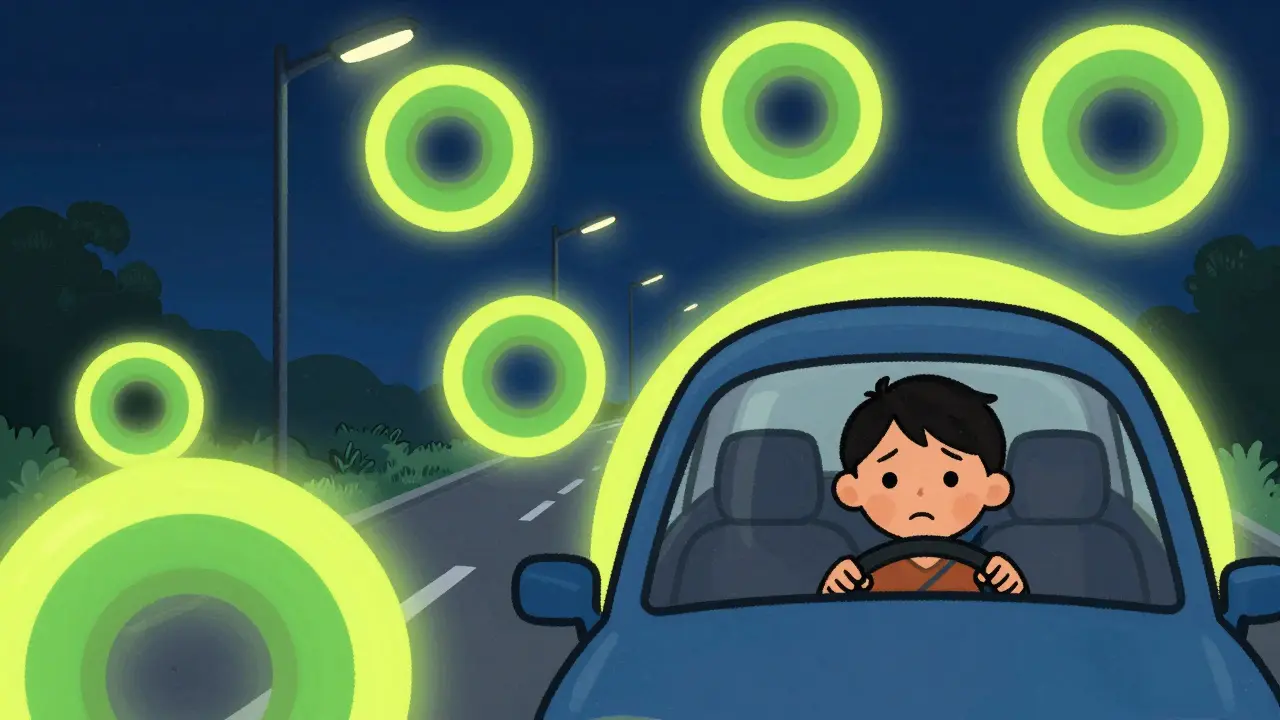
Similarly, Amiodarone, used for heart rhythm disorders, is famous for causing greenish halos around lights. Patients report that night driving becomes impossible because streetlights appear surrounded by large, distracting rings. While this is often reversible if caught early, ignoring it can lead to permanent deposits in the cornea.
The Danger Zone: When to Seek Immediate Help
Most medication-induced light sensitivity is manageable, but some symptoms signal a medical emergency. You need to know the difference between "uncomfortable" and "dangerous."
If you experience sudden onset of severe light sensitivity accompanied by eye pain, nausea, or blurred vision, stop what you are doing and call an ophthalmologist immediately. These could be signs of acute angle-closure glaucoma, a condition where fluid pressure builds up rapidly in the eye. Certain medications, particularly antidepressants and antihistamines, can trigger this in susceptible individuals. Without treatment within 24-48 hours, you could lose permanent vision.
Another red flag is changes in color perception. If the world suddenly looks yellowish or bluish, or if you notice blind spots in your peripheral vision, do not wait for your next scheduled appointment. Contact your doctor right away. For patients taking ethambutol for tuberculosis, monthly vision testing is mandatory because optic nerve damage can occur quickly at higher doses.
Practical Eye Safety Tips for Daily Life
If you are living with medication-induced photophobia or halos, you don’t have to suffer in silence. There are practical, evidence-based strategies to reduce discomfort and protect your eyes.
- Wear Specialized Tinted Glasses: Regular sunglasses help, but they aren’t enough. Look for lenses with FL-41 tint, which is a specific rose-colored filter proven to reduce light sensitivity by 40-60% in clinical studies. Brands like TheraSpecs specialize in these filters. They block the specific wavelengths of light that trigger pain pathways in the brain.
- Adjust Your Home Lighting: Harsh white LED bulbs can be torture for sensitive eyes. Switch to warm-white LEDs with a color temperature of 2700K-3000K. Keep brightness dimmers set between 50-70%. Avoid overhead lighting when possible; use lamps with shades to direct light downward and reduce glare.
- Follow the 20-20-20 Rule: Every 20 minutes, look at something 20 feet away for 20 seconds. In a dimly lit room, this helps reset your pupils and reduces strain. The Cleveland Clinic notes that 73% of patients report reduced discomfort within a week of consistently applying this rule.
- Protect Against UV Radiation: Some chemotherapy drugs, like vemurafenib, make your skin and eyes extremely sensitive to UV light. Wear wraparound sunglasses that block 100% of UVA and UVB rays whenever you are outdoors, even on cloudy days. A wide-brimmed hat adds extra protection.
- Use Artificial Tears: Dry eyes worsen light sensitivity. Many medications, including antihistamines and antidepressants, reduce tear production. Using preservative-free artificial tears regularly can keep the ocular surface smooth and less reactive to light.

Monitoring and Prevention: Don’t Skip the Exam
The single most important thing you can do is get regular eye exams. But "regular" depends entirely on your medication.
If you are taking hydroxychloroquine, tamoxifen, or ethambutol, you need a baseline exam before starting treatment. After that, annual exams are non-negotiable. These exams include specialized tests like spectral-domain OCT (optical coherence tomography) and visual field testing, which can detect damage long before you see it yourself.
Data from JAMA Ophthalmology shows that strict adherence to these monitoring guidelines reduces severe retinal toxicity from 7.3% to just 1.2% over five years. That is a huge drop in risk for simply keeping appointments.
Be proactive with your healthcare team. Tell your optometrist exactly which medications you are taking, including dosages. Ask specifically about drug-induced ocular side effects. If your current medication is causing unbearable light sensitivity, ask your prescribing doctor if there are alternatives. Sometimes, switching from one beta-blocker to another, or adjusting the timing of your dose, can alleviate symptoms without compromising your primary health treatment.
Navigating Work and Social Life
Living with light sensitivity can feel isolating. You might avoid going out with friends because movie theaters or restaurants are too bright. You might struggle to focus on computer screens at work. It’s okay to make adjustments.
In the workplace, request ergonomic assessments. Anti-glare screen filters for your monitor can make a big difference. If natural light floods your desk, ask if you can move your workstation or install blinds. Under laws like the ADA in the US or the Equality Act in the UK, employers are often required to provide reasonable accommodations for medical conditions, including visual sensitivities caused by necessary medications.
Socially, communicate your needs clearly. Instead of saying "I’m tired," say "My eyes are sensitive right now due to my medication." Most people will understand and choose dimmer venues or shorter outings. Wearing stylish FL-41 glasses indoors can also serve as a visual cue to others that you are managing a medical issue, reducing the need for constant explanations.
Are halos around lights always caused by medication?
No. While medications like amiodarone and beta-blockers are common causes, halos can also result from cataracts, corneal edema, or glaucoma. If you are not taking known offending drugs, or if the halos appear suddenly without new medication, see an eye doctor immediately to rule out serious eye conditions.
Will light sensitivity go away if I stop the medication?
In many cases, yes. For drugs like sildenafil or short-term NSAIDs, symptoms usually resolve within hours to days. However, for medications like hydroxychloroquine or chlorpromazine, damage can be permanent if detected late. Never stop prescribed medication without consulting your doctor, as the underlying condition may be more dangerous than the side effect.
What are FL-41 glasses, and do they really work?
FL-41 is a specific rose-colored tint that blocks blue-green light wavelengths, which are most likely to trigger photophobia. Clinical studies show they reduce light sensitivity by 40-60% for migraine sufferers and those with medication-induced photophobia. They are available through specialized optical providers and are distinct from standard sunglasses.
How often should I get eye exams if I take hydroxychloroquine?
You should have a baseline exam before starting the drug. If you have been on it for less than five years and have no risk factors, annual exams are recommended. If you have been on it for more than five years, or if you have high-dose regimens or kidney disease, you need annual screenings including spectral-domain OCT and visual fields to detect early retinal toxicity.
Can over-the-counter painkillers cause permanent eye damage?
Generally, no. NSAIDs like ibuprofen and naproxen can cause temporary light sensitivity in about 1% of users, but this is rarely permanent. However, chronic, heavy use of any medication can have cumulative effects. If you notice persistent visual changes after using OTC painkillers, consult an eye care professional to rule out other causes.