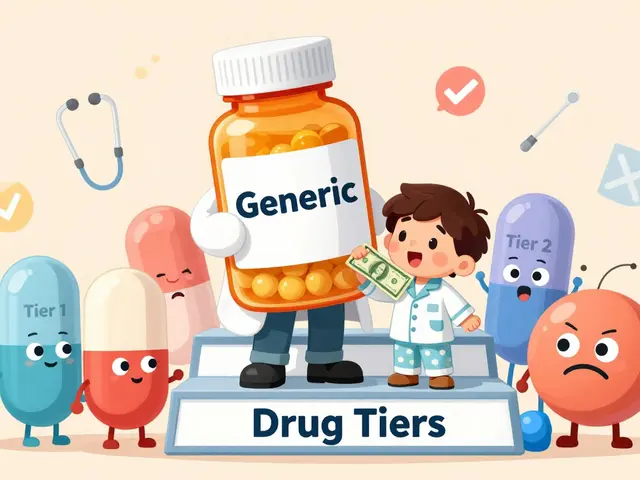
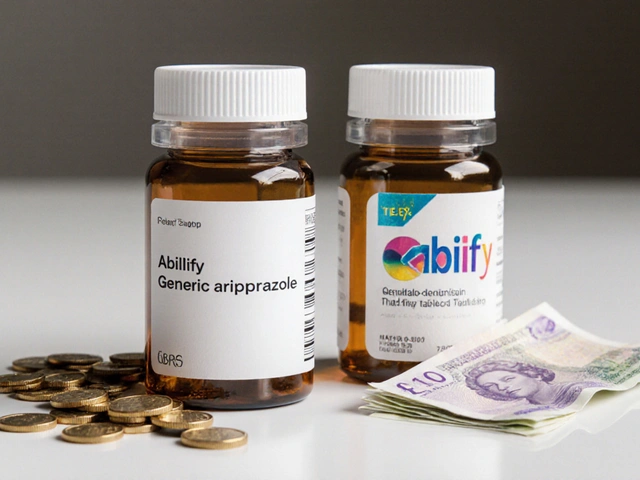


To make an informed choice, you need to understand that Generic Medications is a pharmaceutical equivalent of a brand-name drug that becomes available after the original patent expires. They aren't "knock-offs"; they are regulated versions of the same medicine designed to work exactly the same way in your body.
The Science of "Same"
When a company wants to release a generic drug, they can't just guess the formula. They have to go through the Abbreviated New Drug Application (ANDA) process. This is a rigorous pathway where the manufacturer proves to the FDA (Food and Drug Administration) that their version is bioequivalent to the original.
What does "bioequivalent" actually mean? It means the drug delivers the same amount of active ingredient into your bloodstream within the same timeframe as the brand name. While the FDA allows a small window of variance, real-world data shows that the actual difference in performance is usually around 3.5%. For most of us, that's a negligible difference. In fact, a meta-analysis in JAMA Internal Medicine found that generics performed identically to brand names in 98.5% of cases across cardiovascular and metabolic medications.
You might notice that your generic pill is blue while the brand is white, or that it's a capsule instead of a tablet. That's because while the active ingredient must be identical, the generic vs brand medications choice often involves different inactive ingredients, like fillers, binders, or dyes. These are called excipients. For 99% of patients, these don't matter, but if you have a known allergy to a specific dye or filler, that's when you should talk to your doctor about sticking with a specific brand.
Why the Price Gap is So Huge
It feels suspicious when one pill costs $400 and another costs $4, but it's not because the cheap one is lower quality. The high cost of brand-name drugs covers the massive expense of initial research, clinical trials, and marketing. The company that discovers a new drug gets a patent, giving them a monopoly for about 20 years to recoup their investment.
Once that patent expires, other companies can enter the market. Since they didn't have to spend billions on the original research, they can sell the drug for a fraction of the cost. This competition is why generics now make up about 90% of all prescriptions in the U.S. The savings are staggering-some reports suggest the U.S. healthcare system saved $1.67 trillion over a decade thanks to these alternatives.
| Medication (Active Ingredient) | Brand Name Cost (Est.) | Generic Cost (Est.) | Potential Savings |
|---|---|---|---|
| Sertraline | $400 (30-day supply) | $4 (30-day supply) | ~99% |
| Atorvastatin | $4.50 per tablet | $0.10 per tablet | ~97% |
| Pregabalin | $650 per month | $15 per month | ~97% |
When the Brand Name Actually Matters
I won't tell you that generics are always the right choice, because in a few specific cases, they aren't. There is a category of drugs called Narrow Therapeutic Index (NTI) drugs. These are medications where a tiny change in the dose or how the body absorbs the drug can lead to a huge difference in effect-either the drug stops working or it becomes toxic.
Common NTI drugs include Levothyroxine (for thyroid issues) and Warfarin (a blood thinner). If you are taking these, switching between different generic manufacturers can actually be risky because each company's version might vary slightly. Many doctors prefer you stay on one specific brand-generic or name-brand-and never switch.
Another area to be cautious is complex delivery systems. Think of inhalers or auto-injectors. While the medicine inside might be the same, the way the device delivers that medicine can differ. For example, some patients switching from brand-name Advair to a generic version found it less effective simply because they weren't used to the different inhaler technique. If your medication comes in a complex device, ask your pharmacist for a demonstration of the generic version before you commit.

Navigating the Switch
If you're thinking about switching to a generic to save money, there are a few practical steps to ensure a smooth transition. Most states allow "automatic substitution," meaning the pharmacy will give you the generic unless your doctor explicitly wrote "Dispense as Written" on the prescription.
- Check the Rating: The FDA uses the "Orange Book" to rate generics. Look for an "AB" rating, which means the generic is therapeutically equivalent and can be substituted.
- Stay Consistent: If you find a generic that works well, ask your pharmacist to keep you with that specific manufacturer. This prevents the "batch variability" that can happen when a pharmacy switches suppliers.
- Watch for Side Effects: Since generics can have different inactive ingredients, keep an eye out for new rashes or stomach upsets. It's rare, but it's usually an allergy to a filler, not the medicine itself.
- Use Comparison Tools: Use tools like GoodRx to see the price difference. Sometimes the cost gap is so large that it makes the decision for you.
Remember, the biggest risk of choosing a brand-name drug isn't necessarily the quality-it's the cost. When medications are too expensive, people start skipping doses. Data shows that 29% of patients on brand-only medications struggle with adherence, compared to only 14% for those using generics. A cheaper drug you actually take is infinitely more effective than an expensive drug that stays in the bottle.
Are generic drugs less potent than brand names?
No. By law, generic drugs must contain the same active ingredient and be bioequivalent to the brand-name version. This means they must reach the same concentration in your blood and work in the same amount of time. The FDA strictly enforces these standards to ensure that the clinical outcome is the same.
Why does my generic medication look different?
Generic manufacturers cannot copy the exact look, shape, or color of a brand-name drug due to trademark laws. They use different inactive ingredients (excipients) such as binders and dyes, which changes the appearance but not the medicinal effect.
Can I switch from a brand to a generic at any time?
In most cases, yes. However, for Narrow Therapeutic Index (NTI) drugs like levothyroxine or certain anti-epileptics, you should consult your doctor first. Switching these specific medications can cause fluctuations in your levels that require medical monitoring.
What is a "branded generic"?
A branded generic is a generic drug that is marketed under a specific brand name rather than just its chemical name. These often try to bridge the gap by offering some of the trust of a brand with a price point that is lower than the original innovator drug.
Do generic drugs have the same side effects?
Generally, yes, because the active ingredient is the same. However, because the inactive ingredients (fillers and dyes) differ, a very small number of people may experience a different reaction or an allergic response to the generic version's specific additives.
Next Steps for Patients
If you are currently on a brand-name medication and want to save money, start by asking your pharmacist: "Is there an AB-rated generic available for this?" If the answer is yes, ask your doctor if your specific condition allows for a generic switch. For those on maintenance meds for chronic conditions, consider requesting a 90-day supply of the generic to further lower costs and improve your adherence. If you feel a difference in how a generic is working compared to a brand, document the specific manufacturer listed on the bottle and share that with your provider to find a better match.
9 Comments
The distinction regarding Narrow Therapeutic Index (NTI) drugs is absolutely critical here. Most people ignore the pharmacokinetics of absorption rates, but for drugs like levothyroxine, even a slight deviation in bioavailability can trigger a systemic imbalance. It's not just about the active pharmaceutical ingredient (API) being identical; it's about the excipient profile and the dissolution rate in the gut. If you're managing a condition that requires precise titration, switching generic manufacturers can lead to significant clinical instability. Always check if your specific medication is classified as NTI before making a cost-saving switch. 💊
honestly i just go for whatever is cheapest. as long as it works i don't really care if it's a blue pill or a white pill lol.
It is interesting to think about how we value health. The price gap mentioned isn't just a financial number, it's a reflection of how our society structures innovation and accessibility. We often mistake price for quality because we are conditioned to believe that the 'premium' option is safer, but in reality, the shared science is what truly matters. It's a good reminder to look past the branding and trust the evidence. Everyone deserves access to medicine regardless of their bank account. ✨
Totally agree with the point about adherence. If the brand name is so expensive you can't afford to refill it, it's basically useless. Just keep it simple and go generic if your doc says it's cool. Keep crushing it everyone!
The FDA's ANDA process ensures rigorous quality standards. Generic alternatives are a prudent choice for most patients.
Oh my goodness, I cannot even begin to express how liberating it is to finally understand the logic behind these pricing schemes! I remember the absolute sheer terror I felt the first time my pharmacist suggested a generic switch, wondering if I was compromising my very existence just to save a few dollars, but seeing the data on bioequivalence is simply transformative! It is an absolute travesty that we are led to believe that only the most expensive options are the most effective, and I am just so profoundly thrilled that there is clear, evidence-based guidance available for all of us to navigate this treacherous landscape of healthcare costs. Truly, this is a beacon of hope for anyone struggling to balance their wellness with their budget! 🌟🌈✨
Omg yes!! Saving money is the best feeling ever! 💸 I switched my meds last year and my wallet is literally singing! 🎶 Just make sure you stay safe and check those labels! ❤️✨
I don't trust any of this. Why is it that we are always told to take the cheap stuff now? It's probably because some corporation wants to push a specific agenda. My country's healthcare is already a mess and now we're just supposed to trust a 'bioequivalent' pill? Give me a break. I'll stick to what I know is high quality regardless of the cost because I'm not risking my life for a few bucks.
Wait, that part about the inhalers is a total game changer! I had a nightmare of a time switching my asthma meds because the device felt totally different and I felt like I wasn't even getting the medicine. It's a wild ride when you realize the plastic shell matters as much as the drug inside. Definitely a huge heads-up for anyone else dealing with delivery systems!