




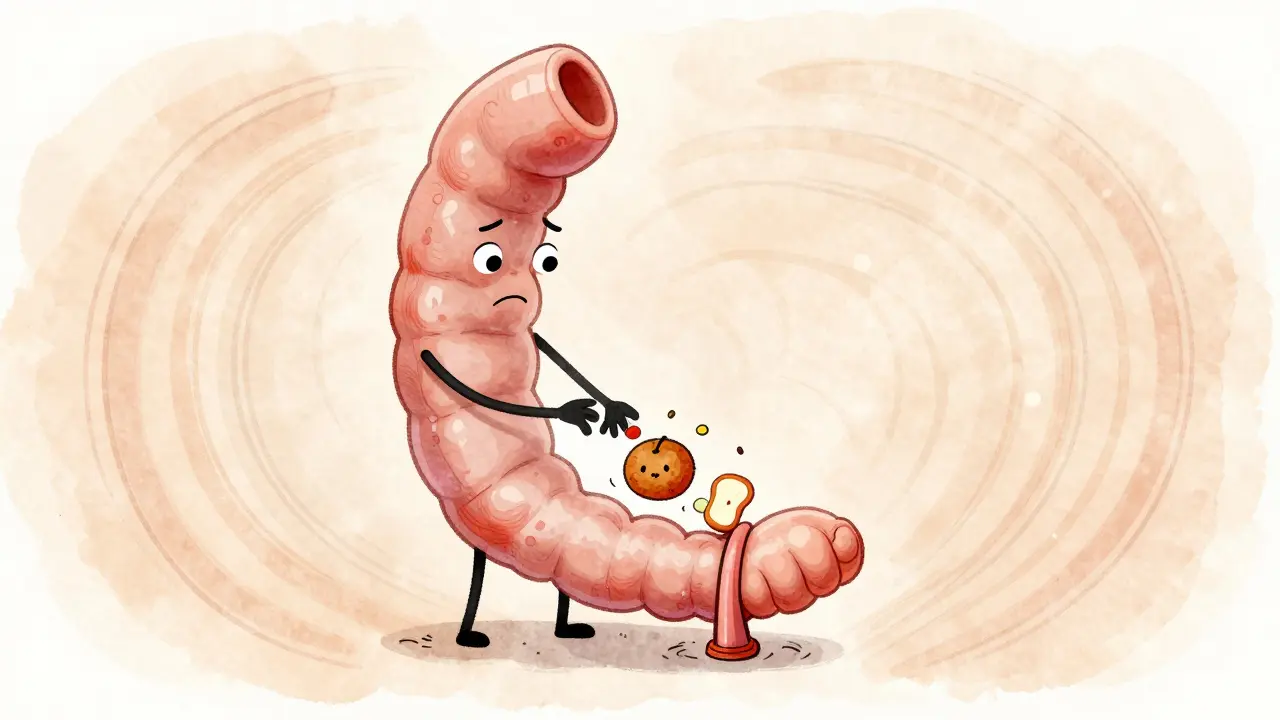
Have you ever felt like food is getting stuck in your chest? It’s a terrifying sensation that many people dismiss as heartburn or anxiety. But if swallowing feels difficult for both solids and liquids, the problem might not be in your stomach-it could be in the way your esophagus moves. These are called esophageal motility disorders, which are conditions where the muscles of the esophagus fail to coordinate properly to push food down to the stomach.
The hallmark symptom is dysphagia, or difficulty swallowing. For years, doctors often misdiagnosed these patients with acid reflux (GERD). Taking antacids didn’t help because the issue wasn’t acid; it was mechanics. Today, we have precise tools to see exactly what’s going wrong inside the tube connecting your throat to your stomach. The key lies in understanding how these muscles work and using a test called manometry to measure their performance.
What Is an Esophageal Motility Disorder?
Your esophagus isn’t just a passive pipe. It’s a muscular tube that uses coordinated waves of contraction, known as peristalsis, to move food downward. At the bottom of this tube sits a ring of muscle called the lower esophageal sphincter (LES). This valve stays tight to keep stomach acid from rising up and relaxes briefly to let food pass through.
In a healthy system, when you swallow, the LES opens, and a wave of pressure pushes the food bolus down. In motility disorders, this choreography breaks down. The muscles might squeeze too hard, too weakly, or at the wrong time. The LES might refuse to open, trapping food above it. Or the contractions might be chaotic, causing pain rather than movement.
These disorders fall into two main buckets:
- Primary Disorders: Problems intrinsic to the esophagus itself, such as achalasia or diffuse esophageal spasm.
- Secondary Disorders: Issues caused by other systemic diseases, like scleroderma (systemic sclerosis), which affects about 80% of patients with that condition by causing fibrosis and muscle atrophy.
Understanding the difference matters because treating secondary symptoms without addressing the root cause-like giving acid reducers for a mechanical blockage-won’t fix the problem.
The Gold Standard: High-Resolution Manometry
If you suspect a motility issue, standard tests like X-rays or endoscopies often come back "normal." They show the structure looks fine, but they can’t tell you how the muscles are functioning. That’s where high-resolution manometry (HRM) comes in.
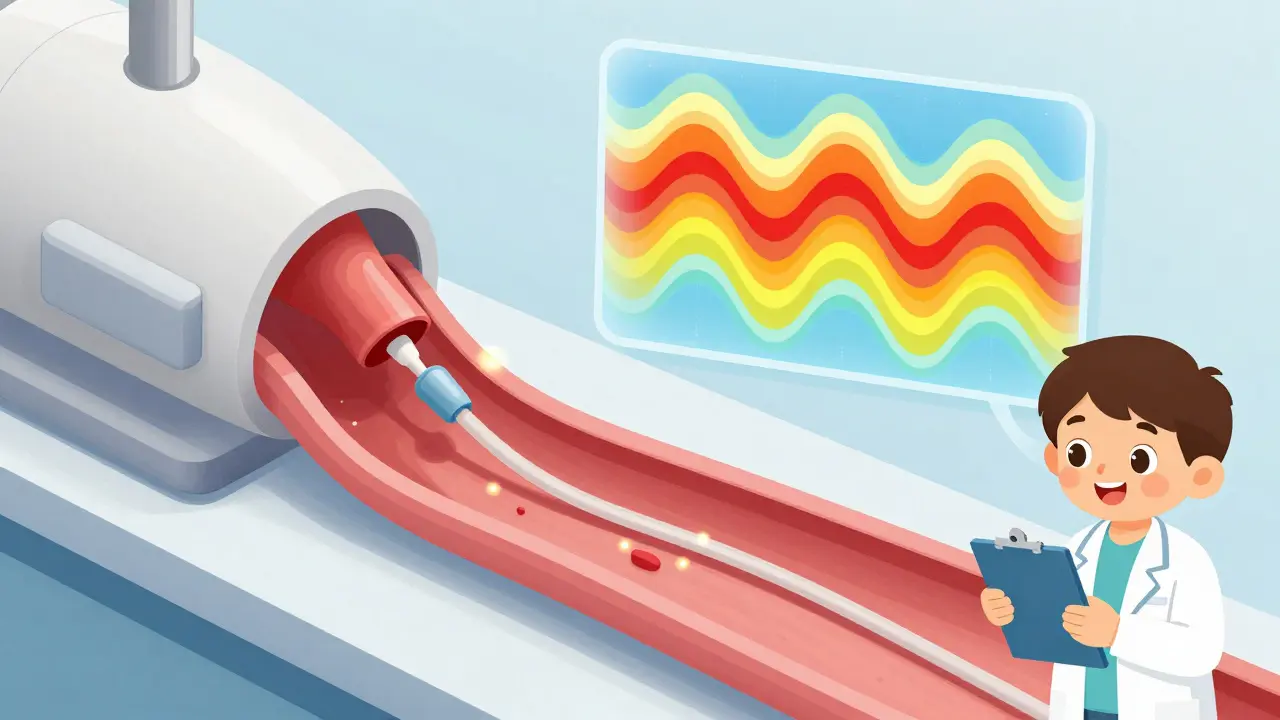
Think of HRM as a video camera for muscle pressure. A thin catheter with 36 pressure sensors spaced every centimeter is passed through your nose into your esophagus. As you swallow water, the device records a color-coded topographic map of pressure changes along the entire length of the esophagus.
This technology revolutionized diagnosis. Before HRM, doctors used low-resolution tubes that missed subtle patterns. Now, we can see exactly where a contraction starts, how strong it is, and whether the LES relaxes completely. According to data from Northwestern University, the shift to HRM improved diagnostic agreement among doctors from moderate (kappa 0.45) to excellent (kappa 0.85).
During the test, you’ll likely undergo a Multiple Rapid Swallows (MRS) protocol. You’ll take several sips of water in quick succession. This stress test reveals how the esophagus handles volume. In a healthy person, the LES inhibits its closure during rapid swallows to allow flow. In disorders like achalasia, the LES stays shut, and the esophagus fails to contract, confirming the diagnosis.
The Chicago Classification: Decoding the Results
Raw manometry data is complex. To make sense of it, gastroenterologists use the Chicago Classification. First published in 2008 and currently on version 4.0 (released in 2023), this system provides standardized criteria for diagnosing specific disorders based on manometric metrics.
The v4.0 update, led by experts like Dr. John E. Pandolfino, introduced clearer distinctions between major disorders requiring treatment and minor variants that might be normal. Here are the most common diagnoses you might encounter:
| Disorder | Key Feature | Manometric Criteria |
|---|---|---|
| Achalasia | Failed LES relaxation + no peristalsis | Elevated Integrated Relaxation Pressure (IRP); Distal Latency absent |
| Diffuse Esophageal Spasm (DES) | Uncoordinated, premature contractions | ≥20% of swallows have premature contractions (Distal Latency <4.5s) |
| Jackhammer Esophagus | Hypercontractile (too strong) | Distal Contractile Integral (DCI) >5,000 mmHg•s•cm |
| Nutcracker Esophagus | High amplitude contractions | Pressures exceeding 180 mmHg (historical term, now often grouped under hypercontractility) |
| EGJ Outflow Obstruction (EGJOO) | LES doesn't open fully, but peristalsis exists | Elevated IRP with preserved peristalsis |
Achalasia is the most well-known primary disorder. It occurs in about 1 in 100,000 people annually. In achalasia, the nerves that tell the LES to relax die off. Food piles up in the esophagus, causing regurgitation and weight loss. The Chicago Classification splits achalasia into three types:
- Type I (Classic): No peristalsis, no pressurization (20% of cases).
- Type II: Pan-esophageal pressurization when swallowing (70% of cases). This type responds best to treatment.
- Type III: Spastic contractions (10% of cases).
Symptoms Beyond Difficulty Swallowing
Dysphagia is the obvious sign, but it’s not the only one. Many patients report chest pain that mimics a heart attack. In fact, 40-50% of people with spastic disorders like DES experience severe chest pain. This leads to unnecessary ER visits and cardiac workups before the true cause is found.
Other red flags include:
- Regurgitation: Undigested food coming back up, especially hours after eating.
- Weight Loss: Due to fear of eating or inability to swallow effectively. Achalasia patients often lose 15-20 pounds.
- Coughing or Choking: Especially at night, due to aspiration of pooled food.
If you’ve been told you have GERD but proton pump inhibitors (PPIs) don’t help, ask your doctor about motility testing. Misdiagnosis is common; one survey found that 68% of patients waited 2-5 years for an accurate diagnosis.
Treatment Options: Fixing the Mechanics
Once diagnosed, treatment focuses on restoring the flow of food. There is no pill that fixes the nerve damage in achalasia, so interventions are usually procedural.
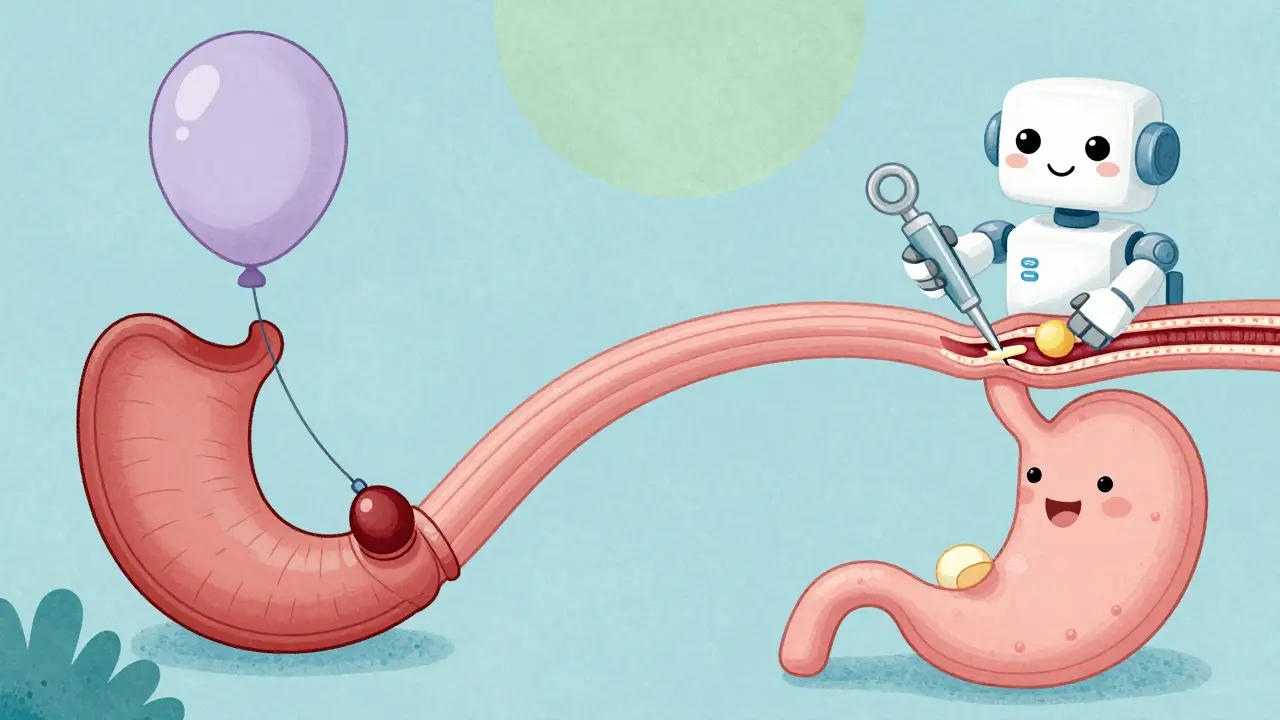
- Pneumatic Dilation: A balloon is inserted via endoscopy and inflated to stretch and tear the tight LES. It has a 70-80% initial success rate but often requires repeat sessions within five years.
- Laparoscopic Heller Myotomy (LHM): Surgery to cut the LES muscles. Combined with a partial fundoplication to prevent reflux, it offers 85-90% symptom improvement at five years.
- Peroral Endoscopic Myotomy (POEM): An all-endoscopic procedure where the doctor cuts the muscle from the inside. POEM is highly effective, especially for Type III achalasia, but carries a higher risk of post-procedure reflux (44% vs. 29% with LHM).
For spastic disorders like Jackhammer esophagus, treatments may include botulinum toxin injections, calcium channel blockers, or even myotomy in severe cases. The goal is to reduce the excessive force of contractions.
Future Directions and Technology
The field is evolving rapidly. New technologies like impedance planimetry (EndoFLIP) measure the cross-sectional area of the esophagus in real-time, offering complementary data to manometry. Wireless capsules (SmartPill) allow for ambulatory monitoring over 24-48 hours, capturing events that happen outside the clinic.
Artificial Intelligence is also entering the room. Preliminary studies suggest AI algorithms can identify achalasia patterns with 92% accuracy, potentially reducing interpretation errors. As awareness grows, more centers are adopting HRM, making earlier and more accurate diagnoses possible for those struggling with unexplained swallowing difficulties.
Is esophageal manometry painful?
Most patients describe the procedure as uncomfortable rather than painful. The catheter passes through the nose, which can cause gagging or nasal irritation. However, the test takes less than 30 minutes, and numbing sprays are used. About 35% of patients report significant discomfort, but satisfaction rates rise to 78% when patients receive thorough pre-procedure education.
What is the difference between HRM and barium swallow?
A barium swallow uses X-rays to visualize the shape and movement of contrast dye. It’s good for spotting structural blocksages like strictures or rings. High-resolution manometry (HRM) measures pressure, not shape. HRM is far more sensitive for functional disorders like achalasia, with a 96% sensitivity rate compared to 78% for barium swallow.
Can lifestyle changes cure esophageal motility disorders?
No, lifestyle changes cannot cure the underlying neuromuscular defect. However, dietary modifications can manage symptoms. Eating smaller meals, chewing thoroughly, avoiding very hot or cold foods, and staying upright after eating can reduce regurgitation and discomfort. These measures do not replace medical intervention for conditions like achalasia.
What does "elevated IRP" mean in my manometry report?
Integrated Relaxation Pressure (IRP) measures how well the lower esophageal sphincter (LES) relaxes during swallowing. An elevated IRP indicates that the LES is not opening fully. This is a key criterion for diagnosing achalasia and EGJ outflow obstruction (EGJOO). Normal IRP values vary by measurement method but generally should be below 15 mmHg.
How long does it take to recover from POEM surgery?
Recovery from Peroral Endoscopic Myotomy (POEM) is typically faster than traditional surgery. Most patients stay in the hospital for 1-2 days and resume a soft diet within a week. Full recovery to a regular diet may take 2-4 weeks. Long-term management often includes acid suppression therapy to prevent reflux esophagitis, which occurs in nearly half of POEM patients.
11 Comments
So you’re telling me I’ve been drinking lukewarm water for years because my esophagus is throwing a tantrum? Typical. The medical industrial complex loves to turn a simple swallow into a $5000 diagnostic odyssey. But hey, at least now I have a fancy name for my misery: Jackhammer Esophagus. Thanks for the update on my life sentence.
It is fundamentally irresponsible to dismiss standard GERD protocols without exhaustive cardiac and structural workups first. While High-Resolution Manometry is indeed the gold standard for motility disorders, as cited in numerous gastroenterological journals, it is imperative that patients do not self-diagnose based on internet articles. The distinction between primary achalasia and secondary causes like scleroderma requires rigorous clinical evaluation by board-certified specialists. Ignoring this hierarchy of diagnostics can lead to severe complications, including aspiration pneumonia. One must adhere to established medical guidelines rather than seeking quick fixes or alternative interpretations of symptoms that are clearly mechanical in nature.
They want you to believe it’s just your muscles failing you :P but have you considered that modern food additives are designed to disrupt the very neural pathways controlling peristalsis? The Chicago Classification is just a way to categorize the damage caused by corporate greed. Big Pharma doesn’t care about your LES relaxation; they care about selling you more PPIs that don’t work. It’s all part of the plan to keep us dependent on procedures like POEM which only create more problems down the line. Wake up people! (y)
i feel like we really need to talk about why you let yourself get to this point honestly it’s about mindset and energy flow through the body you’re blocking your own chi with negative thoughts about swallowing maybe try some breathing exercises instead of rushing to surgery i’m just saying you seem stressed about it and that’s never good for digestion
This article is painfully basic. Any competent gastroenterologist has known about the limitations of barium swallows for decades. The obsession with HRM metrics like DCI >5,000 mmHg•s•cm is tedious and ignores the broader clinical picture. Furthermore, suggesting that lifestyle changes are merely 'management' tools is an understatement; proper dietary discipline should prevent most minor motility issues from escalating. The average reader likely lacks the intellectual capacity to grasp the nuances of the Chicago Classification v4.0 anyway, so simplifying it to 'muscles squeezing too hard' is patronizingly reductive.
omg this is soo helpful!! i was so scared when i felt stuck after eating steak last week but now i know its probably just my esophagus being dramatic lol. thank u for sharing this info!! everyone needs to read this so they dont suffer in silence like i did. ur the best!! keep spreading the love and knowledge!! <3
The data from Northwestern University is fabricated. They are funded by device manufacturers who profit from these invasive tests. Do not trust the kappa values. Real healing comes from rejecting the medical establishment's narrative.
I appreciate how this breaks down the difference between primary and secondary disorders. In many cultures, we often attribute digestive issues to stress or bad luck, but understanding the mechanics helps remove the stigma. It is wonderful to see technology like HRM making diagnoses clearer. This information empowers patients to ask better questions during their appointments. Knowledge truly is power when navigating healthcare systems.
Ah yes, nothing says 'fun weekend' like sticking a catheter up your nose to measure pressure waves. Really looking forward to the 'color-coded topographic map' of my misery. Can’t wait to find out if my esophagus is having a spasm or just being lazy. Truly the highlight of my year.
The paradigm shift towards High-Resolution Manometry represents a significant epistemological advancement in gastroenterology. By leveraging the Chicago Classification v4.0, clinicians can deconstruct the complex phenomenology of dysphagia into quantifiable metrics such as Integrated Relaxation Pressure (IRP) and Distal Contractile Integral (DCI). This granular analysis allows for precise differentiation between achalasia subtypes, thereby optimizing therapeutic interventions like Peroral Endoscopic Myotomy (POEM). We must embrace this technological synergy to transcend traditional diagnostic limitations and achieve holistic patient outcomes through evidence-based motility management.
Oh my goodness!!! 😱😱😱 This is absolutely terrifying!!! 🤢🤢🤢 Who would ever want to put a tube up their nose?!?! 😨😨😨 I mean seriously!!! 😡😡😡 Doctors are just trying to hurt us!!! 💔💔💔 And don't even get me started on the side effects of those surgeries!!! 🚫🚫🚫 You should be ashamed of yourselves for promoting such dangerous procedures!!! 👎👎👎 Stay safe everyone!!! 🙏🙏🙏