
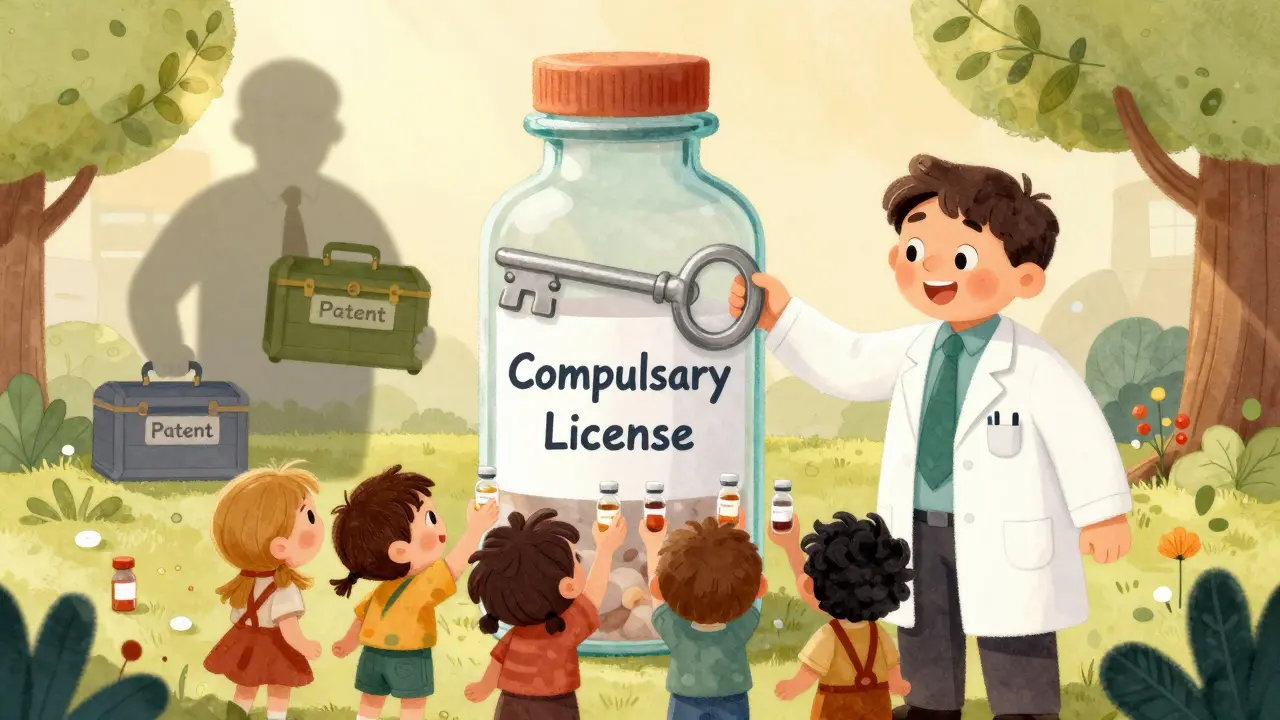
When a life-saving drug costs more than a person’s yearly income, what does the law say? Compulsory licensing is the legal tool that lets governments step in and allow others to make or sell patented medicines - without the company’s permission - if public health is at stake. It’s not about stealing ideas. It’s about making sure people don’t die because a patent blocks access.
How Compulsory Licensing Works
At its core, compulsory licensing is a legal exception to patent rights. Normally, a patent gives its owner exclusive control over who can make, use, or sell an invention for up to 20 years. But under international law, that exclusivity isn’t absolute. The TRIPS Agreement (the 1994 World Trade Organization treaty on trade-related intellectual property rights) allows countries to issue compulsory licenses when there’s a public health emergency, national crisis, or when the patent holder isn’t making the product available at a reasonable price.
The rules aren’t free-for-all. Governments must typically offer to negotiate a voluntary license first. But if there’s an emergency - like a pandemic, a sudden disease outbreak, or a drug shortage - that step can be skipped. The patent owner still gets paid. The law calls it "adequate remuneration," which usually means a royalty based on what the market would pay if the deal were voluntary.
And here’s the catch: the license is mostly for domestic use. The WTO (World Trade Organization) used to block countries from exporting medicines made under compulsory license. But in 2005, a special amendment allowed it - so countries without drug factories could import them. Only one country, Canada, has ever used that export rule - to send HIV drugs to Rwanda in 2012.
Where It’s Used - And Who Uses It
Most compulsory licenses are for medicines. Between 2000 and 2020, 95% of all notifications to the WTO were for pharmaceuticals. The biggest users? India, Brazil, Thailand, and South Africa.
India issued its first compulsory license in 2012 for Nexavar, a kidney and liver cancer drug made by Bayer. The price dropped from $5,500 per month to just $175. That’s not charity - it’s the law. Natco Pharma, an Indian generic manufacturer, proved Bayer wasn’t making enough of the drug available at an affordable price. The patent office agreed and granted the license.
Thailand did something similar in 2006 for HIV drugs. They issued licenses for lopinavir/ritonavir and efavirenz. Prices fell by 65% to 90%. Abbott and Bristol-Myers Squibb didn’t like it - but the government didn’t back down. People got treatment. Lives were saved.
Brazil’s case with Merck’s efavirenz in 2007 was a turning point. The drug cost $1.55 per tablet. After the compulsory license, generic versions sold for $0.48. Brazil didn’t just save money - it kept its public health program running.
Compare that to the United States. Since 1945, the U.S. government has issued only 10 compulsory licenses - all under a law called 28 U.S.C. § 1498 (a provision allowing federal use of patents with compensation). These were mostly for military tech or government projects. Not one for a life-saving drug. Even when the COVID-19 pandemic hit, the U.S. didn’t issue a single compulsory license for vaccines or treatments.
How Different Countries Handle It
There’s no one-size-fits-all approach. Each country has its own rules, even within the same international framework.
- Germany has the legal right to issue compulsory licenses for public interest or national defense - but has never done so.
- France allows it for public health or defense, and used it during the pandemic to secure access to diagnostic tools.
- Spain passed emergency legislation in 2020 to bypass negotiations entirely for coronavirus-related tech.
- Canada updated its patent law in 2020 to make it easier to issue licenses during public health emergencies, and used it to import generic HIV drugs.
- India requires applicants to prove they tried to get a voluntary license first - unless it’s an emergency. The process takes 18-24 months through the Intellectual Property Appellate Board.
Even within the EU, the rules vary wildly. Some countries have the law on the books but never use it. Others act fast when needed.
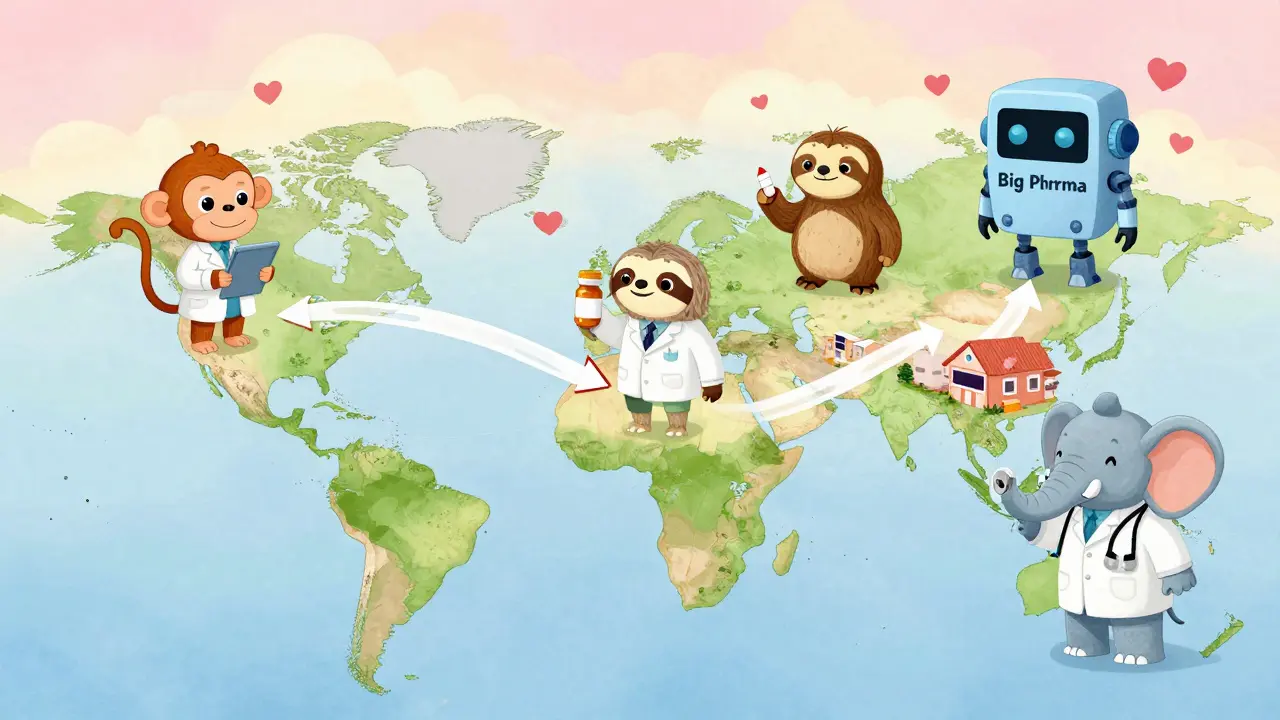
The Big Trade-Off: Innovation vs. Access
Pharmaceutical companies argue that compulsory licensing kills innovation. They say if governments can just override patents, why invest billions in new drugs? A 2018 study in the Journal of Health Economics found countries with active compulsory licensing programs saw 15-20% less R&D investment in pharmaceuticals.
But the counterargument is stronger: the threat of compulsory licensing has forced companies to lower prices voluntarily. Dr. Brook Baker from Northeastern University found that since 2000, 90% of HIV drugs in developing countries got cheaper simply because companies feared a license would be issued. That’s not a failure of the system - it’s a working deterrent.
And the numbers don’t lie. Between 2000 and 2020, compulsory licensing helped cut the price of first-line HIV drugs by 92% in low- and middle-income countries. That’s millions of people getting treatment who otherwise wouldn’t have.
Even the industry admits it. The International Federation of Pharmaceutical Manufacturers & Associations (IFPMA) says each compulsory license announcement causes an 8.2% drop in stock prices for affected companies. That’s not a sign of public overreach - it’s a sign that the market is responding.
What’s Changing Now
The world is moving fast. In June 2022, the WTO agreed to a temporary waiver on COVID-19 vaccine patents - the biggest change to patent rules since TRIPS. It lets developing countries produce vaccines without permission until 2027. But so far, only 12 facilities in 8 countries have actually started making them. Why? Because it’s not just about the law - it’s about know-how, equipment, and supply chains.
The European Union is pushing new rules. Their 2023 Pharmaceutical Strategy proposes forcing patent holders to offer licensing terms within 30 days. If they refuse, the government can skip negotiations and issue a license automatically.
And the WHO is drafting a Pandemic Treaty. One draft article says that during a declared global health emergency, essential health products should get automatic compulsory licenses. No waiting. No negotiations. Just action.
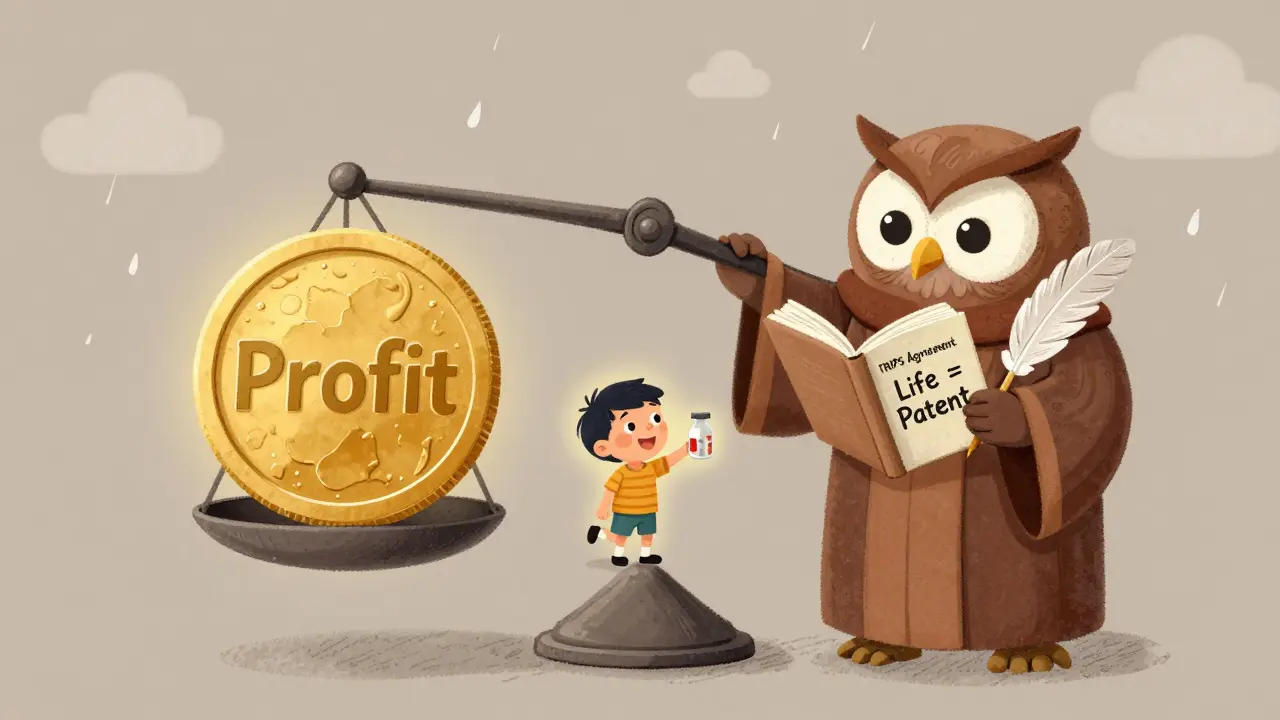
Who Benefits - And Who Pays
Generic drugmakers are the biggest winners. Teva Pharmaceutical made $3.2 billion extra between 2015 and 2020 from medicines produced under compulsory licenses. Hospitals, governments, and patients win too. In South Africa, the price of a tuberculosis drug dropped from $2,000 to $120 per course after a license was issued.
Who pays? The patent holder. They get paid - but not what they wanted. In India, the royalty is often set at 6% of net sales. In the U.S., courts use something called the "Georgia-Pacific factors," which look at 15 different metrics - like what similar licenses have paid in the past, how profitable the invention is, and how much the patent owner has lost.
But here’s the hidden cost: legal battles. Bayer spent eight years fighting India’s Nexavar license. The case went all the way to the Delhi High Court. The company lost. But the delay meant the drug stayed expensive for years.
Why Most Countries Don’t Use It
There are 164 WTO members. Only 12 have ever issued a compulsory license for pharmaceuticals. Why?
- Legal complexity - it takes 12-18 months to learn how to do it right.
- Fear of trade retaliation - the U.S. puts countries on its "Priority Watch List" if they issue licenses.
- Lack of technical capacity - 60% of low-income countries don’t have the lawyers, regulators, or manufacturing know-how to pull it off.
- Political pressure - big pharma lobbies hard against it.
But the trend is shifting. As drug prices keep rising and pandemics keep coming, governments are realizing: patents aren’t sacred. People’s lives are.
What You Need to Know
Compulsory licensing isn’t about breaking the system. It’s about fixing it when it fails. It’s a safety valve - built into international law - to make sure innovation doesn’t become a barrier to survival.
If you live in a wealthy country, you may never need it. But if you’re in a low-income country, waiting for a drug to be affordable, or if your child needs medicine that’s priced out of reach - then this law isn’t theoretical. It’s the difference between life and death.
The future won’t be about abolishing patents. It’ll be about balancing them - with health, justice, and human dignity.
Is compulsory licensing legal under international law?
Yes. The TRIPS Agreement, part of the World Trade Organization rules, explicitly allows countries to issue compulsory licenses for public health emergencies, national emergencies, or when a patent isn’t being made available to the public at a reasonable price. It’s not a loophole - it’s a legal right written into global trade law.
Does compulsory licensing stop companies from innovating?
Studies show mixed results. Some research suggests a 15-20% drop in R&D investment in countries that use it often. But the bigger picture shows that the threat of compulsory licensing has led to voluntary price cuts in 90% of HIV drugs in developing countries since 2000. Companies often lower prices before a license is issued - meaning the tool works as a deterrent, not just a punishment.
Can any company apply for a compulsory license?
No. Only governments can issue them. But private companies - usually generic drug manufacturers - can apply to the government to request one. The government then decides whether to grant it based on legal criteria like public need, failure to supply, or emergency conditions.
What’s the difference between compulsory licensing and voluntary licensing?
Voluntary licensing is when the patent holder agrees to let someone else make the product - usually for a fee. Compulsory licensing is when the government forces the issue because the patent holder won’t cooperate. The key difference? Consent. One is negotiated. The other is mandated.
Why hasn’t the U.S. used compulsory licensing for drugs?
The U.S. has the legal tools - like Section 1498 and Bayh-Dole march-in rights - but has never used them for medicines. Political pressure from pharmaceutical companies, fear of trade sanctions, and a strong belief in patent protection have kept the government from acting. Even during the COVID-19 pandemic, the U.S. relied on voluntary deals and funding, not compulsory licenses.
Can a country export medicines made under a compulsory license?
Yes - but only under strict conditions. The WTO’s 2005 amendment allows countries without manufacturing capacity to import medicines made under compulsory license. However, the process is complex and only one country - Canada - has ever used it, to send HIV drugs to Rwanda in 2012. Most countries still avoid it due to bureaucracy and political risk.
How much do patent holders get paid under compulsory licensing?
It varies by country. India uses a formula of 6% of net sales. The U.S. uses court-based calculations called the Georgia-Pacific factors, which consider 15 elements like comparable licenses and profit margins. In Brazil, the government negotiated a royalty based on the drug’s cost and market value. The goal is "adequate remuneration" - not full profit, but fair compensation.
Is compulsory licensing only for drugs?
No. While 68% of cases involve pharmaceuticals, it’s also been used for agricultural chemicals, environmental technologies, and even assistive devices for the visually impaired. The 2017 Marrakesh Treaty allows compulsory licensing for accessible formats of copyrighted works - and 9 countries have used it since 2022.
11 Comments
Really appreciate this breakdown. I never realized how much of a lifeline compulsory licensing has been for countries without the cash to pay corporate drug prices. It’s not about being anti-patent - it’s about being pro-human.
One must question the foundational premises of this argument. The sanctity of intellectual property is not a mere legal technicality - it is the very cornerstone of modern innovation. To undermine it, even in the name of public health, is to invite systemic collapse in pharmaceutical R&D. One cannot have both universal access and sustainable innovation without a coherent framework of market incentives.
Oh wow, the US never used it? Wow. Shocking. I thought Americans just liked paying $500 for a pill that costs $2 to make. But hey, at least we have the best healthcare system in the world - if you can afford it. 😏
Meanwhile in India, we made Nexavar affordable and didn’t cry to the WTO. We just used the law. The same law the US wrote. Funny how that works.
THIS. 🙌 I had a friend in Kenya whose kid needed HIV meds - $800/month. Then came generics. $15. He’s alive today because of this. Patents don’t save lives. People do. And sometimes, that means saying ‘no’ to Big Pharma.
Let’s be real - if you’re not using compulsory licensing, you’re basically choosing profit over people. And no, ‘but innovation!’ doesn’t cut it. We’ve had 20+ years of this system. Millions died. Now we’re talking about waivers and ‘voluntary’ deals? That’s just corporate PR with a fancy name.
For anyone wondering how this works in practice - in India, the process isn’t just about law. It’s about evidence. You have to prove the patent holder isn’t meeting demand, isn’t pricing reasonably, or isn’t localizing production. It’s not a free pass. It’s a last resort. And honestly? It’s worked better than any lobbying campaign ever has.
It’s interesting how we treat patents as sacred when they’re tied to life-saving drugs, but we don’t treat them the same way with software, music, or even agricultural seeds. There’s a moral hierarchy here we rarely name. Is a patent on a cancer drug more ‘valuable’ than a patent on a smartphone chip? If so, why? Is it because one affects survival and the other affects convenience? And if that’s true - why haven’t we built a legal system that reflects that moral distinction instead of pretending all patents are equal under the law?
This is just socialism with a fancy name. Patents exist for a reason. Stop pretending this isn’t theft.
The TRIPS flexibilities are not a policy tool - they’re a regulatory loophole exploited by rent-seeking states with weak institutional capacity. The 15-20% R&D decline cited is a conservative estimate. You don’t disrupt incentive structures without cascading systemic consequences. The EU’s 30-day licensing mandate? A dangerous precedent that will collapse global innovation architecture. This isn’t public health - it’s wealth redistribution disguised as humanitarianism.
I worked in a clinic in rural Georgia. A woman came in with stage 4 breast cancer. The drug she needed? $12,000 a month. Insurance denied it. She cried and said, ‘I just want to see my granddaughter graduate.’
We didn’t have compulsory licensing here. We had hope. And hope doesn’t pay for medicine.
If the law can fix this - then why aren’t we using it? Not because we’re evil. Because we’re scared. And scared people don’t change things.
You people are so naive. The drug companies will just move R&D overseas. Next thing you know, no new drugs will be developed in the West. And who pays? You do - in higher taxes, worse care, longer waits. This isn’t justice. It’s self-sabotage.