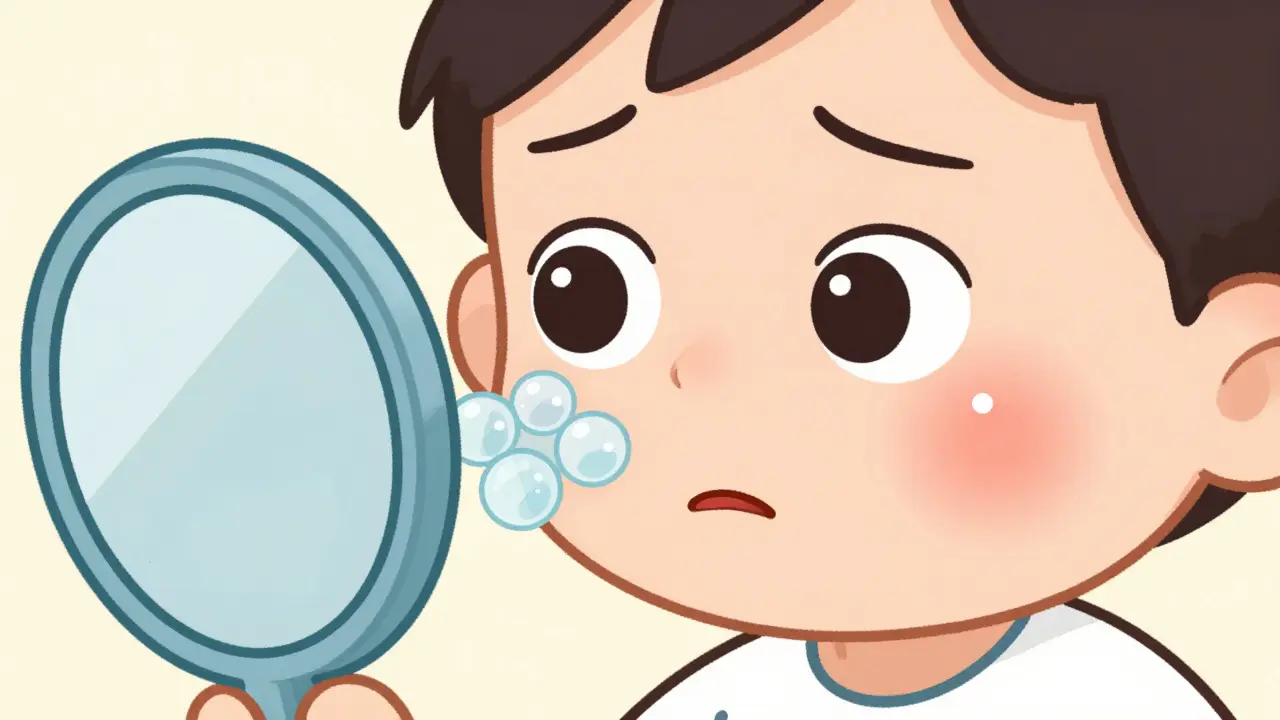
Have you ever noticed a bump on your lip and panicked? Is it just another annoying pimple from that late-night snack, or is it a cold sore waiting to spread? You aren't alone in this confusion. Many people mistake one for the other, leading to treatments that don't work-or worse, make things worse.
Getting this wrong can cost you days of healing time and potentially infect others. Cold sores are viral infections caused by Herpes Simplex Virus type 1 (HSV-1), a virus that affects roughly two-thirds of the global population under age 50. Pimples, on the other hand, are inflammatory lesions caused by clogged pores, bacteria, and excess oil. They look similar at first glance but require completely different approaches. Knowing the difference isn't just about vanity; it's about effective health management.
The Visual Test: What Are You Actually Looking At?
The first step in identifying the culprit is a close visual inspection. While both appear as red bumps, their structure tells a very different story.
Cold sores, medically known as herpes labialis, almost always start as a cluster of tiny, fluid-filled blisters. Think of them like a bunch of grapes rather than a single grape. They typically form along the vermilion border, which is the precise line where your red lip meets the skin of your face. As they progress, these blisters burst, ooze clear fluid that turns cloudy, and eventually form a yellowish crust or scab. The entire cycle usually lasts between 7 and 14 days if left untreated.
In contrast, a Pimple (or acne lesion) is usually a solitary bump. It might have a white or yellow head filled with pus, surrounded by redness and swelling. Pimples can appear anywhere on your face, including directly on the lip surface itself, because lips contain hair follicles too. Unlike the clustered nature of cold sores, pimples stand alone. If you see multiple small blisters grouped tightly together on the edge of your lip, it’s highly likely to be a cold sore. If you see one raised, inflamed spot with a central point, it’s probably a pimple.
| Feature | Cold Sore | Pimple |
|---|---|---|
| Appearance | Cluster of fluid-filled blisters | Single raised bump, often with a whitehead |
| Location | Edge of the lip (vermilion border) | Anywhere on the face, including lip surface |
| Fluid | Clear to cloudy liquid inside blisters | Pus (white/yellow) or sebum |
| Healing Time | 7-14 days (predictable stages) | 3-7 days for minor; weeks for cystic |
The Sensation Check: Tingling vs. Pain
Your body gives you warning signs before either condition fully breaks out, but the sensations are distinct. Paying attention to how the area feels can save you from misdiagnosis.
Cold sores have a notorious "prodrome" phase. This happens 12 to 48 hours before you see any visible blister. During this time, you’ll feel a tingling, burning, itching, or tight sensation on your lip. It’s like a static shock or a mild sunburn localized to one spot. This is your window of opportunity. If you catch it here, you can significantly shorten the outbreak.
Pimples don’t announce themselves with tingling. Instead, they present with localized pain or tenderness when you touch them. There’s no pre-warning itch. You simply wake up, touch your face, and feel a tender lump. If you’re feeling an itch or burn before seeing anything, lean toward cold sore. If it just hurts when pressed, it’s likely a pimple.
Contagion Risk: Can You Spread It?
This is the most critical difference. Misidentifying a cold sore as a pimple can lead to serious social and health consequences.
HSV-1 is highly contagious. During an active outbreak, the virus sheds from the blisters. Direct contact-like kissing, sharing utensils, or even touching the sore and then shaking hands-can transmit the virus to others. Studies suggest transmission occurs in 30-50% of contacts during active outbreaks. Even after the sore heals, the virus remains dormant in your nerve ganglia, ready to reactivate later due to stress, sunlight, or illness.
Pimples are not contagious. They result from internal factors like hormonal changes, diet, hygiene, and bacterial accumulation within your own pores. You cannot "catch" a pimple from someone else, nor can you give one to them. If you pop a pimple, you risk spreading bacteria across your own face, but you won’t infect anyone else. If you pop a cold sore, however, you create open wounds that leak viral fluid, drastically increasing the risk of spreading HSV-1 to yourself (other parts of your body) or others.
Treatment Paths: Why Mixing Them Up Hurts
Using the wrong treatment doesn’t just fail to help; it can actively worsen the condition. Here is why precision matters.
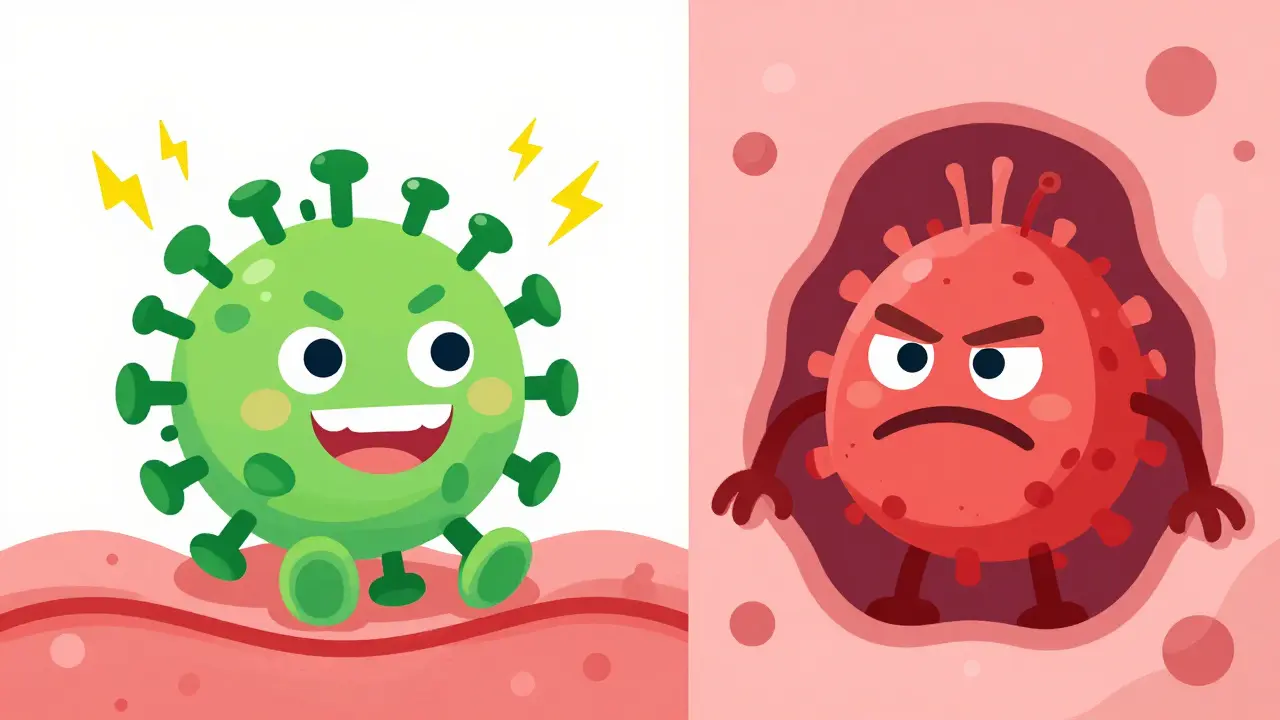
For Cold Sores: You need antiviral medication. Over-the-counter options like Docosanol (found in Abreva) can reduce healing time by about 50% if applied frequently (every few hours) at the first sign of tingling. Prescription antivirals like acyclovir or valacyclovir are more potent and should be started immediately upon prodrome symptoms. Applying acne treatments like benzoyl peroxide to a cold sore is a bad idea. These ingredients dry out and irritate the skin, which can rupture the delicate blisters prematurely. This increases viral shedding and spreads the infection to surrounding healthy skin.
For Pimples: You need anti-inflammatory and antibacterial agents. Benzoyl Peroxide (2.5-10%) kills the Cutibacterium acnes bacteria and reduces inflammation. Salicylic Acid (0.5-2%) exfoliates the pore lining to prevent clogging. These treatments take time-weeks of consistent use-to show significant results. Applying antiviral creams to a pimple will do nothing but waste money and leave a greasy residue that might clog pores further.
Common Mistakes People Make
We’ve all heard the old wives' tales, but some home remedies are particularly damaging when applied to the wrong condition.
- Popping: Never pop a cold sore. It prolongs healing by 3-5 days and spreads the virus. Popping a pimple is also risky due to scarring, but at least it’s not infectious to others.
- Toothpaste and Baking Soda: Many people apply toothpaste to pimples to dry them out. Doing this to a cold sore causes severe chemical burns and irritation, delaying healing.
- Sharing Lip Products: Sharing lipstick or lip balm during a cold sore outbreak transmits HSV-1 to 41% of partners in some studies. With pimples, this is unsanitary but not infectious in the same way.
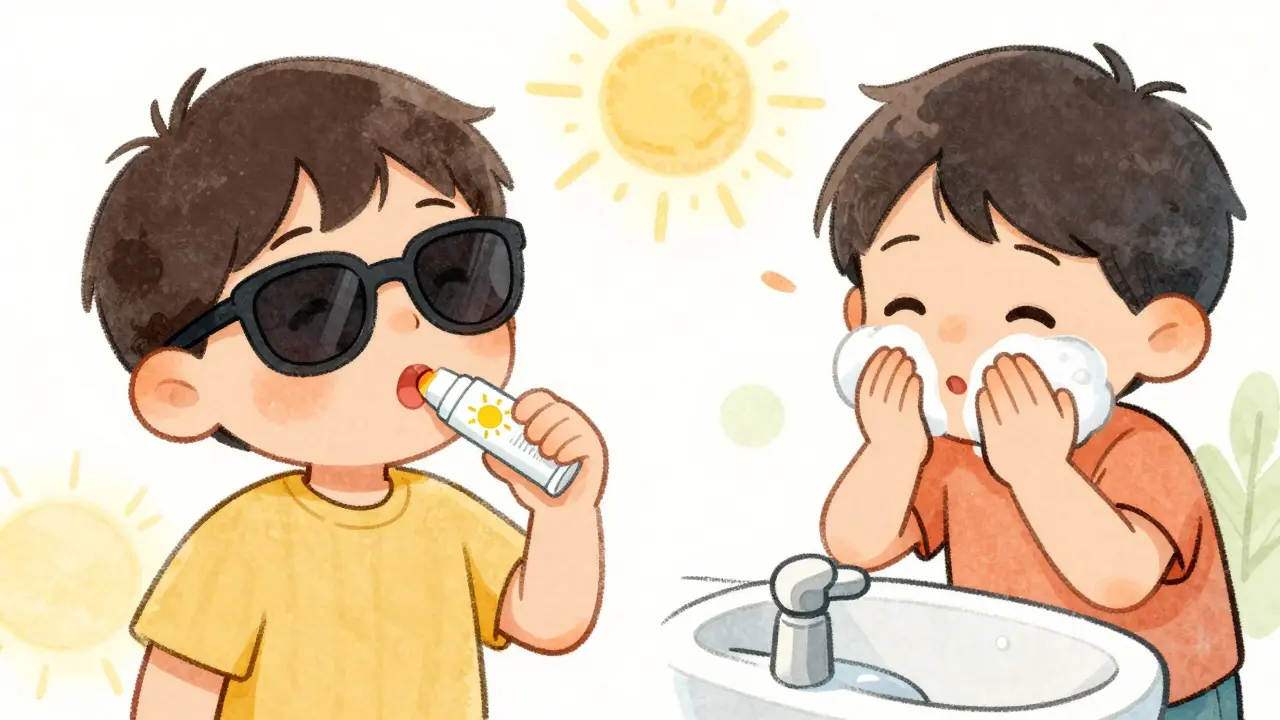
- Ignoring Triggers: About 85% of cold sore outbreaks have identifiable triggers. UV exposure accounts for 32% of cases. Wearing lip balm with SPF can prevent many outbreaks. Stress and hormonal changes are also major contributors.
When to See a Doctor
Most cold sores and pimples resolve on their own or with over-the-counter care. However, certain situations require professional medical attention.
See a dermatologist or primary care provider if:
- The sore lasts longer than two weeks without improvement.
- You experience frequent outbreaks (more than six times a year).
- The lesions spread to your eyes, genitals, or other sensitive areas.
- You have a weakened immune system due to illness or medication.
- You are unsure whether it is a cold sore or something else, such as impetigo or shingles.
Doctors can prescribe stronger antivirals for cold sores or oral antibiotics and isotretinoin for severe, persistent acne. Early intervention is key to managing both conditions effectively.
Prevention Strategies That Work
While you can’t cure HSV-1, you can manage it. And while acne is chronic, you can control it. Prevention focuses on trigger management and consistent hygiene.
Cold Sore Prevention:
Use lip balm with SPF 30+ daily to block UV triggers.
Manage stress through sleep, exercise, and mindfulness.
Avoid touching your face, especially if you’ve touched someone else’s cold sore.
Consider prescription suppressive therapy if outbreaks are frequent.
Pimple Prevention:
Wash your face twice daily with a gentle cleanser.
Use non-comedogenic moisturizers and makeup.
Change pillowcases regularly to reduce bacterial buildup.
Incorporate salicylic acid or benzoyl peroxide into your routine consistently, not just when breakouts occur.
Can I kiss someone if I have a cold sore?
No. You should avoid kissing and intimate contact until the cold sore has completely healed and the skin looks normal again. The virus is highly contagious during the blister and oozing stages, and even shortly after healing, viral shedding can still occur.
Why does my cold sore feel like it’s burning before it appears?
This is called the prodrome phase. The HSV-1 virus reactivates in the nerve cells near your lip, causing inflammation and nerve irritation before the blisters actually form. This tingling or burning sensation is your best warning sign to start antiviral treatment immediately.
Can acne treatments help heal a cold sore faster?
No. Acne treatments like benzoyl peroxide or salicylic acid are designed to kill bacteria and unclog pores. They do not affect viruses. In fact, they can irritate the delicate skin of a cold sore, causing blisters to rupture and spread the virus to nearby skin.
Is it possible to get a cold sore on the inside of my mouth?
Typically, cold sores appear on the outside of the lip or around the mouth. Sores inside the mouth are more likely to be canker sores (aphthous ulcers), which are not caused by HSV-1 and are not contagious. Canker sores look like shallow, white or yellow ulcers with a red border.
How long does it take for a pimple to go away vs. a cold sore?
A minor pimple usually resolves in 3 to 7 days with proper care. A cold sore typically takes 7 to 14 days to heal completely, going through stages of blistering, oozing, crusting, and finally healing. Antiviral medications can shorten the cold sore timeline by 1 to 2 days.