

If you’re constantly sneezing, coughing, or struggling to breathe at night, it’s not just bad luck-it’s likely your home is full of invisible triggers. Allergens like dust mites, pet dander, and mold are hiding in your bedding, carpets, and even your HVAC system. And while medications can help, they don’t fix the root problem: exposure. The truth is, allergen avoidance isn’t optional if you want real, lasting relief. It’s the foundation of effective allergy management, backed by decades of research and endorsed by major medical organizations worldwide.
Why Your Home Is the Biggest Allergen Source
Most people assume pollen is their main enemy, especially in spring. But indoors, you’re exposed to allergens 24/7. In the U.S., 80% of households have dust mites in their bedding. Six in ten have pets that shed dander. And nearly half live in homes with detectable mold. These aren’t just nuisances-they’re immune system triggers. When you breathe in these particles, your body overreacts, releasing histamine and causing symptoms like runny nose, itchy eyes, wheezing, and even asthma attacks. The good news? You don’t need to move out. You just need to change how you manage your space. Environmental control isn’t about perfection-it’s about reducing exposure below the level that sets off your symptoms. Studies show that cutting allergen levels by 75% or more can significantly reduce medication use and improve sleep and daily function.Dust Mites: The Silent Saboteurs
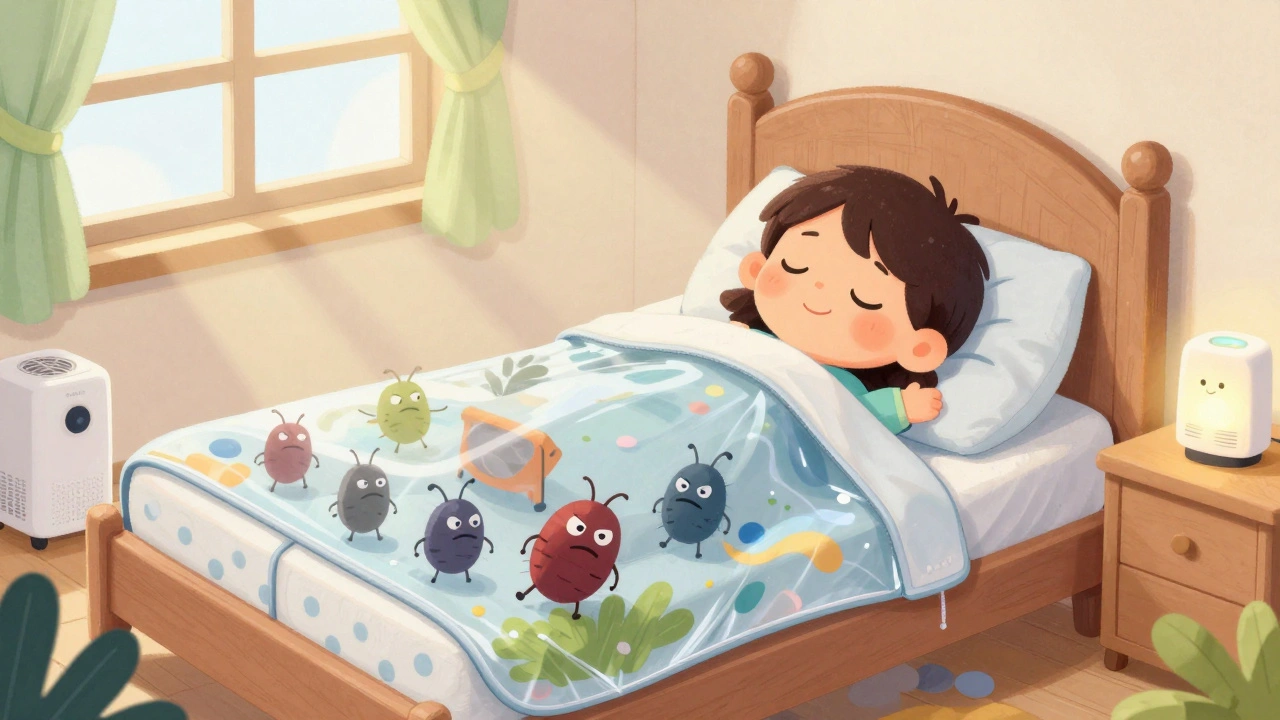
Dust mites are tiny creatures that feed on dead skin cells. They thrive in warm, humid environments-exactly where you sleep. Your mattress, pillows, and upholstered furniture are their playground. The allergen isn’t the mite itself, but its waste. And it doesn’t just sit there-it gets stirred up every time you move. The most effective fix? Encasements. Use allergen-proof covers on your mattress, box spring, and pillows. These aren’t regular zippered sheets-they’re made of tightly woven fabric that blocks mite particles as small as 0.3 microns. Look for ones certified by the Asthma and Allergy Foundation of America (AAFA). Studies show they reduce allergen exposure by 73-90%. Pair that with weekly hot water washing. Set your washer to at least 130°F (54.4°C). That’s the temperature that kills mites and breaks down their allergens. Cold or warm water won’t cut it. If you can’t wash everything weekly, at least do your sheets and pillowcases. Also, avoid feather or down bedding-they trap more moisture and mites than synthetic fills.Humidity Control: The Forgotten Key
Dust mites and mold both need moisture. If your home’s humidity stays above 50%, you’re feeding them. Below 50%, mites can’t survive. Below 40%, mold spores stop growing. Buy a digital hygrometer-it costs less than $20 and tells you exactly what your indoor humidity is. If it’s above 50%, get a dehumidifier. You don’t need a giant unit. A 30-pint model in the bedroom is enough. Run it daily, especially in summer or in damp basements. In winter, when air gets dry, you might need to add moisture-but only if you’re not dealing with mold. Balance is everything. Also, fix leaks fast. A dripping faucet or wet carpet can turn into a mold hotspot in 24-48 hours. Clean bathrooms weekly with a bleach solution or EPA-approved mold killer. Don’t just wipe-scrub grout and shower curtains. And never leave wet towels on the floor.Pet Dander: Can You Keep Your Pet?
If you’re allergic to cats or dogs, you might think you have to give them up. You don’t. But you do need to be strict. The strongest move? Keep pets out of the bedroom. Studies show this cuts allergen levels in your sleeping area by 30-55%. Also, bathe your cat weekly. Yes, weekly. Research shows it reduces airborne cat allergen (Fel d 1) by 41%. Use a damp cloth or pet-safe wipes between baths if your cat hates water. Vacuuming matters-but not all vacuums are equal. Use a vacuum with a true HEPA filter. Regular vacuums just blow allergens back into the air. HEPA traps 99.97% of particles down to 0.3 microns. Vacuum at least twice a week, and wear a mask if you’re sensitive. Consider replacing carpets with hard flooring, especially in bedrooms. If you can’t, steam clean them every few months. And yes, washing your hands after petting them helps. So does changing clothes after long cuddle sessions.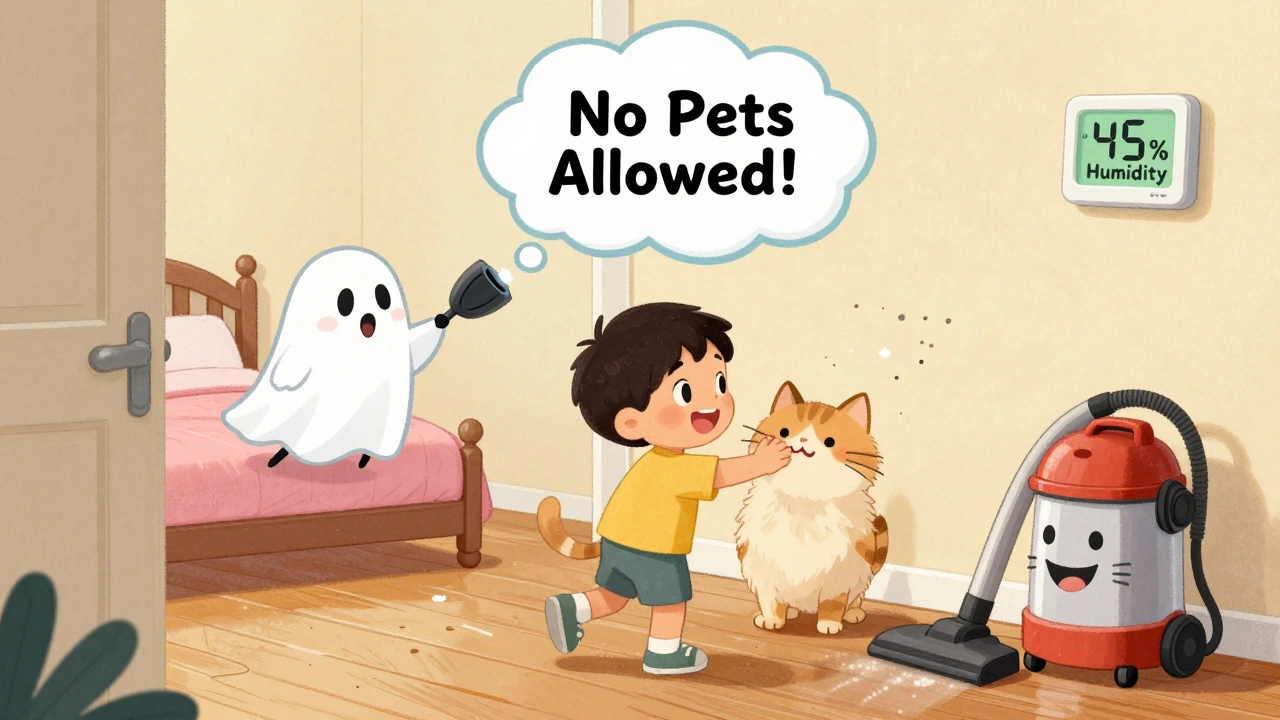
Air Filtration: Not All Purifiers Are Created Equal
Air purifiers are everywhere-but most are useless. Look for one with a true HEPA filter and a CADR (Clean Air Delivery Rate) that matches your room size. For a bedroom, aim for a unit that can do 4-6 air changes per hour. That means if your room is 300 square feet, the purifier should handle at least 1,200-1,800 cubic feet per hour. Place it near your bed, not in the corner. Keep doors closed while it runs. Run it 24/7 during allergy season. Don’t be fooled by ionizers, UV lights, or “HEPA-like” filters. Only true HEPA delivers proven results. Don’t rely on purifiers alone. They don’t remove allergens from surfaces-they only clean the air. Combine them with cleaning and humidity control for real impact.Multi-Pronged Approach Works-Single Fixes Don’t
Here’s the hard truth: putting on a dust mite cover and calling it a day won’t do much. Same with buying an air purifier and ignoring humidity. Studies reviewed by the American College of Allergy, Asthma, and Immunology show that single interventions reduce allergens by 40-65% but rarely improve symptoms. The real win comes from combining at least three strategies. For example:- HEPA air purifier in the bedroom
- Allergen-proof mattress and pillow covers
- Dehumidifier keeping humidity under 50%
- Pets kept out of the bedroom
- Weekly hot water laundry
Cost vs. Benefit: What’s Worth It?
You don’t need to spend thousands. Start with low-cost, high-impact changes:- HEPA air purifier: $100-$250
- Allergen-proof bedding: $30-$100 per set
- Dehumidifier: $100-$200
- HEPA vacuum: $200-$400

Common Mistakes and How to Avoid Them
Most people fail because they don’t stick with it. Here’s what goes wrong:- Buying a HEPA filter but never changing the filter-replace it every 6-12 months.
- Washing bedding in cold water-no mite kill, no allergen removal.
- Thinking ‘clean’ means ‘allergen-free’-vacuuming doesn’t remove settled allergens without HEPA.
- Ignoring humidity-your purifier can’t fix a swampy room.
- Trying to do everything at once-start with one change, then add another every two weeks.
When to Call a Professional
If you’ve tried the basics and still struggle, it might be time for help:- Professional allergen testing-some labs can test your home for dust mite, pet, and mold levels. This tells you exactly what to target.
- Pest control-if you have cockroaches, don’t spray. Use bait stations or call an exterminator. Cockroach allergens are powerful triggers, especially in urban homes.
- Certified asthma educator-many hospitals offer free or low-cost sessions. They teach you how to implement these strategies correctly. Patients who work with them have 85% adherence rates versus 45% with standard advice.
What Doesn’t Work (And Why)
There’s a lot of misinformation out there. Skip these:- Essential oils or air fresheners-they irritate airways and make allergies worse.
- “Hypoallergenic” labels on products-they’re marketing, not science. No pillow or mattress is truly allergen-proof without a certified barrier.
- Removing pets from the home for a few days-dander lingers for months. It takes six months of no exposure to drop levels significantly.
- Using air conditioning alone-it helps with pollen, but not dust mites or dander.
Final Thought: It’s About Control, Not Perfection
You don’t need a sterile home. You need a smart one. Allergen avoidance isn’t about fear-it’s about reclaiming your space. Start small. Pick one area-your bedroom-and make it your sanctuary. Change your bedding, add a purifier, lower the humidity. Give it six weeks. If you feel better, keep going. If not, add another step. The goal isn’t to eliminate every allergen. It’s to drop them below your body’s reaction threshold. And when you do, you’ll notice more than fewer sneezes. You’ll sleep deeper. Breathe easier. Live fuller.Can allergen avoidance replace allergy medication?
No, but it can reduce how much you need. Allergen avoidance lowers your exposure so your body reacts less. Many people find they can cut their nasal spray or antihistamine use by half-or even stop them entirely-if they consistently control their environment. But if you have asthma or severe symptoms, medication is still essential. Think of avoidance as the foundation, and meds as the backup.
How long does it take to see results from environmental control?
Most people notice less sneezing and better sleep within 2-4 weeks. But full symptom improvement, especially for asthma, can take 6-12 weeks. Allergens like dust mite waste and pet dander linger in carpets and furniture. It takes time for levels to drop low enough to stop triggering reactions. Stick with the plan-even if you don’t feel better right away.
Is it worth buying a whole-house air purifier?
Usually not. Whole-house systems cost $2,000-$5,000 and require HVAC upgrades. For most people, a single HEPA purifier in the bedroom delivers 80-90% of the benefit. Focus your budget on your sleeping area-you spend a third of your life there. If you have severe, multi-room symptoms, then consider a whole-house unit after trying targeted solutions first.
Do air purifiers help with pollen allergies?
Yes, but only indoors. Pollen comes in through open windows and on clothes. Keep windows closed during high pollen days, especially in the morning. Use your HEPA purifier to clean the air after you come inside. Shower and change clothes after being outdoors. Air purifiers won’t stop pollen from entering, but they’ll clean it out quickly once it’s inside.
Can I still have stuffed animals or rugs if I have allergies?
You can-but with limits. Keep stuffed animals out of the bedroom, or wash them weekly in hot water. If they’re too big, freeze them for 24 hours to kill mites. Avoid thick rugs, especially in bedrooms. Hard floors are easier to clean. If you love rugs, choose low-pile, washable ones and vacuum them twice a week with a HEPA vacuum.
15 Comments
OMG I just switched to allergen-proof covers last month and my sneezing fits are GONE. Like, I actually slept through the night without a tissue box next to my face 😭✨
It’s wild how many people think air purifiers are magic wands. The real game-changer is humidity control-I lived in a damp apartment in Vancouver for years, and no matter how many HEPA filters I bought, my sinuses were wrecked until I got a 30-pint dehumidifier. Below 45% humidity? Mold stopped growing, dust mites vanished, and my asthma stopped acting up. It’s not sexy, but it’s science. Also, washing bedding at 130°F? Non-negotiable. Cold water just moves the allergens around like they’re on a lazy Sunday picnic.
I used to think this was all hype until my kid got diagnosed with severe dust mite allergies. We started with the mattress cover and a cheap HEPA purifier-just $120 total. Within three weeks, her nighttime coughing stopped. I didn’t believe it until I saw her sleeping peacefully for the first time in years. This stuff works. You don’t need to overhaul your whole house. Just pick one thing-your bed-and make it a safe zone. Small steps, big results.
So I bought a HEPA vacuum and then immediately vacuumed my cat’s favorite rug… and she stared at me like I betrayed her 😅 But honestly? It’s worth it. I’ve been using the same filter for 10 months and just replaced it-don’t be like me and wait too long. Also, pet baths weekly? My cat hates it but I do it with treats and a towel wrap. She’s less of a walking dander bomb now. And yes, I change clothes after cuddles. No shame.
i was so sick of sneezin all day i tried the hot water wash thing and like… it worked?? i thought it was a myth but my nose stopped running after 2 weeks. also dehumidifier = godsend. i didnt even know my house was that humid 😅
This is the most practical allergy advice I’ve ever read. I used to buy all those ‘hypoallergenic’ pillows-total scam. The AAFA-certified covers? Total game changer. Also, I keep my dog out of the bedroom and use a damp cloth to wipe him down after walks. It’s not perfect, but my eyes don’t itch anymore. Small changes, huge payoff. 🙌
Let’s be real-this whole ‘allergen avoidance’ thing is just corporate fear-mongering. You think dust mites are bad? Try the chemicals in those ‘allergen-proof’ covers. They’re coated in PFAS. And dehumidifiers? They’re just electricity hogs that create dry air, which is worse for your lungs. You’re better off just taking antihistamines and ignoring the ‘experts.’
I’ve been doing this for 12 years. I have severe asthma. I’ve tried everything. The only thing that saved me? The combo: HEPA filter, mattress encasement, dehumidifier, and keeping my dog out of the bedroom. I used to be in the ER every other month. Now? I haven’t needed a nebulizer in 3 years. People say it’s too much work? You’re not working-you’re breathing. This isn’t a lifestyle tweak. It’s survival.
Who’s really behind all this? The mattress companies? The HEPA filter corporations? The ‘allergy specialists’ who get paid to sell you $300 pillowcases? I did a deep dive-turns out the ‘75% reduction’ studies were funded by companies that sell these products. And mold? It’s everywhere. You can’t control it. You’re being sold a fantasy. Just take your meds and stop obsessing over your bedding. Your anxiety is probably worse than the dust mites.
I started with just the pillow covers and a dehumidifier. Two weeks later I noticed I could breathe through my nose at night. No more mouth breathing. No more dry throat. I didn’t expect such a simple change to make such a difference. It’s not about perfection-it’s about consistency. I still have a cat. I still have carpets. But my bedroom is clean. And that’s enough.
My mum’s got asthma and we tried all the fancy gadgets. Turns out the cheapest thing we did-the weekly hot wash-was the one that actually helped. No drama. No expensive gear. Just boiling water and a good detergent. Sometimes the simplest stuff is the real MVP.
While the empirical data on allergen reduction is statistically significant, the ecological validity of bedroom-centric interventions remains questionable in multi-generational households with high fomite turnover. The CADR-to-room-volume ratio is often misapplied, and the assumption that 50% RH is universally optimal ignores diurnal microclimatic variance. Also, your cat’s Fel d 1 load is irrelevant if your HVAC is recirculating particulate matter from the kitchen-where you cook with olive oil, which oxidizes into pro-inflammatory aldehydes. Just saying.
Wow. So you’re telling me I need to become a cleaning robot to breathe? And I thought my cat was the problem. Turns out I’m the problem. Thanks for making me feel like a failure for owning a pillow.
Who says allergens are the enemy? Maybe your immune system is just tired of being lied to. Maybe it’s not the dust-it’s the lies. The chemicals. The processed food. The stress. You think washing sheets will fix a broken system? You’re treating symptoms, not the root: modern life. Let your body fight. Let it be wild. Don’t sterilize your existence. That’s not health-that’s surrender.
For anyone feeling overwhelmed-start with one thing. Just one. Maybe it’s washing your sheets. Maybe it’s putting your pet out of the bedroom. Don’t try to do it all at once. I helped a friend who thought she had to buy everything on day one. She quit after a week. Then she tried just the pillow cover. Two weeks later she said, ‘I didn’t realize I was this tired all the time.’ Progress, not perfection. You’ve got this.