



Hyperkalemia Risk Assessment Tool
This tool helps identify risk factors associated with the use of Trimethoprim (TMP-SMX). Disclaimer: This is for educational purposes only and not a clinical diagnosis. Always consult a healthcare provider.
Estimated Risk Profile
Recommended Safety Protocol:
- Obtain baseline potassium levels before start.
- Critical Window: Monitor levels between 48–72 hours.
- If potassium > 5.5 mmol/L, contact physician immediately.
Most people think of antibiotics as simple tools to fight infections, but some can trigger surprising reactions in the body. One of the most concerning is how Trimethoprim is an antibiotic often combined with sulfamethoxazole (forming TMP-SMX) that can cause a dangerous spike in blood potassium levels. Commonly known by brand names like Bactrim or Septra, this drug can lead to a condition called hyperkalemia, which in severe cases, can cause the heart to stop.
Why Trimethoprim Affects Your Potassium
You might wonder why a drug meant to kill bacteria would affect your minerals. The secret lies in the kidneys. Trimethoprim is structurally very similar to amiloride, which is a type of potassium-sparing diuretic. Because of this similarity, the drug tricks the kidneys into holding onto potassium instead of flushing it out through urine.
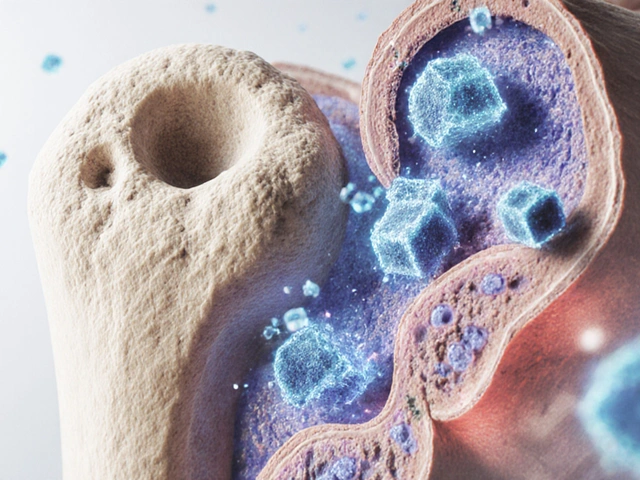
Specifically, trimethoprim blocks the epithelial sodium channels (ENaC) in the distal convoluted tubule of the nephron. When these channels are blocked, the electrical balance in the kidney is disrupted, making it much harder for the body to secrete potassium. To make matters worse, the concentration of the drug in the kidney tubules can be 10 to 50 times higher than in the rest of the blood, creating a potent localized effect that suppresses potassium excretion.
Who Is Most at Risk?
While anyone can experience this side effect, some people are far more vulnerable. The risk isn't just about the drug itself, but who is taking it and what other medications they use. If you have pre-existing kidney issues, the risk of hyperkalemia jumps significantly-from about 8.4% in a general population to roughly 17.6% in those with renal impairment.
The danger increases sharply when trimethoprim is paired with other common medications. People taking ACE inhibitors (like lisinopril) or Angiotensin Receptor Blockers (ARBs) are in a high-risk zone. A major study in JAMA Internal Medicine found that older adults on these blood pressure meds had a 6.7-fold higher risk of being hospitalized for hyperkalemia when using TMP-SMX compared to those taking amoxicillin.
Age and dosage also play a role. High-dose regimens, often used to treat Pneumocystis pneumonia, show a 23.7% incidence of elevated potassium. However, don't assume a low dose is safe. There are documented cases of patients with normal kidney function suffering cardiac arrest after just a few days of low-dose prophylactic therapy because their potassium reached critical levels.
| Patient Group | Estimated Risk / Incidence | Risk Level |
|---|---|---|
| General Population (Standard Dose) | ~8.4% | Moderate |
| Patients with Renal Impairment | ~17.6% | High |
| High-Dose Regimens (15-20 mg/kg/day) | ~23.7% | Very High |
| Diabetes + CKD + ACEI/ARB Use | ~32.1% | Critical |

Spotting the Danger: Symptoms and Timing
The scary part about hyperkalemia is that it often doesn't have obvious symptoms until it is a medical emergency. By the time someone feels muscle weakness or tingling in their extremities, their potassium levels might already be dangerously high. The most critical sign is often seen on an EKG as abnormal heart rhythms.
Timing is everything. Most severe events occur very quickly. Research indicates that about 78% of severe hyperkalemia cases (where potassium exceeds 6.0 mmol/L) happen within 72 hours of starting the antibiotic. The peak potassium level typically hits around the second or third day of treatment. This narrow window means that waiting until the end of a ten-day course to check blood work is often too late.

How to Manage the Risk Safely
Since TMP-SMX is still a first-line treatment for many serious infections, the goal isn't always to avoid it entirely, but to monitor it aggressively. Medical experts suggest a specific safety protocol for high-risk patients: check potassium levels before starting the drug, again at the 48-to-72-hour mark, and weekly if the treatment lasts a long time.
If a patient's potassium exceeds 5.5 mmol/L, the medication should usually be stopped immediately. For those who are too high-risk, doctors often turn to alternatives. For urinary tract infections, Nitrofurantoin is often preferred because it doesn't carry this specific potassium risk.
Modern hospitals are fighting this by using electronic alerts. One study showed that mandatory prompts in electronic health records-reminding doctors to check potassium before prescribing TMP-SMX to someone on an ACE inhibitor-slashed hyperkalemia events by over 57%.
Practical Safety Checklist
If you or a loved one are prescribed trimethoprim-sulfamethoxazole, consider these points:
- Review all current medications for ACE inhibitors, ARBs, or potassium-sparing diuretics.
- Ask your doctor if a baseline potassium test is necessary before starting the dose.
- Ensure a follow-up blood test is scheduled for 3 days into the treatment.
- Be vigilant about any sudden muscle weakness or heart palpitations.
- Confirm if your kidney function (eGFR) is currently stable.
Does trimethoprim always raise potassium levels?
No, not everyone will experience this. In healthy patients with strong kidney function and no other risk factors, the risk is relatively low. However, the effect is potent enough that even some healthy individuals can experience spikes, though it is much more common in those with renal issues or those taking specific blood pressure medications.
Why is it compared to a diuretic?
It is compared to a potassium-sparing diuretic because it mimics the action of drugs like amiloride. It blocks the sodium channels in the kidneys, which prevents the body from exchanging sodium for potassium, effectively "trapping" potassium in the blood.
How quickly can potassium levels rise?
Potassium levels can rise by 0.5 to 1.5 mmol/L within just 48 to 72 hours of starting the therapy. This is why early monitoring is so critical.
What are the most dangerous levels of potassium?
A normal range is typically 3.5 to 5.0 mmol/L. Levels above 5.5 mmol/L are generally considered the threshold for immediate clinical concern, and levels above 6.0 mmol/L are often treated as medical emergencies that may require insulin-glucose therapy or dialysis.
Can I take a potassium supplement while on this antibiotic?
Generally, this is very risky. Since trimethoprim prevents the body from excreting potassium, adding a supplement can accelerate the climb toward dangerous hyperkalemia levels. Always consult your doctor before taking any supplements during an antibiotic course.
12 Comments
It is so important to mention the role of ACE inhibitors here. Many patients don't even realize their blood pressure medication can interact with an antibiotic in this way. I always suggest that patients keep a current list of all their meds, including supplements, to share with their pharmacist. This kind of screening can prevent a trip to the ER. It's also worth noting that for those with stage 3 or 4 CKD, the risk is even more pronounced than the general renal impairment stats suggest. Staying hydrated and having a clear communication line with your provider makes a world of difference when managing these risks. Just a friendly reminder to always double-check your labs if you feel off while on this specific drug!
typical big pharma logic telling us what to fear so we buy more tests. its all just a cycle of monitoring and more monitoring to make the docs feel useful while we just take pills. the real philo sophy is that the body handles itself if you stop messing with it so much
They hide these risks until they have to. Total control over our health.
The biological mechanism is quite elementary. The structural mimicry of amiloride is a classic pharmacological fluke that any first-year med student should know. It is laughable that some people find this "surprising." The real issue is the systemic failure of primary care physicians to actually read the prescribing information before hitting the enter key on their electronic scripts. We pretend it is a complex interaction when it is actually just basic chemistry and clinical negligence. The data provided in the table is useful, but it barely scratches the surface of how renal clearance rates directly correlate with the toxicity threshold. You cannot expect the general public to understand this without a fundamental grasp of nephrology, yet here we are trying to simplify it into a checklist.
This is really helpful info for anyone worried about their meds!
I appreciate the breakdown of the risk groups. My dad is on an ARB and had a scare with this a few years ago, so it's good to see the actual numbers behind it.
Please prioritize your lab work! This is vital for safety.
Absolutely tragic that we live in an era where a simple antibiotic could literally stop your heart because some doctor forgot to check a blood test! I am practically shaking just thinking about the sheer incompetence of the healthcare system! It is a complete and utter disaster of the highest magnitude!
Good to be aware of these things. Just follow the doctor's advice and keep it simple.
Too much text for something a quick Google search explains in two sentences.
The "electronic alerts" are just another way for them to track every single move a doctor makes and keep us in a digital cage. Don't trust the software.
Stay positive everyone, just keep communicating with your health team and you'll get through the treatment just fine!