





Using a pill organizer can make managing multiple medications easier-until it doesn’t. For many older adults, a simple weekly box with seven compartments feels like a lifesaver. But if you’re putting the wrong medicine in it, or cleaning it wrong, or sharing it with someone else, it could be doing more harm than good.
What Exactly Is a Pill Organizer?
A pill organizer, also called a medication box or monitored dosage system, is a container divided into compartments labeled by day and time of day-morning, noon, evening, bedtime. Some are basic plastic boxes you fill by hand. Others are electronic, with alarms, locks, and even Bluetooth that connects to your phone. They’re designed to help you take the right medicine at the right time, especially when you’re juggling five or more prescriptions.
According to a 2019 study, about 43% of adults over 65 in the U.S. use one. And for good reason: research shows proper use can boost medication adherence by up to 26.4%. That means fewer missed doses, fewer hospital visits, and better control of conditions like high blood pressure, diabetes, or heart disease.
Not All Medicines Belong in a Pill Organizer
This is where things get dangerous. Not every pill can be safely moved from its original bottle into a plastic box.
The FDA warned back in 2011 that Pradaxa (dabigatran), a blood thinner, loses up to 37% of its potency in just 30 days if taken out of its original packaging. Why? Because the original bottle has a desiccant-tiny packets that soak up moisture. Most pill organizers don’t. A patient in New Zealand developed internal bleeding after switching Pradaxa to a weekly box. Symptoms only stopped when she went back to the original bottle.
Other medications that shouldn’t go in organizers include:
- Effervescent tablets (like Alka-Seltzer or certain vitamin C pills)-they dissolve if they touch even a little moisture.
- Nifedipine (a blood pressure drug)-light and humidity can break it down.
- Cabergoline (used for Parkinson’s and prolactin issues)-it’s extremely sensitive to humidity.
- Sodium valproate (for epilepsy)-moisture changes how it’s absorbed.
- Warfarin (another blood thinner)-one Reddit user reported their INR spiked to 6.2 after switching to a pill box. That’s life-threatening.
If your medicine comes in a foil blister pack or a bottle with a desiccant, leave it there. If you’re unsure, ask your pharmacist. Don’t assume it’s safe just because it looks like a regular pill.
How to Load a Pill Organizer Safely
Even if your meds are safe to move, loading the box wrong can cause errors. A 2020 study found 12.7% of medication errors involving pill organizers happened because someone put the wrong pill in the wrong compartment.
Here’s how to do it right:
- Wash your hands with antimicrobial soap for at least 30 seconds.
- Clean your workspace with 70% isopropyl alcohol. Don’t use a kitchen counter that’s had raw meat on it.
- Double-check each pill against your prescription list. Use a magnifier if your vision is blurry.
- Don’t rush. Set aside 15-20 minutes once a week. Do it on the same day, like Sunday morning.
- Have someone else verify if possible. A family member or caregiver can catch mistakes you might miss.
- Close each compartment immediately after filling. Open lids can pop open in your purse or drawer.
Memorial Sloan Kettering Cancer Center recommends these steps for every patient using a pill organizer. Skipping even one step increases your risk of error.
Cleaning Your Pill Organizer Matters
A 2019 study found that 28.7% of pill organizers used in hospitals had bacteria on them. Staphylococcus aureus-a common skin germ that can cause serious infections-was found in 12.3% of samples.
At home, cleaning is just as important. Here’s how:
- Daily wipe: Use a damp cloth with 70% isopropyl alcohol. Don’t soak it.
- Weekly deep clean: If your organizer is dishwasher-safe (check the label), run it on the sanitize cycle (160°F for 10 minutes). If not, wash it by hand with warm soapy water, then rinse and air-dry completely.
- Never share. Even with family members. One person’s bacteria can contaminate another’s meds.
Hero Health’s electronic dispensers are dishwasher-safe. Basic plastic ones from Walmart or CVS? Hand wash only.
Child Safety and Locking Features
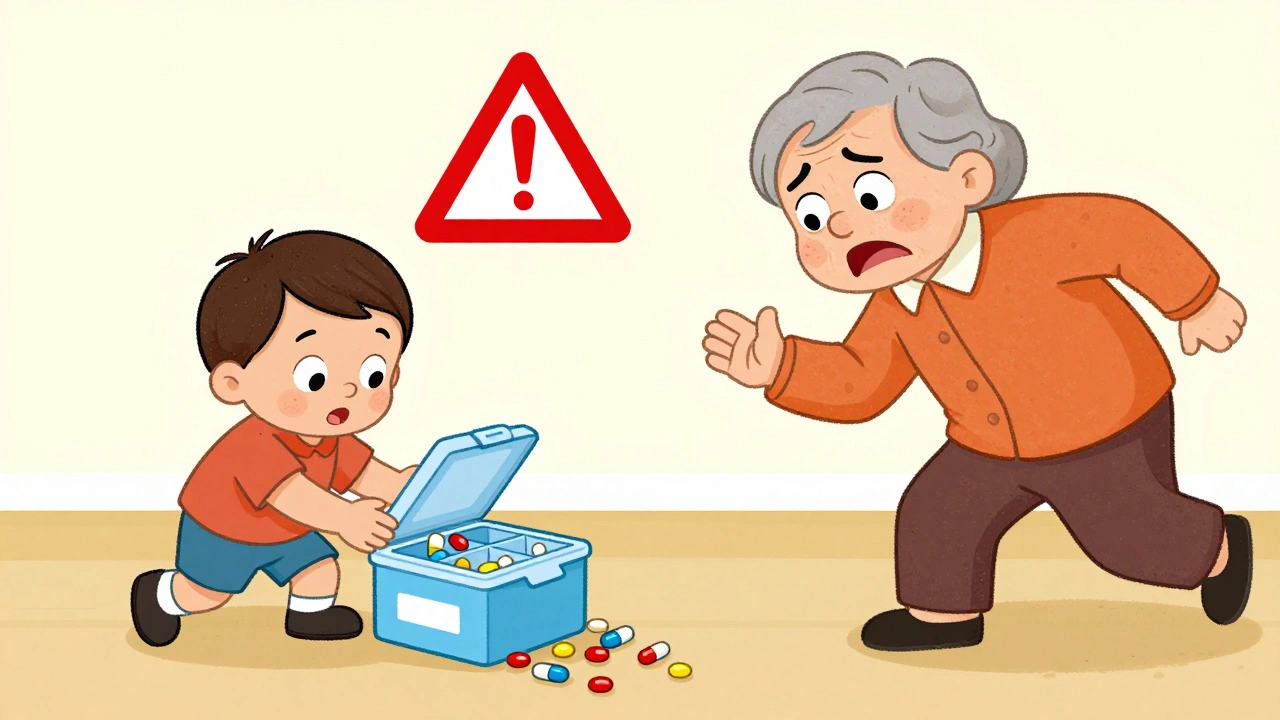
If you have young grandchildren, pets, or anyone under 5 in your home, your pill organizer could be a poison risk. In 2020, U.S. poison control centers received over 65,000 calls about children getting into pill organizers.
The CDC says all organizers used in homes with young children must have child-resistant locks. That means a button you press while sliding, a twist-lock, or a 4-digit code like the Hero device uses.
Simple flip-top boxes? Too easy for a curious toddler. Upgrade to a locking model-even if it costs a few dollars more. Safety isn’t optional.
Smart vs. Basic: What’s Worth the Extra Cost?
Basic weekly organizers cost $1.99-$4.99. They’re fine if you take the same meds every day and have good memory or help from a caregiver.
But if you’re on 5+ medications, take pills at different times, or forget to take them even with a box, a smart organizer might be worth it:
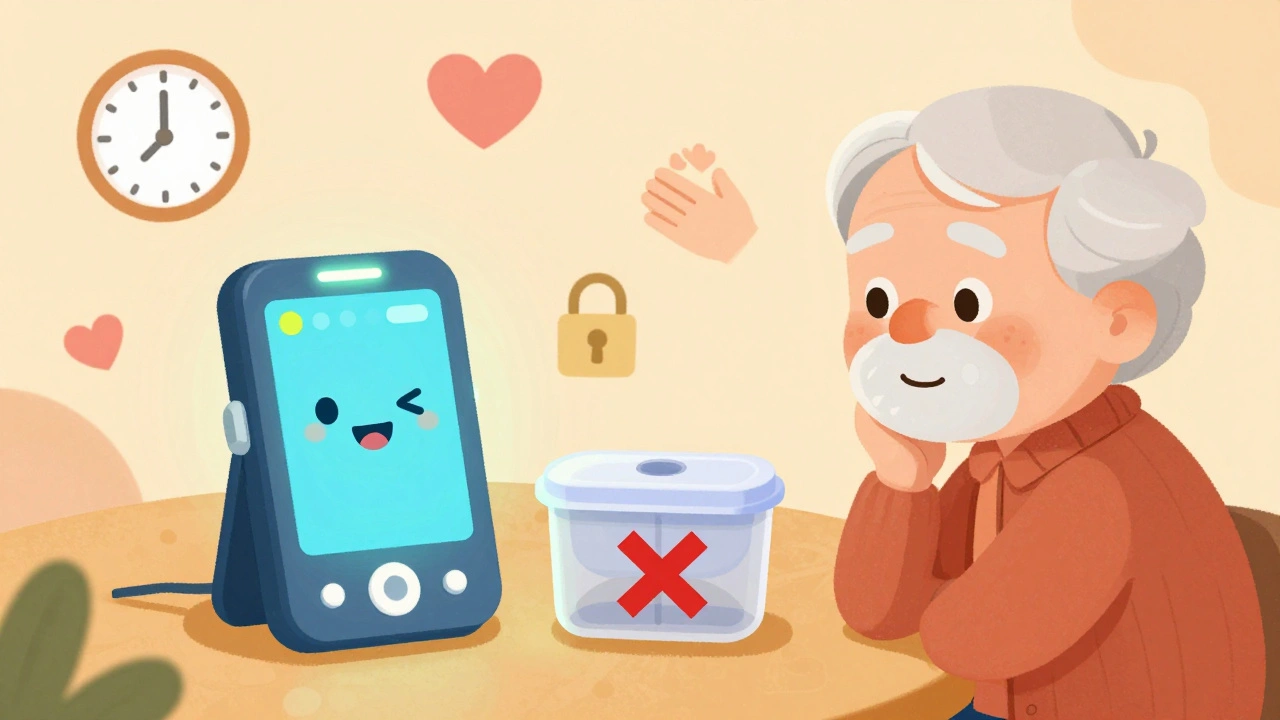
- Hero Health: Dispenses pills automatically, sends phone alerts, has a lock, and tracks usage. Costs $299. 92% of users report satisfaction, but 23% of people over 75 struggle with setup.
- MedMinder: Has a voice reminder and phone app. Around $150.
- AdhereTech: Tracks when you open the box and sends alerts to caregivers. Used in clinical settings.
Most people don’t need the high-end stuff. But if you’ve had a close call-like forgetting a dose that landed you in the ER-a smart system could be a game-changer.
What to Do If You’re Not Sure
If you’re on five or more medications, your pharmacist is legally required under CMS 2023 guidelines to review your pill organizer use during your Medicare Part D check-in. Don’t skip this meeting.
Ask them:
- “Which of my meds can go in a pill box?”
- “Do any of these need special storage?”
- “Can you show me how to load it safely?”
- “Is there a better system for me?”
Pharmacists see this every day. They’ll tell you what’s safe, what’s risky, and what’s unnecessary.
Real Stories, Real Risks
A 72-year-old man in Kaiser Permanente’s system took glipizide for diabetes. He accidentally put two pills in one morning compartment. He had a severe low-blood-sugar episode. He didn’t realize until he felt dizzy and confused.
A woman in the UK switched her warfarin to a plastic box because she thought it was more convenient. Her INR jumped to 6.2-dangerously high. She needed emergency treatment.
These aren’t rare. The CDC reports over 2,400 emergency room visits in 2022 linked to pill organizer errors-mostly in people over 65.
It’s not the tool’s fault. It’s how it’s used.
Bottom Line: Use It Right, or Don’t Use It
Pill organizers are powerful tools. But they’re not magic. They don’t fix bad habits. They don’t protect fragile medicines. And they don’t replace communication with your care team.
Use one only if:
- Your meds are stable and safe for repackaging
- You clean it regularly
- You load it carefully
- You don’t share it
- You have child-proofing if needed
- You’ve checked with your pharmacist
If any of those boxes aren’t checked, stick with your original bottles. Write down your schedule on a piece of paper. Set alarms on your phone. Ask a friend to call you at pill time.
There’s no shame in choosing safety over convenience. Your health isn’t a puzzle to solve-it’s your life.
Can I put all my pills in one weekly organizer?
No. Some medications, like Pradaxa, warfarin, and sodium valproate, lose effectiveness or become unsafe when removed from their original packaging. Always check with your pharmacist before moving any pill into a box. Only use organizers for stable, non-sensitive medications.
How often should I clean my pill organizer?
Wipe it down daily with a 70% isopropyl alcohol cloth. Do a deep clean once a week. If it’s dishwasher-safe, run it on the sanitize cycle. If not, wash by hand with warm soapy water and let it air-dry completely. Never skip cleaning-bacteria can grow in the compartments.
Are expensive smart pill organizers worth it?
If you’re on five or more meds, forget doses often, or live alone, yes. Smart organizers like Hero or MedMinder have alarms, locks, and tracking features that reduce errors. But if you have help from a family member and take the same pills daily, a $3 plastic box works fine. Cost isn’t the issue-fit is.
Can children open pill organizers?
Many basic models can. In 2020, over 65,000 children in the U.S. were exposed to medications through pill organizers. If you have kids or grandchildren under 5, use only child-resistant models with locks, passwords, or twist mechanisms. Never assume a box is safe just because it looks small.
Should I share my pill organizer with a family member?
Never. Even if you take the same medicine. Each person’s body reacts differently, and cross-contamination can happen. Bacteria from one person’s hands can transfer to another’s pills. Plus, dosages may differ. Always use your own organizer.
What should I do if I miss a dose because of my pill organizer?
Don’t double up unless your doctor says so. Contact your pharmacist or doctor right away. They’ll tell you whether it’s safe to take the missed dose or if you should skip it. Keep a written log of missed doses-it helps your provider spot patterns and adjust your plan.
Is it okay to use a pill organizer for monthly medications?
Only if you’re confident you can load it correctly every week. Monthly organizers hold 28 doses and are harder to manage. Many people misload them, especially if they change medications often. For monthly meds, ask your pharmacist about blister packs or automated dispensers instead.
11 Comments
Man, this hit home. My grandma used one of those $3 plastic boxes and put her warfarin in it without thinking. Ended up in the ER. I cried for three days. Don't be like her. Talk to your pharmacist. They're not just handing out pills-they're saving lives. 🙏
soooo many people dont realize pradaxa is like... super sensitive?? like its not just a pill it's a little chemical bomb waiting to explode if you put it in a box with no desiccant. i learned this the hard way when my uncle got a bleed. just leave it in the bottle. trust me. 🤦♀️
Let me tell you something, folks. This whole pill organizer thing is a corporate scam designed by Big Pharma to make you feel like you're in control while they quietly profit off your ignorance. You think your $2.99 box from CVS is safe? HA. The same company that makes those boxes also makes the pills. They want you to mess up. They want you to end up in the hospital so they can sell you more drugs. And don't get me started on the 'smart' ones-Hero Health? That's just a fancy Bluetooth tracker with a price tag designed to drain your Social Security check. The real solution? Paper. Pen. A clock. And a daughter who remembers to call you at 8 a.m. Every. Single. Day. You don't need tech. You need love. And maybe a lawyer.
wait so you're telling me i can't just dump all my meds in one box like a normal person?? like i got 7 different pills and i'm tired of juggling bottles. i just want to grab one thing and go. why is this so hard?? 😭
People in this country are too lazy to read the damn label. That's why we have 2400 ER visits a year from pill boxes. We've turned healthcare into a game of chance. You think your grandma's gonna read the FDA warning? No. She's gonna trust the pretty plastic box with the smiley face on it. And then she's gonna die. And it's not just her fault. It's the system. The government lets these things be sold without warning labels. The pharmacists are overworked. The manufacturers don't care. And you? You're just scrolling through Reddit while your parent's INR spikes to 6.2. Wake up. This isn't a convenience. It's a death sentence waiting to happen.
Hey everyone-this is such an important topic. I’ve helped my mom manage her meds for years, and honestly, the biggest game-changer was sitting down with her pharmacist. She didn’t know half of what she was taking couldn’t go in the box. We made a color-coded chart, set phone alarms, and now she’s got her routine down. It’s not about buying the fanciest gadget-it’s about being intentional. You don’t need to do it alone. Ask for help. Write it down. Take your time. Your body deserves that kind of care.
My dad used to forget his meds all the time until we got him a simple weekly box. We cleaned it every Sunday with rubbing alcohol and double-checked everything together. No fancy tech. Just us. And a little patience. If you’re reading this and you’re scared you’re doing it wrong-you’re already doing better than most. You care. That’s half the battle.
These pill organizers are a sign of American decline. Back in my day we used calendars and alarms. We didn’t need plastic boxes with Bluetooth. Now we have 70-year-olds using apps to remember to take aspirin. What happened to personal responsibility? The government is coddling people into dependency. And now we’re paying for it with ER bills. Stop outsourcing your health to gadgets. Take control. Or don’t. But don’t blame the system when your INR crashes.
Just a quick note-don't forget that even if you clean the box, if you're using your fingers to load it and you have dry skin or eczema, you're transferring oils and dead skin into the compartments. That's why bacteria grow. Use tweezers. Or better yet, have someone else do it. And no, your grandkid who 'wants to help' doesn't count. They're not trained. I'm serious. This is not a craft project.
Okay but let’s be real-how many of these people even have a pharmacist who answers their phone? I called mine three times last week. Left three voicemails. Got one reply. Three days later. Said ‘check your portal.’ My portal says ‘meds stable.’ What does that even mean?? I’m supposed to be an expert now? This system is broken. And the pill box is just the symptom.
My cousin’s wife is a nurse and she says the #1 thing they see in the ER from seniors? Pill organizer mistakes. Not overdoses. Not allergies. Just wrong pills in wrong slots. One guy took his wife’s blood pressure med instead of his own. He ended up in a coma. So yeah. Clean your box. Double-check. Don’t share. And if you’re too tired to do it? Just keep the bottles. Set five alarms. Call your kid. It’s not about the box. It’s about being alive tomorrow.