Methadone QT Prolongation Risk Calculator
Calculate Your Methadone QT Risk
Enter your specific factors to get personalized monitoring recommendations based on current clinical guidelines.
When someone starts methadone for opioid dependence, the goal is clear: stabilize their life, reduce cravings, and lower the risk of overdose. But behind that stability lies a quiet, potentially deadly threat - methadone QT prolongation. It doesn’t cause drowsiness or nausea. It doesn’t show up in urine tests. It hides in the heart’s electrical rhythm, silently stretching the time between beats until the heart can’t recover properly. And when that happens, the risk of a fatal arrhythmia called Torsades de Pointes spikes - sometimes without warning.
Why Methadone Affects Your Heart
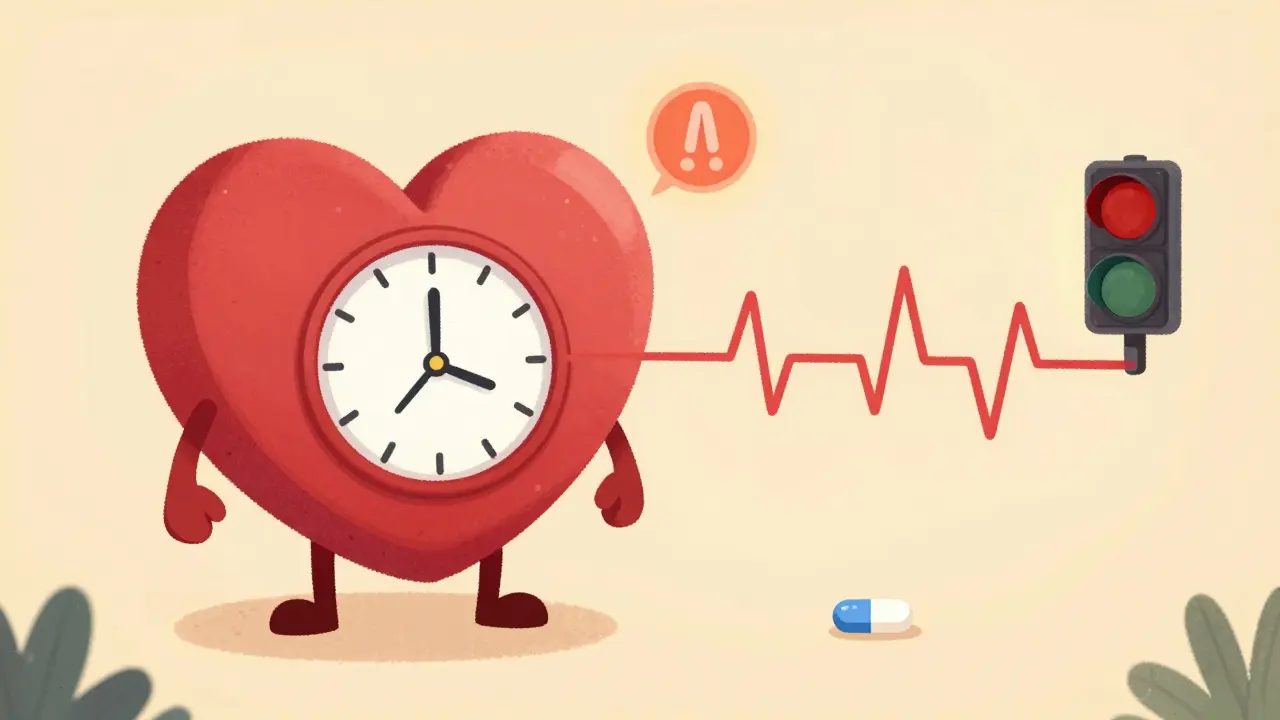
Methadone blocks a specific ion channel in heart cells called hERG, which controls the flow of potassium out of the cell during the heart’s recovery phase. This is known as the IKr current. When it’s blocked, the heart takes longer to reset after each beat. That delay shows up on an ECG as a longer QT interval. The longer the QT interval, the higher the chance of dangerous, irregular heart rhythms. This isn’t just a theory. Since the FDA issued a safety alert in 2006, over 140 confirmed cases of Torsades de Pointes have been linked to methadone. Many of these deaths were mislabeled as opioid overdoses. In reality, the person’s heart stopped because their QT interval had stretched too far - often without any prior symptoms.What’s a Normal QT Interval?
The QT interval isn’t the same for everyone. It’s corrected for heart rate, called QTc. Here’s what matters:- Normal: ≤430 ms for men, ≤450 ms for women
- Borderline: 431-450 ms (men), 451-470 ms (women)
- Significant prolongation: >450 ms (men), >470 ms (women)
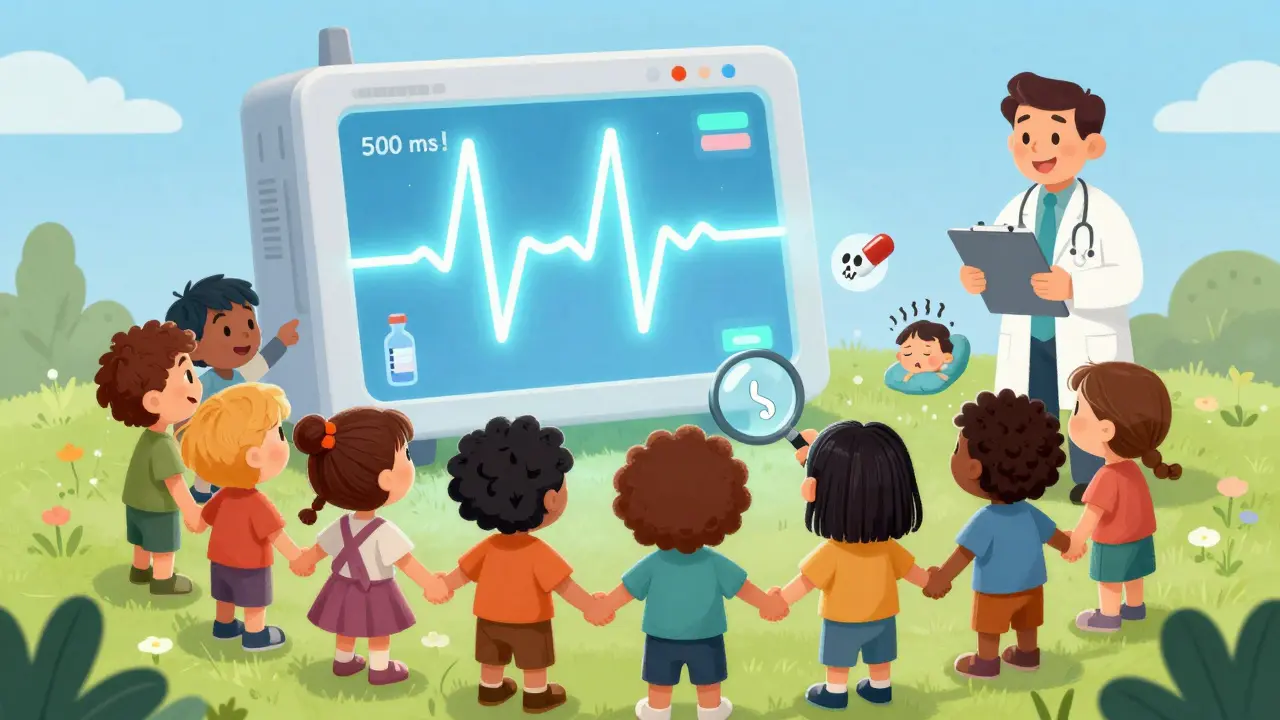
- High risk: >500 ms - this doubles the risk of sudden cardiac death
Who’s at Highest Risk?
Not everyone on methadone needs monthly ECGs. But some people are playing with fire. The biggest risk factors include:- High daily dose: Doses over 100 mg/day increase risk significantly. In one study, patients taking more than 100 mg had over 3 times the chance of QT prolongation.
- Female gender: Women are 2.5 times more likely than men to develop QT prolongation from methadone.
- Low potassium or magnesium: Potassium below 3.5 mmol/L or magnesium below 1.5 mg/dL makes the heart far more vulnerable.
- Older age: People over 65 have reduced ability to clear methadone, leading to higher blood levels.
- Heart disease: History of heart failure, low ejection fraction, or prior heart attack increases vulnerability.
- Other QT-prolonging drugs: Antidepressants like amitriptyline, antipsychotics like haloperidol, antibiotics like moxifloxacin, and even some antifungals like fluconazole can stack with methadone.
- Drug interactions: Medications that block the liver enzyme CYP3A4 - such as fluvoxamine, voriconazole, or even some SSRIs - can raise methadone levels by up to 50%.
When and How Often Should You Get an ECG?
Guidelines from SAMHSA and the American Society of Addiction Medicine don’t recommend blanket testing for everyone. They use a tiered approach based on risk.- Baseline ECG: Before starting methadone - no exceptions. This gives you a reference point.
- Follow-up ECG: At steady state - usually 2 to 4 weeks after starting or changing the dose. Methadone builds up slowly. The peak effect on the heart doesn’t happen right away.
- Monitoring frequency:
- Low risk: QTc under 450 ms (men) or 470 ms (women), no other risk factors - every 6 months.
- Moderate risk: QTc 450-480 ms (men) or 470-500 ms (women), or 1-2 risk factors - every 3 months.
- High risk: QTc over 480 ms (men) or 500 ms (women), or 3+ risk factors - every month.
What If You Can’t Get Regular ECGs?
Many patients report inconsistent monitoring. One Reddit survey of 142 people in recovery found that 68% had no consistent schedule for ECGs. That’s alarming. But those who did get regular monitoring were far more confident in their treatment. Eighty-two percent felt safer with monitoring compared to just 47% without it. If your clinic doesn’t offer routine ECGs, ask for them. Cite the guidelines. Bring a printed copy of the SAMHSA or American Heart Association recommendations. If they refuse, ask for a referral to a cardiologist or addiction specialist who understands the risk. Your life depends on it.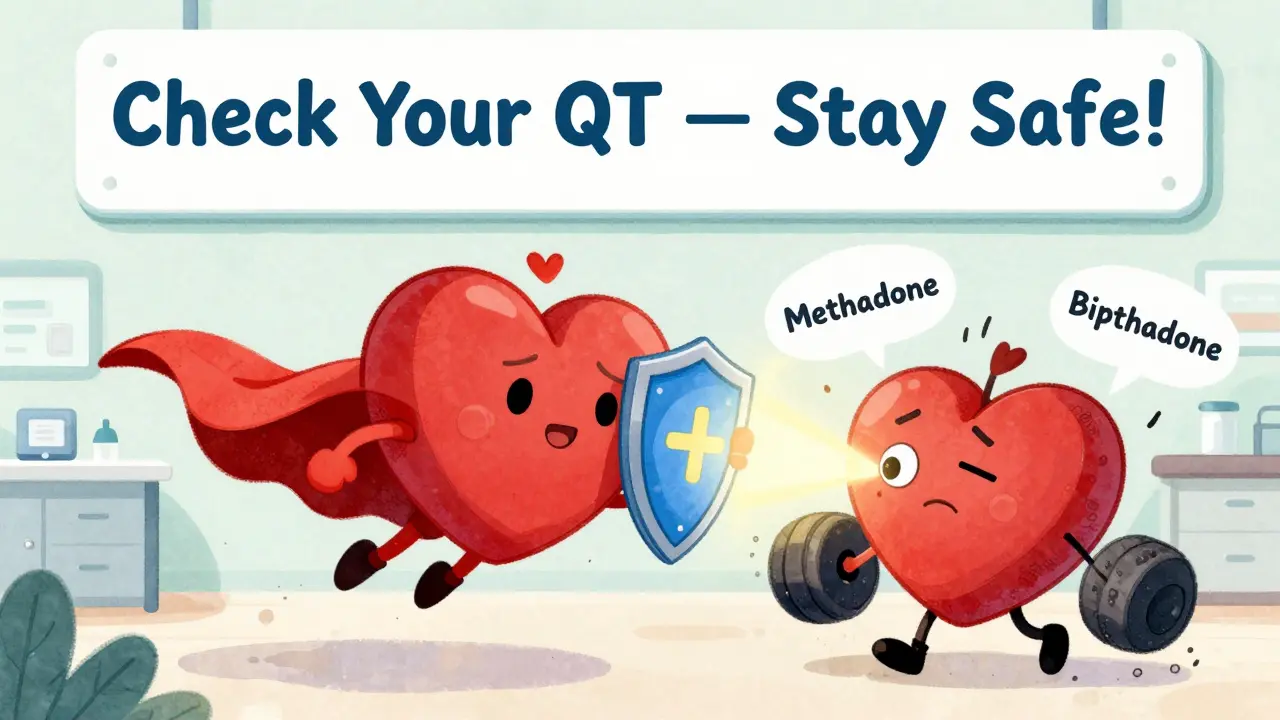
The Bigger Picture: Why This Matters
Methadone saves lives. People on methadone maintenance therapy have a 33% lower risk of dying from overdose compared to those not in treatment. They’re less likely to use street drugs, less likely to contract HIV or hepatitis C, and more likely to hold jobs and rebuild relationships. But that benefit vanishes if the treatment itself kills you. The solution isn’t to stop methadone - it’s to monitor smarter. A 2023 study in JAMA Internal Medicine showed that clinics with structured QT monitoring programs reduced serious cardiac events by 67%. That’s not a small number. That’s life or death. Sleep apnea is another hidden factor. About half of people on methadone have it. When breathing stops during sleep, oxygen drops. That stress on the heart can trigger arrhythmias - especially if QT is already prolonged. If you snore loudly, wake up gasping, or feel exhausted during the day, get tested for sleep apnea. Treating it can reduce cardiac risk.What to Do Right Now
If you’re on methadone:- Ask if you’ve had a baseline ECG. If not, request one immediately.
- Know your QTc value. Don’t let your provider say “it’s fine” without showing you the number.
- Get your potassium and magnesium levels checked at least once a year - or more often if you’re on diuretics or have diarrhea.
- Review every medication you take - even over-the-counter ones - with your prescriber. Many common drugs can interact with methadone.
- If your dose is over 100 mg/day, insist on quarterly ECGs, even if you feel fine.
- If your QTc is over 450 ms (men) or 470 ms (women), don’t wait. Talk to your doctor about lowering your dose or switching to buprenorphine.
- Don’t assume low-risk patients are safe. A 40-year-old woman on 80 mg/day with low potassium and taking sertraline is at risk.
- Use a standardized protocol. Don’t rely on memory or clinic tradition.
- Document every ECG result and electrolyte level. If something changes, act.
- Know when to refer. A cardiologist doesn’t need to manage methadone - but they do need to advise on cardiac safety.
Bottom Line
Methadone is one of the most effective tools we have for treating opioid use disorder. But it’s not harmless. Its cardiac risks are real, measurable, and preventable. The key isn’t fear - it’s awareness. Regular ECG monitoring isn’t bureaucratic busywork. It’s the difference between a patient living a full life and dying quietly from a heart rhythm no one checked. The data is clear. The guidelines exist. The tools are available. The only thing missing is consistent action.Does methadone always cause QT prolongation?
No. Not everyone on methadone develops QT prolongation. But the risk increases with higher doses, female gender, low electrolytes, older age, and other medications. About 9% to 88% of patients show some prolongation depending on the population studied, but only a small fraction reach dangerous levels above 500 ms.
Can I still take methadone if my QTc is slightly prolonged?
Yes - but you need closer monitoring. If your QTc is between 450-480 ms (men) or 470-500 ms (women), you’re in the moderate-risk zone. Continue methadone, but get an ECG every 3 months, check your potassium and magnesium, and avoid other QT-prolonging drugs. Your dose may need adjustment if it climbs higher.
Is buprenorphine safer for the heart than methadone?
Yes. Buprenorphine has a much lower risk of QT prolongation. Studies show it rarely causes significant QTc changes, even at high doses. For patients with multiple risk factors or a QTc over 500 ms, switching to buprenorphine is often the safest choice - without sacrificing treatment effectiveness.
What should I do if I feel dizzy or have palpitations on methadone?
Don’t ignore it. Dizziness, fainting, or irregular heartbeats could signal a dangerous arrhythmia. Stop taking any other QT-prolonging drugs immediately, get an ECG right away, and check your electrolytes. If your QTc is over 500 ms or you’ve had a recent dose increase, seek emergency care. These symptoms are warning signs - not side effects to tolerate.
Why aren’t all methadone clinics doing regular ECGs?
Many clinics lack resources, training, or awareness. Some assume QT prolongation is rare or only happens at very high doses. But studies show it’s common even at moderate doses when risk factors are present. The 2023 JAMA study proved that structured monitoring cuts cardiac events by two-thirds. Lack of action isn’t due to lack of evidence - it’s due to lack of implementation.
Can I get a home ECG to monitor my QT interval?
Some wearable devices can detect heart rhythm abnormalities, but they’re not reliable for measuring QTc accurately. Only a 12-lead ECG performed in a clinical setting with proper calibration and interpretation can give you trustworthy QTc values. Don’t rely on smartwatches or phone apps - they’re not substitutes for medical-grade monitoring.
14 Comments
Methadone saved my life but I didn’t know my heart was playing Russian roulette until my QTc hit 490. Got checked after a near-faint at the gym. Now I get ECGs every 3 months and my potassium is up. Don’t wait until you’re in the ER.
It is both profoundly concerning and statistically indefensible that primary care providers, many of whom lack formal training in cardiac electrophysiology, are entrusted with the initiation and titration of a pharmacologic agent with a known, dose-dependent, life-threatening arrhythmogenic profile - particularly when non-opioid alternatives with superior cardiac safety profiles are available and underutilized.
Listen - if you’re on methadone and you’ve never had an ECG, you’re not being careful, you’re being lucky. Baseline test is free at most clinics. Get it. Then get your electrolytes checked. If your doc won’t do it, find one who will. Your heart doesn’t care how ‘stable’ you feel.
It is simply unconscionable that, in the year 2025, we still treat addiction medicine as a second-tier specialty where cardiac monitoring is treated as an optional luxury rather than a non-negotiable standard of care. One would expect nothing less from a hospital, yet here we are - patients being handed pills like candy while their QT intervals creep toward catastrophe.
I’ve been on 80mg for 3 years. My QTc was 462 last time - borderline. I didn’t even know what QT meant until my counselor handed me a printout. Now I take magnesium daily, avoid antihistamines, and get checked every 90 days. It’s not scary if you’re informed. You can live well on methadone - just don’t sleepwalk through the risks.
My mom’s on methadone and she’s 72. She didn’t know she had low potassium until she got dizzy. Now she gets bloodwork every 6 weeks. If you’re older or on other meds, don’t assume you’re fine. Ask for the numbers. Seriously.
Everyone’s acting like this is some new revelation. The FDA warning was in 2006. The JAMA study was 2023. If your clinic hasn’t updated their protocol since 2010, they’re not just negligent - they’re dangerous. I’ve seen clinics where nurses don’t even know what hERG means. That’s not healthcare. That’s gambling.
QT prolongation isn’t a bug it’s a feature of methadone’s chemistry and if you’re not monitoring it you’re not treating you’re just handing out timed bombs
my cousin died at 38 they said OD but the coroner found QTc 520 and no opioids in his system
he was on 90mg and took Zyrtec
that’s all it took
Of course clinics don’t do ECGs. It’s easier to ignore the problem than to fix the system. And guess who pays the price? The patients. The ones who showed up, did the work, and just needed a little oversight to stay alive. Instead they get silence.
Just got my QTc back - 448. Felt like I won the lottery. Seriously though - if you’re on methadone and haven’t checked this, go do it today. No excuses. Your heart’s not gonna thank you later.
My clinic in Texas does ECGs on day one and every 3 months. No questions. No paperwork. Just done. Why can’t everywhere be like this? It’s not hard. It’s not expensive. It’s just the right thing.
Why are we coddling addicts with cardiac monitoring? If they can’t manage their own health, why are we subsidizing their treatment at all? Maybe the real solution is to stop enabling dependency and let nature take its course.
Wait - so if someone’s on methadone and takes fluconazole and has low magnesium and is a woman over 50… they’re basically playing Russian roulette with their heart? And this isn’t common knowledge? That’s terrifying. How many people have died because no one told them?
Let’s be honest - the entire methadone system is a house of cards built on goodwill and ignorance. Providers don’t want to deal with the complexity. Patients don’t want to be told they’re at risk. Regulators don’t want to enforce guidelines that require infrastructure. So we all pretend it’s fine until someone drops dead in their living room and the obituary says ‘overdose’ - when really, it was a silent arrhythmia no one bothered to check for. We’ve normalized neglect as routine.