





You know that intense itch. It starts small, maybe just a tickle after a long day, but by bedtime, it’s demanding your full attention. If you’re here, you’ve likely already Googled "white discharge" or "burning when I pee," hoping for a quick fix. Here is the reality check: Candida vaginitis is not just an annoyance; it is a fungal infection caused by an overgrowth of Candida species, primarily Candida albicans, which accounts for 80-90% of cases. While it sounds scary, it is incredibly common. The CDC reports that about 75% of women will deal with at least one episode in their lifetime.
But before you run to the pharmacy aisle, let’s talk about what actually works. Most people assume any itch means yeast. That’s wrong. Misdiagnosis happens in up to 50% of self-treated cases because bacterial vaginosis (BV) and trichomoniasis can look and feel similar. This guide cuts through the noise. We’ll break down the specific signs that point to Candida, how to use over-the-counter (OTC) options correctly so they don’t fail, and when you really need to see a doctor instead of guessing.
Is It Really Yeast? Spotting the Specific Signs
If you are trying to figure out if this is a yeast infection, ignore the vague "feeling off" sensations. Look for the hard data. Clinical studies show that vulvar pruritus-that’s medical speak for intense itching-is present in 97% of confirmed cases. If you aren’t itching, it might not be yeast.
The discharge is another major clue. Classic vaginal discharge from Candida is thick, white, and clumpy, often described as resembling cottage cheese. It usually doesn’t have a strong odor. If your discharge is thin, grayish, or smells fishy, that’s a red flag for bacterial vaginosis, and antifungal cream won’t help. Other tell-tale signs include external dysuria (burning when urine hits irritated skin) and soreness during sex. Physical checks often reveal redness (erythema) in 85% of cases and swelling (edema) in 60%.
Why does this happen? Your vagina has a natural ecosystem. Normally, Lactobacillus bacteria keep Candida in check. When that balance tips-often due to antibiotics killing good bacteria, high sugar intake, or hormonal shifts-the yeast multiplies unchecked. If you’ve recently taken antibiotics, there is a 30-50% higher chance this is yeast-related.
The OTC Toolkit: What Actually Works
You have options on the shelf, but not all are created equal. The main players are azole antifungals. These work by disrupting the cell membrane of the fungus, stopping it from growing. The three big names you’ll see are clotrimazole, miconazole, and tioconazole.
| Active Ingredient | Common Brand Examples | Typical Duration | Efficacy Rate* | Best For |
|---|---|---|---|---|
| Clotrimazole | Gyne-Lotrimin, Mycelex | 1, 3, or 7 days | 85-90% | Mild to moderate symptoms; widely available. |
| Miconazole | Monistat | 1, 3, or 7 days | 85-90% | Users who prefer suppositories or creams. |
| Tioconazole | Vagistat | Single dose (6.5%) | ~85% | Convenience; single application. |
Here is a pro tip: Longer isn’t always better, but it is safer for beginners. A 7-day course of clotrimazole or miconazole generally has a slightly higher cure rate than the 1-day treatments for severe symptoms because it allows more time for the medication to penetrate deeply. However, patient preference studies show 68% of women favor shorter courses. If you choose the 1-day option, make sure you follow the instructions exactly. Missing a step here is where most failures happen.

How to Use OTC Meds Without Failing
You bought the box. Now, how do you actually use it? Improper use causes 35% of treatment failures. Here is the playbook:
- Timing matters: Apply the cream or insert the suppository at bedtime. Why? Gravity. Lying down keeps the medication in place longer. A Johns Hopkins study found that 85% of successful users applied treatment at night.
- Finish the course: This is the hardest part. You will likely feel better in 24-48 hours. Do not stop. Only 65% of users complete the full course, and those who stop early are twice as likely to relapse within two weeks.
- Technique counts: For creams, use the applicator to reach deep into the vagina, then apply a small amount externally to soothe the vulva. For suppositories, wash hands thoroughly and lie back with knees bent to ensure proper placement. A University of Michigan study noted that 40% of first-time users apply these incorrectly.
- Skip the sex: Intercourse during treatment reduces efficacy by 30%. Condoms can also degrade latex-based creams, causing irritation.
If you are pregnant, be careful. Oral fluconazole (Diflucan) is generally avoided during pregnancy. Stick to topical azoles like clotrimazole or miconazole, which are considered safe. Always confirm with your OB-GYN before starting any new medication while expecting.
When to Stop Self-Treating and See a Doctor
Self-care is great for uncomplicated cases. But sometimes, your body is telling you something else is going on. You need professional eyes if:
- It’s your first time: If you’ve never had a yeast infection, get tested. Misdiagnosis rates are highest for first-timers.
- Symptoms persist beyond 7 days: If you’ve finished the OTC course and still itch, burn, or have discharge, it’s either resistant yeast, a different infection, or a non-albicans species (like Candida glabrata) that doesn’t respond well to standard azoles.
- You have fever or pelvic pain: Yeast stays local. Fever suggests the infection has spread or you have Pelvic Inflammatory Disease (PID).
- Recurrent infections: If you get four or more episodes a year, you have Recurrent Vulvovaginal Candidiasis (RVVC). This requires a maintenance regimen, often involving prescription oral fluconazole once a week for six months.
Also, watch out for resistance. The WHO notes that azole resistance is rising, affecting 7-10% of C. glabrata isolates. If standard creams stop working, you might need a prescription alternative like boric acid suppositories or nystatin, prescribed by a clinician.
Lifestyle Tweaks to Prevent Relapse
Treatment kills the current outbreak. Prevention stops the next one. Candida loves warm, moist environments. Think of it like mold in a bathroom-it thrives in humidity.
- Ditch the douches: Douching disrupts the pH balance and washes away protective lactobacilli. It increases risk significantly.
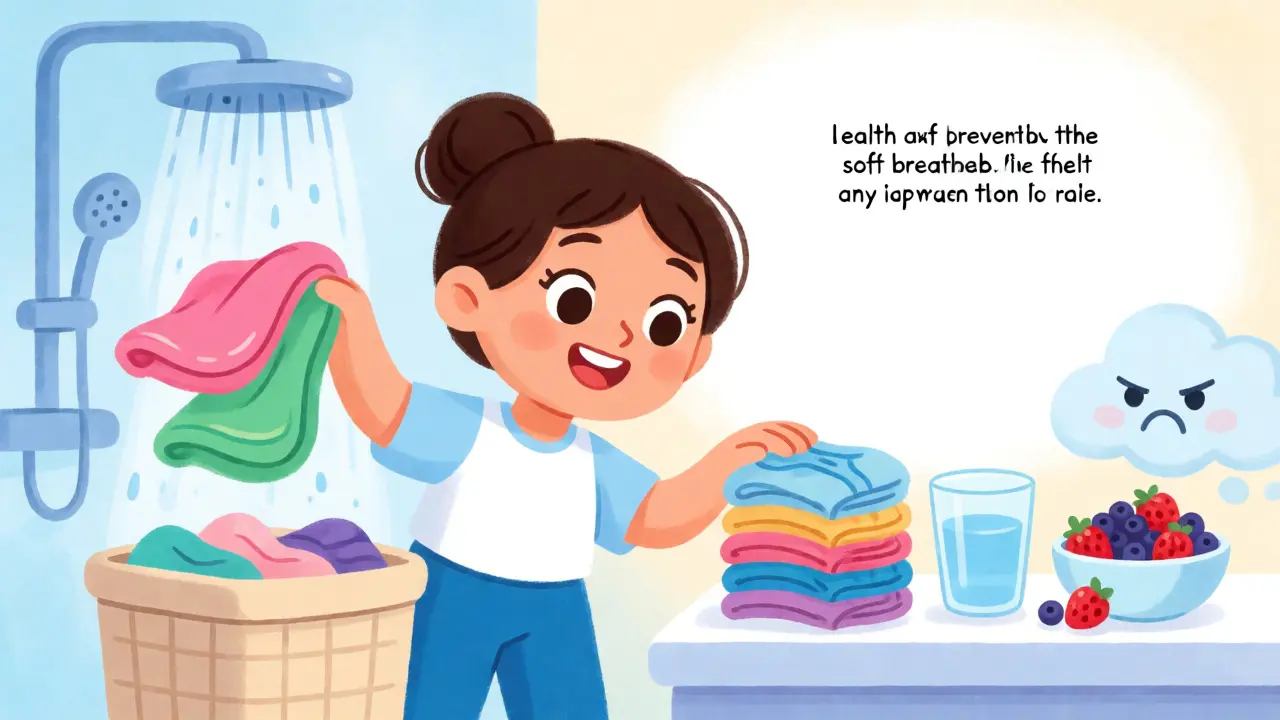
- Cotton underwear: Synthetic fabrics trap heat. Switch to breathable cotton, especially during workouts. Change out of wet swimsuits or gym clothes immediately.
- Watch the sugar: High blood sugar feeds yeast. If you have diabetes, keeping HbA1c under control reduces risk by 2.3 times. Even without diabetes, cutting excess refined sugars can help stabilize vaginal flora.
- Probiotics: Some evidence supports oral probiotics containing Lactobacillus rhamnosus and Lactobacillus reuteri to restore healthy bacteria, though results vary.
Remember, 75% of women experience this. You are not alone, and you are not "unclean." It’s a biological imbalance. With the right OTC strategy and timely medical intervention when needed, you can manage it effectively.
Can I use OTC yeast infection medication if I'm pregnant?
Yes, but only topical treatments. Clotrimazole and miconazole creams or suppositories are generally considered safe during pregnancy. Avoid oral fluconazole unless specifically directed by your healthcare provider, as some studies link it to potential risks in the first trimester.
How quickly should I expect relief from OTC treatments?
Symptom relief typically begins within 24 to 72 hours. However, you must complete the entire course of treatment (1, 3, or 7 days depending on the product) even if you feel better sooner. Stopping early is a leading cause of recurrence.
What if the OTC treatment doesn't work?
If symptoms persist after completing the full OTC course, see a doctor. You may have a non-albicans Candida strain (like C. glabrata) that resists standard azoles, or you might have bacterial vaginosis or trichomoniasis, which require different medications entirely.
Can men get yeast infections from having sex with an infected partner?
Yes, men can develop balanitis (inflammation of the penis head) after unprotected sex with a partner who has a yeast infection. Symptoms include redness, itching, and rash. Men should treat with topical antifungal cream if symptomatic, but routine treatment of asymptomatic male partners is generally not recommended.
Are home remedies like yogurt or garlic effective?
Evidence is mixed. Applying plain, unsweetened yogurt may provide temporary soothing due to cooling effects and probiotic content, but it rarely cures an active infection. Garlic has antifungal properties in labs, but inserting cloves can cause chemical burns. OTC azoles are far more reliable and clinically proven.
8 Comments
the distinction between candida and bv is crucial bc antifungals do nothing for bacterial overgrowth
misdiagnosis rates are honestly staggering when people just guess based on discharge texture alone
While the statistical breakdown is adequate, one must consider that the general populace lacks the pharmacological literacy to distinguish between azole mechanisms and polyene resistance patterns.
The reliance on OTC self-diagnosis often stems from a systemic failure in primary care accessibility rather than mere patient ignorance. It is rather presumptuous to assume that a simple guide can rectify decades of medical misinformation without addressing the underlying socioeconomic barriers to proper diagnostic testing.
this is super helpful info!! i always forget to finish the course even when it stops itching lol
gotta stick with it till the end otherwise its back again :( cotton undies r life savers too
The efficacy rates cited are misleading if not contextualized within the framework of uncomplicated vulvovaginal candidiasis (VVC).
We are seeing a significant uptick in non-albicans species like C. glabrata which exhibit intrinsic tolerance to standard azoles. Self-treating these resistant strains with miconazole or clotrimazole is essentially futile and delays appropriate management.
Furthermore, the disruption of the vaginal microbiome by broad-spectrum antibiotics creates a dysbiotic environment where Lactobacillus dominance is compromised. Without restoring this ecological balance, topical antifungals merely suppress symptoms rather than resolving the root cause.
Patient compliance issues mentioned here are symptomatic of broader health literacy deficits. The Johns Hopkins data regarding bedtime application highlights the importance of bioavailability, yet many users fail to understand why gravity affects drug retention.
This article simplifies complex mycological interactions into digestible chunks but risks oversimplifying the clinical reality of recurrent infections.
If you have four or more episodes annually, you are dealing with RVVC which requires a completely different therapeutic approach involving maintenance fluconazole.
Ignoring the differential diagnosis of trichomoniasis or aerobic vaginitis leads to prolonged discomfort and potential complications.
The mention of probiotics is scientifically valid but the specific strains matter immensely; generic yogurt applications lack the standardized CFU counts needed for colonization.
Ultimately, treating yeast as a monolithic entity ignores the nuanced pathophysiology of fungal overgrowth in immunocompromised hosts.
One should consult a gynecologist for culture sensitivity testing before resigning oneself to repeated OTC cycles.
The rise in azole resistance is a public health concern that warrants more attention than this casual blog post provides.
Understanding the interplay between hormonal fluctuations and glycemic control is essential for long-term prevention strategies.
This guide serves as a basic triage tool but fails to address the complexities of mixed infections or atypical presentations.
Proper hygiene practices must be balanced against the risk of chemical irritation from harsh soaps and douches.
In summary, while OTC options are valuable, they are not a substitute for professional medical evaluation in persistent cases.
Wait, wait, wait... did anyone else catch that?? You're telling us to skip sex during treatment, but what about oral?? And why does everyone ignore the fact that latex condoms degrade?! This whole "finish the course" thing is such a hassle, isn't it? I mean, seriously, who has time for 7 days of applicators?? Just take the pill and move on, right?? Wrong! But still... annoying!! Also, why is sugar blamed?? Isn't it all about pH?? Ugh, so much confusion!!!
I find the dismissal of home remedies somewhat arrogant given the lack of accessible healthcare for many women.
It is frustrating to read that misdiagnosis is common when the article itself admits that symptoms overlap significantly with other conditions.
If 50% of self-treated cases are wrong, then the entire premise of relying on visual cues like cottage cheese discharge is flawed.
We are told to see a doctor if symptoms persist, but appointments are hard to get and expensive.
The tone feels condescending towards those who cannot afford prescription medications immediately.
Moreover, the focus on individual responsibility ignores environmental factors like humidity and clothing choices which are outside immediate control.
Why is there no mention of stress as a trigger for immune suppression leading to yeast overgrowth?
Stress hormones directly impact cortisol levels which can alter vaginal flora balance.
The article suggests lifestyle tweaks but offers no concrete evidence for their effectiveness compared to medication.
Cotton underwear is recommended, but synthetic blends are often more practical for active lifestyles.
Is it realistic to expect every woman to monitor her HbA1c levels regularly?
For many, diabetes management is already overwhelming enough without adding vaginal health concerns.
The advice to avoid douching is sound, but cultural norms vary widely across demographics.
Some communities view douching as a standard hygiene practice regardless of medical advice.
Therefore, blanket statements may alienate readers who need tailored guidance.
Finally, the urgency conveyed in the text seems disproportionate to the mild nature of most yeast infections.
It creates anxiety rather than empowerment for the average reader seeking quick relief.
The pharmaceutical industry pushes these OTC solutions aggressively because they are profitable.
We are conditioned to treat every minor imbalance with chemicals rather than looking at dietary changes.
Notice how the article mentions sugar intake only briefly while emphasizing brand-name creams?
Big Pharma wants you buying Monistat every month instead of cutting out processed foods.
The rise in resistance is likely due to overuse of these very products we are told to trust.
They create the problem through marketing and then sell us the solution.
It is a cycle designed to keep consumers dependent on their products.
Medical professionals are often influenced by sponsorship deals with these manufacturers.
Therefore, unbiased information is scarce in mainstream health discussions.
We must question why natural remedies are dismissed despite centuries of use.
The scientific method is sometimes used selectively to support corporate interests.
Independent studies are harder to fund and publish in major journals.
Consequently, the narrative remains skewed toward commercial interventions.
Patients deserve transparency about the limitations of current treatments.
Without it, we remain vulnerable to ineffective therapies and side effects.
The system favors convenience over holistic health outcomes.
We need to reclaim our health from these profit-driven narratives.
Only then can we make truly informed decisions about our bodies.
Trust your instincts over the glossy packaging on the shelf.
The truth is often hidden behind paywalls and advertising budgets.
ugh stop trying to overcomplicate this with your conspiracy theories and elitist attitudes :(
it works for most people so just follow the instructions and move on :)
not everything is a scheme or a lecture lol
keep it simple guys