
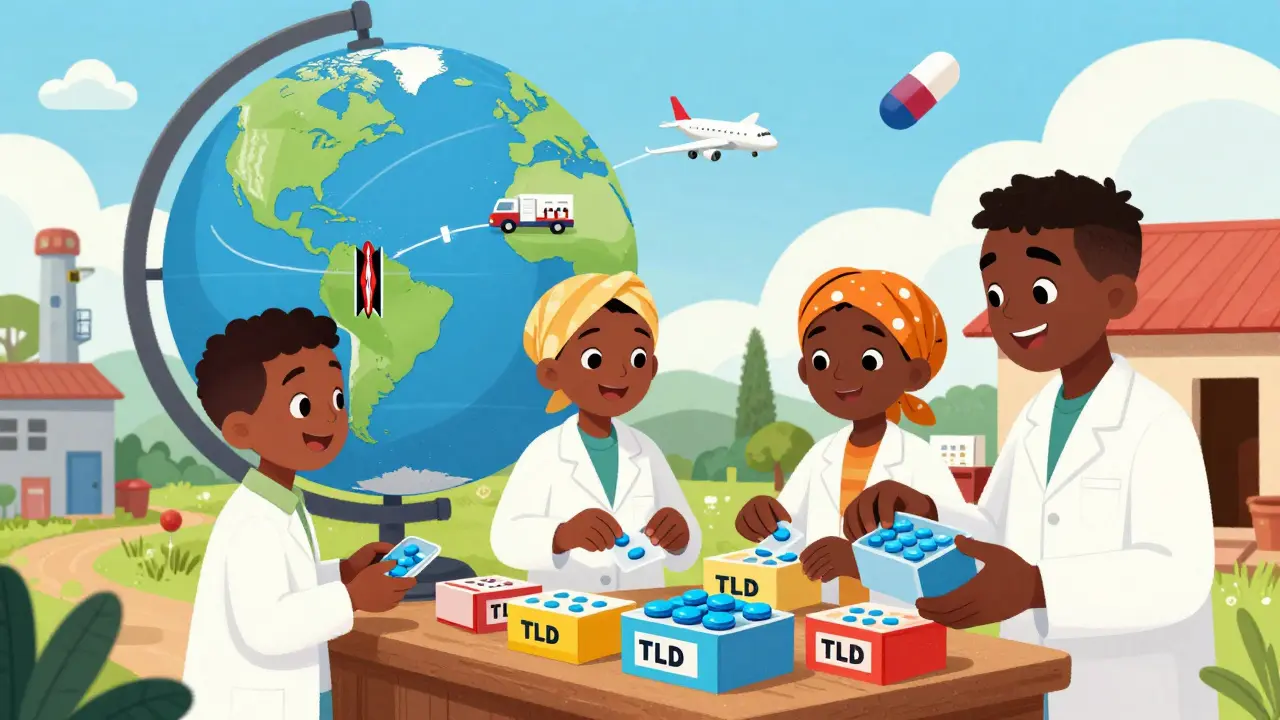
For the first time in history, a first-line HIV treatment made in Africa is being shipped across the continent - and it’s changing everything.
On May 6, 2025, a shipment left a factory in Nairobi, Kenya, bound for Mozambique. Inside were 1.2 million tablets of TLD - a combination of tenofovir, lamivudine, and dolutegravir - manufactured by Universal Corporation Ltd. This wasn’t just another drug order. It was the first time the Global Fund had ever bought an HIV medicine made in Africa. And it wasn’t a one-off trial. This was the start of a new era.
For decades, African countries relied on imported HIV drugs, mostly from India. Even though those generics brought the cost of treatment down from $10,000 per person per year in 2000 to under $100 by 2015, the supply chains were fragile. When the pandemic hit, border closures and shipping delays left clinics empty. Patients went without medication. In some places, people stopped showing up for refills because they knew the drugs might not arrive.
Now, things are shifting. African manufacturers are stepping up - not just as buyers, but as makers. And the proof is in the medicine.
Why TLD is the new gold standard for HIV treatment
TLD isn’t just another drug combo. It’s the current global standard for first-line HIV treatment in low-resource settings. Dolutegravir, the key component, works better than older drugs. It suppresses the virus more reliably, has fewer side effects, and is harder for HIV to develop resistance against. That’s critical in places where patients might miss doses due to distance, stigma, or lack of transportation.
Before TLD, many countries used regimens with efavirenz. But efavirenz caused dizziness, nightmares, and depression in up to 30% of users. TLD changed that. In Uganda, clinics reported fewer patients dropping out of care after switching. In South Africa, viral suppression rates jumped by 8% in just two years after rolling out TLD nationwide.
And now, TLD is being made right here.
Universal Corporation: The first African company to pass WHO prequalification
Getting WHO prequalification isn’t easy. It’s like passing a global audit that checks everything: how clean the factory is, how stable the drug is under heat and humidity, whether every batch performs the same. Only a handful of manufacturers worldwide have ever passed it for HIV drugs.
In 2023, Universal Corporation became the first African company to get WHO prequalification for TLD. Their factory in Kenya met every requirement - from water purity to quality control labs. The fact that they did it without foreign ownership or partnership is significant. This wasn’t a joint venture with a European or U.S. firm. It was African-led, African-built, African-tested.
The impact? Mozambique now gets 72,000 person-years of treatment annually from this single facility. That’s enough to cover nearly all new patients in the country each year. And Universal isn’t alone. Two more Kenyan plants, one in Nigeria, and one in Rwanda are now in advanced stages of WHO prequalification.
How the Global Fund is changing the game
The Global Fund didn’t just buy TLD. They changed their entire procurement strategy. For years, they prioritized the lowest price - often from India. But low price doesn’t always mean reliable supply. So in 2024, they launched a new model: predictable demand.
Instead of bidding once a year, they signed multi-year contracts with African manufacturers. They guaranteed to buy a certain volume each year, no matter what. That gave companies like Universal the confidence to invest in bigger machines, hire more technicians, and train more quality control staff.
Mark Edington, Head of Grant Management at the Global Fund, said it plainly: “We’re not just buying drugs. We’re building markets.”
This approach is working. In 2025, African manufacturers supplied 11% of the Global Fund’s ARV needs - up from just 2% in 2020. The goal? 30% by 2030.
Beyond pills: Diagnostics and long-acting injections are coming too
HIV treatment isn’t just about pills. You need to know who has it. You need to test regularly. You need options for people who struggle with daily pills.
In Nigeria, Codix Bio is now making HIV rapid diagnostic tests under a license from SD Biosensor - thanks to a WHO-backed technology transfer program. These tests used to be imported. Now, they’re made in Lagos. Cost dropped by 40%. Delivery time went from six weeks to three days.
And then there’s the injectable. In October 2025, South Africa became the first African country to approve a twice-yearly HIV injection: cabotegravir long-acting. No daily pills. Just two shots a year. For people who fear stigma, who forget pills, who travel often - this is life-changing.
Gilead Sciences licensed six African companies to make generic versions. The price? Expected to be 80-90% lower than the brand-name version. That means a year of treatment could cost less than $50. South Africa is already negotiating bulk purchases for public clinics.
What’s still holding Africa back?
Progress is real - but the scale is still too small.
Africa needs about 15 million person-years of first-line ARVs every year. Today’s local manufacturers can cover maybe 1.5 million. That’s 10%. Even with new factories coming online by late 2025, it’ll take years to catch up.
Regulatory systems vary wildly. In some countries, getting a drug approved takes two years. In others, it takes six. The African Union’s Pharmaceutical Manufacturing Plan for Africa (PMPA) wants to harmonize standards by 2030 - but funding is still short.
Then there’s the funding gap. Most African health budgets are stretched thin. Even when drugs are cheaper, governments struggle to pay for them. That’s why international support remains critical. Unitaid, the Gates Foundation, and CIFF are stepping in with grants to help manufacturers scale. But this isn’t charity. It’s investment.
Every dollar spent on local manufacturing creates jobs - chemists, engineers, logistics workers, quality inspectors. It keeps money in-country. It builds resilience for future outbreaks.
The bigger picture: From HIV to health sovereignty
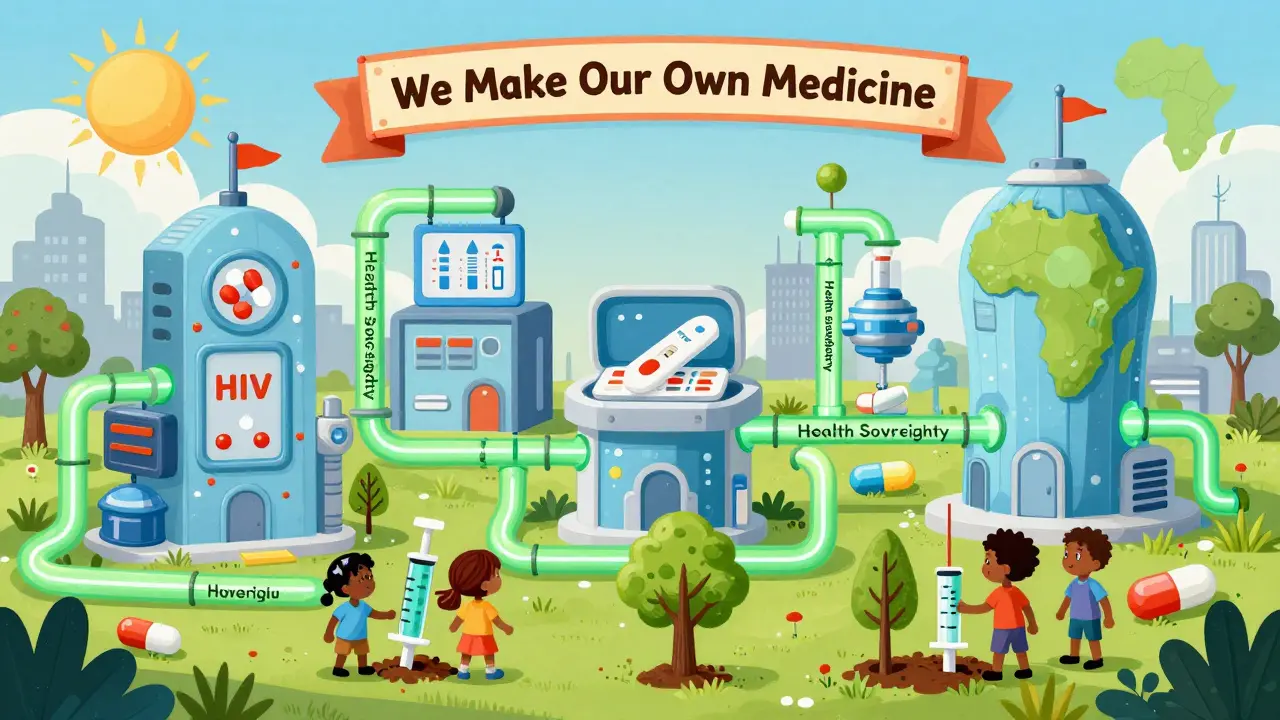
This isn’t just about HIV. It’s about control.
Before the pandemic, Africa imported 80% of its medicines. That made the continent vulnerable. When global supply chains broke, so did treatment for malaria, TB, and diabetes.
Now, countries are asking: Why can’t we make our own vaccines? Our own antibiotics? Our own insulin?
Dr. Ussene Hilário Isse, Mozambique’s Minister of Health, put it this way: “When we produce our own medicines, we stop waiting for someone else to decide if we live or die.”
The same factories making TLD can be retooled to make malaria drugs. The labs testing ARV batches can test for tuberculosis. The supply chains built for HIV can deliver vaccines.
That’s the real win - not just more pills, but stronger systems.
What’s next? The road to 2030
By 2030, experts predict African-made ARVs could supply 20-30% of the continent’s needs. That’s not enough to replace imports entirely - but it’s enough to break the cycle of dependency.
Three things will determine if this happens:
- More factories - At least 10 more need to reach WHO prequalification by 2028.
- Harmonized regulation - African countries must agree on one set of standards, not 54 different ones.
- Long-term funding - Donors can’t pull out after five years. This needs to be treated like infrastructure - roads, power, water.
And there’s one more thing: African leadership. For too long, treatment guidelines were written in Geneva or New York. Now, African scientists are leading trials for new regimens tailored to local strains of HIV. African policymakers are designing financing models that actually work in their countries.
This isn’t aid. It’s ownership.
Can this model work for other diseases?
Yes - and it already is.
Senegal is now making generic hepatitis C drugs. Ghana is producing insulin. Tanzania is building a facility for tuberculosis diagnostics. The same playbook is being reused: WHO prequalification + predictable demand + local investment.
What worked for HIV can work for diabetes, hypertension, and cancer. The infrastructure is being built now. The skills are being trained now. The political will is growing now.
And it’s all because someone finally said: Let Africans make the medicine Africans need.