

When it comes to protecting your vision as you age, not all supplements are created equal. If you’ve heard about AMD vitamins and are wondering whether they’re right for you, the answer isn’t simple. It depends on your eye health - specifically, whether you have intermediate or advanced age-related macular degeneration (AMD). The science behind these supplements is clear, but the rules are strict. Take them when you shouldn’t, and you’re wasting money. Don’t take them when you should, and you might miss a chance to slow vision loss.
What Are AREDS2 Vitamins?
AREDS2 vitamins aren’t just another multivitamin. They’re a specific, clinically tested formula designed to slow the progression of AMD - a leading cause of vision loss in people over 50. This formula comes from the Age-Related Eye Disease Study 2 (AREDS2), a 12-year clinical trial led by the National Eye Institute (NEI). The original AREDS study, published in 2001, showed that a mix of antioxidants and zinc could reduce the risk of AMD worsening by 25%. But the updated version, AREDS2, made a crucial change: it swapped out beta carotene for lutein and zeaxanthin.
Why? Because beta carotene raised the risk of lung cancer in smokers and former smokers. The new formula keeps the same core ingredients - vitamin C, vitamin E, zinc, and copper - but adds two powerful carotenoids found naturally in leafy greens and yellow vegetables. These are lutein (10 mg) and zeaxanthin (2 mg). The result? A supplement that’s not only safer but also more effective.
The Science Behind the Formula
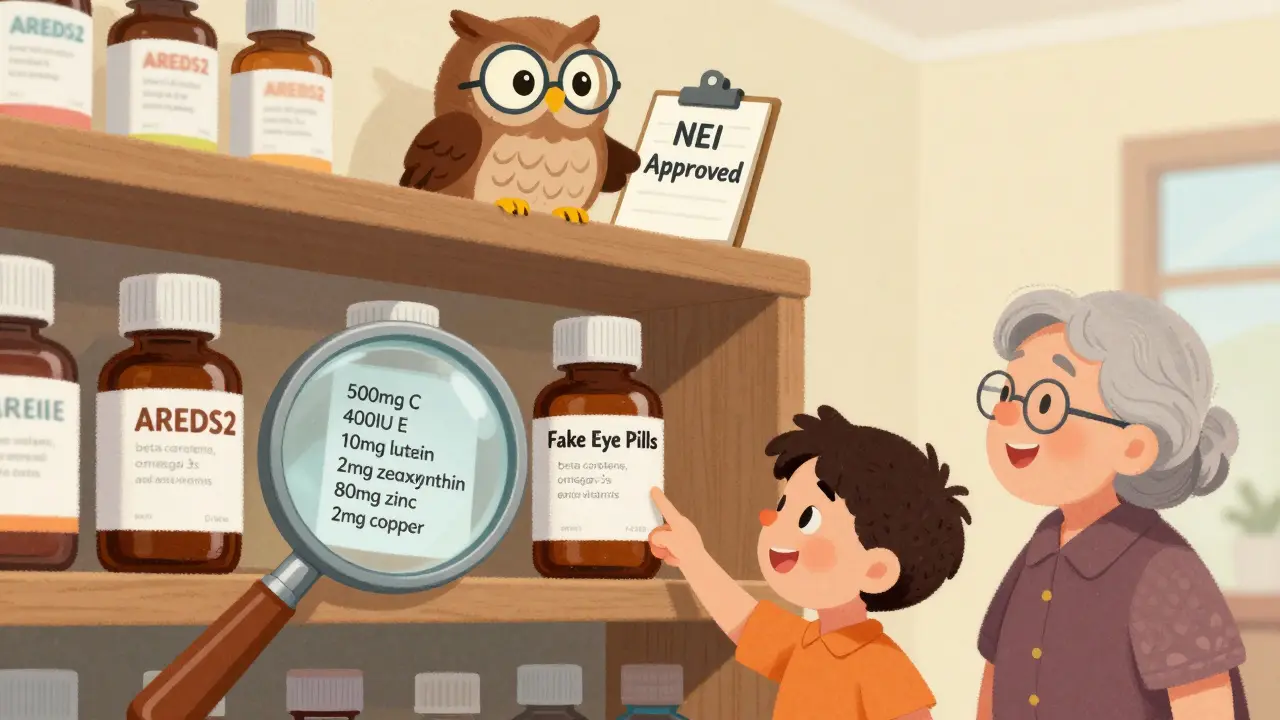
The exact AREDS2 formula includes:
- 500 mg of vitamin C
- 400 IU of vitamin E
- 10 mg of lutein
- 2 mg of zeaxanthin
- 80 mg of zinc (as zinc oxide)
- 2 mg of copper (as cupric oxide)
Copper is included because high doses of zinc can lower copper levels in the body. Without it, you risk anemia or nerve damage. This isn’t a random mix - it’s the result of testing over 3,800 people across two five-year phases.
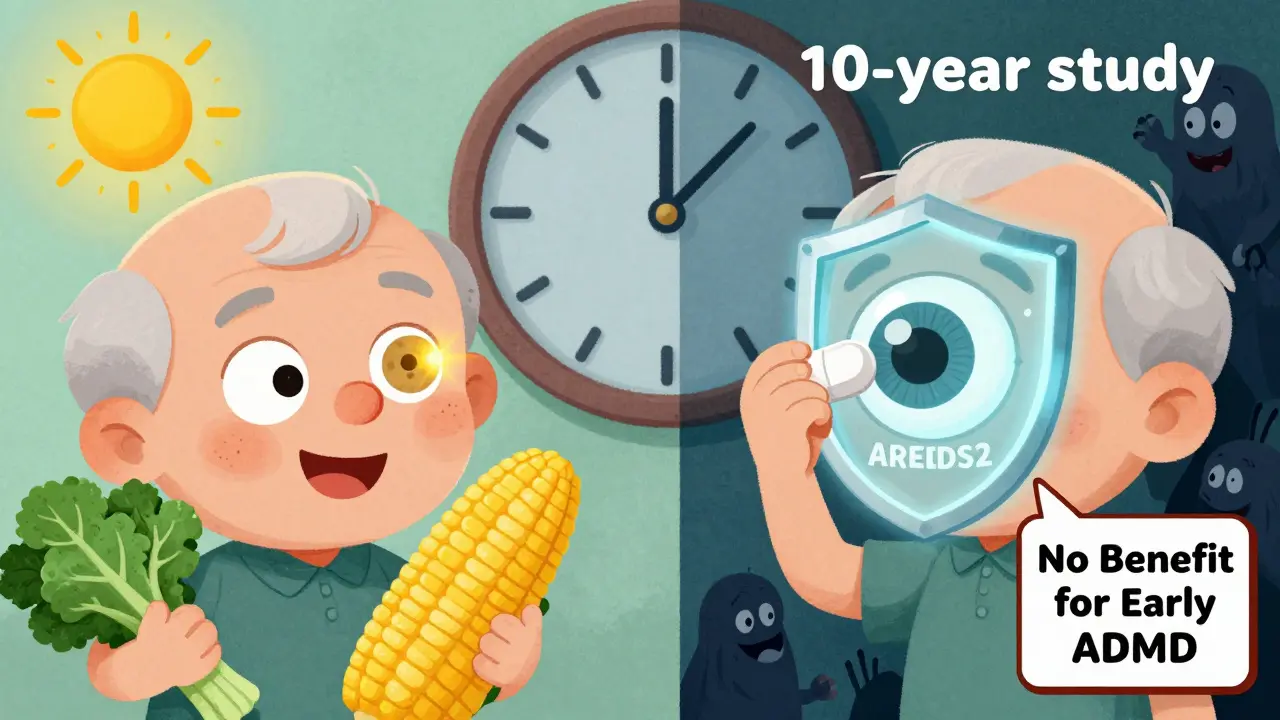
The 10-year follow-up published in JAMA Ophthalmology in May 2022 confirmed what researchers suspected: lutein and zeaxanthin reduced the risk of progressing to late-stage AMD by 26% compared to the old beta carotene version. The hazard ratio was 0.88 - meaning a 12% lower risk of vision loss. Even more importantly, this benefit held true over the full decade. People who stuck with the supplement had a lasting advantage.
One surprise? Omega-3 fatty acids - often touted for eye health - added nothing. The study found no extra benefit from fish oil or DHA/EPA supplements. So if your AREDS2 pill includes omega-3s, you’re paying for something that doesn’t help.
Who Should Take AREDS2 Vitamins?
This is where most people get it wrong. AREDS2 supplements are not for everyone. They’re not a general eye health booster. They’re not for prevention. They’re not for early AMD.
You should only take them if you have:
- Intermediate AMD in one or both eyes - defined by many medium-sized drusen or at least one large drusen
- Or, advanced AMD (geographic atrophy) in one eye, with intermediate AMD in the other
If you have small drusen - the kind often seen in early AMD - the supplement won’t help. Studies show no benefit. If you don’t have AMD at all, taking these pills won’t stop you from getting it. The evidence is clear: AREDS2 vitamins do not prevent AMD.
And if you’re already in late-stage AMD with severe central vision loss? The answer is more nuanced. A July 2024 study from the NIH analyzed retinal scans of over 1,200 people from the original AREDS2 trial. They found that those with geographic atrophy (GA) - especially when it was outside the very center of the macula - saw a 55% slowdown in disease progression over three years. That’s a big deal. For years, experts thought these supplements only helped in the middle stages. Now, we know they might also help people with late-stage dry AMD, as long as the damage hasn’t fully taken over the fovea.
What About Safety?
The AREDS2 formula has been studied for over 20 years. The 10-year follow-up found no major safety concerns. People who took it daily for a decade didn’t have higher rates of side effects compared to those who didn’t. But there are exceptions.
- If you’re a current smoker, avoid any supplement with beta carotene. The AREDS2 formula eliminates this risk.
- High-dose zinc (80 mg) can cause nausea or stomach upset. Taking it with food helps.
- Long-term zinc use can interfere with copper absorption - which is why copper is included.
- If you have kidney disease or take diuretics, talk to your doctor. Zinc can build up in your system.
Also, don’t double up. If you’re already taking a multivitamin with zinc or high-dose antioxidants, you could end up with too much. Check the labels. You don’t need 500 mg of vitamin C from three different sources.
What Doesn’t Work
Let’s clear up some myths.
- AREDS2 doesn’t reverse vision loss. It slows progression. If your central vision is already gone, these pills won’t bring it back.
- They’re not for early AMD. Small drusen don’t benefit. No studies show a reduction in risk.
- They’re not for prevention. If you have healthy eyes, taking AREDS2 won’t keep you from getting AMD later.
- Omega-3s don’t add value. Skip the fish oil combo unless your doctor recommends it for another reason.
Many people buy these supplements because they’ve heard "they’re good for the eyes." That’s misleading. These are targeted medical supplements, not general wellness products.
How to Know If You’re a Candidate
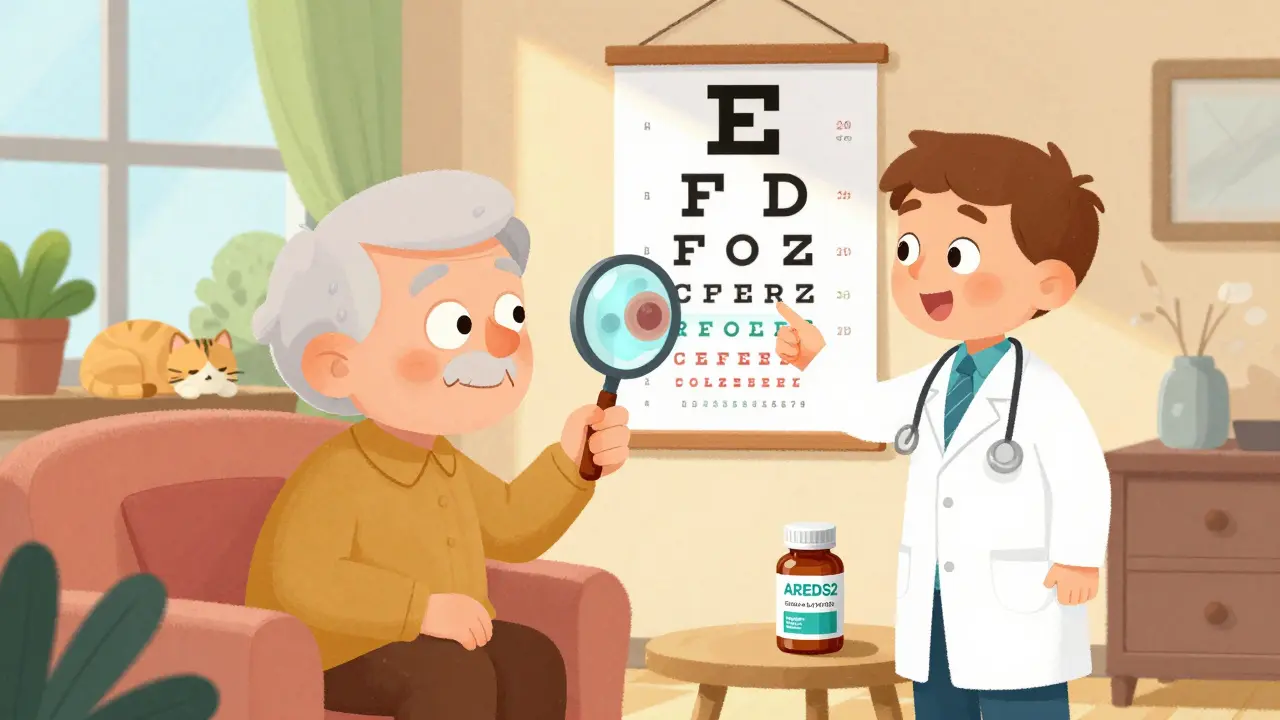
The only way to know if you should take AREDS2 vitamins is through a dilated eye exam. Your eye doctor will look at your retina and grade your drusen. They’ll tell you if you’re in the intermediate or advanced stage. That’s it. No guesswork. No online quizzes. No self-diagnosis.
If you’re over 60 and have a family history of AMD, get checked every year. If you’re diagnosed with intermediate AMD, ask your doctor about the AREDS2 formula. Don’t wait. The goal isn’t to cure AMD - it’s to keep you seeing clearly for as long as possible.
What to Look for on the Label
Not all "AREDS2" supplements are equal. Some brands cut corners. Some use different forms of zinc or skip the copper. Always check the label against the exact formula:
- Vitamin C: 500 mg
- Vitamin E: 400 IU
- Lutein: 10 mg
- Zeaxanthin: 2 mg
- Zinc: 80 mg (as zinc oxide)
- Copper: 2 mg (as cupric oxide)
If it doesn’t match, it’s not the right formula. Some products include beta carotene - avoid those. Others add selenium or other antioxidants - those aren’t part of the proven formula and may even interfere.
Look for the NEI logo or mention of the AREDS2 study. Reputable brands like Ocuvite, PreserVision, and many pharmacy generics now carry the correct formula. But always double-check the numbers.
Final Thoughts
AREDS2 vitamins are one of the few supplements in medicine with strong, long-term clinical evidence. They work - but only for a specific group of people with specific eye conditions. They’re not a magic pill. They’re not a preventative. And they won’t fix what’s already damaged.
If you’re in the right group - intermediate or advanced AMD - taking them daily could mean the difference between keeping your independence and losing it. If you’re not, they’re just expensive pills with no benefit.
Don’t take them because your friend does. Don’t take them because they’re on sale. Take them because your eye doctor says you need them. And if you’re not sure - get an exam. Your vision is worth it.
Can I take AREDS2 vitamins if I don’t have AMD?
No. Studies show no benefit for people without intermediate or advanced AMD. Taking them won’t prevent the disease and may even lead to unnecessary side effects from high-dose zinc or vitamins. They’re not a general eye health supplement.
Is it safe to take AREDS2 vitamins long-term?
Yes. The 10-year follow-up of the AREDS2 trial found no significant safety issues in people who took the formula daily. However, high-dose zinc can cause stomach upset or interfere with copper absorption, so always take it with food and make sure your supplement includes copper. If you have kidney disease, check with your doctor first.
Do AREDS2 vitamins help with wet AMD?
The AREDS2 formula was not designed for wet AMD, which is treated with injections or laser therapy. However, some people with wet AMD also have areas of geographic atrophy (dry AMD). In those cases, the supplement may help slow the dry areas from worsening. Always discuss with your retinal specialist.
Can I get the same benefits from food instead of pills?
Lutein and zeaxanthin are found in leafy greens like kale and spinach, and in yellow vegetables like corn and egg yolks. But the amounts in food are much lower than the 10 mg and 2 mg used in AREDS2. It’s nearly impossible to get the full dose from diet alone. The supplement is designed to deliver the exact amount shown to work in clinical trials.
Why was beta carotene removed from the original AREDS formula?
Beta carotene was linked to a 20% higher risk of lung cancer in current and former smokers during the AREDS2 trial. Since many AMD patients are older adults who smoked in the past, this risk was too high. Replacing it with lutein and zeaxanthin eliminated that risk and improved effectiveness.
13 Comments
i took these for like 6 months cuz my grandma swore by em and honestly? my eyes felt worse. like, dry as a desert. maybe i wasnt supposed to take em? anyone else feel this way? also why is zinc so high? 80mg?? that's like 7x the daily limit. what even is this.
While I appreciate the thoroughness of this article, I must emphasize that the clinical evidence for AREDS2 is robust and should not be diluted by anecdotal experiences. The formula is not a panacea, nor is it intended for preventive use. As a medical professional with over two decades of clinical experience, I urge all readers to consult their ophthalmologist before initiating any supplement regimen. Self-diagnosis is not only inaccurate-it is potentially hazardous.
I just got my eye exam last week and they said I have intermediate AMD. I was so scared I almost cried. Then my doctor said 'take these' and handed me the AREDS2 pills. I didn't even know they existed. Now I take them every morning with my coffee and a banana. It feels weird to take 'medicine' when I'm not sick... but I'm so glad I found this. Thank you for explaining it so clearly. <3
OMG I'm so glad I read this!! I was about to buy that fish oil + AREDS2 combo on Amazon. Like... why do they even make that?? I thought omega-3 was magic for eyes 😅 I'm switching to the plain one now. Thanks for saving me $30 and my stomach!!
this is the kind of info that actually helps. i'm 67 and my eyes are fine but my brother has amd. i'm gonna send him this. simple, clear, no fluff. thank you.
The assertion that AREDS2 reduces progression by 26% is statistically significant but clinically marginal. The hazard ratio of 0.88 translates to a 12% absolute risk reduction over a decade. In a population with a 20% 10-year progression rate, this equates to approximately 2.4 fewer cases per 100 patients. This is not a therapeutic breakthrough-it is a modest, statistically driven adjustment in risk profile. Moreover, the long-term zinc exposure may confer renal burden in susceptible individuals. The cost-benefit analysis remains questionable.
I HAVE AMD AND I'M TAKING THESE AND I'M SO HAPPY I DID BECAUSE I CAN STILL SEE MY GRANDKIDS AND I JUST WANTED TO SAY THANK YOU TO THE DOCTORS WHO FIGURED THIS OUT AND ALSO TO THE PERSON WHO WROTE THIS ARTICLE BECAUSE I WAS SO SCARED I WAS GONNA GO BLIND AND NOW I'M NOT
they don't want you to know this but the real reason they removed beta carotene is because big pharma owns the lutein patents. this whole thing is a money grab. they're selling you a $30 bottle to replace a $2 vitamin. i've been taking spirulina and it's way better. why do you think they don't mention it?
I'm 58 and my mom had AMD. I got checked last year and I have small drusen. I was wondering if I should start the vitamins. This article made me realize I shouldn't. I'm so relieved! I thought I was doing something proactive, but now I know I'm just avoiding unnecessary supplements. Thanks for the clarity!
you people are so naive the study was funded by the government and the supplement companies and the real reason they changed the formula is because the original one was causing liver damage and they had to cover it up with lutein and zeaxanthin because they sound natural and healthy and nobody questions it
the 10-year follow-up? pfft. that's just a reanalysis of a flawed cohort. the original trial had selection bias, attrition rates over 30%, and no placebo control in phase two. the '26% reduction' is derived from a post-hoc subgroup analysis of patients who complied with 80%+ adherence. this isn't science-it's marketing dressed in lab coats. the FDA should ban these as 'nutraceuticals' and regulate them as drugs. they're not vitamins. they're pharmaceuticals with a side of snake oil.
you think you're being smart taking these pills? you're just feeding the machine. the eye industry makes billions off people like you who swallow pills like candy. you think you're protecting your vision? you're protecting their quarterly earnings. the real cure is sunlight, blue light avoidance, and not staring at screens for 12 hours a day. but that doesn't sell. pills do.
i read half this and got bored. just tell me if i should take it or not. i have drusen. yes or no?