
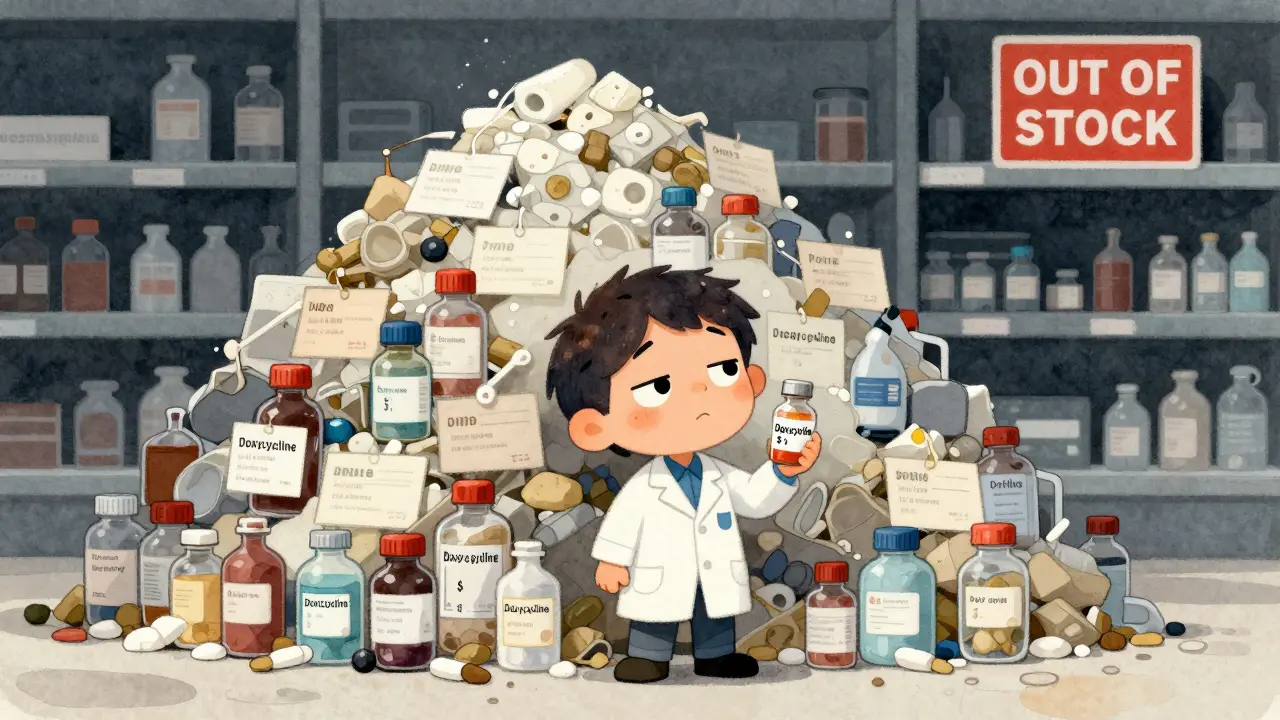
By mid-2025, hospitals across the U.S. and Europe are running out of basic antibiotics, IV fluids, and blood pressure meds-not because of demand spikes, but because the companies making them can’t afford to keep producing them. This isn’t a temporary glitch. It’s a systemic collapse driven by one brutal truth: pricing pressure and shortages are crushing drug manufacturers, and patients are paying the price.
Why Are Generic Drugs So Cheap That No One Can Make Them?
Generic drugs are supposed to be affordable. That’s the whole point. But in the race to the bottom, prices have fallen so far that many manufacturers operate at a loss. A 2025 analysis by the Manufacturers Alliance found that 68% of generic drug makers are selling their products below the cost of raw materials alone. For example, a single vial of doxycycline, a common antibiotic, sells for under $1 in the U.S. market. Yet the cost to produce it-including active pharmaceutical ingredients (APIs), packaging, quality control, and compliance-now sits at $1.37. That’s a 37% loss per unit.
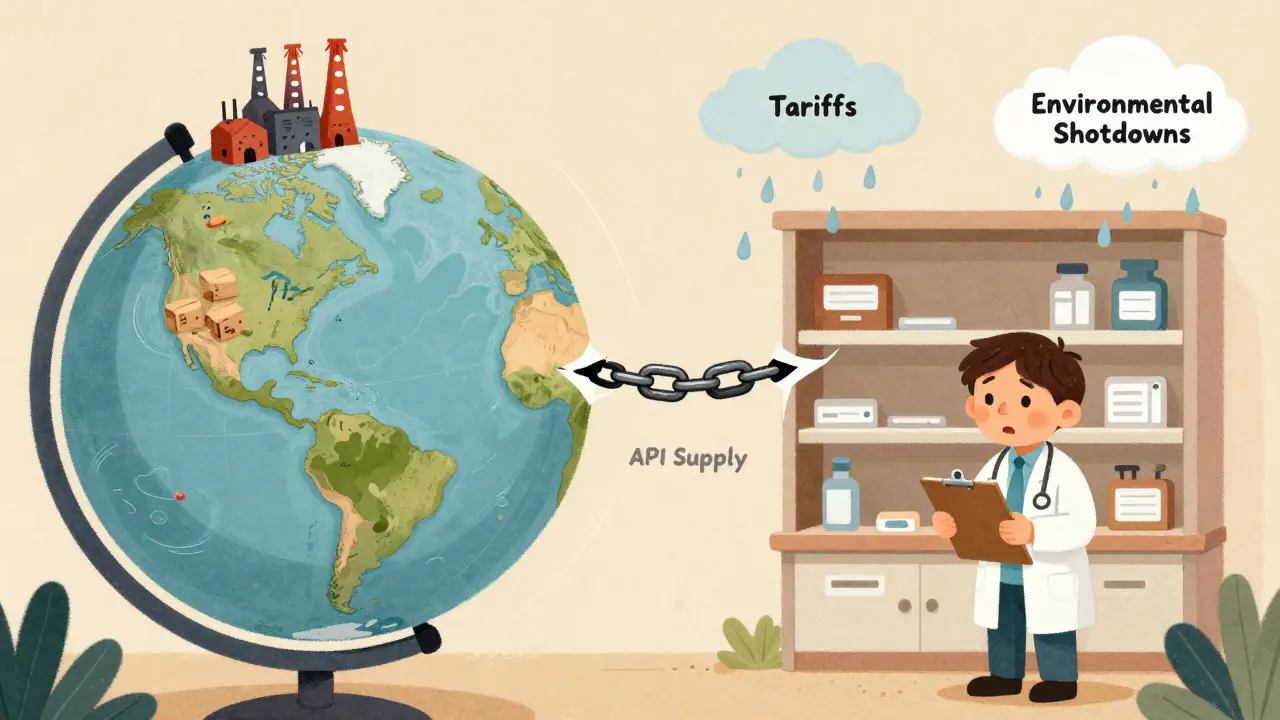
The problem started years ago when U.S. insurers and pharmacy benefit managers (PBMs) demanded deeper discounts. Then came the pandemic, which exposed how reliant the U.S. is on foreign suppliers, especially in India and China, for APIs. When geopolitical tensions spiked in 2024 and 2025, export restrictions, port delays, and new tariffs made those imports even more expensive. Rare earth metals used in drug packaging, specialty chemicals for sterile production, and even basic plastic components saw price jumps of 15-25% in 2025. Meanwhile, U.S. regulators didn’t raise price ceilings. So manufacturers had no choice: cut margins, delay production, or stop making the drug entirely.
Supply Chain Chaos Is Making Shortages Worse
It’s not just about cost. It’s about control. Over 80% of the world’s APIs come from just two countries: India and China. When China imposed new environmental inspections on chemical plants in early 2025, over 120 API facilities were shut down for months. India, meanwhile, started prioritizing domestic needs over exports after its own shortages hit. The result? A domino effect.
Take heparin, a blood thinner used in every ICU. One major supplier in China halted production for three months after failing a safety audit. That one delay caused a 40% nationwide shortage in the U.S. by June 2025. Hospitals rationed doses. Patients with atrial fibrillation had to switch to more expensive alternatives-some costing 10 times more. And because manufacturers couldn’t predict when raw materials would arrive, they stopped ordering in bulk. That meant even when supplies returned, production couldn’t ramp up fast enough.
And it’s not just APIs. Packaging materials like glass vials and rubber stoppers are also in short supply. A single vial of insulin requires 10 different components, each sourced from a different supplier. If one fails, the whole batch gets scrapped. In 2025, 31% of drug manufacturers reported losing over 15% of their monthly output due to packaging failures alone.
Manufacturers Are Caught Between a Rock and a Hard Place
Imagine you’re running a small generic drug plant. Your costs are rising. Your customers-hospitals and pharmacies-won’t pay more. Your investors want profits. What do you do?
- Option 1: Raise prices. Risk losing contracts and being dropped from formularies.
- Option 2: Keep prices low. Lose money on every bottle. Eventually, shut down.
- Option 3: Switch to making more profitable drugs. But then other essential meds disappear.
Most choose Option 2-until they can’t anymore. In 2025, over 27 generic drug manufacturers in the U.S. either shut down or sold their operations to larger firms. The ones that survived did so by cutting corners: reducing staff, skipping audits, or delaying equipment upgrades. That’s how you get quality issues-and more recalls. In the first nine months of 2025, the FDA issued 89 recalls for generic drugs, up 42% from 2024. Many were due to contamination or inconsistent dosing. Patients didn’t know their meds were risky. Regulators didn’t have the resources to catch them all.
Who’s Really Paying the Price?
It’s not the manufacturers. It’s not even the insurers. It’s the patient.
When a drug disappears from shelves, doctors scramble. They switch to alternatives-often newer, branded drugs that cost 10 to 100 times more. A patient on generic metformin for diabetes might suddenly be prescribed a branded version costing $300 a month instead of $4. Insurance might cover part of it, but copays rise. For those without insurance? They skip doses. Or stop taking it altogether.
According to a Duke University survey of 1,200 U.S. patients in October 2025, 38% reported missing a dose of a chronic medication due to unavailability. 14% said they went without it for over a week. That’s not just inconvenient. It’s dangerous. Uncontrolled blood pressure, blood sugar, or infections lead to ER visits, hospitalizations, and long-term damage. The real cost? Billions in avoidable healthcare spending.
Why Isn’t the Government Fixing This?
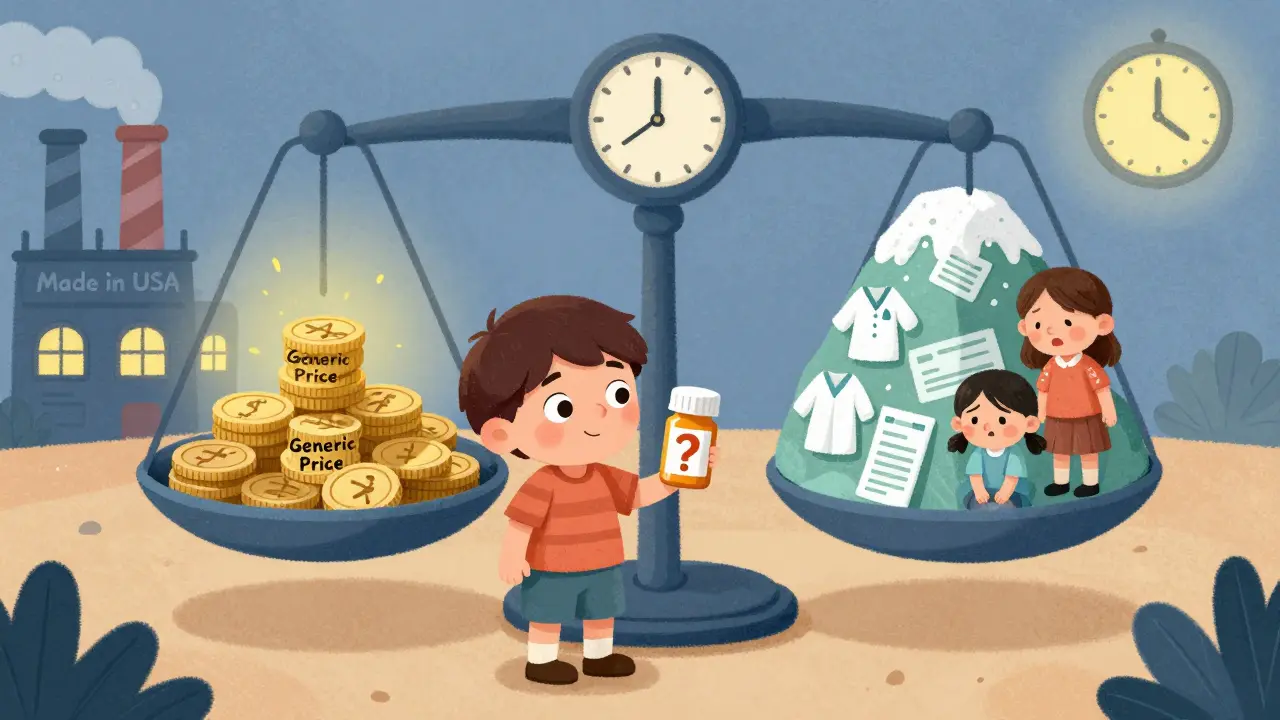
There are solutions-but they’re hard, and they take time.
- Strategic stockpiling: The U.S. government has a Strategic National Stockpile for vaccines and bioterror agents. But it doesn’t include common generics. Experts say a 6-month reserve of 50 essential drugs could prevent 70% of current shortages.
- Price floors: Instead of letting prices collapse, set a minimum price for essential generics based on production cost + 10% profit. That would make production viable again.
- Domestic production incentives: The CHIPS Act helped revive semiconductor manufacturing. A similar “Drug Production Act” could offer tax credits, low-interest loans, and fast-track approvals for U.S.-based API plants.
- Dual sourcing: Require manufacturers to have at least two suppliers for every critical ingredient. Right now, most rely on one.
So far, Congress has debated these ideas for years. Nothing’s passed. Meanwhile, the FDA has a backlog of over 500 pending generic drug applications. Approval times have stretched to 30 months. That’s longer than it takes to build a new car plant.
What’s Next? The Road to Recovery
Some manufacturers are fighting back. A few in Ohio and North Carolina have started building small, automated API plants with U.S. government grants. One company, MedGen Labs, now produces 12 essential generics entirely on American soil. Their costs are higher-but so are their margins. They’ve doubled their workforce in 18 months.
Others are using AI to predict shortages before they happen. By tracking port delays, supplier financial health, and even weather patterns that affect chemical production, these systems can warn hospitals weeks in advance. That lets them order alternatives before shelves go empty.
But tech alone won’t fix this. The system needs policy change. The market needs to stop treating life-saving drugs like commodities. If we keep letting prices drop to zero, we won’t have anyone left to make them.
The next time you hear about a drug shortage, don’t blame the pharmacy. Don’t blame the doctor. The problem started long before the pill reached your hands. It started when the company making it couldn’t afford to keep the lights on.
Why are generic drug prices so low that manufacturers can’t profit?
Generic drug prices have been driven down by aggressive bidding from pharmacy benefit managers (PBMs) and insurers over the past 15 years. Many generics now sell below the cost of raw materials, especially since 2024 when global supply chain disruptions pushed up the price of active pharmaceutical ingredients (APIs) by 15-25%. Manufacturers can’t raise prices without losing contracts, so they either lose money or stop making the drug.
How do geopolitical issues contribute to drug shortages?
Over 80% of the world’s active pharmaceutical ingredients come from India and China. When China imposed stricter environmental inspections in early 2025, over 120 API plants shut down. India then restricted exports to meet its own domestic needs. These disruptions created delays of 3-6 months for critical ingredients, causing cascading shortages across the U.S. and Europe. Tariffs and export bans on rare earth metals and specialty chemicals have made packaging and sterile production even harder.
Are drug shortages only happening with generics?
No. While generics are hit hardest because of their low margins, even branded drugs are affected. For example, insulin and certain cancer drugs rely on complex supply chains with single-source components. When a single supplier in Germany or Japan faces a production delay, it can cause global shortages. The difference is that branded drugs can raise prices to cover costs-generics can’t.
What’s being done to fix this problem?
Some manufacturers are building domestic API plants with U.S. government grants. A few states are creating emergency stockpiles of essential generics. The FDA is fast-tracking approvals for new suppliers, but the backlog is still over 500 applications. Congress has proposed bills to create price floors and tax incentives for domestic production, but none have passed as of late 2025. The biggest barrier is political will-not technical ability.
How can patients protect themselves from drug shortages?
Talk to your pharmacist and doctor early. Ask if your medication is on the FDA’s shortage list. If it is, ask about alternatives-sometimes a different brand or formulation is available. Don’t wait until your prescription runs out. Keep a 10-14 day supply on hand if possible. And if you’re having trouble getting your meds, contact your local health department-they often have emergency access programs.
10 Comments
This is the quiet crisis no one talks about. I work in a rural clinic and we've had to switch patients off generic metformin twice this year. No warning. No backup. Just 'sorry, out of stock.' Patients don't understand why their $4 script suddenly costs $300. The system is broken, not the people trying to fill prescriptions.
Manufacturers aren't greedy-they're bankrupt. And we're the ones cleaning up the mess.
LET'S BE REAL. This isn't a supply chain issue-it's a CAPITALIST FAILURE. We treat life-saving meds like fucking commodities on Amazon. 🤬 The FDA backlog is a joke. 500+ pending apps? That's not bureaucracy, that's negligence. We need a DRUG PRODUCTION ACT NOW. Tax credits, domestic fabs, price floors-DO IT. Or we're gonna start seeing preventable deaths on the nightly news. #FixTheSystem
They're letting China and India control our medicine supply? That's treason. I knew the globalists were selling us out. Why don't we just nuke the ports that ship from there? And why is the FDA letting them import pills from factories that smell like sewage? I saw a video-this guy in Ohio said the vials come in with dust on them. Our kids are taking Chinese dirt pills. This is bioweapon territory.
As someone from India, I see both sides. Our API plants are under pressure from environmental rules and domestic demand. But the real problem is the pricing model. If the U.S. paid even $0.20 more per vial of doxycycline, hundreds of Indian factories could stay open. It’s not about nationalism-it’s about sustainable economics. We’re not the enemy. The system is.
Let me break this down for the laypeople: PBMs are the real villains. They negotiate rebates based on list price, so they incentivize higher-cost drugs over cheaper generics. That’s why insulin is $300 but doxycycline is $1. It’s not about production cost-it’s about perverse financial incentives. The whole model is designed to maximize rebate revenue, not patient outcomes. Read the 2024 CMS report on PBM structure. It’s horrifying.
I’ve been a nurse for 22 years. I’ve held the hands of patients who cried because they couldn’t get their blood pressure meds. I’ve watched people skip doses because they’re afraid of the bill. This isn’t policy. This is moral failure. We don’t need more reports. We need action. Call your rep. Write to the FDA. Show up at town halls. They’re listening. Or they should be.
I run a small med shop in Kerala. We export to the US. The problem? No one pays for quality. They want the cheapest. So we cut corners. Not because we want to. Because we have to. If you want safe drugs, pay for them. Simple as that. No drama. No blame. Just pay the cost.
The real question isn't who's to blame-it's whether we've forgotten that medicine is not a product. It's a covenant. When we commodify survival, we don't just break supply chains-we break the social contract. The vial is empty, yes. But so is our collective conscience.
MedGen Labs in Ohio is proof it can be done. They’re making doxycycline, heparin, insulin-on American soil. No Chinese middlemen. No Indian delays. Just good jobs and reliable meds. We need to fund more of these. Not just for security. For dignity.
Funny how everyone blames China but ignores the fact that the U.S. outsourced its entire API infrastructure in the 90s because it was ‘cheaper.’ Now we’re surprised when the cheap option collapses? That’s not a crisis. That’s karma. And now we want a tax break to fix it? Nah. Let’s just stop pretending this is new. We knew this was coming. We just didn’t care enough to act.