




Every day, millions of people are exposed to sounds that can quietly damage their hearing-without them even realizing it. At work, factory machines roar. At concerts, bass thumps. And on the way home, earbuds blast music at levels that push past safe limits. This isn’t just about temporary discomfort. It’s about permanent hearing loss that builds up over years, often too late to reverse. The good news? Noise-induced hearing loss is completely preventable. The key is understanding the numbers: decibels, exposure time, and the real-world limits that protect your ears.
What Counts as Dangerous Noise?
Not all loud sounds are the same. A vacuum cleaner at 70 dB is fine for hours. But a chainsaw at 110 dB? That’s dangerous in under a minute. The danger isn’t just about how loud something is-it’s about how long you’re exposed and how often. The science is clear: continuous exposure to 85 decibels (dBA) or higher over an 8-hour period can cause permanent hearing damage. That’s the level of heavy city traffic or a noisy restaurant. By the time you hit 90 dBA-like a lawnmower or a power drill-the risk jumps sharply. And at 100 dBA, such as a motorcycle or a nightclub, just 15 minutes of exposure can be enough to harm your hearing.Workplace Rules: OSHA vs. NIOSH
In the U.S., two major standards govern noise at work, and they don’t match. The Occupational Safety and Health Administration (OSHA) sets the legal limit at 90 dBA for an 8-hour shift. But here’s the catch: OSHA only requires employers to offer hearing protection when noise hits 85 dBA. That’s not a safety rule-it’s a starting point for a program. Meanwhile, the National Institute for Occupational Safety and Health (NIOSH) says 85 dBA is the maximum safe level. Why the difference? NIOSH uses a 3-decibel exchange rate. That means every time noise goes up by 3 dB, the safe exposure time cuts in half. So at 88 dBA, you’re only safe for 4 hours. At 91 dBA? Just 2 hours. OSHA uses a 5-dB rate, which gives you more time at higher levels-making it less protective.NIOSH’s standard isn’t just theoretical. Studies show workers exposed to 85-90 dBA for 20 years show measurable hearing loss. The American College of Occupational and Environmental Medicine confirms that OSHA’s 5-dB rate underestimates risk by up to 700% at higher volumes. California already follows NIOSH’s stricter standard. And across Europe, countries like the UK and Germany use 85 dBA as the action level, with a hard limit of 87 dBA even with ear protection.

How Hearing Protection Works (And Why Fit Matters)
Earplugs and earmuffs aren’t magic. Their effectiveness depends on how well they’re used. NIOSH research shows that properly fitted earplugs can reduce noise by 15 to 30 dB. But if they’re not inserted right, the protection drops to almost nothing. In factories, workers who get hands-on training in fitting earplugs increase their usage from 40% to 85%. That’s not a small jump-it’s the difference between hearing loss and hearing well into retirement.Employers must follow a hierarchy of controls. First, eliminate or replace noisy equipment. Second, use engineering fixes like enclosures or vibration dampeners. Third, rotate workers to limit time in loud areas. Only after all that should hearing protection be the main line of defense. Many workplaces skip the first three steps and just hand out earplugs. That’s not safety-it’s damage control.
Concerts, Festivals, and Personal Audio
You don’t have to work in a factory to risk your hearing. A rock concert can hit 110-120 dBA. That’s like standing next to a jet engine. The World Health Organization recommends limiting personal audio device use to 40 hours a week at 80 dBA. Most people blast music at 90-100 dBA-sometimes for hours. That’s not just a habit. It’s a silent threat.Some venues are stepping up. Festivals like Lifehouse now give out free, high-fidelity earplugs-and 75% of attendees take them. Others install real-time sound displays so you can see the decibel level as the music builds. Quiet zones with ambient levels around 70-75 dBA let people take breaks. The European Commission is even considering extending workplace noise rules to concert staff who work more than 80 dBA daily. That’s a big shift: if you’re paid to be in loud environments, your ears deserve protection, no matter if you’re on stage or behind the bar.
What You Can Do Right Now
You don’t need to wait for regulations to protect yourself. Here’s what works:- Know the numbers: If it’s loud enough that you have to shout to be heard, it’s over 85 dBA. That’s your warning sign.
- Use earplugs at concerts: Music-specific earplugs reduce volume without killing sound quality. They’re cheap and easy to find.
- Set volume limits on devices: iPhones and Android phones let you cap maximum volume. Set it at 70% or lower. Use the built-in “safe listening” alerts from Apple or Spotify.
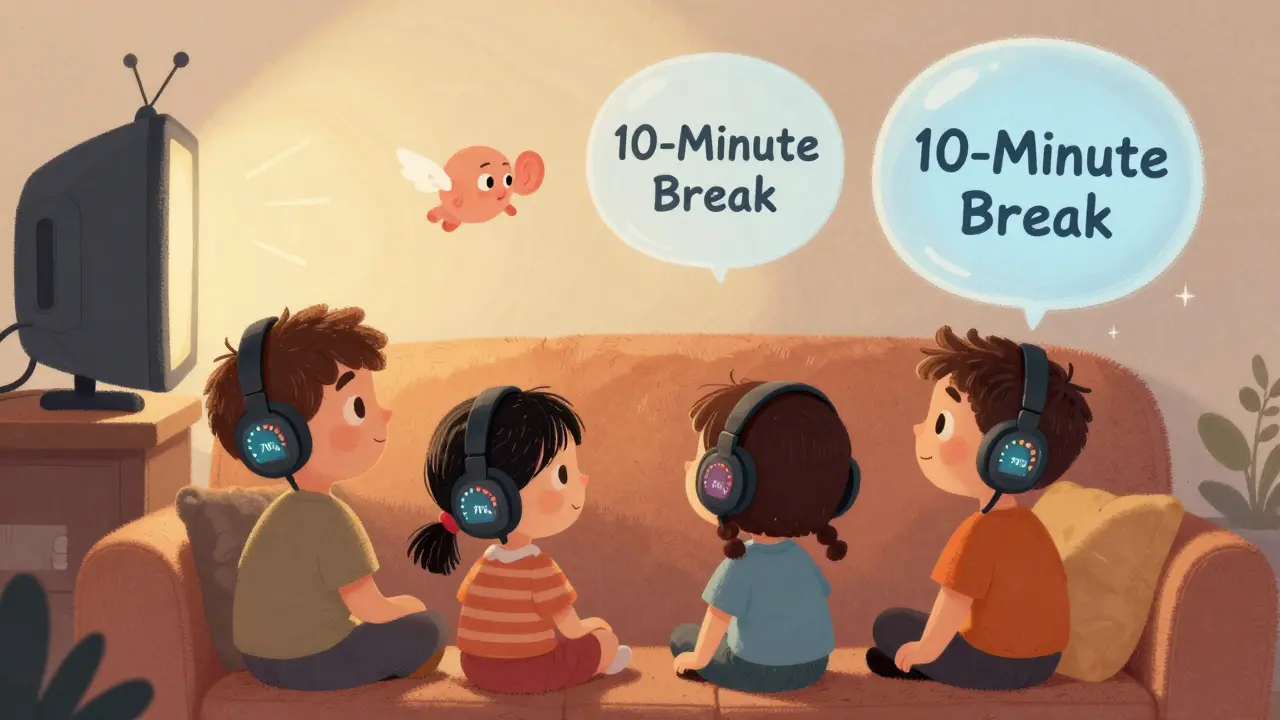
- Take breaks: After an hour of loud music or machinery, give your ears 10 minutes of quiet. Your auditory system needs recovery time.
- Get tested: If you work in a noisy job or go to concerts often, get a baseline hearing test. Annual checkups catch early signs of damage.
Why This Matters Beyond the Numbers
Hearing loss doesn’t just mean you can’t hear your favorite song. It affects relationships, mental health, and even job performance. Studies link untreated hearing loss to higher rates of depression, social isolation, and cognitive decline. In the U.S., hearing loss claims cost over $1 billion a year in workers’ compensation. And that’s just the tip of the iceberg-many cases go unreported.The good news? We have the tools. We have the science. We just need to use them. Whether you’re a construction worker, a musician, or someone who just loves listening to music on the train-your hearing is not replaceable. Protect it like you would your eyes, your teeth, or your heart. Because once it’s gone, you can’t get it back.
What is the safest noise exposure limit for daily work?
The safest limit for daily work is 85 decibels (dBA) averaged over 8 hours, according to NIOSH and the World Health Organization. This level is designed to keep the risk of permanent hearing loss below 8% over a working lifetime. OSHA allows up to 90 dBA, but that carries a higher risk-up to 25% over time. For maximum protection, follow the 3-dB exchange rate: every 3 dB above 85 dBA cuts your safe exposure time in half.
Are earplugs really effective at concerts?
Yes, high-fidelity earplugs are very effective. They reduce overall volume by 15-25 dB while preserving sound clarity, so music still sounds natural. Regular foam earplugs work too, but they can muffle higher frequencies. Studies show that concertgoers who use earplugs are far less likely to experience temporary or permanent hearing damage. Festivals that distribute free earplugs report up to 75% usage rates, proving they’re both practical and popular.
Can noise from headphones cause hearing loss?
Absolutely. Listening to music at 90-100 dBA through headphones for more than 60 minutes a day can lead to permanent hearing damage over time. The World Health Organization recommends no more than 40 hours per week at 80 dBA. Many smartphones now include safe listening features that warn you when volume exceeds safe levels. Setting your device’s maximum volume to 70% and using noise-canceling headphones to block background noise can help you stay within safe limits.
Why do some workplaces still use 90 dBA as the limit?
OSHA’s 90 dBA limit is a legal standard, not a health recommendation. It was set decades ago based on economic and regulatory trade-offs, not science. NIOSH’s 85 dBA standard is based on decades of research showing hearing loss begins at lower levels. Many industries resist lowering limits because it means costly changes to equipment or processes. But states like California and countries in the EU have already moved to 85 dBA, proving it’s feasible. The trend is shifting toward better protection-not away from it.
How can I tell if I’m losing my hearing?
Early signs include difficulty understanding speech in noisy places, ringing in the ears after loud events, or needing to turn up the TV volume. You might also feel like people are mumbling. These aren’t normal aging effects-they’re warning signs of noise-induced damage. If you work in a noisy job or go to concerts regularly, get a hearing test. A shift of 10 dB or more at 3,000 or 4,000 Hz on an audiogram is an early indicator of hearing loss. Catching it early means you can still prevent further damage.
15 Comments
Man, I’ve been at concerts for 15 years and never thought about earplugs until last year. Bought some high-fidelity ones-cost me $20. Now I can actually hear the guitar solos without my ears ringing for days. Seriously, if you’re not using them, you’re just gambling with your hearing. No excuses.
85 dB is the real line. Anything above that for more than 8 hours = damage waiting to happen. Simple math.
Let’s be clear: OSHA is not a health agency. It’s a corporate loophole factory. The 90 dB standard was written by lobbyists who got paid to make noise seem ‘manageable.’ Meanwhile, NIOSH’s research has been buried under red tape since the 80s. This isn’t negligence-it’s intentional sabotage.
And don’t get me started on ‘safe listening’ apps. They’re designed to make you feel better, not safer. They don’t track cumulative exposure. They don’t account for workplace noise. They’re a distraction. A placebo for the digitally complacent.
Who profits from this? The earbud companies. The concert promoters. The OSHA contractors. The hearing aid manufacturers. It’s a cycle. And we’re all just paying into it.
Used to blast music at 100% on my commute. Now I use noise-cancelling cans, set my phone to 70%, and take breaks. My ears don’t buzz anymore. Also, I got a hearing test last year-turns out I had a tiny dip at 4k Hz. Scary stuff. Don’t wait till you can’t hear your kid say ‘I love you.’
Also, earplugs at concerts? Game changer. I thought they’d ruin the vibe. Nah. It’s like turning down the bass on a bad mix. You hear everything better.
They’re lying. The government doesn’t care about your hearing. They want you to get hearing aids so they can bill Medicare. It’s all about the money. The WHO? Just a tool. The real danger is the implants they’re secretly testing on concertgoers. I’ve seen the documents.
If you’re too lazy to turn down your music or wear earplugs then you deserve to go deaf. Stop blaming the system. It’s personal responsibility. Period.
Yo, I work on a construction crew. We got these fancy earmuffs that look like space helmets. Boss says ‘wear ‘em or get written up.’ I used to think they were dumb. Now I’m 42 and I can still hear my wife whisper across the room. That’s worth more than flexing on the job.
Also-free earplugs at festivals? That’s the move. I took three pairs last weekend. One for me, one for my bro, one for the dude who asked. Good vibes. Good ears.
In India, factory noise often exceeds 100 dB. Workers are given earplugs but no training. Many don’t know how to insert them. The result? High prevalence of bilateral sensorineural loss by age 35. The real issue isn’t policy-it’s implementation. Without behavioral change, regulations are paper.
Just started using the iPhone safe listening feature. It tells me when I’m over the limit. I didn’t even realize I was blasting it. Now I keep it at 65%. Feels weird at first but my ears thank me. Also, I take 10-minute quiet walks after work. Small changes, big difference.
You think this is about hearing? Nah. It’s about control. The corporations want you dependent. They want you on hearing aids. They want you isolated so you buy more tech, more meds, more subscriptions. The noise isn’t the enemy. The system is. They’re turning your senses into a commodity. Your ears are a data point. Your silence? That’s the product.
And don’t believe the ‘free earplugs’ crap. That’s just PR to keep you docile. Real change? Ban all concerts over 90 dB. Shut down factories that don’t engineer out noise. Stop outsourcing safety to individuals. This isn’t about choices. It’s about power.
I’m an audiologist. I’ve seen hundreds of cases. The earliest sign? Trouble with consonants-s, t, k, f. Not volume. Clarity. People think they’re ‘just getting older.’ They’re not. It’s the 90s iPod, the 100 dB gym speakers, the 8-hour commute with bass-heavy tunes. It adds up. Prevention is cheap. Treatment? Not so much.
Why are we even talking about 85 dB? That’s still too high. The human ear evolved in silence. We weren’t meant to hear anything above 70 dB for more than an hour. Modern life is a sensory assault. We’re not losing hearing-we’re being systematically desensitized. The real tragedy? We don’t even miss what we’ve lost.
My cousin works at a textile plant in Mumbai. Noise level? 105 dB. They give out foam plugs once a year. No training. No monitoring. No follow-up. He’s 29 and already needs hearing aids. The company says ‘it’s his fault for not using them.’ But they don’t even teach him how. This isn’t negligence. This is violence.
And don’t tell me about OSHA. This isn’t America. In India, the law is a suggestion. The real solution? Unionize. Demand better. Or keep dying quietly.
The 3-dB exchange rate is scientifically sound. Every 3 dB increase halves safe exposure time. This is basic acoustics, not opinion. OSHA’s 5-dB rate is outdated and dangerous. Countries that adopted NIOSH standards saw 40-60% reduction in occupational hearing loss within five years. Evidence exists. Action is overdue.
Set your phone volume to 70%. Use noise-canceling headphones. Take breaks. Get tested. That’s it. No magic. Just discipline.