
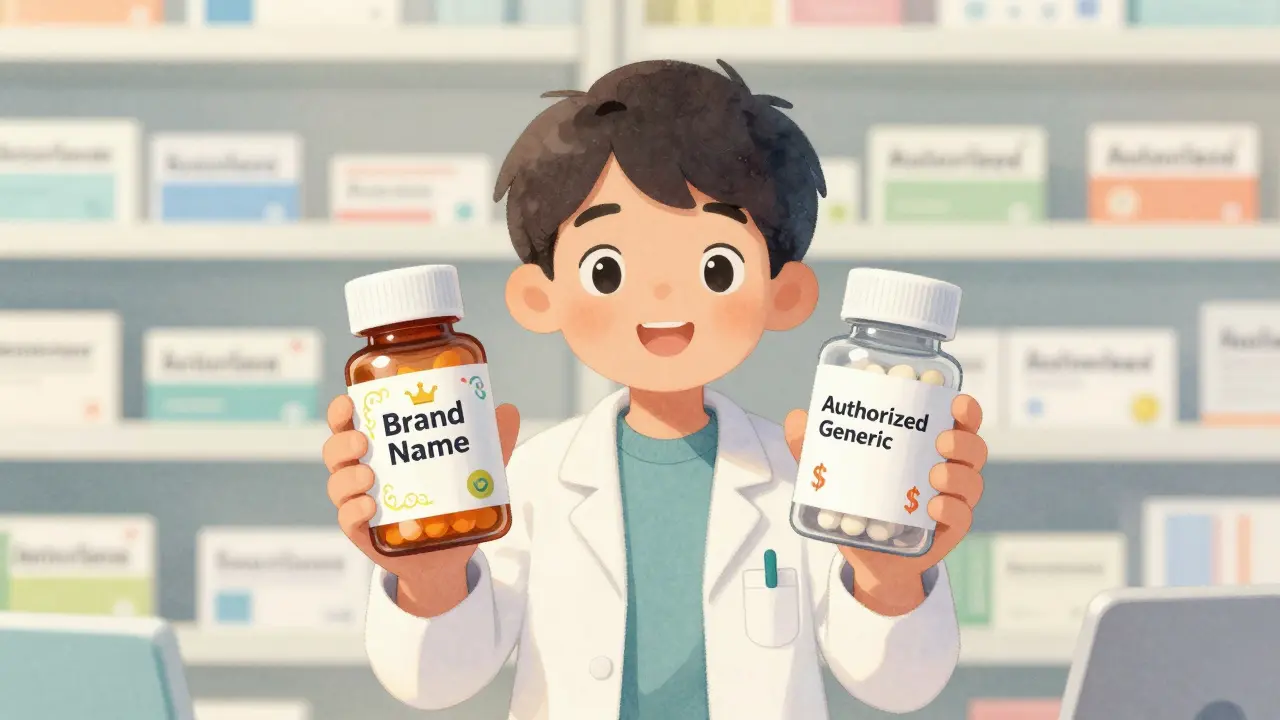
Imagine this: you’ve been taking the same brand-name medication for years. It works perfectly. Then, your insurance tells you that a generic is available, but you’re worried about fillers or different inactive ingredients causing side effects. You feel stuck between paying hundreds of dollars more for the brand or risking a switch to a standard generic. There is actually a third option sitting right there on the shelf. It’s called an authorized generic, which is a prescription drug produced by the original brand-name manufacturer but sold under a different label at a lower price.
Authorized generics are not some experimental alternative. They are the exact same drug as the brand-name version, made by the same company, in the same facility, using the same recipe. The only difference? The box looks different, and the price tag is significantly lower. For many patients, especially those sensitive to formulation changes, authorized generics offer the perfect middle ground between cost savings and therapeutic consistency.
What Exactly Is an Authorized Generic?
To understand authorized generics, you first need to look at how they differ from traditional generics. A traditional generic is made by a different company than the brand-name maker. To get approval from the Food and Drug Administration (FDA), the generic manufacturer must prove that their drug is bioequivalent to the brand name. This means it delivers the same amount of active ingredient into your bloodstream over the same period. However, traditional generics can use different inactive ingredients-like dyes, binders, or fillers.
An authorized generic skips this step entirely. Because it is manufactured by the original brand-name company under its own New Drug Application (NDA), it does not need to prove bioequivalence. It already *is* equivalent because it is identical. According to the FDA’s definition under Subsection 505(t)(3), an authorized generic is simply a listed drug marketed with labeling, packaging, or trade names that differ from the brand product, even though the contents are the same.
Think of it like buying a store-brand cereal that is actually made by the famous national brand. The box says "Store Brand," but inside, it’s the same corn flakes, same sugar, same factory. That is the essence of an authorized generic. It allows the brand company to compete directly with cheaper alternatives without diluting the premium perception of their main brand name.
Why Do Brand Companies Make Them?
You might wonder why a big pharmaceutical company would sell its own product for less money. The answer lies in market strategy and competition. Under the Drug Price Competition and Patent Term Restoration Act of 1984, also known as the Hatch-Waxman Act, the first generic company to file an application challenging a brand patent gets 180 days of marketing exclusivity. During this window, no other generic competitors can enter the market.
This exclusivity period is valuable, but it doesn’t stop the brand company from selling its own drug at a lower price. By launching an authorized generic, the brand company can undercut its own prices and capture some of the market share that would otherwise go to the competing generic. A Federal Trade Commission (FTC) report from 2011 showed that when innovator companies launched authorized generics during this exclusivity period, prices were 25-30% lower than in markets where no authorized generic competed.
While critics argue this tactic can undermine incentives for new generic filers, the immediate benefit often goes to consumers. Health Affairs research covering 2010-2019 found that 75% of authorized generics launched after the approval of the first generic for their brand-name counterpart. This timing suggests that brand companies use authorized generics strategically to maintain control over pricing and supply while offering a budget-friendly option.
How Are They Different From Traditional Generics?
The distinction between authorized generics and traditional generics comes down to one key factor: inactive ingredients. Traditional generics must have the same active pharmaceutical ingredient (API) as the brand name, but they can vary in inactive components. These differences usually don’t matter for most people. However, for some medications, particularly those with a narrow therapeutic index, small changes in formulation can impact how the drug works in the body.
Narrow therapeutic index drugs include medications like warfarin (a blood thinner) and levothyroxine (for thyroid conditions). With these drugs, even slight variations in absorption due to different fillers can lead to adverse reactions or reduced efficacy. Studies published in US Pharmacist indicate that 32% of patients report adverse reactions when switching between brand and traditional generics due to these inactive ingredient differences.
Authorized generics eliminate this risk. Since they are produced under the brand’s NDA, they contain identical active and inactive ingredients. Dr. Aaron Kesselheim, Professor of Medicine at Harvard Medical School, noted in a 2021 JAMA commentary that authorized generics offer the most reliable alternative for patients who experience problems with traditional generics due to formulation differences. If you are sensitive to fillers or dyes, an authorized generic provides the peace of mind of the brand name with the affordability of a generic.
| Feature | Brand Name Drug | Authorized Generic | Traditional Generic |
|---|---|---|---|
| Manufacturer | Original Brand Company | Original Brand Company | Different Company |
| Active Ingredients | Identical | Identical | Identical |
| Inactive Ingredients | Identical | Identical | May Differ |
| FDA Approval Path | New Drug Application (NDA) | New Drug Application (NDA) | Abbreviated New Drug Application (ANDA) |
| Bioequivalence Proof Required? | No | No | Yes |
| Typical Cost Savings | None | 15-20% less than brand | 80-85% less than brand |

Are They Covered by Insurance?
One of the biggest hurdles for any medication change is insurance coverage. Fortunately, authorized generics generally enjoy favorable treatment. Because they are therapeutically equivalent to the brand name and priced closer to generics, insurers often categorize them appropriately.
Data from 2023 shows that Medicare Part D covers authorized generics at generic copay levels 92% of the time. Commercial insurers do so in 78% of cases. This means that in most scenarios, you will pay the same low copay you would for a traditional generic, rather than the higher brand-name tier copay. However, coverage can vary by plan and pharmacy network, so it is always wise to check with your specific provider before making the switch.
It is also important to note that access remains limited. As of 2023, only 15-20% of brand-name drugs had authorized generic versions available. Not every medication has an authorized generic option. The availability depends on whether the brand manufacturer chooses to launch one. The FDA maintains a list of authorized generic drugs, updated quarterly, which pharmacists and patients can reference to see if an option exists for their specific medication.
What Do Patients Say About Them?
User experiences highlight both the benefits and the confusion surrounding authorized generics. On platforms like Reddit’s r/pharmacy community, verified pharmacists have reported significant positive outcomes for specific patient groups. In a March 2023 thread, a pharmacist noted that for patients on levothyroxine who couldn’t tolerate generic versions due to fillers, authorized generics reduced adverse reactions by approximately 70%. GoodRx user reviews reflect this trend, showing a 4.2 out of 5 star rating for authorized generics specifically for narrow therapeutic index drugs, compared to 3.7 out of 5 for traditional generics in the same category.
However, confusion is common. A 2022 Kaiser Family Foundation study found that 28% of surveyed patients didn’t realize they received an authorized generic until after purchase. This lack of transparency can cause unnecessary anxiety. Patients may see a different color pill or a different logo on the bottle and assume something has changed with their medication. Pharmacists play a crucial role here. The American Pharmacists Association reports that 87% of chain pharmacies have protocols to identify authorized generics through National Drug Code (NDC) cross-referencing. If you are unsure about the medication you receive, ask your pharmacist. They can verify if it is an authorized generic, a traditional generic, or the brand name.

Regulatory Landscape and Future Outlook
The regulatory environment for authorized generics is evolving. Historically, the FDA’s Orange Book, which lists approved drug products with therapeutic equivalence evaluations, did not specifically distinguish authorized generics because they fall under the original NDA. This made it difficult for prescribers and pharmacists to identify them quickly.
In response to calls for greater transparency, the FDA announced a 2023 initiative to create a dedicated section for authorized generics in the Orange Book, scheduled for implementation in Q2 2024. This change aims to reduce confusion and improve patient awareness. Additionally, the Biden administration’s 2022 Executive Order on Promoting Competition in the American Economy directed the FDA to address anti-competitive tactics, including strategic authorized generic launches during exclusivity periods. While the goal is to ensure fair competition, industry analysts project that authorized generics will continue to grow, potentially representing 12-15% of the generic market by 2026.
For patients, this growth means more options for affordable, consistent medication. For the healthcare system, it represents a complex balance between encouraging innovation and ensuring access. As the market matures, expect to see clearer labeling and better communication from manufacturers and pharmacies alike.
When Should You Consider Switching?
Switching to an authorized generic makes sense in several specific scenarios. First, if you are currently paying high out-of-pocket costs for a brand-name drug and want to save money without changing the formulation. Second, if you have experienced side effects or efficacy issues with traditional generics, particularly for narrow therapeutic index drugs. Third, if your insurance plan requires prior authorization for brand-name drugs but covers generics easily.
Before making the switch, discuss it with your doctor and pharmacist. Ensure that an authorized generic is available for your specific medication. Ask your pharmacist to explain the differences between the brand, the authorized generic, and any traditional generics on the market. Understanding your options empowers you to make informed decisions about your health and finances.
Is an authorized generic the same as the brand name drug?
Yes, an authorized generic contains the exact same active and inactive ingredients as the brand-name drug. It is manufactured by the same company in the same facility using the same process. The only differences are the packaging, labeling, and price.
Do I need a new prescription to get an authorized generic?
In most cases, no. Pharmacists can typically substitute an authorized generic for the brand-name drug if the prescriber did not indicate "no substitution." However, policies can vary by state and pharmacy, so it is best to confirm with your pharmacist.
Why are authorized generics cheaper than brand name drugs?
Brand companies launch authorized generics to compete with traditional generics and capture market share. By selling the same drug under a different label at a lower price, they can attract cost-conscious consumers and insurers without devaluing their primary brand name.
Can I tell if my medication is an authorized generic?
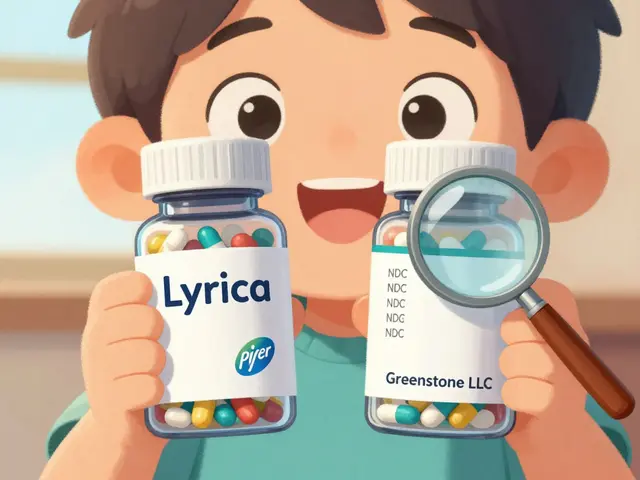
Authorized generics may look different from the brand name in terms of color, shape, or markings. They will also have a different National Drug Code (NDC). Your pharmacist can help you identify if the medication you received is an authorized generic.
Are authorized generics safe for narrow therapeutic index drugs?
Yes, authorized generics are often safer for narrow therapeutic index drugs than traditional generics because they maintain identical inactive ingredients. This consistency reduces the risk of adverse reactions or changes in efficacy due to formulation differences.
Does insurance cover authorized generics?
Most insurance plans, including Medicare Part D and commercial insurers, cover authorized generics at generic copay levels. However, coverage details can vary, so it is recommended to check with your specific insurance provider.